news/Spotlights
Get to know Canada through its masterpieces. We highlight not only the nation’s most beloved artworks, but also incredible lesser-known gems that deserve a closer look. Enjoy these short and scintillating descriptions from art historians, curators, and visual culture experts across the country.

How Yousuf Karsh took his most famous portrait.
by Melissa Rombout
How the iconic portrait of Queen Elizabeth II led to “a Karsh in every pocket.”
by Melissa Rombout
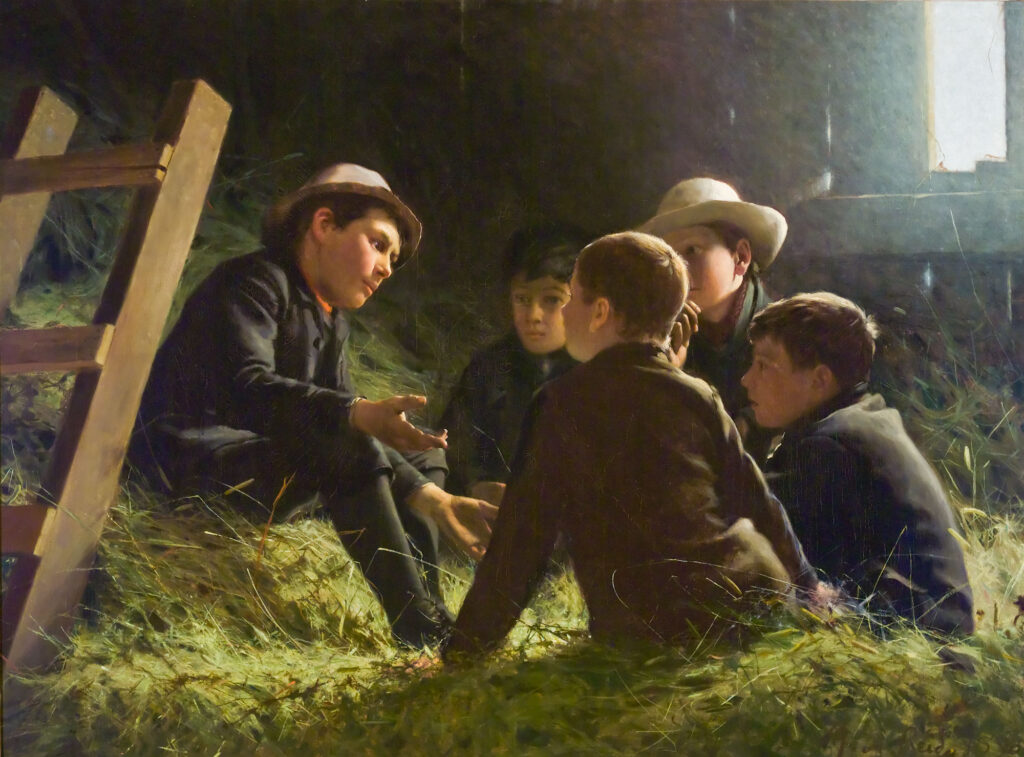
How Reid's idyllic painting The Story cemented his reputation.
by Brian Foss
How the art collective Kiss & Tell fought lesbian erasure in Drawing the Line.
by Kristen Hutchinson
Giorgia Volpe recycled materials to create powerful commentary on culture and the environment.
by Michèle Grandbois
Unpacking the layers of meaning in Tim Whiten’s Lucky, Lucky, Lucky, 2010.
by Carolyn Bell Farrell
Exploring Tom Forrestall’s meticulous realism.
by Ray Cronin
How Takao Tanabe reveals more than meets the eye in Cormorant Island, Looking South.
by Ian Thom
Suzy Lake’s The Natural Way to Draw came from her earliest artistic inspirations.
by Erin Silver
Norman Takeuchi's Hastings Park and the echoes of Japanese Canadian internment of the 1940s.
by Jim Burant
How Little Boy Blue, 1897, marked a turning point for Sophie Pemberton.
by Kathryn Bridge
How Michael Snow’s Venus Simultaneous experimented with cut out figures and forms.
by Martha Langford
In Model T Ford, c.1955–65, Maud Lewis evokes the freedom of a car ride in her early years of marriage.
by Ray Cronin
Mary Pratt’s Eggs in an Egg Crate, 1975 transforms a tragic event into a moving still-life.
by Ray Cronin
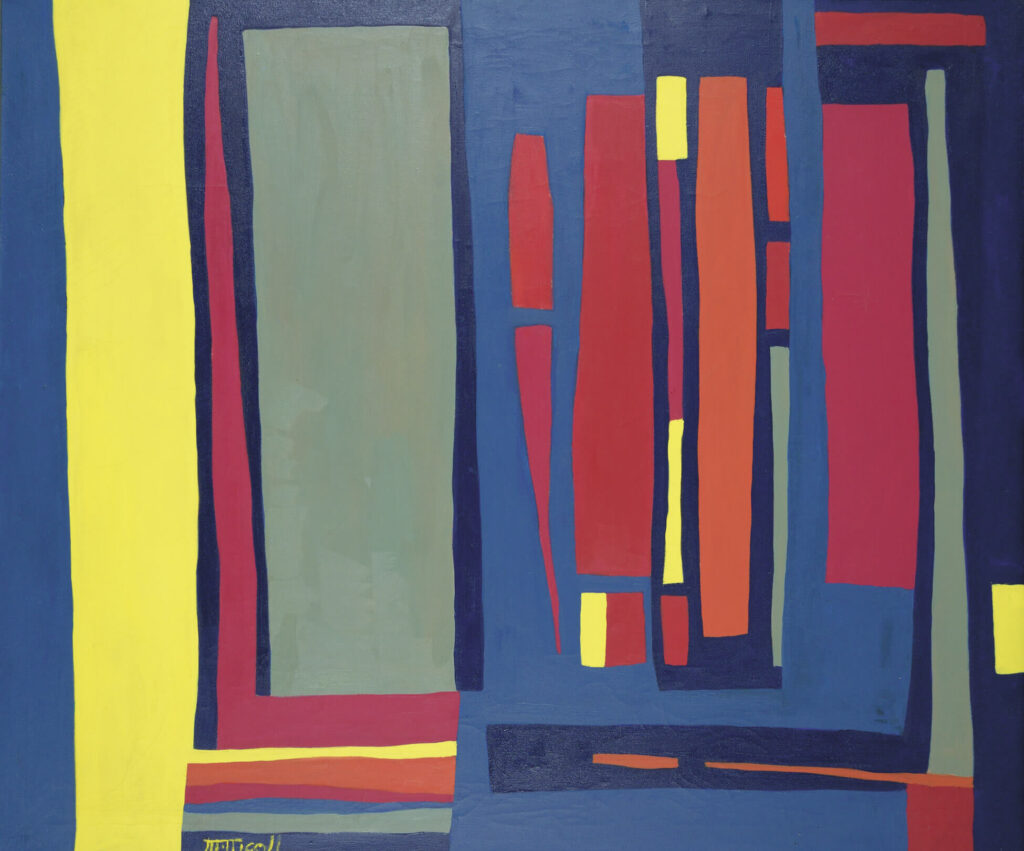
Marion Nicoll’s Alberta IV: Winter Morning, 1961 evokes the winter landscape of her home province with bold primary colours.
by Catharine Mastin
The strong, sensuous silhouette of Tower of Ivory, 1924 by Margaret Watkins features the model, dancer, and health advocate Marguerite Agniel, who used this work in her book that advocated wellness.
by Mary O’Connor
Miss America, 2012 by Kent Monkman is an inspired reinterpretation of the eighteenth-century ceiling fresco Apollo and the Four Continents, by Giovanni Battista Tiepolo.
by Shirley Madill
In Pavane, 1954 by Jean Paul Riopelle, the artist pays homage to the great Impressionist painter, Claude Monet, and his beloved water lilies.
by François-Marc Gagnon
In 196 Apples, 1969–70 by Gathie Falk, the artist presents different degrees of texture, ripeness, and bruising.
by Michelle Jacques
Abstracted and haunting, Forest, British Columbia, 1931–32 by Emily Carr shows the spiritual power of growth and the energetic life force of trees.
by Lisa Baldissera
Mystery accompanies this painting by Elizabeth Cann of The Soldier’s Wife, 1941 an isolated woman of mystery.
by Laura Brandon
On a trip to the farthest point south on the globe, Doris McCarthy painted Antarctica from Above, 1991, capturing a dramatic moment of summer illumination
by John G. Hatch
With Voyage 1, 1988, Carl Beam offers a searing commentary on the so-called discovery of North America by Christopher Columbus
by Anong Migwans Beam
How Vest One, 1969 by Betty Goodwin was an artistic breakthrough and the starting point for a three-year artistic preoccupation
by Jessica Bradley
Inspired by “the wild orange-red flowers” that grew around his house, Eli Bornstein created Double Plane Structurist Relief No. 3, 1967–69
by Roald Naasgard
Cercles chromatiques de M.E. Chevreul (detail), 2006 by Arnaud Maggs emphasizes the artist’s exploration of time
by Anne Cibola
Agnes Martin’s With My Back to the World, 1997, lays bare the artist’s desire to make art about the intangible experiences in life
by Christopher Régimbal
Luxurious vegetation and organic variations are bountiful in Jardin vert (Green Garden), 1958, by Alfred Pellan
by Maria Rosa Lehmann
Jagdeep Raina challenges fixed ideas about tradition in Paradise Lost, 2019.
by Victoria Nolte
Ken Lum takes on the workplace with his internationally celebrated photo-text work, Melly Shum Hates her Job, 1989.
by Victoria Nolte
In her multimedia project Untunnelling Vision, 2020, Jin-me Yoon imagines a planetary future with the interrelatedness of humans and nature.
by Ming Tiampo
Chun Hua Catherine Dong explores the possibility of existing in two places at once in their performance of Reconnection, 2021.
by Victoria Nolte
Anthony Gebrehiwot finds strength in vulnerability through his portraits of Black masculinity in Ebb and Flows, 2019
by Victoria Nolte
In Lowcanes, Camal Pirbhai and Camille Turner subvert artifacts of enslavement through visions of liberation
by Victoria Nolte
Henrietta Hamilton’s Demasduit, 1819, is the only known depiction of a Beothuk person created from life
by Tara Ng
Kazuo Nakamura’s tranquil August, Morning Reflections, 1961, features his signature blue/green colour palette
by John G. Hatch
William Brymner declared the ambitious A Wreath of Flowers, 1884, to be his magnum opus
by Jocelyn AndersonWalter S. Allward’s Vimy Memorial, 1921–36, commemorates fallen Canadian soldiers of the First World War
by Philip Dombowsky
Alootook Ipellie explores the triumph over evil in Self-Portrait: Inverse Ten Commandments, 1993
by Tara Ng
Edward Mitchell Bannister painted River Scene, 1885, after achieving unprecedented success as a Black artist
by Tara Ng, with David Woods
Iljuwas Bill Reid’s Eagle and Bear Box, 1967, signals the Haida artist’s determination to counter Indigenous stereotypes
by Gerald McMaster
Rajni Perera thrives in a hostile world in I take a journey, you take a journey, we take a journey together, 2020
by Tara Ng
Brian Jungen takes his famous sculptures made with Nike Air Jordans in a different direction in Plague Mask, 2020
by Tara Ng
In On the Edge of This Immensity, 2019, Meryl McMaster turns to nature for knowledge and wisdom
by Tara Ng
Iljuwas Bill Reid’s The Raven and the First Men, 1980, honours the ever-curious Haida Trickster
by Gerald McMaster
Annie Pootoogook’s Cape Dorset Freezer, 2005, reflects on the collision of tradition and modern convenience
by Nancy G. Campbell
Presents from Madrid, 1937, announced Paraskeva Clark’s newfound political consciousness
by Christine Boyanoski
William Brymner bears witness to state-enforced famine in Giving Out Rations to the Blackfoot Indians, NWT, 1886
by Jocelyn Anderson
The exuberant Formative Colour Activity, 1934, was Jock Macdonald’s first semi-abstract painting
by Joyce Zemans
Pitseolak Ashoona’s The Shaman’s Wife, 1980, is an arresting portrait of spiritual transcendence
by Christine Lalonde
Sorel Etrog’s Dream Chamber, 1976, evokes the secret world of thoughts and dreams
by Alma Mikulinsky
Layers of pulsating colour animate Françoise Sullivan’s Homage to Paterson, 2003
by Annie Gérin
Nature and machine collide in Alex Colville’s dramatic painting Horse and Train, 1954
by Ray Cronin
Domestic and work spaces overlap in Mary Hiester Reid’s Studio in Paris, 1896
by Andrea Terry
Paul-Émile Borduas’s first entirely non-preconceived painting was Green Abstraction, 1941
by François-Marc Gagnon
Alex Colville’s Infantry, Near Nijmegen, Holland, 1946, sets the stage for his later work
by Ray Cronin
With The Bather, 1930, Prudence Heward refused to idealize her female subject
by Julia Skelly
Satire, religion, and nuclear disaster combine in William Kurelek’s This Is the Nemesis, 1965
by Andrew Kear
Joyce Wieland plays with drama and disaster in Boat Tragedy, 1964
by Johanne Sloan
Françoise Sullivan’s Blocked Phone Booth (Cabine téléphonique bloquée), 1978–79
by Annie Gérin
Paterson Ewen finds a new medium in, Solar Eclipse, 1971
by John G. Hatch
General Idea picture themselves as pups to comment on the AIDS crisis in Fin de siècle, 1990
by Sarah E. K. Smith
Paterson Ewen draws on the symbolic force of water in Coastline with Precipitation, 1975
by John G. Hatch
Homer Watson creates a mystic landscape in Moonlit Stream, 1933
by Brian Foss
Greg Curnoe cries foul in The True North Strong and Free, #1–5, 1968
by Judith Rodger
Shuvinai Ashoona presents an extraordinary scene in Hunting Monster, 2015
by Nancy G. Campbell
Norval Morrisseau invokes traditional beliefs and personal struggle in Water Spirit, 1972
by Carmen Robertson
Kathleen Munn’s ambitious modernism animates The Dance, c.1923
by Georgiana Uhlyarik
William Notman makes a crowd come to life in Skating Carnival, Victoria Rink, Montreal, 1870
by Sarah Parsons
Molly Lamb Bobak documents her fellow servicewoman in Private Roy, Canadian Women’s Army Corps, 1946
by Michelle Gewurtz
William Kurelek’s Reminiscences of Youth, 1968, opens one memory into another
by Andrew Kear
Lionel LeMoine FitzGerald finds harmony in From an Upstairs Window, Winter, c.1950–51
by Michael Parke-Taylor
Prudence Heward captures the spirit of an age in Girl on a Hill, 1928
by Julia Skelly
In Northern Lights Septet No. 3, 1985, Gershon Iskowitz’s dramatic colours take a monumental turn
by Ihor Holubizky
Oviloo Tunnillie animates stone in Dogs Fighting, c.1975
by Darlene Coward Wight
Ozias Leduc’s Erato (Muse in the Forest), c.1906
by Laurier Lacroix
Jock Macdonald seeks the infinite in Fall (Modality 16), 1937
by Joyce Zemans
Harold Town’s Festival, 1965, evokes wild nights and cosmic depths
by Gerta Moray
Rat Life and Diet in North America, 1968, portrays Joyce Wieland’s take on the Vietnam War
by Johanne Sloan
In 1910 Remembered, 1962, Jean Paul Lemieux revisits his youth
by Michèle Grandbois
Paul Kane explores a Romantic wilderness in The Cackabakah Falls, c.1849–1856
by Arlene Gehmacher
Shuvinai Ashoona collaborates with John Noestheden to create Earth and Sky (detail), 2008
by Nancy G. Campbell
Real and abstract meet in The St. Lawrence, 1931, by Bertram Brooker
by James King
Zacharie Vincent evokes the origin story of the Wendat chiefs in Head of a Moose, from Nature, c.1855
by Louise Vigneault
In A Coming Storm in the Adirondacks, 1879, Homer Watson enters the American landscape
by Brian Foss
Yves Gaucher’s harmony in Two Blues, Two Greys, 1976
by Roald Nasgaard
Jack Chambers stops time in his unfinished painting Lunch, 1969
by Mark A. Cheetham
Louis Nicolas’s, Birds, n.d., captures the natural world
by François-Marc Gagnon
Gershon Iskowitz’s Autumn Landscape #2, 1967, turns to an abstract sky
by Ihor Holubizky
Robert Houle’s Kanata, 1992, Nishnaabe waabdaan (“our people will witness it”)
by Shirley Madill
The Russian modernism of Paraskeva Clark’s Wheat Field, 1936
by Christine Boyanoski
Ozias Leduc’s Boy with Bread, 1892–99, visualizes both sound and time
by Laurier Lacroix
Lionel LeMoine FitzGerald’s idyllic vision of Manitoba, Summer Afternoon, The Prairie, 1921
by Michael Parke-Taylor
Oviloo Tunnillie’s creative process revealed in Self-Portrait with Carving Stone, 1998
by Darlene Coward Wight
Helen McNicoll captures the bustle of a French village scene in Marketplace, 1910
by Samantha Burton
Oscar Cahén’s cover illustration for Hiroshima, 1946, foregrounds the human costs of war
by Jaleen Grove
Joyce Wieland kisses her way through the national anthem in O Canada, 1970
by Johanne Sloan
In Legend of the Woman Who Turned into a Narwhal, c.1974, Inuit artist Pitseolak Ashoona builds a biography from a traditional tale
by Christine Lalonde
Homer Watson’s studio frieze, 1893–1894, catalogues the artists he most admired
by Brian Foss
Music provides the energy that animates Bertram Brooker’s Sounds Assembling, 1928
by James King
Greg Curnoe’s beloved bicycle is the subject of Mariposa 10 Speed No. 2, 1973
by Judith Rodger
Huron-Wendat artist Zacharie Vincent likely saw himself in his image of Tecumseh, Huron, n.d.
by Louise Vigneault
Framework of Tube and Staging Looking In, Victoria Bridge, 1859, helped launch the career of Montreal photographer William Notman
by Sarah Parsons
Soaring over the Manitoba landscape, Gershon Iskowitz found the basis for the unique style of Lowlands No. 9, 1970
by Ihor Holubizky
The political meets the spiritual in Saulteaux artist Robert Houle’s Morningstar, 1999
by Shirley Madill
Tom Thomson captures the magic of a bright sky and blazing clouds in Sunset, 1915
by David P. Silcox
Painted in Paris, Blossoming, 1956, reveals Paul-Émile Borduas’s American style
by François-Marc Gagnon
Wild Flowers of Canada: Impressions and Sketches of a Field Artist (1978) is Molly Lamb Bobak’s illustrated autobiography
by Michelle Gewurtz
Rich colour and rising lines give Yves Gaucher’s Blue Raga, 1967, its tone and mood
by Roald Nasgaard
William Kurelek makes his intentions clear in Portrait of the Artist as a Young Man, 1950
by Andrew Kear
Zig-zagging bodies show the drama on a war’s home front in Paraskeva Clark’s Parachute Riggers, 1947
by Christine Boyanoski
Jean Paul Lemieux finds a new way of seeing his Quebecois home in The Evening Visitor, 1956
by Michèle Grandbois
Paul Kane created The Buffalo Pound, c.1846–1849, for Hudson’s Bay Company governor Sir George Simpson
by Arlene Gehmacher
Anishinaabe artist Norval Morrisseau puts his own meaning into Self-Portrait Devoured by Demons, 1964
by Carmen Robertson
Harold Town’s Day Neon, 1953, mixes modern art and pop culture references
by Gerta Moray
When British royalty took notice of Homer Watson’s The Pioneer Mill, 1880, it launched his career with a subject that hit close to home
by Brian Foss
Rink Theme—Skaters, 1969, is Molly Lamb Bobak’s dynamic interpretation of an everyday scene
by Michelle Gewurtz
Paterson Ewen’s Bandaged Man, 1973, reveals the artist’s inner state
by John G. Hatch
Pigment comes alive in Painters Eleven member Oscar Cahén’s Small Combo, c.1954
by Jaleen Grove
Critics at the time struggled to understand Paul-Émile Borduas’s Study for Torso or No. 14, 1942
by François-Marc Gagnon
Françoise Sullivan sees past and present in Portraits of People Who Resemble One Another, 1971
by Annie Gérin
A rural girl shows modern poise in Prudence Heward’s Rollande, 1929
by Julia Skelly
With Doc Snyder’s House, 1931, Lionel LeMoine FitzGerald gave a modest house monumental presence
by Michael Parke-Taylor
Shuvinai Ashoona brings inspiration and insight to her Cape Dorset Composition (Community with Six Houses), 2004–2005
by Nancy G. Campbell
Joyce Wieland’s The Water Quilt, 1970–1971, comments on environmental fragility
by Johanne Sloan
Why Louis Nicolas depicted Unicorn of the Red Sea, n.d., in his seventeenth-century drawing of the new world
by François-Marc Gagnon
General Idea mixes commentary and commercials in Test Tube, 1979
by Sarah E.K. Smith
Harold Town turns broken ornaments into dazzling abstraction in Silent Light No. 11, 1968–69
by Gerta Moray
Paul Kane paints the Hudson’s Bay Company fur trade in Fort Edmonton, c.1849–56
by Arlene Gehmacher
In Sandy Bay, 1998–99, Saulteaux artist Robert Houle conjures his past
by Shirley Madill
Impending dooms unsettles William Kurelek’s In the Autumn of Life, 1964
by Andrew Kear
Human suffering is Bertram Brooker’s subject in The Recluse, 1939
by James King
Kathleen Munn’s Untitled I, c.1926–28, was originally part of a larger work
by Georgiana Uhlyarik
Norval Morrisseau charts his creative evolution in Man Changing into Thunderbird, 1977
by Carmen Robertson
William Notman’s photograph St. Regis Lacrosse Club, 1867, documents a Mohawk team and a sport’s promotion
by Sarah Parsons
Greg Curnoe takes his palette for a spin with Large Colour Wheel, 1980
by Judith Rodger
In Asagao, 1961, Montreal artist Yves Gaucher innovates in printmaking
by Roald Nasgaard
Alex Colville’s Black Cat, 1996, balances between the known and unknown
by Ray Cronin
Pitseolak Ashoona’s Untitled (Birds Flying Overhead), c.1966–67
by Christine Lalonde
Helen McNicoll’s The Little Worker, c.1907, connects viewers to its young subject
by Samantha Burton
Tom Thomson breaks free of convention in Cranberry Marsh, 1916
by David P. Silcox
Snowshoe Maker, by 19th-century Huron-Wendat artist Zacharie Vincent
by Louise Vigneault
In Nature Evolving, 1960, Jock Macdonald’s ideas about art come to life
by Joyce Zemans
Jean Paul Lemieux’s The Ursuline Nuns, 1951, is a portrait of traditional Quebec
by Michèle Grandbois
Jack Chambers’s Hart of London, 1968–70, is an experimental tour de force
by Mark A. Cheetham
Paraskeva Clark’s Myself, 1933, signals a grand entrance into Canadian art
by Christine Boyanoski
General Idea’s Mondo Cane Kama Sutra, 1984, is a subversive take on representing queer identity
by Sarah E.K. Smith
Oscar Cahén’s Multi-part Mural for the Imperial Oil Executive Office Building, 1956, brought modernist style to corporate space
by Jaleen Grove
The crystalline forms of Kathleen Munn’s Descent from the Cross, c.1934–35, bring a traditional subject into the 20th century
by Georgiana Uhlyarik
With his iconic painting To Prince Edward Island, 1965, Alex Colville explores ways that we see
by Ray Cronin
Why Paul-Émile Borduas’s The Black Star, 1957, is an abstract masterpiece
by François-Marc Gagnon
Robert Houle reclaims Manitoba in Muhnedobe uhyahyuk (Where the gods are present), 1989
by Shirley Madill
Artful Edwardian tourists in Helen McNicoll’s Sunny September, 1913
by Samantha Burton
Jean Paul Lemieux’s Self-portrait, 1974, captures the artist’s feelings about the passage of time
by Michèle Grandbois
How William Notman’s photo Mrs. Hillard’s Dead Baby, 1868, lovingly documented loss
by Sarah Parsons
Yves Gaucher’s Yellow, Blue & Red IV (Jaune, bleu & rouge IV), 1999
by Roald Nasgaard
Harold Town pays homage with In Memory of Pearl McCarthy, 1964
by Gerta Moray
The Little Plant, 1947, by Lionel LeMoine FitzGerald
by Michael Parke-Taylor
In drawings like Plants, Louis Nicolas recorded the early days of colonial contact in New France
by François-Marc Gagnon
Pitseolak Ashoona’s Summer Camp Scene, c.1974, encapsulates the season
by Christine Lalonde
The power of puppets in Paraskeva Clark’s Petroushka, 1937
by Christine Boyanoski
by Paul Kane

Zacharie Vincent’s Zacharie Vincent and His Son Cyprien, c.1851
by Louise Vigneault
The perceptual “wow moment” of Jack Chambers’s 401 Towards London No. 1, 1968–69
by Mark A. Cheetham
Shadows and illuminations in Paterson Ewen’s Gibbous Moon, 1980
by John G. Hatch
Creatures break free in Shuvinai Ashoona’s Composition (Attack of the Tentacle Monsters), 2015
by Nancy G. Campbell
Tongue in cheek, ink in hand, Greg Curnoe redraws borders in his Map of North America, 1972
by Judith Rodger
Kathleen Munn’s Cows on a Hillside, c.1916
by Georgiana Uhlyarik
Jock Macdonald’s Etheric Form, 1936
by Joyce Zemans
General Idea’s Nazi Milk, 1979
by Sarah E.K. Smith
Norval Morrisseau’s Observations of the Astral World, c.1994
by Carmen Robertson
Oscar Cahén’s Maclean’s illustration, 1952, satirizes Canadian art
by Jaleen Grove
Prudence Heward’s At the Theatre documents new female freedom
by Julia Skelly
Tom Thomson’s Approaching Snowstorm, 1915, captures nature’s fury
by David P. Silcox