Art Thompson, Untitled (Portrait), late 1950s
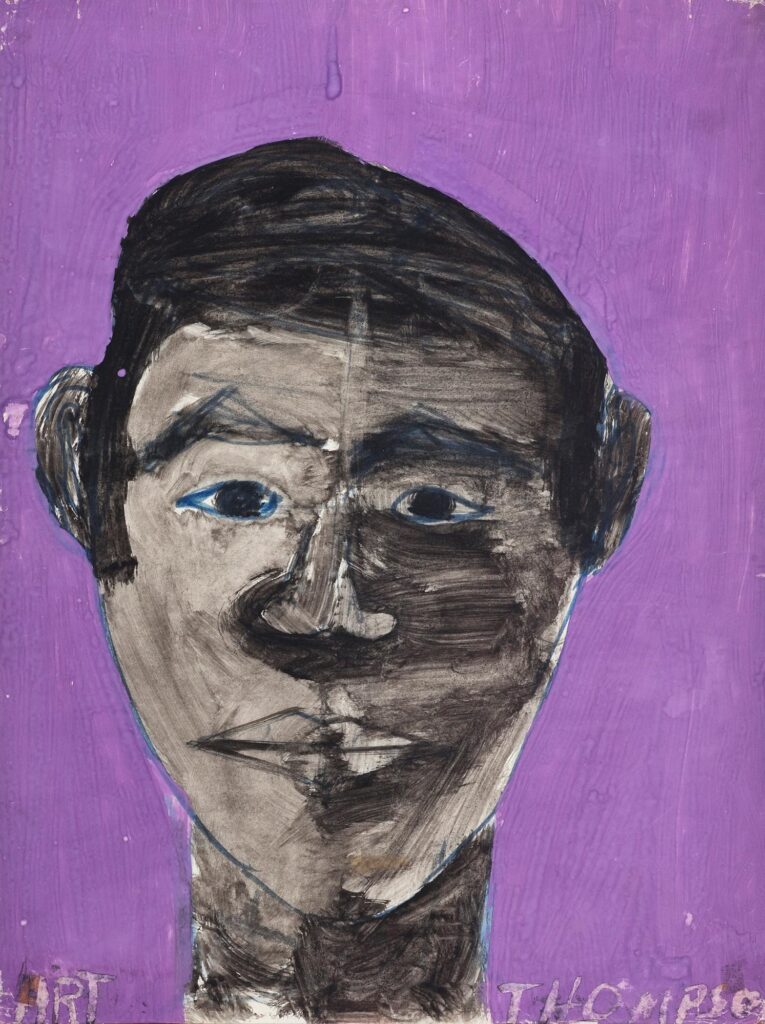
Art Thompson, Untitled (Portrait), late 1950s, private collection.
The early painting Untitled (Portrait) by Art Thompson (1948–2003), a member of the Ditidaht Band of the Nuu-chah-nulth, was created while he was a student at Alberni Indian Residential School, British Columbia, where he was confined from the age of five to age thirteen. It may be among his earliest surviving works. Preserved by his instructor Robert Aller (1922–2008), who kept meticulous records of student artwork, the painting stands today as both a rare visual document and an act of testimony.
The portrait presents a young face divided by light and shadow. One side is rendered with clarity and tonal warmth, and the other submerged in darkness. The composition is stark and frontal. Thompson confronts the viewer directly, but his gaze seems suspended between exposure and concealment. Even without biographical context, the psychological tension is palpable. When placed within the institutional setting of a residential school, the painting becomes profoundly resonant.
The division of the face suggests fracture. It evokes the splitting of identity experienced by many Indigenous children who were forcibly separated from family, language, and culture. Thompson’s later testimony describes physical and sexual abuse, shame, and fear. The duality in this portrait can be read as an early visual articulation of that imposed division between the self that survived internally and the self that was required to perform compliance.
The handling of paint is direct and unembellished. The brushwork is expressive rather than polished, suggesting urgency rather than academic training. The purple ground intensifies the emotional charge of the image, functioning almost as a psychic field. The asymmetry of the facial modelling heightens the sense of imbalance. The portrait does not idealize childhood; instead, it presents it as contested terrain. That this work was created within the confines of Alberni is significant. Even here, within this regime, a child asserts a form of self-representation. The act of painting becomes a declaration of presence. Even if shaped by classroom instruction, the image exceeds its pedagogical function. It registers interiority.

Art Thompson, Opposing Spirits, c.1995, red cedar, cedar bark, 38.1 x 26.7 x 15.2 cm, private collection.

Art Thompson’s self-portrait with the Witness Blanket installation, date unknown, photographer unknown.
Thompson would later become an internationally recognized Northwest Coast artist and master carver. More importantly, he emerged as a courageous Survivor who sought justice not only for himself but for others. As documented in The Defiant 511 of the Alberni Indian Residential School (2025), Thompson was among those who pursued legal action against the Government of Canada, the United Church of Canada, and individual abusers. His testimony helped catalyze broader public awareness of the abuses within residential schools and contributed to the processes that eventually led to a national reckoning.
Seen retrospectively, this childhood portrait can be understood as a precursor to that later defiance. It is an image of survival before language was available to articulate trauma. The face divided by light and shadow anticipates a life lived between concealment and revelation. In the context of children’s art from residential schools, this work refuses sentimentality. It is neither naive nor decorative. It is a record of consciousness under pressure.
Collection of Children’s Drawings

Mark Atleo, Sockeye Salmon, 1960s

Rhoda K. Awa (Rhoda Katsak), Untitled (Community Scene with Airplane), late 1960s

Jeffrey Cook, Raven, n.d.
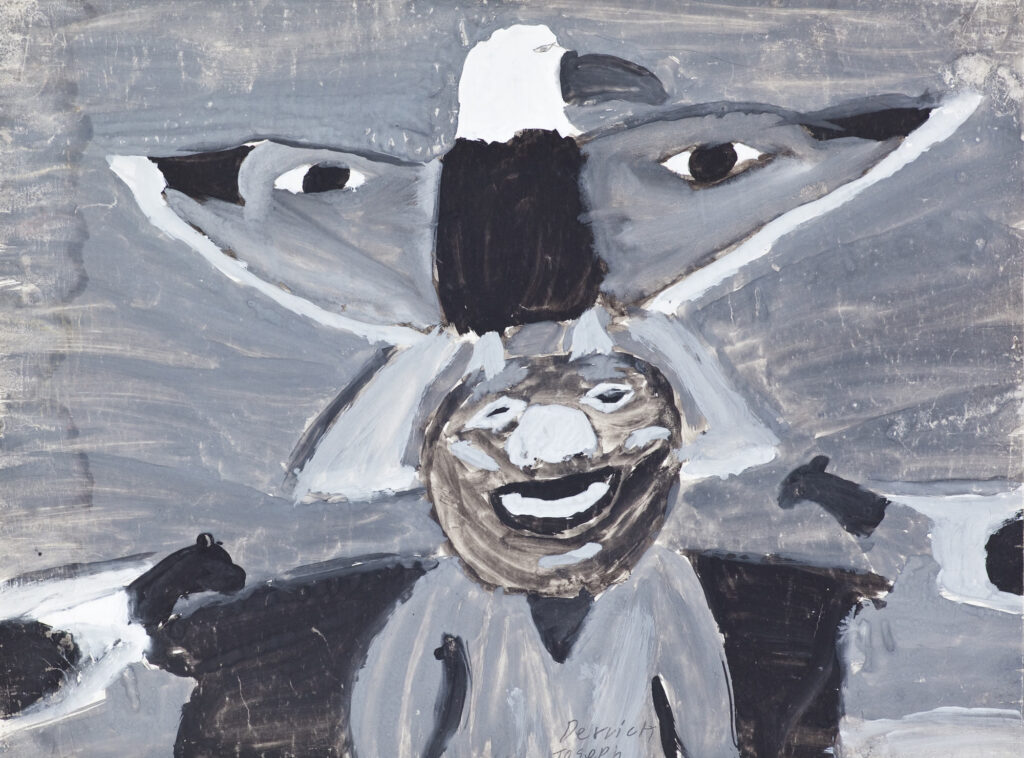
Joseph Derrick, Untitled (Eagle and Figure), 1958–60
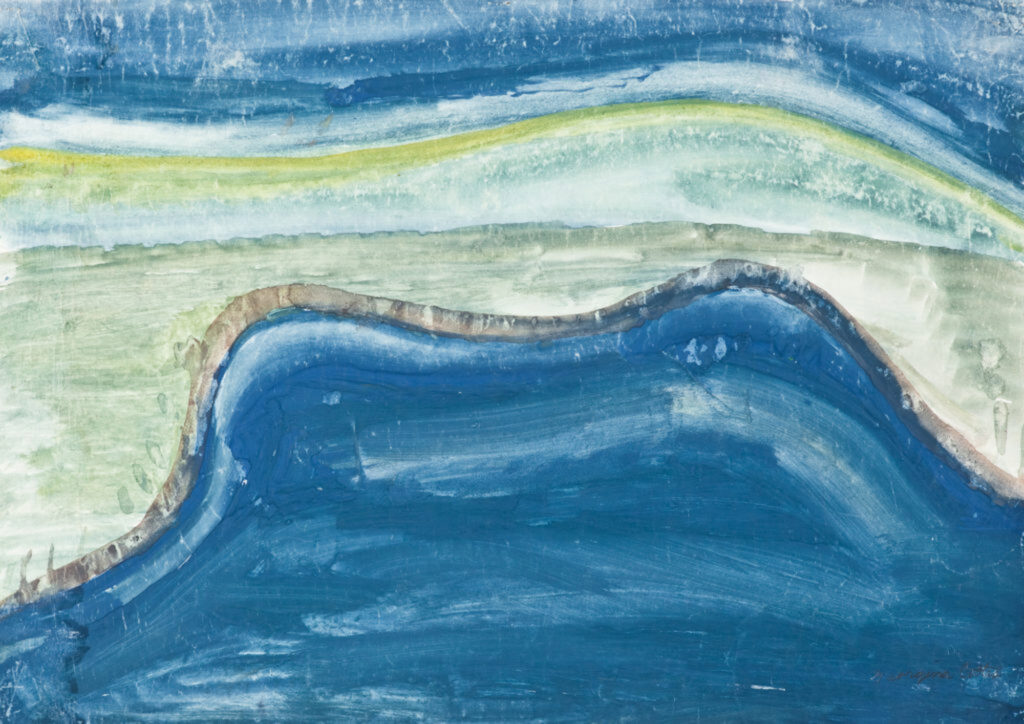
Gina (Daisy) Laing, The Beach, 1954–64

Once-known Stoney Nakoda child at Morley Residential School, untitled drawing, n.d.
Art Thompson, Untitled (Portrait), late 1950s
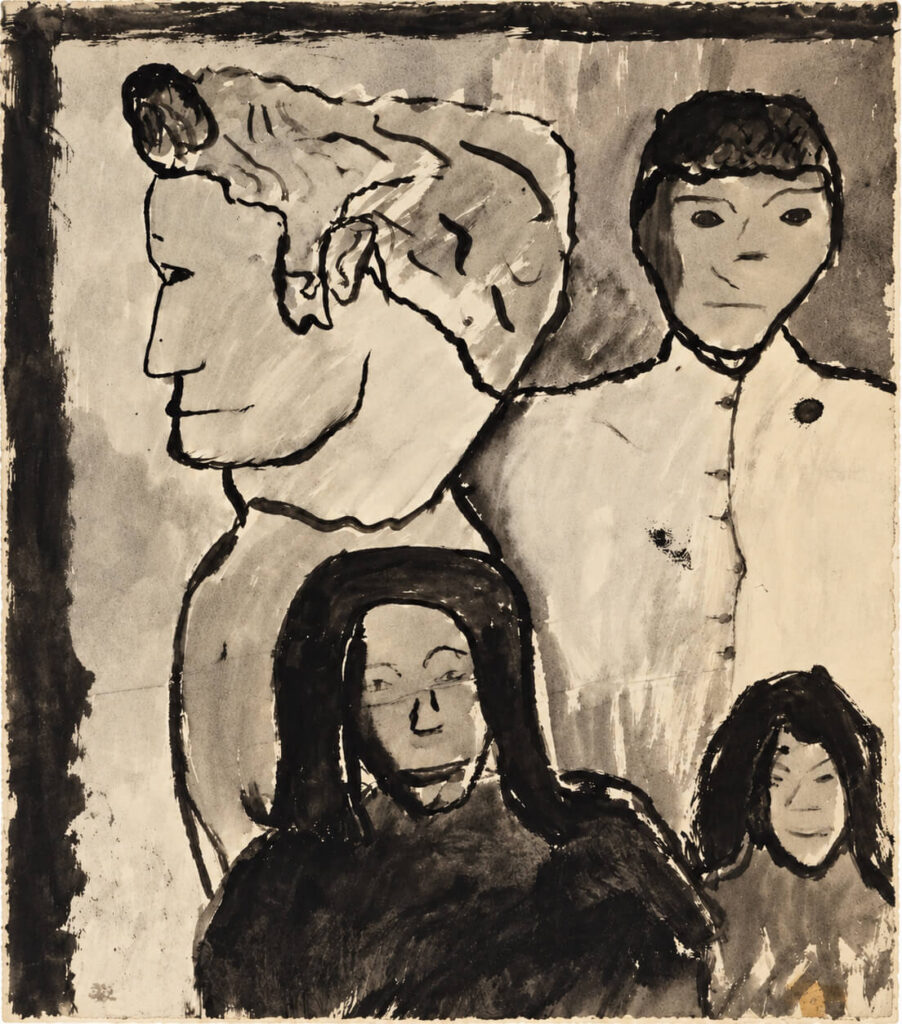
Jim Wastasecoot, Untitled (Family Portrait), 1960