Jeffrey Cook, Raven, n.d.

Jeffrey Cook, Raven, n.d., tempera on paper, private collection.
Jeffrey Cook of Huu-ay-aht First Nation, British Columbia, created Raven while he was a student at Alberni Indian Residential School, presenting a striking image of cultural memory. The bird fills most of the pictorial field, rendered in deep black against a pale background. Its rounded form and large eye command attention, giving the figure an almost iconic presence. The painting’s economy of form reflects the immediacy of a child’s vision while also echoing visual traditions familiar along the Northwest Coast.
Cook went to the Alberni school for thirteen years and attended after-hours art sessions led by instructor Robert Aller (1922–2008), who encouraged his students to paint from memory and experience. Cook’s Raven likely emerged from memories of the coastal environment of his Huu-ay-aht homeland, where ravens are a constant presence in both landscape and story. Within Northwest Coast traditions, Raven is a figure associated with transformation, knowledge, and the shaping of the world itself. By painting this being, the young Cook placed an important cultural symbol onto paper.

Jeffrey Cook, Family Curtain, 2015, photograph by Jeffrey Cook.
The painting’s visual language reinforces this sense of presence. The dark form stands boldly against the background, the bird’s eye appearing alert and watchful. The composition is simple but deliberate, focusing attention on the creature itself. The result is a powerful image that suggests both observation and memory.
Decades later, Cook encountered the painting again when the works created in Aller’s classes were returned to their makers. Cook described the emotional impact of recognizing the work from his youth: “When we left [residential school], we just left with what we had. We never took any of our personal belongings home because they generally threw them away… that is something from my past that I saw and recognized.”
Today, Cook, who received the traditional name of his grandfather Yaalthuu-a in 1985, serves as a hereditary chief within Huu-ay-aht Nation. The Raven image from his childhood painting has taken on renewed significance in his life. He later incorporated the raven motif into his family curtain, a ceremonial textile that records lineage and history and will be passed on to future generations. Reflecting on the purpose of the raven on the curtain, Cook explained:
I spent thirteen years in the residential school system, and this was part of my story and history that I wanted to pass on to future generations. When I was adding the raven, even though I don’t recall the original painting, I had some of my grandchildren help me recreate it. I wanted to envision what I looked and felt like at a young age, and I hope they will carry this legacy forward. I’ve never really told this story until now, but I believe it was part of my healing journey.
Given that we as Survivors have little to no physical mementos from our childhoods, it was important to me to find ways to ensure my painting was preserved and passed on in my family but, too, that I shared my painting and story with other people. I have used my painting to educate broad audiences about residential schools and my own experiences, and this has included public school education to museum programming. Following our traditions, our family curtain will be passed to my grandson. Once he assumes his role as a hereditary chief, he will share the curtain with future generations.
My painting on our curtain officially records the intergenerational impact of residential schools on our people. My intention for placing my painting onto our curtain is so that our people, Nuu-chah-nulth people, will see this history through our cultural ways, and this, too, is a way to continue to educate about our truth.
In this way, a childhood artwork created within the confines of residential school has become part of an ongoing cultural narrative. Raven, therefore, stands as a testament to resilience and continuity. What began as a young student’s painting has become an enduring symbol of identity, memory, and cultural inheritance. Through the image of Raven, Cook affirmed a connection to story and land that continues across generations.
Collection of Children’s Drawings

Mark Atleo, Sockeye Salmon, 1960s

Rhoda K. Awa (Rhoda Katsak), Untitled (Community Scene with Airplane), late 1960s
Jeffrey Cook, Raven, n.d.
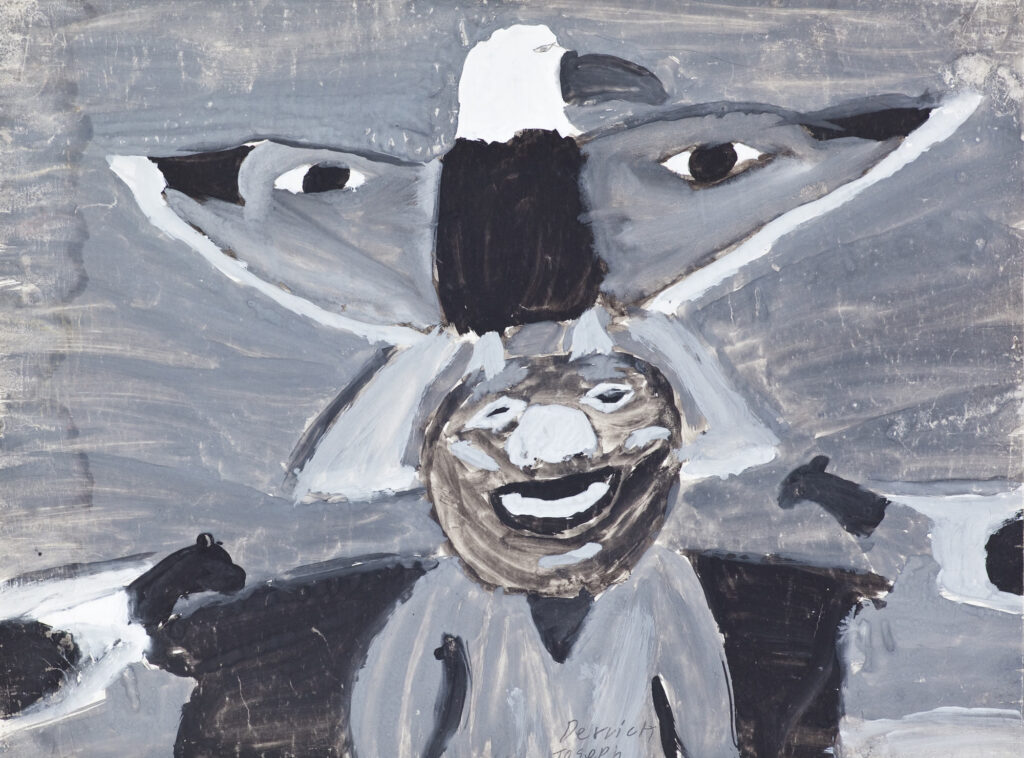
Joseph Derrick, Untitled (Eagle and Figure), 1958–60
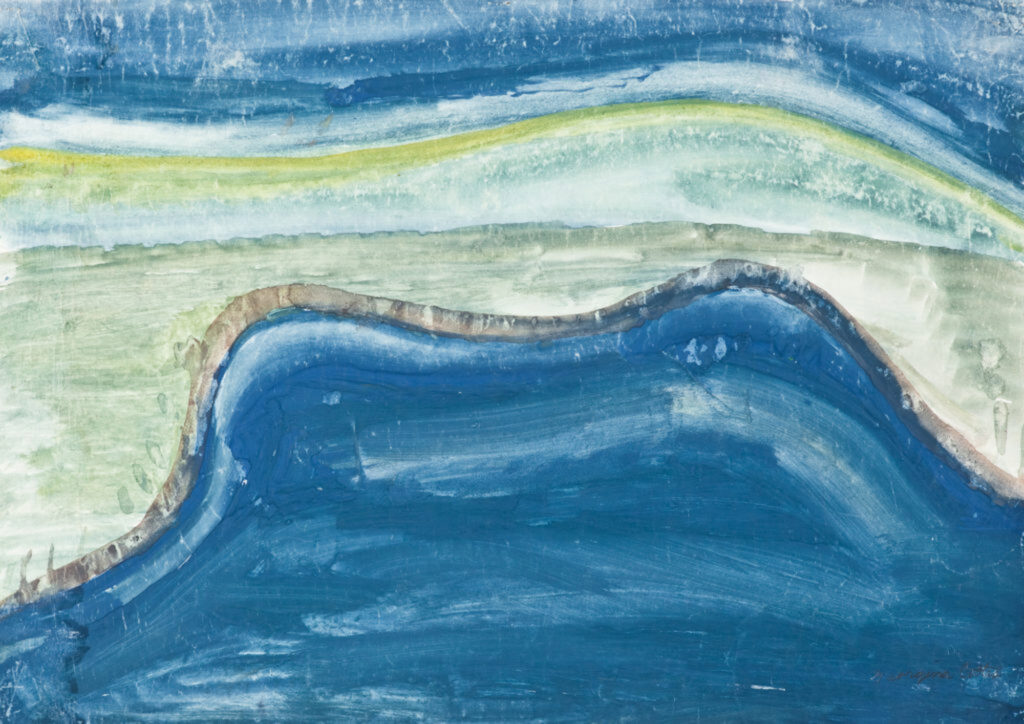
Gina (Daisy) Laing, The Beach, 1954–64

Once-known Stoney Nakoda child at Morley Residential School, untitled drawing, n.d.
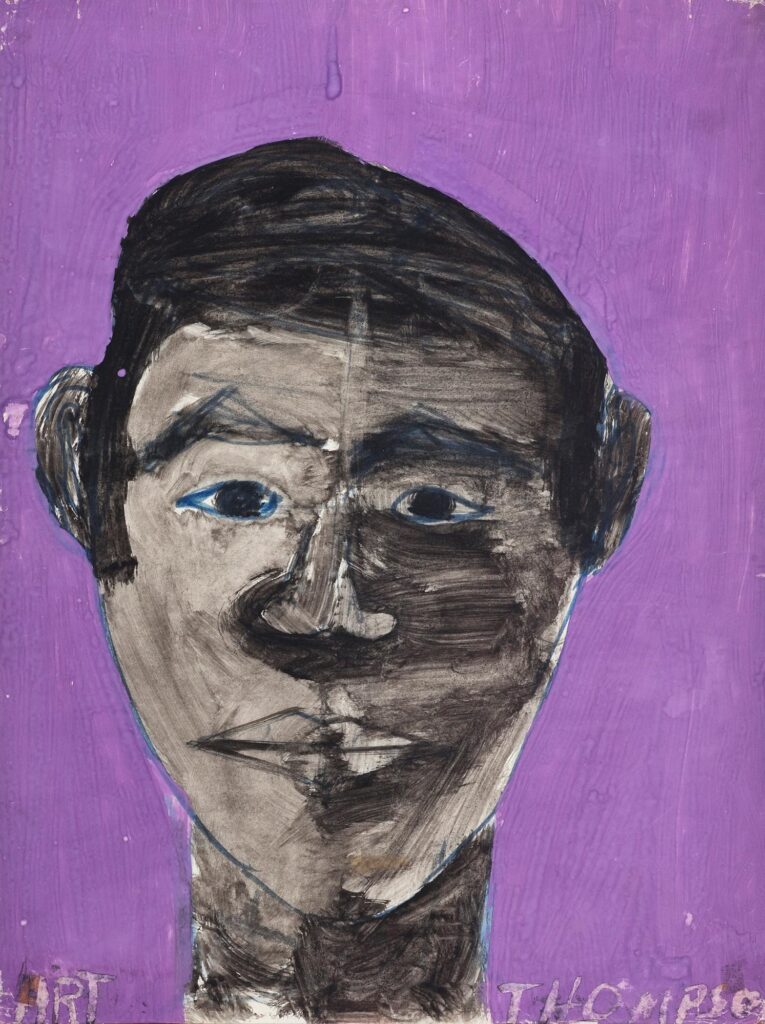
Art Thompson, Untitled (Portrait), late 1950s
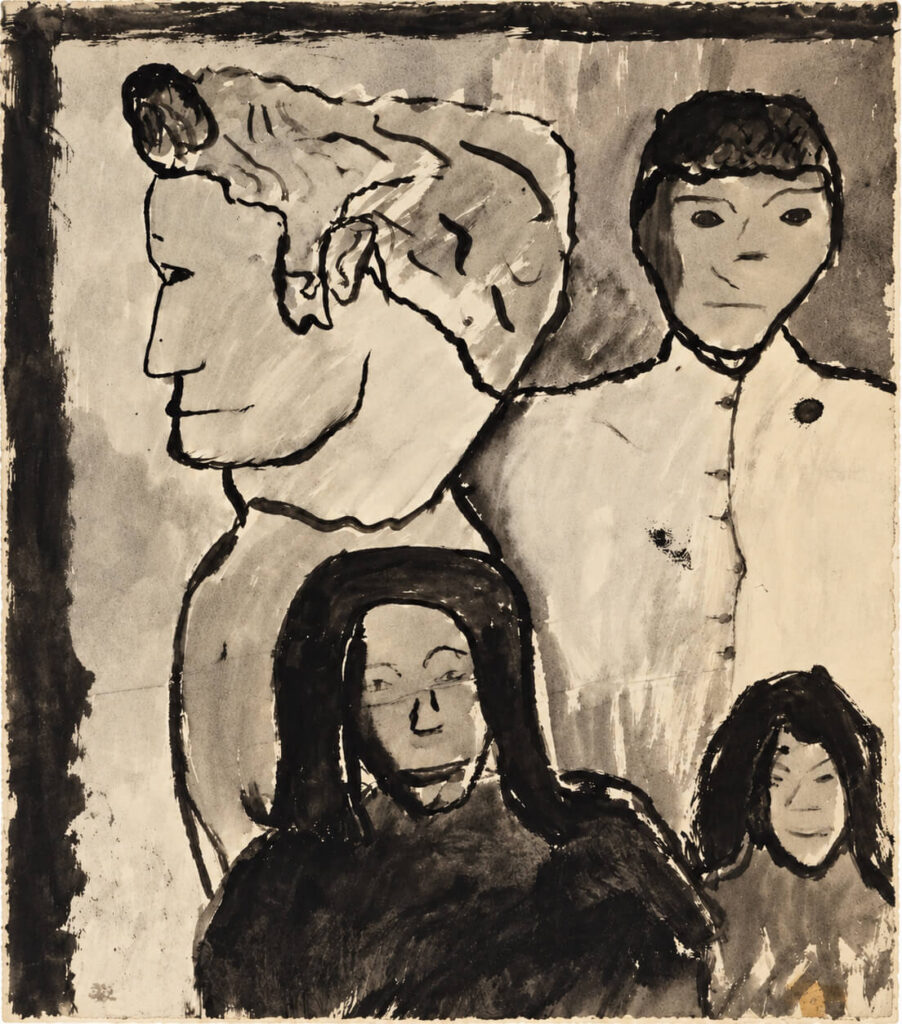
Jim Wastasecoot, Untitled (Family Portrait), 1960