Rhoda K. Awa (Rhoda Katsak), Untitled (Community Scene with Airplane), late 1960s

Rhoda K. Awa (Rhoda Katsak), Untitled (Community Scene with Airplane), late 1960s, National Centre for Truth and Reconciliation, Winnipeg.
The panoramic drawing Untitled (Community Scene with Airplane) presents a northern settlement spread across a snowy horizon beneath a sky tinted red with either sunrise or sunset. Executed in coloured pencil on paper, the work was likely produced in the late 1960s by Rhoda K. Katsak (née Awa), who resided at the Federal Hostel in Igloolik, Nunavut, while attending the local federal day school. The hostel was part of the Northern Affairs Branch Small Hostels Program and operated in Igloolik from 1961 to 1969. When asked about the drawing decades later, she immediately recognized the place: “Yes. I remember everything on this picture except where the airport is located. The two inukshuks are familiar. Definitely Igloolik where I was at residential school.”
The composition unfolds across a wide field of snow animated by small clusters of activity. Figures move through the foreground—some running, some hunting, others travelling with dog teams. Scattered across the landscape are houses, igluit, sleds, and dogs. Two inuksuit stand in the distance as familiar markers within the terrain. The drawing conveys a vivid sense of daily life in the community, where traditional practices of travel, hunting, and dwelling remain central to the landscape.
At the centre of the image, an airplane approaches the settlement from above. Its elevated position gives it visual prominence and anchors the composition. In the drawing, several figures appear to raise rifles toward the plane while others run across the snow. Rather than signalling simple hostility, this moment may represent the charged drama of arrival. The spatial arrangement of buildings across the middle ground further reflects the social geography of the settlement. Structures associated with Qallunaat (non-Inuit) authority, such as the Hudson’s Bay Company store and what appears to be a church or school, stand apart from Inuit dwellings and igluit.
Katsak, who grew up in Igloolik and moved to Pond Inlet (Mittimatalik) in 1972, belongs to a transitional generation of Inuit whose childhood coincided with the shift from life on the land to settlement life and federal schooling. Raised initially in Inuit hunting camps before attending school in Igloolik, she later became a senior public servant in Nunavut and co-author of Saqiyuq: Stories from the Lives of Three Inuit Women (2001), a landmark account of the intergenerational Inuit experience.
Untitled (Community Scene with Airplane) functions as a form of visual testimony. Through careful observation of everyday details—dog teams, houses, hunters, and the arrival of an airplane—the young artist mapped a world in the midst of profound transformation. What appears at first glance to be a simple community scene becomes a powerful document of memory and lived experience, recording through the eyes of a child the encounter between Inuit life on the land and the expanding presence of Qallunaat institutions that reshaped northern communities during the twentieth century.
Collection of Children’s Drawings

Mark Atleo, Sockeye Salmon, 1960s
Rhoda K. Awa (Rhoda Katsak), Untitled (Community Scene with Airplane), late 1960s

Jeffrey Cook, Raven, n.d.
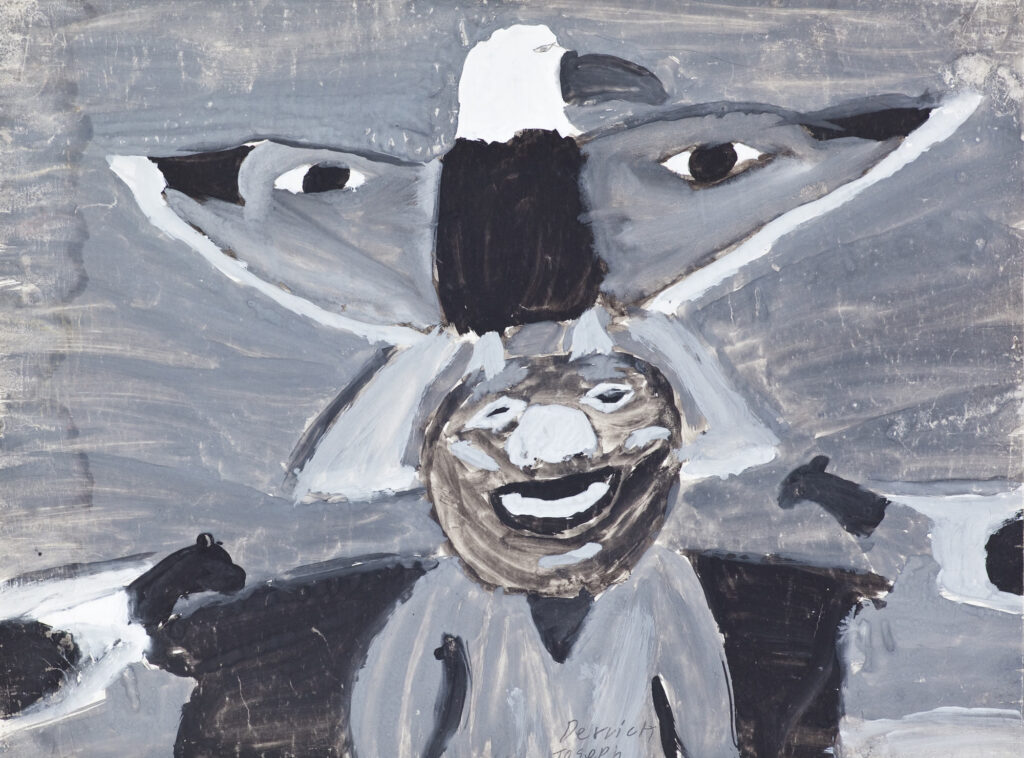
Joseph Derrick, Untitled (Eagle and Figure), 1958–60
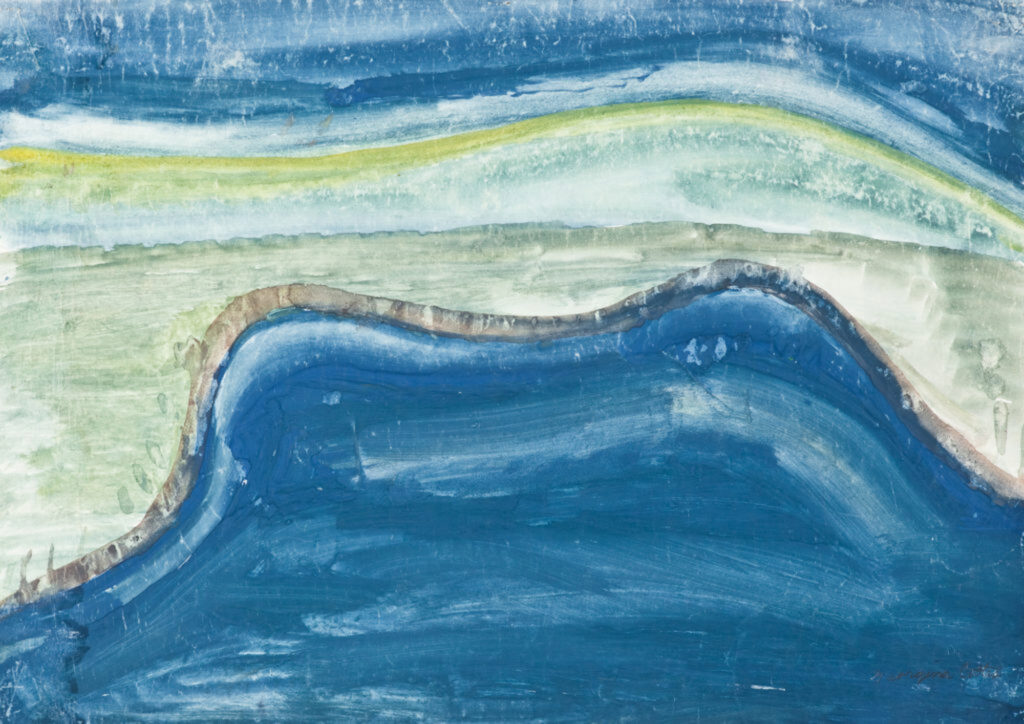
Gina (Daisy) Laing, The Beach, 1954–64

Once-known Stoney Nakoda child at Morley Residential School, untitled drawing, n.d.
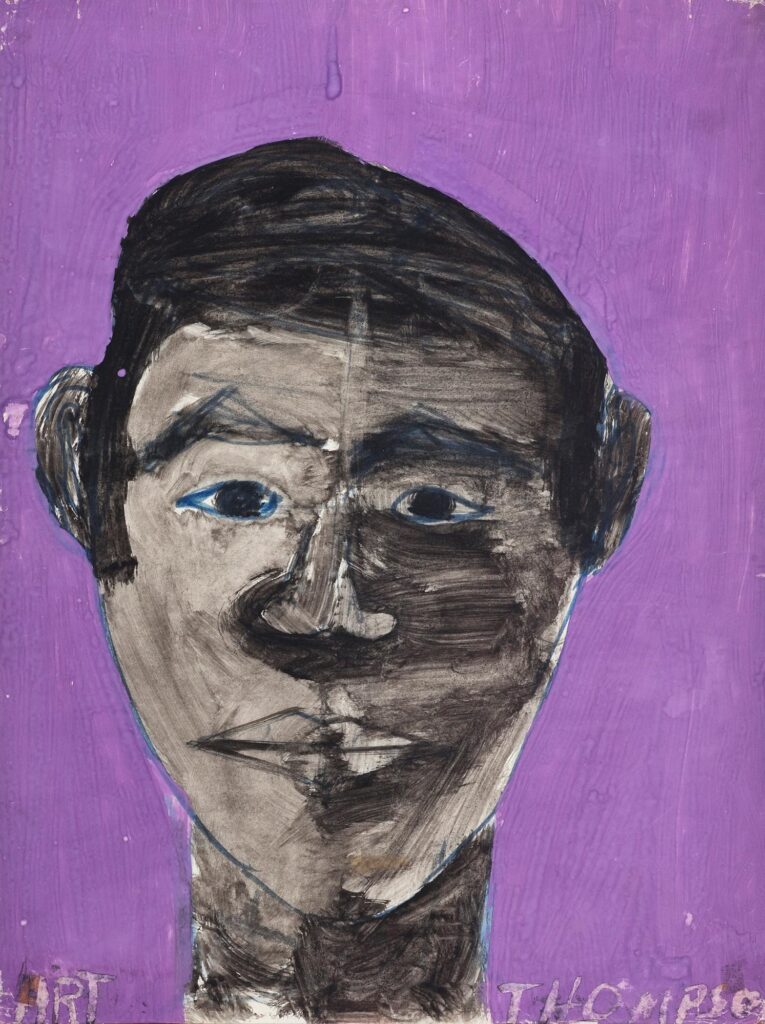
Art Thompson, Untitled (Portrait), late 1950s
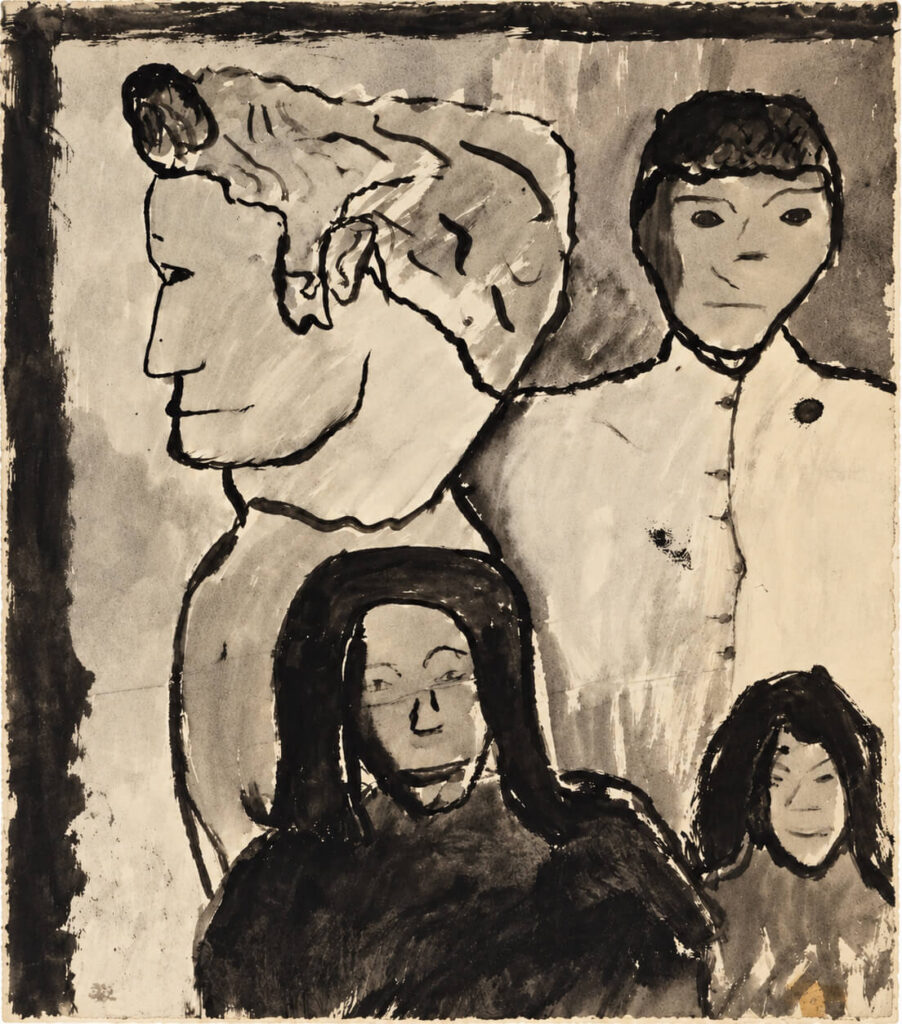
Jim Wastasecoot, Untitled (Family Portrait), 1960