Gina (Daisy) Laing, The Beach, 1954–64
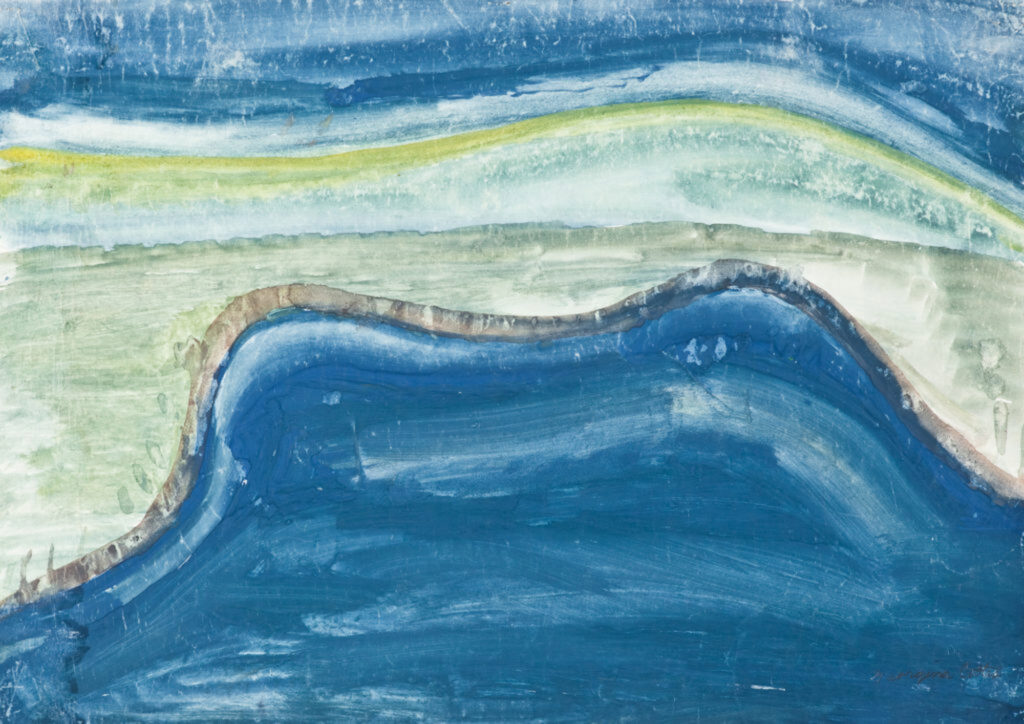
Gina (Daisy) Laing, The Beach, 1954–64, private collection.
The Beach, painted by Gina (Daisy) Laing (b.1947) of Uchucklesaht First Nation, British Columbia, while she was a student at Alberni Indian Residential School, offers a quiet yet powerful example of how children’s artworks from these institutions can carry memory across time. Executed in tempera on paper, the composition is deceptively simple. Bands of colour organize the landscape: deep-blue water fills the foreground, while a gently curving shoreline separates sea from land and soft atmospheric tones suggest distant hills and sky. The painting’s calm rhythm contrasts sharply with the institutional environment in which it was produced. Laing recalled that regular art instruction at the school was governed by compulsion—“we had art in class and had to do it a certain way otherwise you get punished”—making Robert Aller's invitation to paint freely an act of deliberate contrast.
Like Jeffrey Cook, Laing, whose Nuu-cha-nulth name is Ah-ooma-took, benefited from art sessions led by Robert Aller (1922–2008). Rather than teaching formal techniques or European models, Aller encouraged children to paint images that mattered to them. Laing’s painting reflects precisely this impulse. The beach she depicts is the shoreline of her childhood home on Vancouver Island, a place where she played, swam, and gathered food from the water. She would later describe it simply as “our front door”— a space where her father dragged home logs for winter fuel, where the family gathered crabs for bait and perch for the table, and where children competed in swimming, rowing, and an improvised game of pole vault tag using long pieces of cedar. The image carries the sensory memory of that environment. The shoreline arcs gently across the page, forming a protective boundary between land and sea. No human figures appear, but the painting is filled with presence. The land itself becomes the keeper of memory.
The absence of houses is also significant. “I didn't show any of the houses,” Laing explained, “because I knew what happened in some of those houses.” The landscape becomes the space of freedom and belonging. The contrast with school life was visceral: at the residential school, Laing recalled, children “were told to march everywhere—if you didn't have your head straight you got hit.” The beach offered the opposite. “We could do whatever we wanted,” she said. “To just enjoy ourselves, to be real people, and not be ‘little soldiers’.”
The beach painting depicts a time when family teachings and relationships with the natural world were the foundations of daily life. The beach was a place where generations of children grew up and formed their identities. As Gina recalls, her time on the beach echoed her grandmother’s childhood in the very same place; residential schools broke this generational connection to the shoreline.
Laing would later speak openly about the role of art in her healing process. Contemplating the return of her childhood paintings and her decision to share them publicly, she explained, “I want to tell my story. I want people to hear right from the victim and find out what happened. To understand what I went through and feel it too.” Through this act of testimony, Laing transforms a childhood painting into a voice within the larger history of residential schools. The Beach is more than a child’s memory of place. It is an early act of visual testimony that preserves a relationship to land and culture.
Collection of Children’s Drawings

Mark Atleo, Sockeye Salmon, 1960s

Rhoda K. Awa (Rhoda Katsak), Untitled (Community Scene with Airplane), late 1960s

Jeffrey Cook, Raven, n.d.
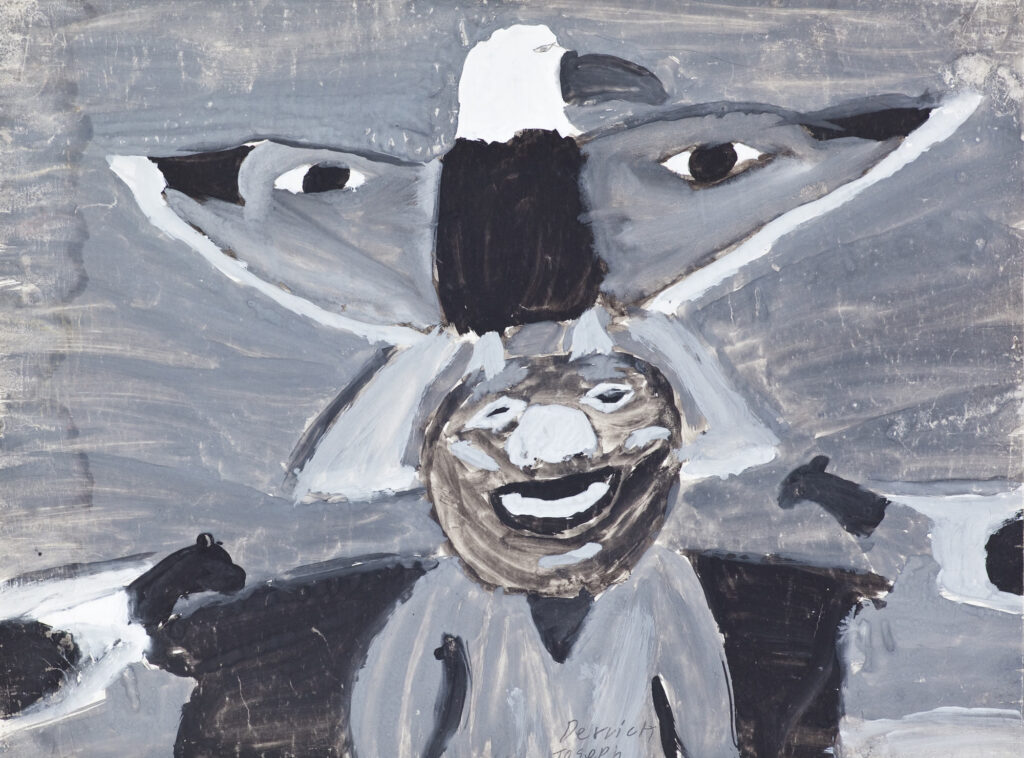
Joseph Derrick, Untitled (Eagle and Figure), 1958–60
Gina (Daisy) Laing, The Beach, 1954–64

Once-known Stoney Nakoda child at Morley Residential School, untitled drawing, n.d.
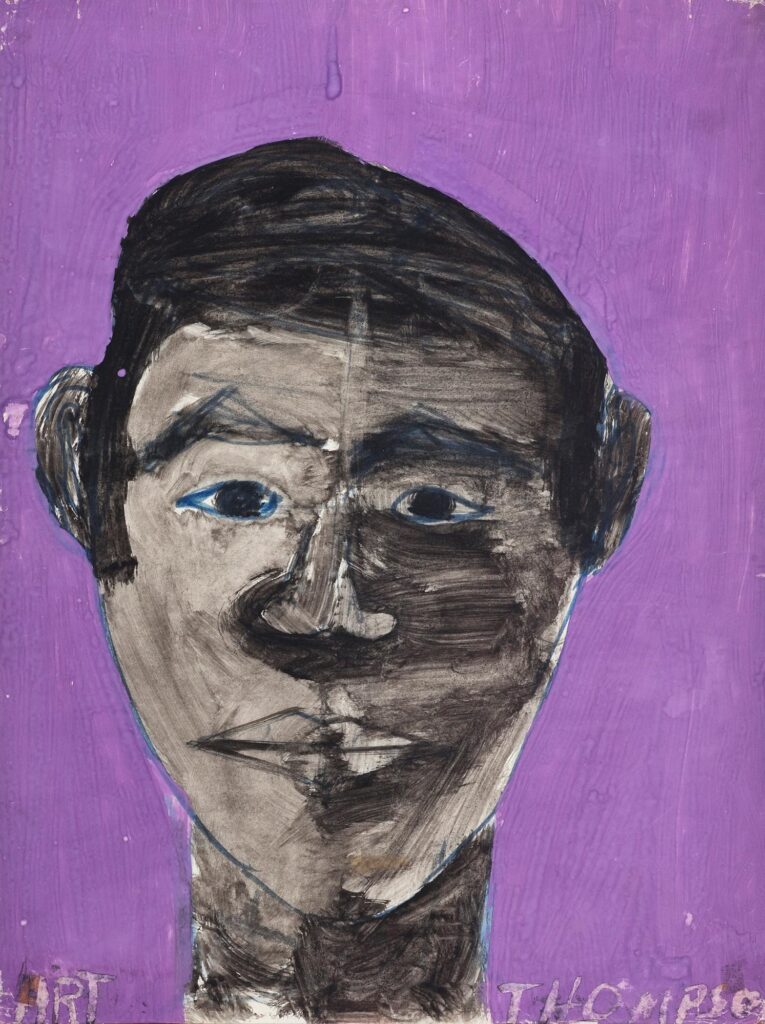
Art Thompson, Untitled (Portrait), late 1950s
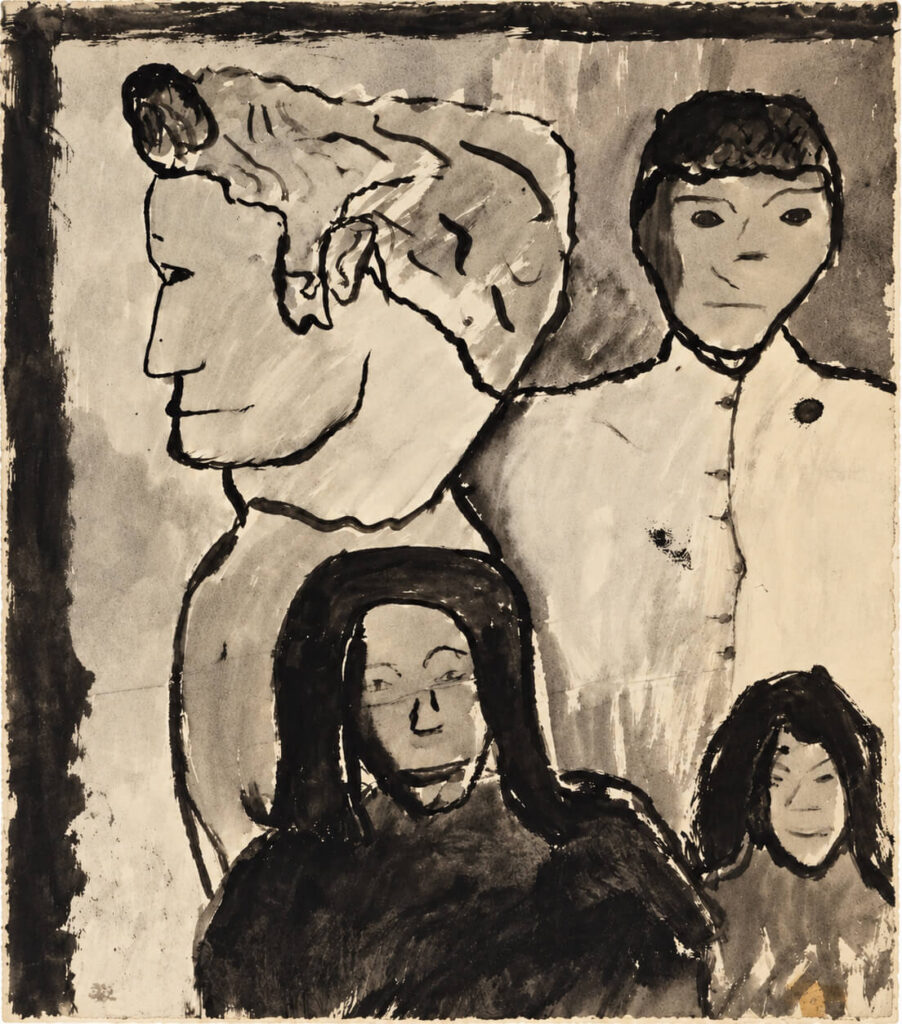
Jim Wastasecoot, Untitled (Family Portrait), 1960