Mark Atleo, Sockeye Salmon, 1960s

Mark Atleo, Sockeye Salmon, 1960s, tempera on paper, private collection.
Residential school Survivor Mark Atleo (b.1952) of Ahousaht First Nation, British Columbia, whose Nuu-chah-nulth name is Kiikitakashuaa, created his painting Sockeye Salmon in the early 1960s, when he was seven years old and attending Alberni Indian Residential School. It depicts a deep-blue salmon marked with bright yellow and green patterns, its body caught within the black lines of a fishing net, surrounded by swirling purple waters. Rendered in tempera paint, the image reflects what he had learned in his early life: before being taken to school, his grandfather had taught him to tie knots and to fish. Created in an institution designed to sever Indigenous children from their languages, cultures, and families, this simple yet vibrant depiction of a salmon in a net is both a personal memory and a profound act of cultural survival.
The art class in which Atleo made this painting was led by volunteer teacher Robert Aller (1922–2008), who encouraged children to paint what was important to them rather than replicate European models. While residential school classrooms typically silenced Indigenous voices, Aller’s approach allowed moments of truth telling through children’s art. Survivors later recalled how many children painted images of home, family, and culture—subjects denied to them in daily life.
In Atleo’s case, the sockeye salmon carries layered significance in Nuu-chah-nulth traditions. Salmon are not only a source of food but are understood as living relatives who return each year, sustaining both physical life and cultural continuity through reciprocal relationships among people, waters, and the more-than-human world. The salmon symbolizes abundance, sustenance, and renewal. As opposed to simply depicting an animal, Atleo was expressing a world view in which human life is inseparable from the cycles of the natural world. In doing so, he asserted visual sovereignty: a child’s capacity to affirm identity and cultural ties, even under oppressive conditions. Years later, he explained that the salmon and net symbolized the circle of life his grandfather had shared with him, linking ancestral teachings from the past to his own experience as a child and to the knowledge carried forward into future generations. In capturing these lessons, the painting preserved ancestral knowledge that the school sought to erase.

Mark Atleo holding his painting with his son, Mark Atleo, Jr., 2015, photographer unknown.
The significance of this painting deepened decades later when it was returned to Atleo as part of a University of Victoria project led by Andrea Walsh, which reunited Survivors with artworks that Aller had preserved. At the national Truth and Reconciliation Commission of Canada event in Vancouver in 2013, Atleo was ceremonially presented with his long-forgotten painting. He was overwhelmed; he had repressed memories of his early years and had no recollection of ever making the piece. Seeing it again was like “turning the telescope the right way,” unlocking grief and suppressed memory while also reconnecting him to his grandfather’s teachings and to the joy of fishing.
The return of the painting became a catalyst for healing. Atleo has described how the image opened him up emotionally, enabling him to speak about his experiences and reconnect with former classmates and family. Sockeye Salmon exemplifies how children’s art created under the shadow of residential schools carries cultural knowledge across time. What began as a child’s memory of fishing becomes a vessel of resilience and testimony, grounded in relationships among people, land, and water, returning decades later as a source of truth, healing, and renewal. Today, Atleo uses the painting as a teaching tool, sharing its story with younger generations and the broader public. In doing so, he transforms a personal act of childhood expression into communal testimony.
Collection of Children’s Drawings
Mark Atleo, Sockeye Salmon, 1960s

Rhoda K. Awa (Rhoda Katsak), Untitled (Community Scene with Airplane), late 1960s

Jeffrey Cook, Raven, n.d.
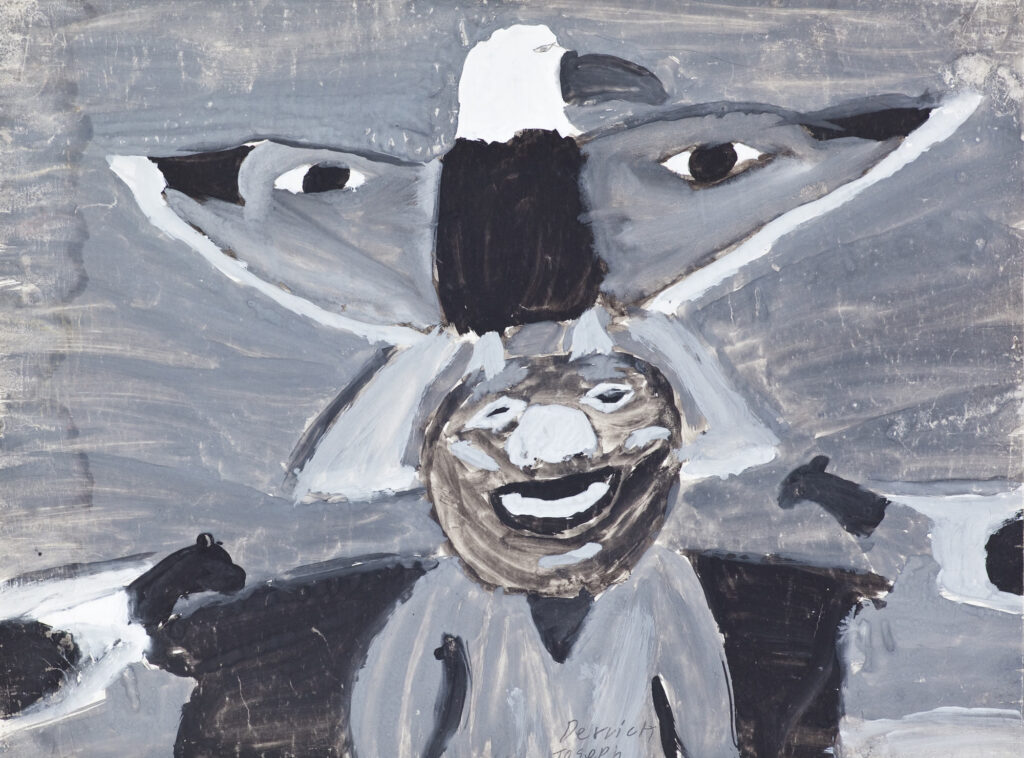
Joseph Derrick, Untitled (Eagle and Figure), 1958–60
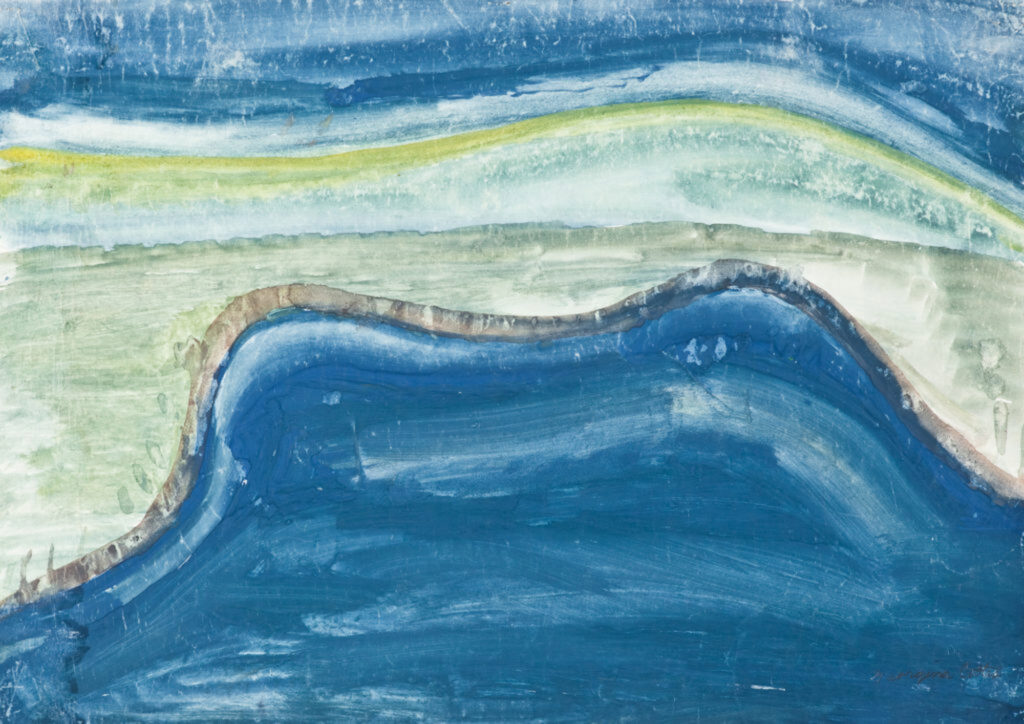
Gina (Daisy) Laing, The Beach, 1954–64

Once-known Stoney Nakoda child at Morley Residential School, untitled drawing, n.d.
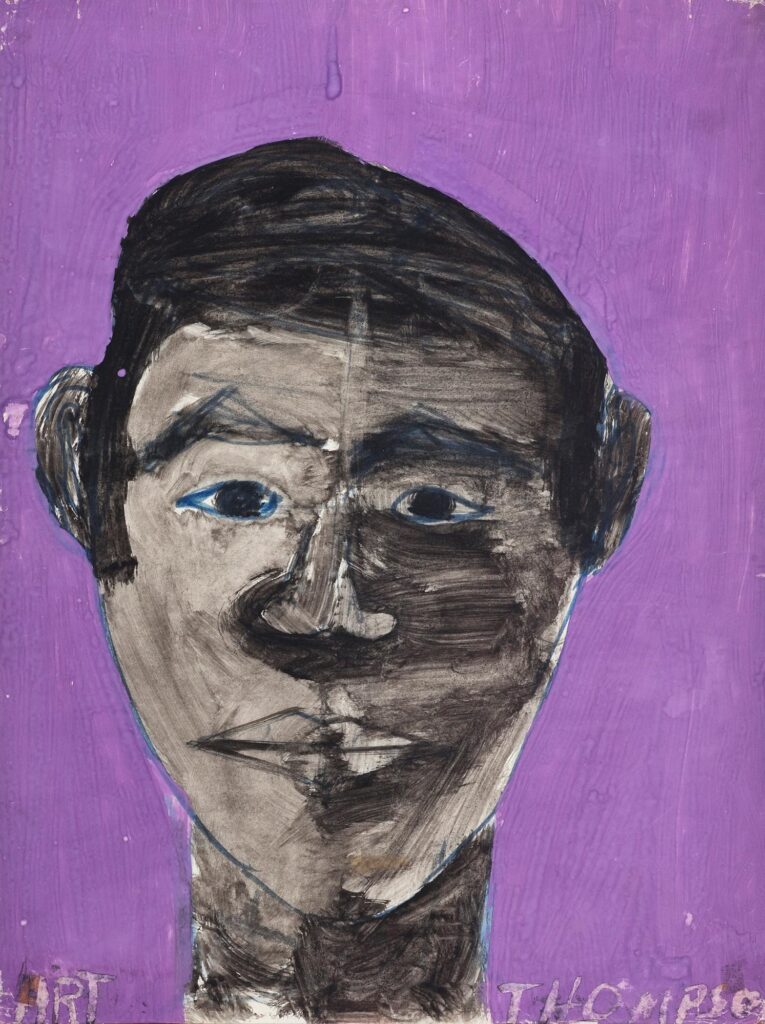
Art Thompson, Untitled (Portrait), late 1950s
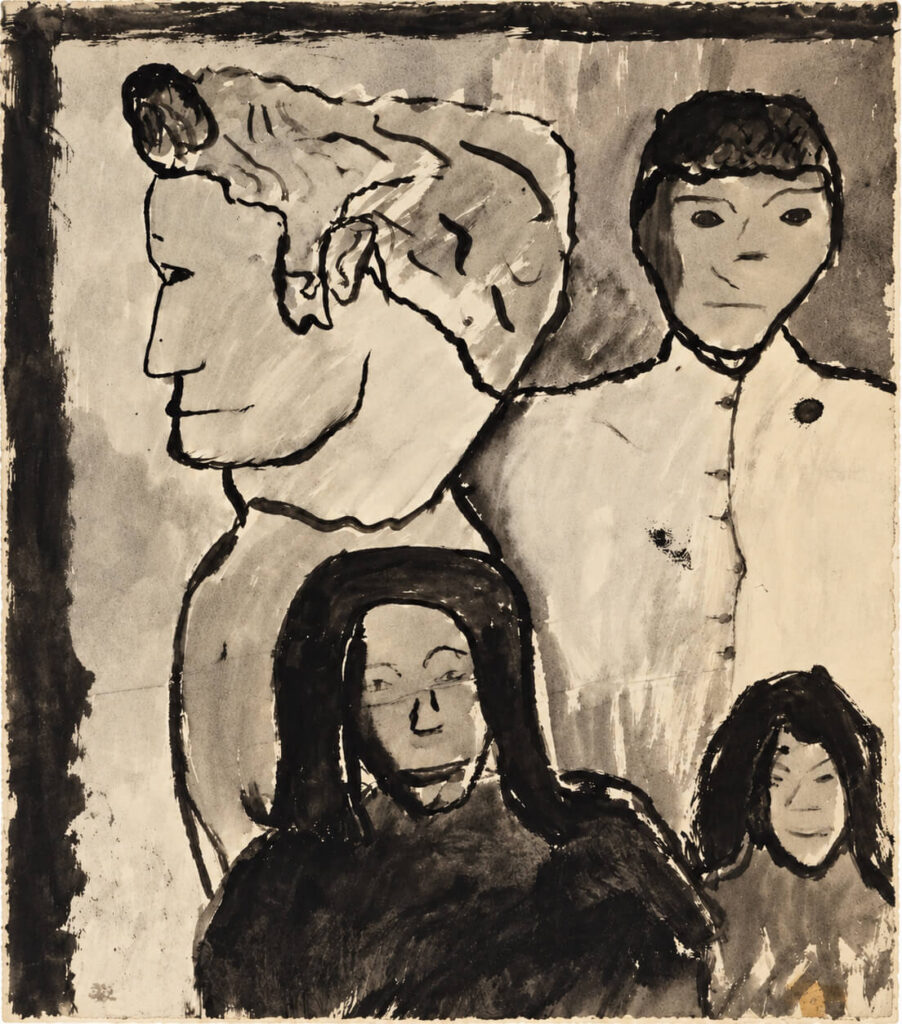
Jim Wastasecoot, Untitled (Family Portrait), 1960