Jim Wastasecoot, Untitled (Family Portrait), 1960
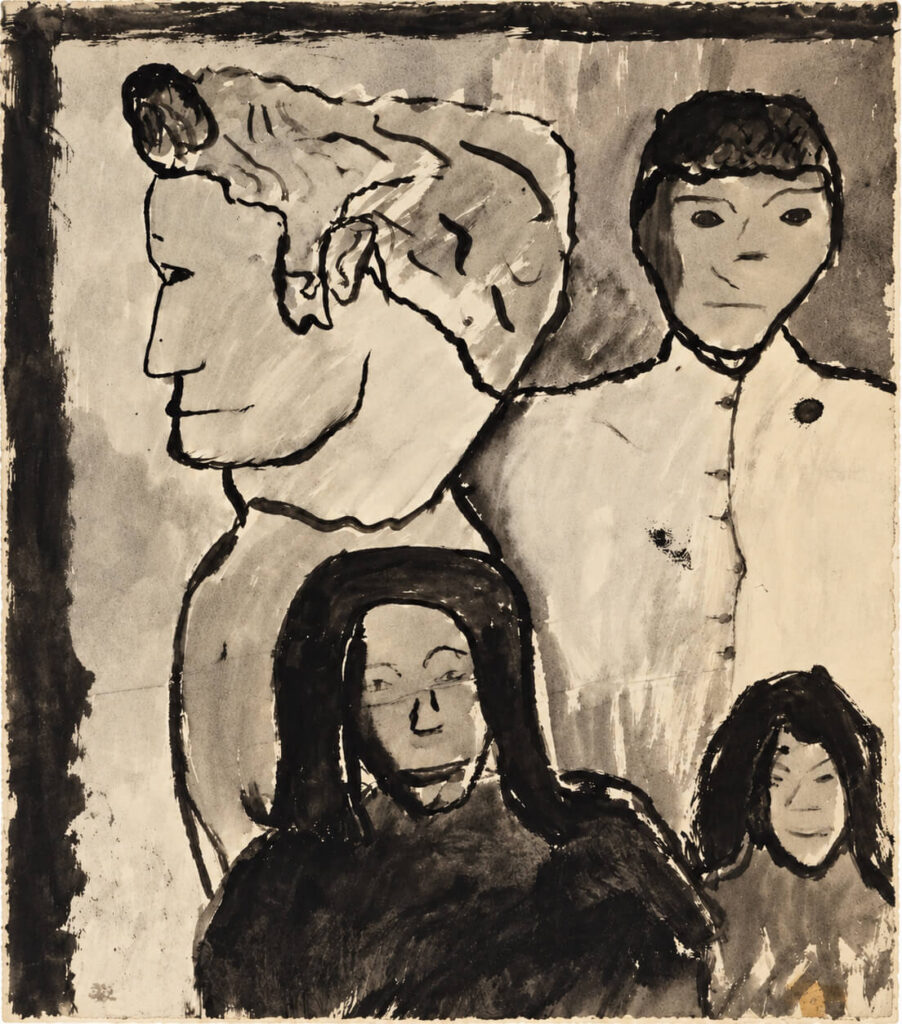
Jim Wastasecoot, Untitled (Family Portrait), 1960, private collection.
Imagine being six, or eight, or ten years old, arriving at Mackay Indian Residential School in Dauphin, Manitoba. Imagine being taken from your mother’s arms, placed on a train or in a truck, and carried far from everything you know: the sound of your own language, the smell of your home, the face of your father. No explanation that makes sense. No comfort that reaches you. Just the terrible knowledge that you are alone, and that the people who love you most are somewhere you cannot reach.
This is what Jim Wastasecoot lived. An Inninew (Cree) child from Peguis First Nation, he arrived at MacKay Indian Residential School around the age of nine. Hundreds of kilometres from home, in an institution designed to strip him of everything that made him who he was, he did something quietly radical: he painted his family.
Four figures, held together on a single sheet of paper. His mother. His father. His brother. Himself. It is an act of longing made visible, not a memory so much as a refusal to forget. Survivors who attended residential schools speak of this again and again: the heartache of separation, the terror of strange surroundings, the loneliness of nights when nothing was familiar.
Jim's own account of arriving at Mackay gives those experiences a devastating specificity:
I arrived at the school by train with my brother, Ken. We were detained in The Pas for a few days while my leg, which had become infected in Churchill, healed. Billeted to a house at Big Eddy reserve, I remember horses running outside, a big river, and nice trees.
It was a bewildering trip. I'd never been away from my parents. I missed them terribly and cried a lot. It was a lonely trip, even with my brother, who did his best to explain everything. I only spoke Cree at this age. Upon arrival at Mackay, Ken went his way, and I went another. And suddenly, I was left to face this strange new world by myself.
A stocky woman, Mrs. Impey, escorted me to the basement of a huge building, where she cut my hair. Then I joined other boys in the junior dorm. A white man came in and gave me clothes to change into. The man shouted something to the boys who were gathered around. The boys lined up and I followed. In this way, I entered the strange new world of residential school, governed by unfamiliar rules, rigid routines and, above all, the church.
At night, lying awake in the dormitory, I sometimes heard the distant whistle of a train. My father worked on the railway, and the sound carried my thoughts home. More than anything, I wished I could follow it back to my parents.
The painting is that longing given form. It is what he missed most, and it is what the school could not take from him: the love he carried for his family. Survivors today, speaking openly about their experiences in ways many could not for decades, tell us how central this grief was. Not the cruelty of the schools alone, but the unbearable absence of family. The not knowing whether you were remembered. The wondering whether home would still feel like home if you ever got back.
When Jim’s painting was returned to his family fifty-five years later, his daughter Lorilee wept. Jim himself had no memory of making it. The painting remembered for him. It had held his family together across more than half a century, waiting to be found. That is what this work is, not a historical artifact, but a love letter that survived.
Collection of Children’s Drawings

Mark Atleo, Sockeye Salmon, 1960s

Rhoda K. Awa (Rhoda Katsak), Untitled (Community Scene with Airplane), late 1960s

Jeffrey Cook, Raven, n.d.
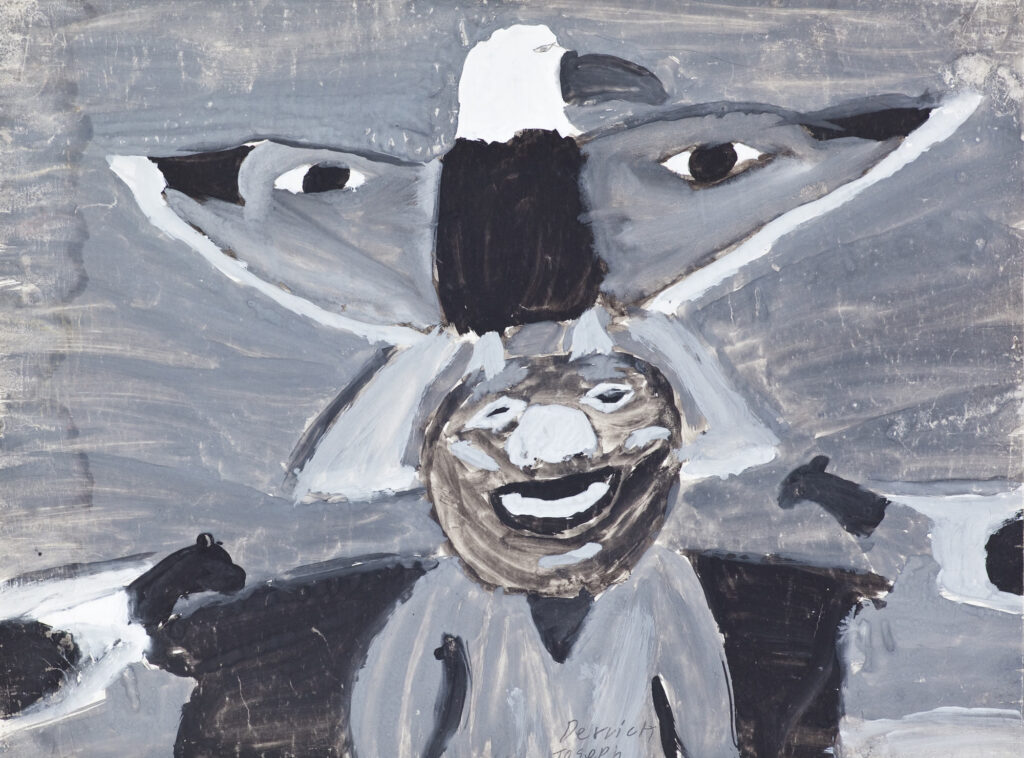
Joseph Derrick, Untitled (Eagle and Figure), 1958–60
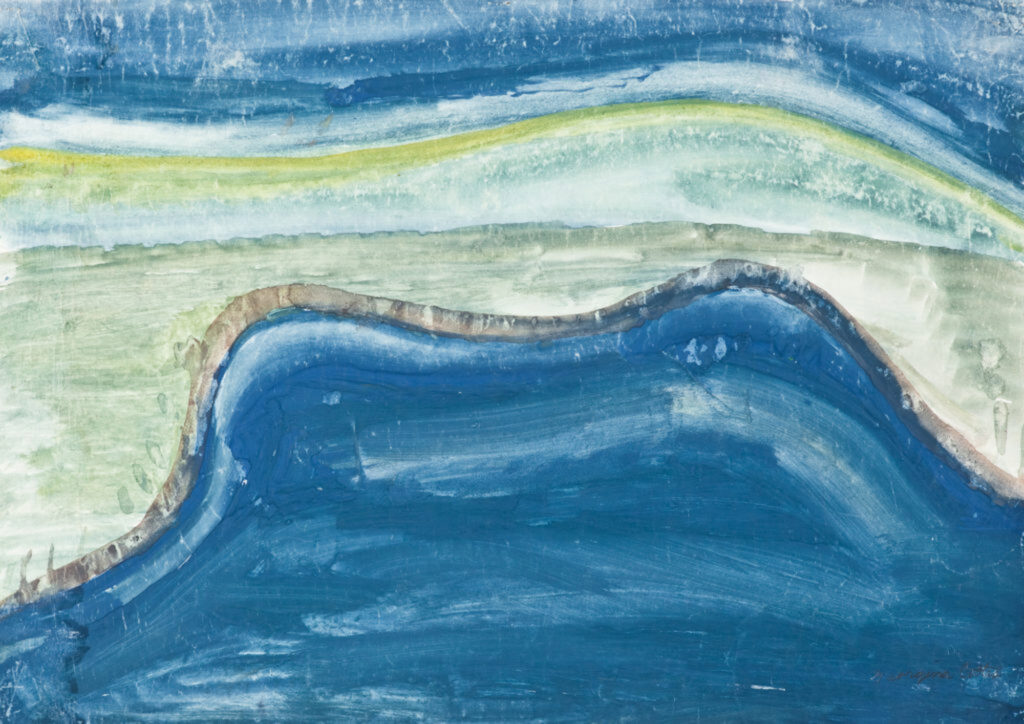
Gina (Daisy) Laing, The Beach, 1954–64

Once-known Stoney Nakoda child at Morley Residential School, untitled drawing, n.d.
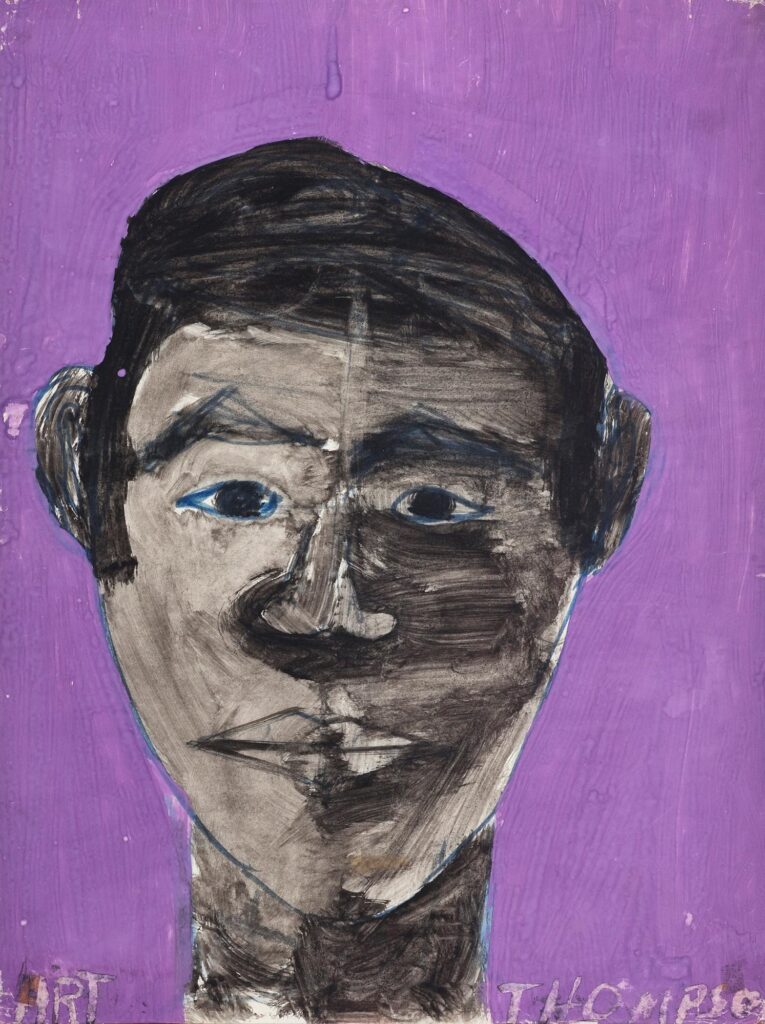
Art Thompson, Untitled (Portrait), late 1950s
Jim Wastasecoot, Untitled (Family Portrait), 1960