Joseph Derrick, Untitled (Eagle and Figure), c.1958–60
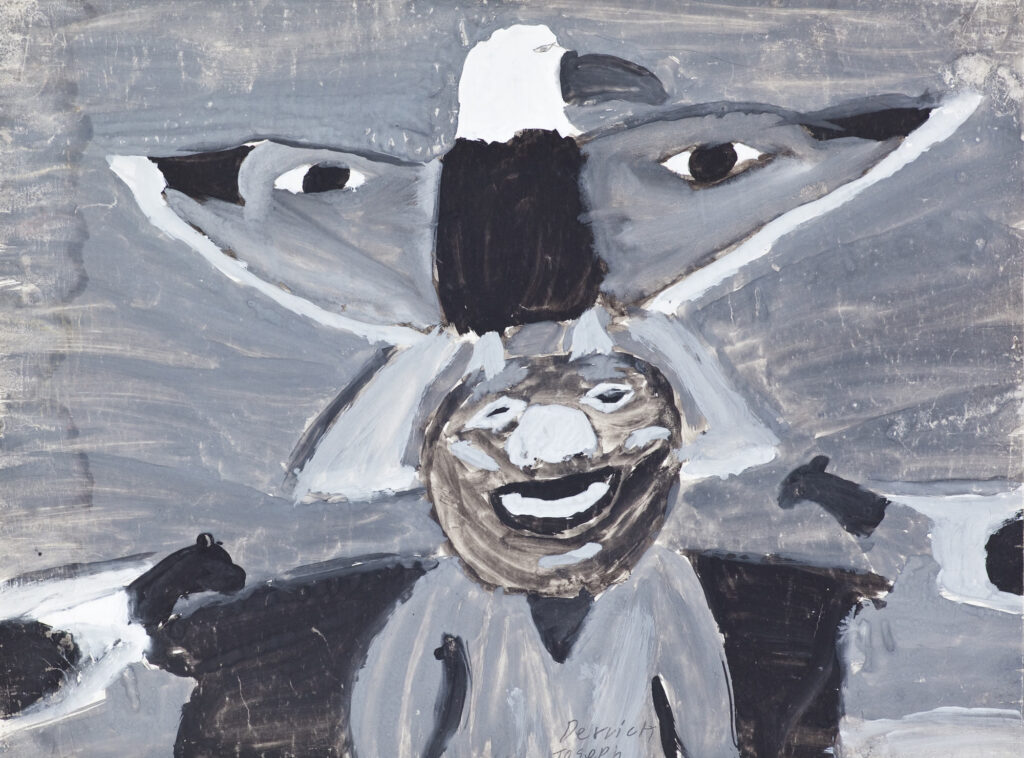
Joseph Derrick, Untitled (Eagle and Figure), c.1958–60, private collection.
The student painting Untitled (Eagle and Figure), produced at Alberni Indian Residential School, British Columbia, between approximately 1958 and 1960, presents a compelling image of relational presence between human and animal forms. A bald eagle occupies the upper register of the composition, its wings extended across the width of the page, while below it, a human figure appears animated and expressive. The composition is direct yet evocative: the eagle’s gaze faces forward, its wings arching outward, while the human figure beneath raises its arms in a gesture that suggests animation, performance, or transformation.

Alberni Indian Residential School, Port Alberni, British Columbia, after 1938, photographer unknown, United Church of Canada Archives, Toronto.
Although created within the institutional environment of the residential school, the imagery resonates strongly with visual principles found in Northwest Coast Indigenous art. The alignment of animal and human figures recalls the stacked and relational structures common in totem poles and crest imagery, where humans, animals, and supernatural beings are often represented as interconnected presences rather than separate categories of life. The vertical relationship between the eagle and the human figure may, therefore, suggest a cosmological or kinship connection rather than a simple narrative scene. In many Northwest Coast traditions, eagles are powerful beings associated with vision, authority, and communication between realms.
Little is currently known about the young artist who produced this work. Like many children who attended residential schools, their personal story remains only partially documented. The painting, therefore, carries particular significance as a surviving trace of their presence. In the absence of extensive written records, the work itself becomes a form of testimony, offering insight into the imaginative and cultural worlds that students continued to carry with them. The circumstances under which the painting was created are also important. During the late 1950s, visiting artist and teacher Robert Aller (1922–2008) held weekly art sessions at Alberni, temporarily transforming classroom spaces into studios where students were provided with paper and poster paints. Many of the resulting works depict animals, community symbols, and scenes connected to the children’s cultural backgrounds.
Seen through the lens of Plains Cree concepts of drawing such as tâpasinahikêwin, the act of making such images can be understood as a gesture of truthfulness and witnessing. In this sense, the painting is not simply an exercise in school art instruction but an act of visual expression grounded in memory, imagination, and cultural knowledge. The eagle hovering above the human figure suggests a relationship of attention and presence, evoking a world view in which humans and animals exist within networks of reciprocal awareness.
This painting forms part of a broader group of works produced by children at Alberni during the late 1950s, many of which depict animals, birds, and powerful cultural symbols. Today, this painting stands as one small but resonant expression within that larger body of work. Preserved through the efforts of Aller and later researchers, these children’s paintings demonstrate how acts of drawing became forms of testimony. Through image making, young artists asserted the persistence of Indigenous visual knowledge, transforming moments of creative expression into enduring gestures of presence, memory, and visual sovereignty.
Collection of Children’s Drawings

Mark Atleo, Sockeye Salmon, 1960s

Rhoda K. Awa (Rhoda Katsak), Untitled (Community Scene with Airplane), late 1960s

Jeffrey Cook, Raven, n.d.
Joseph Derrick, Untitled (Eagle and Figure), 1958–60
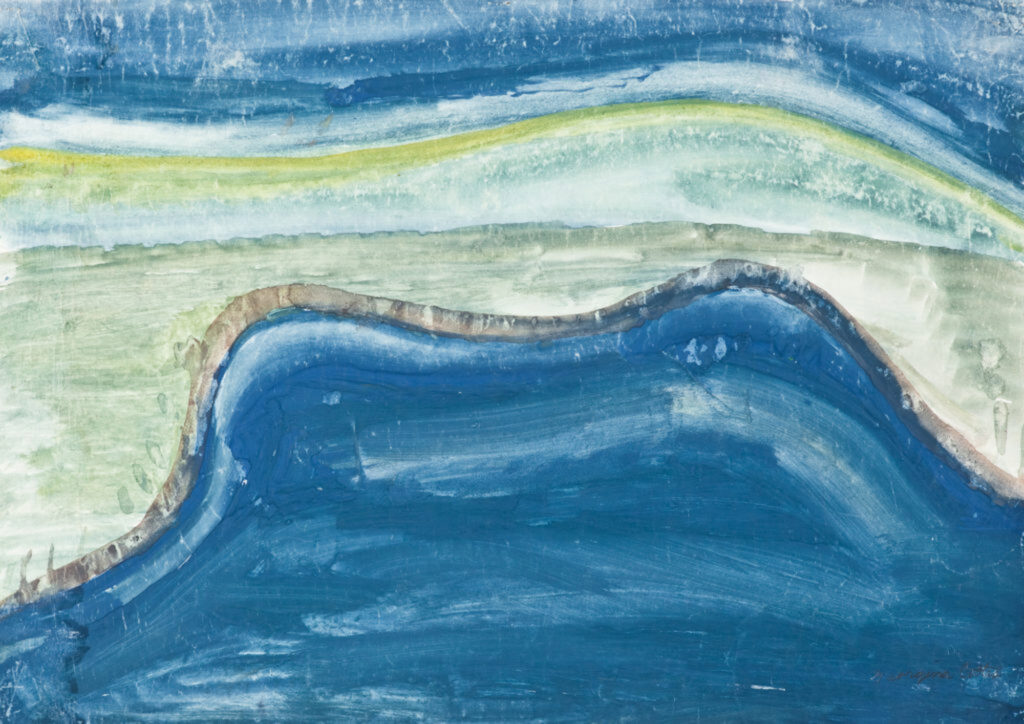
Gina (Daisy) Laing, The Beach, 1954–64

Once-known Stoney Nakoda child at Morley Residential School, untitled drawing, n.d.
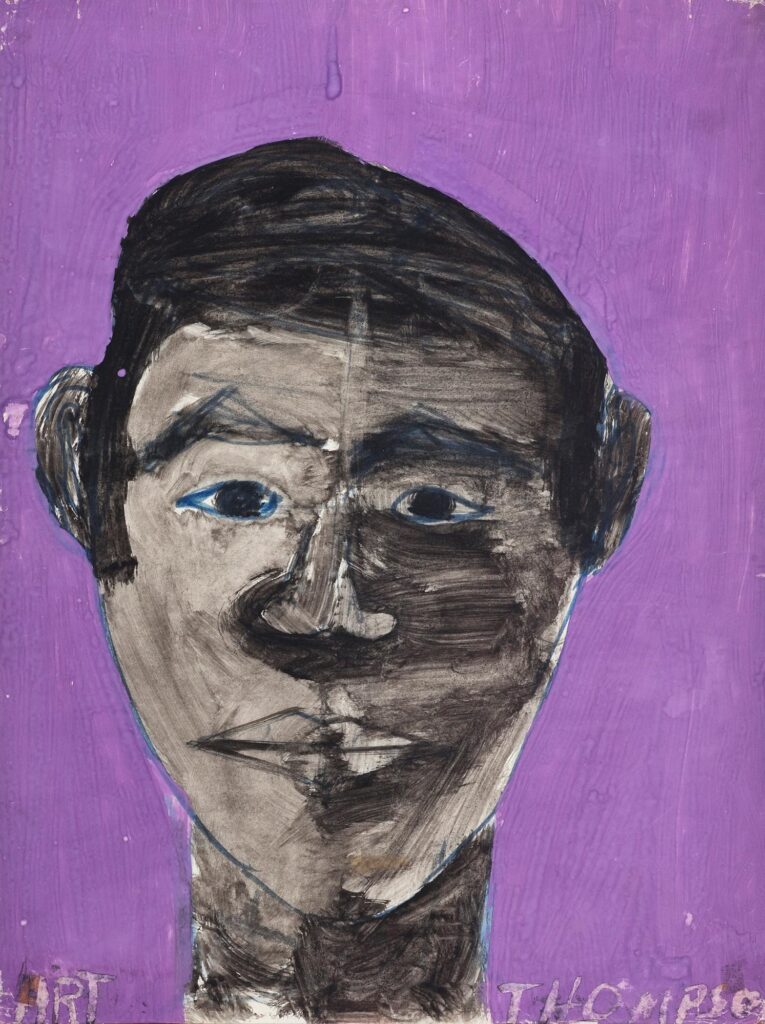
Art Thompson, Untitled (Portrait), late 1950s
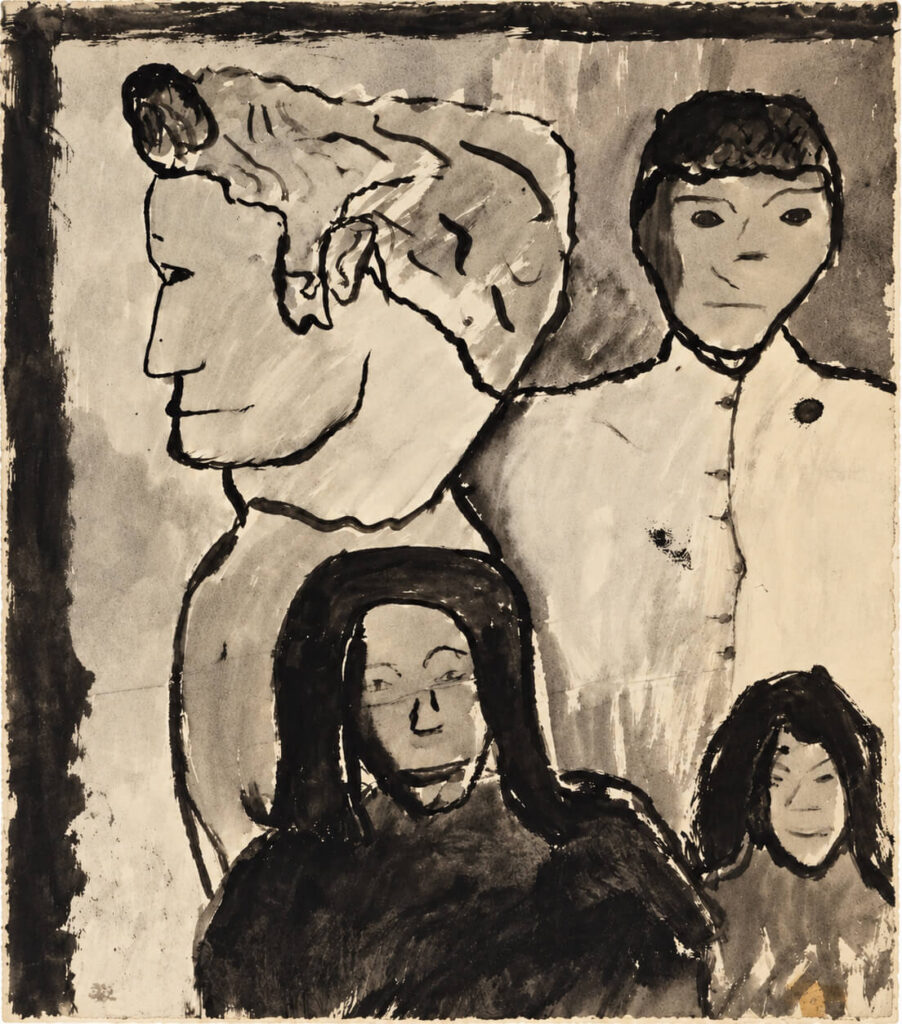
Jim Wastasecoot, Untitled (Family Portrait), 1960