Once-known Stoney Nakoda child at Morley Residential School, untitled drawing, n.d.

Once-known Stoney Nakoda child at Morley Residential School, untitled drawing, n.d., pencil crayon on paper, 23 x 19 cm, Museum of Anthropology, University of British Columbia, Vancouver.
The drawings produced by Stoney Nakoda children at Morley Residential School in Alberta in the early to mid-1930s reveal a striking orientation toward life beyond institutional walls. Rather than depicting dormitories, classrooms, or church interiors, these images turn outward to land, kinship, horses, and daily practice. They present camp scenes, rodeo riders, and carefully rendered moccasins. In doing so, they preserve a visual record of community continuity during a period of enforced separation.

Once-known Stoney Nakoda child at Morley Residential School, untitled drawing, n.d., pencil crayon on paper, 31 x 23 cm, Museum of Anthropology, University of British Columbia, Vancouver.
Morley Residential School, located west of Calgary in Stoney Nakoda territory, operated under Methodist and later United Church administration from the late nineteenth century. Survivors have spoken of lasting trauma, and recent debates about rebuilding the associated church underscore how deeply the school remains embedded in living memory.
Against this historical backdrop, the children’s drawings take on layered meaning. One scene shows a tipi set against rolling foothills, smoke rising gently as figures move across open ground. The landscape is specific to the Bow Valley and the eastern slopes. Another drawing captures a rodeo rider astride a spotted horse, arm raised mid-ride. Rodeo culture among the Stoney Nakoda was not peripheral. By the early twentieth century, horsemanship had become central to identity, shaped by ranching economies and intercommunity gatherings. Rodeo offered a space of skill, pride, and public visibility. That a child chose to draw such a scene suggests familiarity and admiration.
A further drawing of moccasins decorated with floral beadwork underscores the persistence of Plains aesthetic traditions. These designs were learned within family networks, not classrooms. Even under conditions of regulation, children retained detailed knowledge of material culture. The images do not record absence; they record presence.
The survival of these drawings is due in part to Jean Telfer, who taught at Morley from 1931 to 1934 and later at Alberni Indian Residential School in British Columbia. A graduate of the University of British Columbia, Telfer retained correspondence, photographs, and student work from her time in the schools. Her fonds, which include materials relating to Morley and the Nakoda Nation, now form an important archival record. Yet, while Telfer preserved these pieces, the drawings themselves remain the intellectual and cultural property of the children who created them. They are Indigenous visual testimony rather than institutional artifacts.
These works demonstrate that children did not simply internalize institutional discipline. They remembered land. They remembered horses. They remembered beadwork, camp life, and community gatherings. The act of drawing becomes a quiet form of continuity. These images affirm that Stoney Nakoda identity endured as lived knowledge carried in memory and line.
Collection of Children’s Drawings

Mark Atleo, Sockeye Salmon, 1960s

Rhoda K. Awa (Rhoda Katsak), Untitled (Community Scene with Airplane), late 1960s

Jeffrey Cook, Raven, n.d.
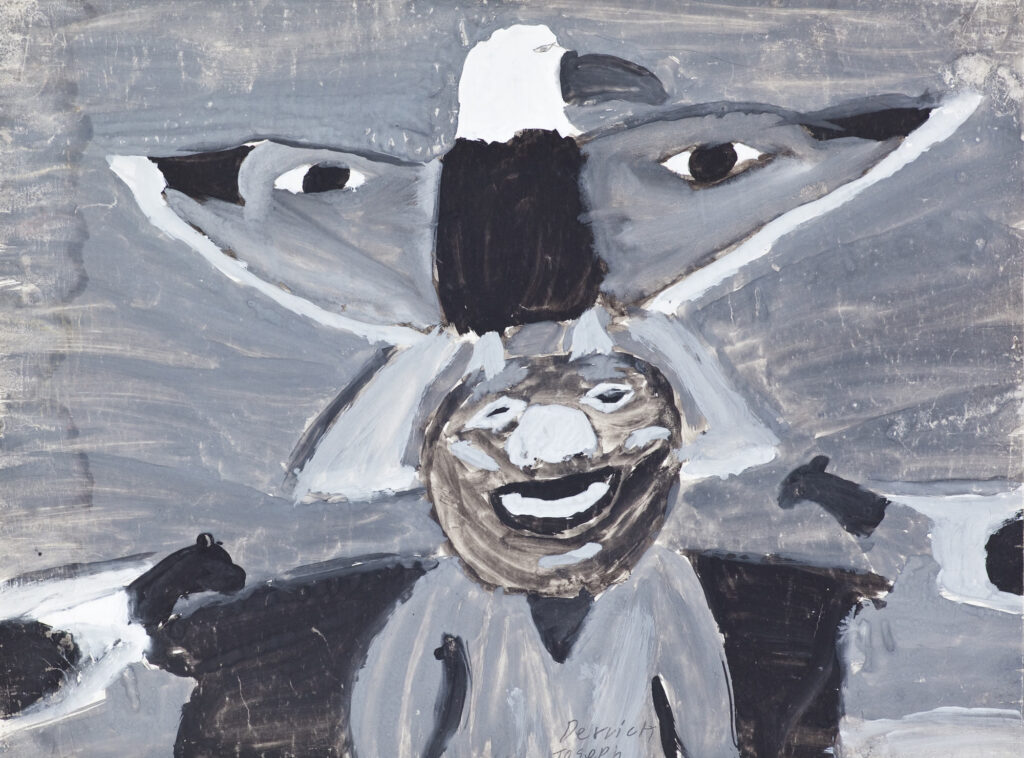
Joseph Derrick, Untitled (Eagle and Figure), 1958–60
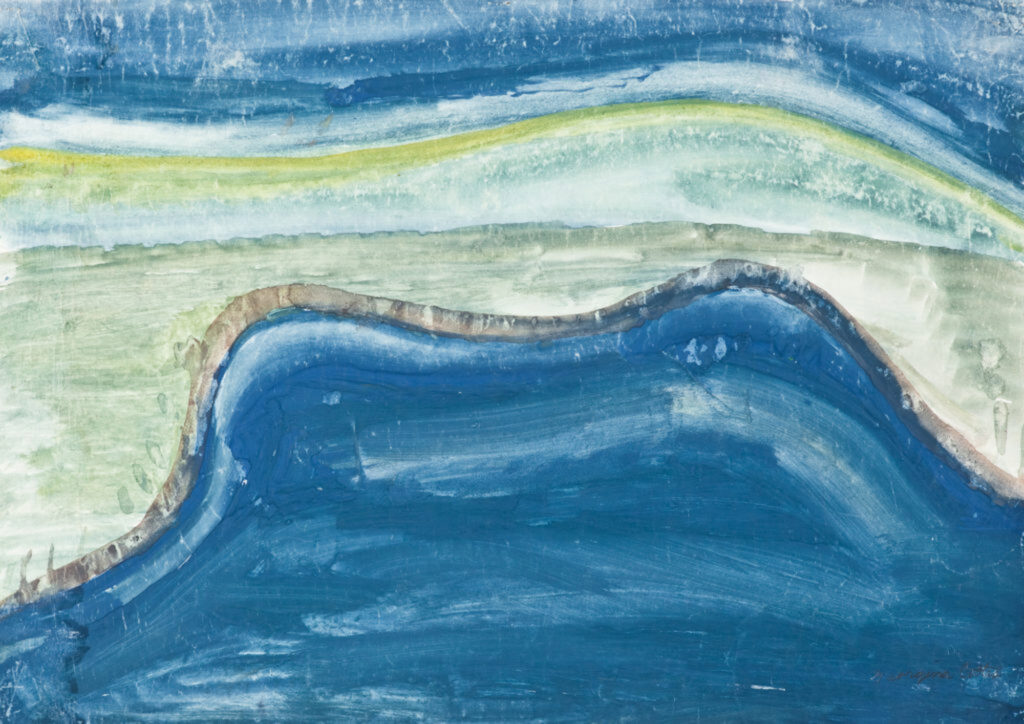
Gina (Daisy) Laing, The Beach, 1954–64
Once-known Stoney Nakoda child at Morley Residential School, untitled drawing, n.d.
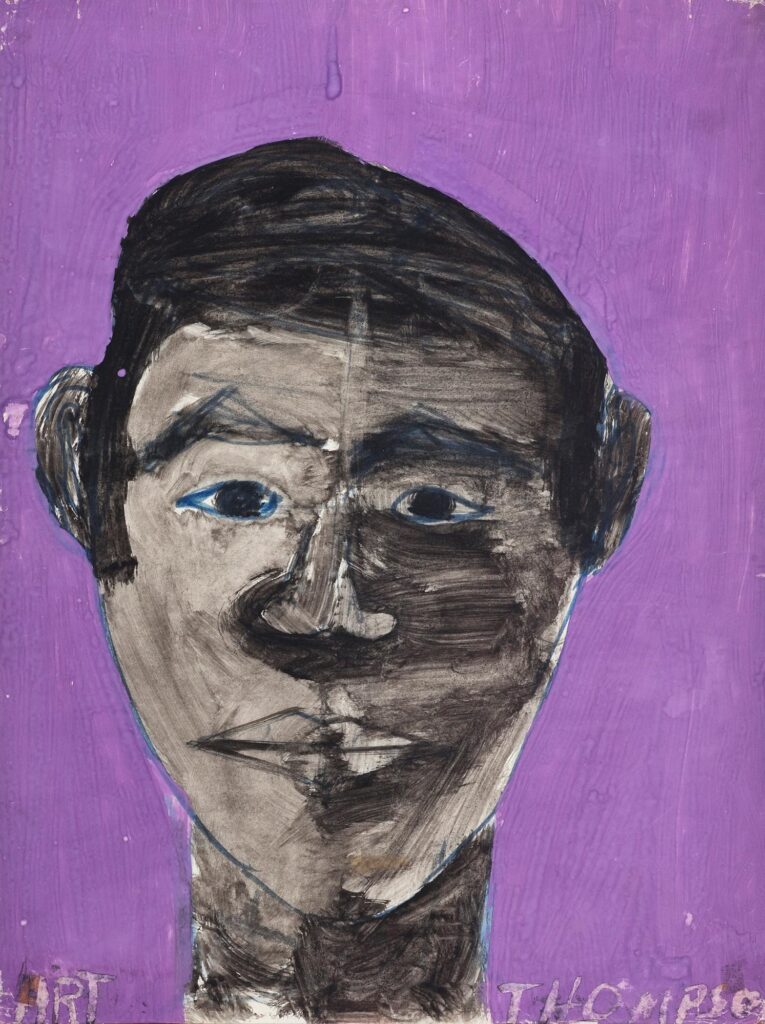
Art Thompson, Untitled (Portrait), late 1950s
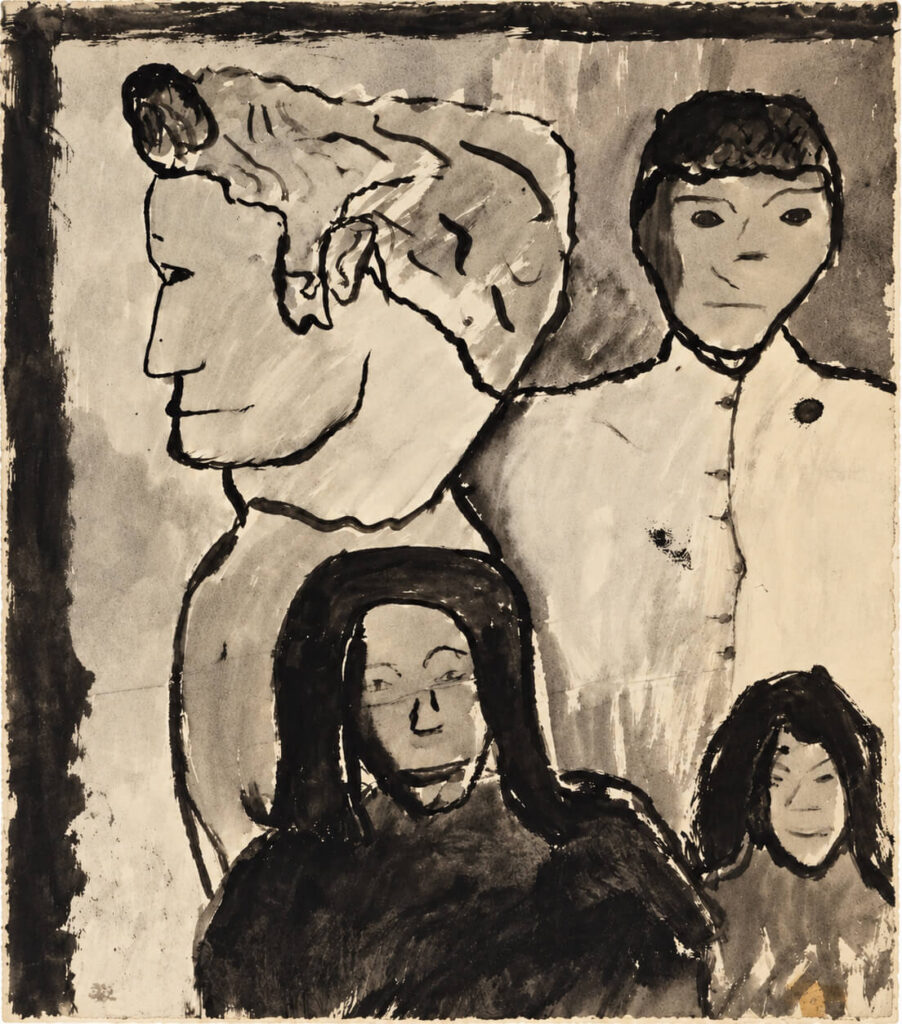
Jim Wastasecoot, Untitled (Family Portrait), 1960