A Descent of Lilies, 1935
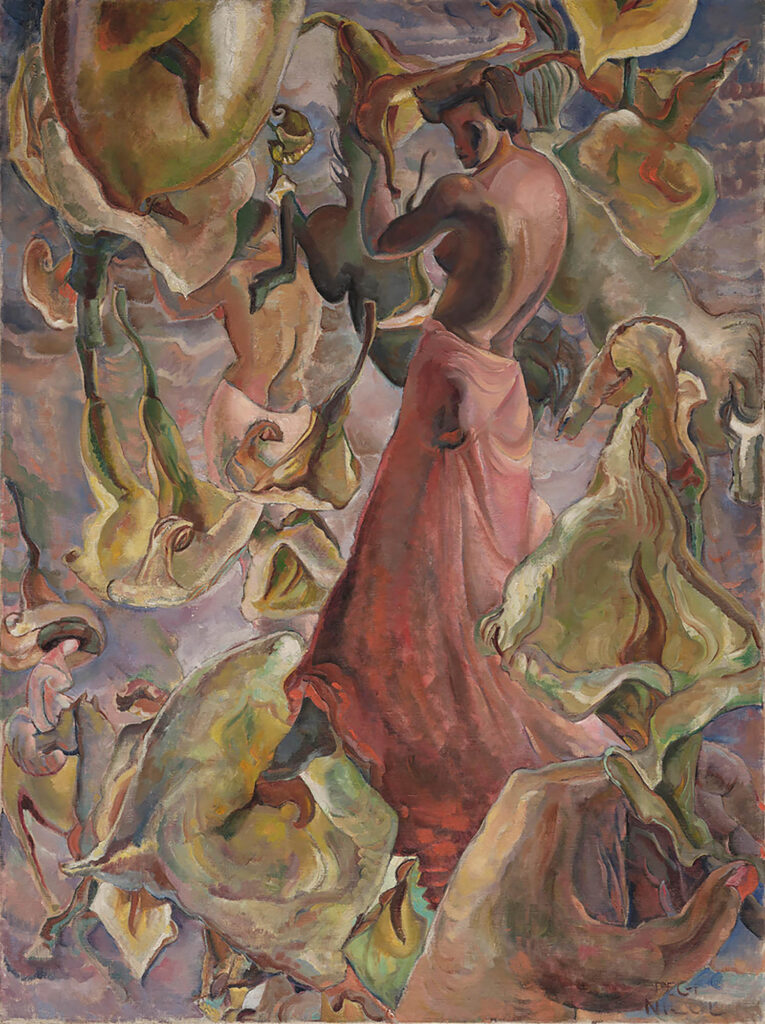
Pegi Nicol MacLeod, A Descent of Lilies, 1935, oil on canvas, 122 x 91.6 cm, National Gallery of Canada, Ottawa.
Described by curator Sarah Milroy as “an extraordinary painting without precedent in Canadian art,” A Descent of Lilies is a fantastical vision of figures, flowers, and animals. It is one of MacLeod’s most ambitious works, synthesizing her interests in self-portraiture, the nude, still life, and modernist experimentation, while also reflecting her engagement with international developments in modern art.
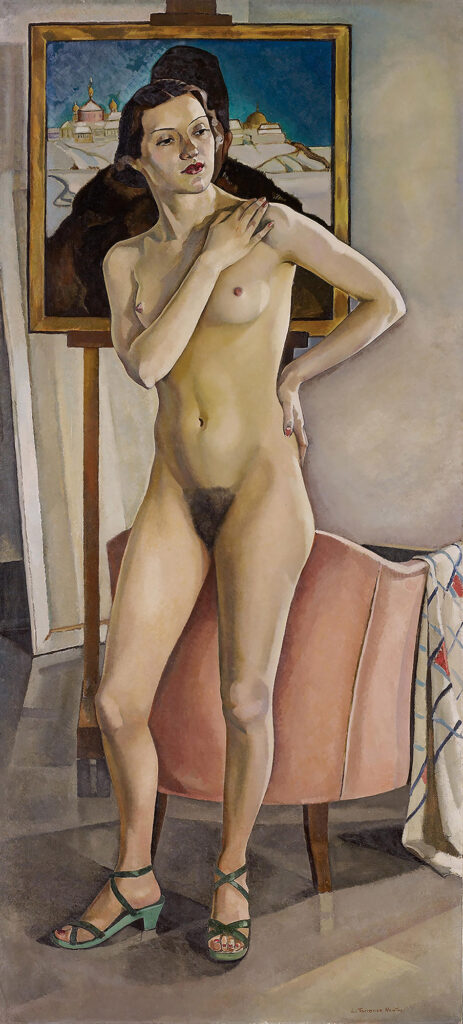
Lilias Torrance Newton, Nude in the Studio, 1933, oil on canvas, 20.3 x 91.5 cm, collection of A.K. Prakash.
In this large canvas, MacLeod’s partially nude body, draped in vibrant pink fabric, appears at the centre and is echoed twice among the assemblage of lilies. A large hand with painted red nails blends almost imperceptibly into the surrounding blossoms, while in the lower-left corner, two figures on horseback emerge, their faces reduced to blocks of colour and flecks of paint, while the horses they ride blend into the surroundings.
MacLeod’s style is most evident in the loose, almost abstract forms of the flowers. Her use of colour creates a sense of fluidity, where clouds, flowers, figures, horses, hands, and fabric seem to appear from and dissolve into one another, lending the composition a dreamlike quality. By positioning her own body at the centre of the canvas and directing her gaze outward, MacLeod asserts a deliberate presence within this otherwise surreal scene.
The painting is part of over a dozen intimate self-portraits executed by MacLeod between 1925 and 1939. At the time, she was responding to European explorations of Surrealism and psychoanalysis and, like French painter Suzanne Valadon (1865–1938), challenging the eroticism of the conventional high art nude. The work is also deeply self-reflexive.
In the lower-right corner, MacLeod depicts her hand grasping a paintbrush that is both tool and flower, a subtle acknowledgement of the labour of artmaking and an assertion of her own authorship within a genre that often objectified women. The fluid lines of paint across the canvas emphasize this process, registering the trace of her gesture. Friend and critic Graham McInnes, writing for the Canadian Forum, overlooked any deeper meaning in the painting to argue that it “is integrated through the decorative arrangement of shapes, and color relationships” in her work.
MacLeod clearly regarded A Descent of Lilies as a major work because she priced it at $300, her highest to date, when it was shown in Toronto in 1935. Though first offered to her supporter Vincent Massey (who also owned the infamous Nude in the Studio, 1933, by Lilias Torrance Newton [1896–1980]), the painting eventually went to architect Humphrey Carver before being acquired by T.E. Nichols, publisher of the Hamilton Spectator. Today, the work remains a landmark of Canadian modernism—a daring self-portrait that merges sensuality, artistic process, and a visionary imagination.
Gallery
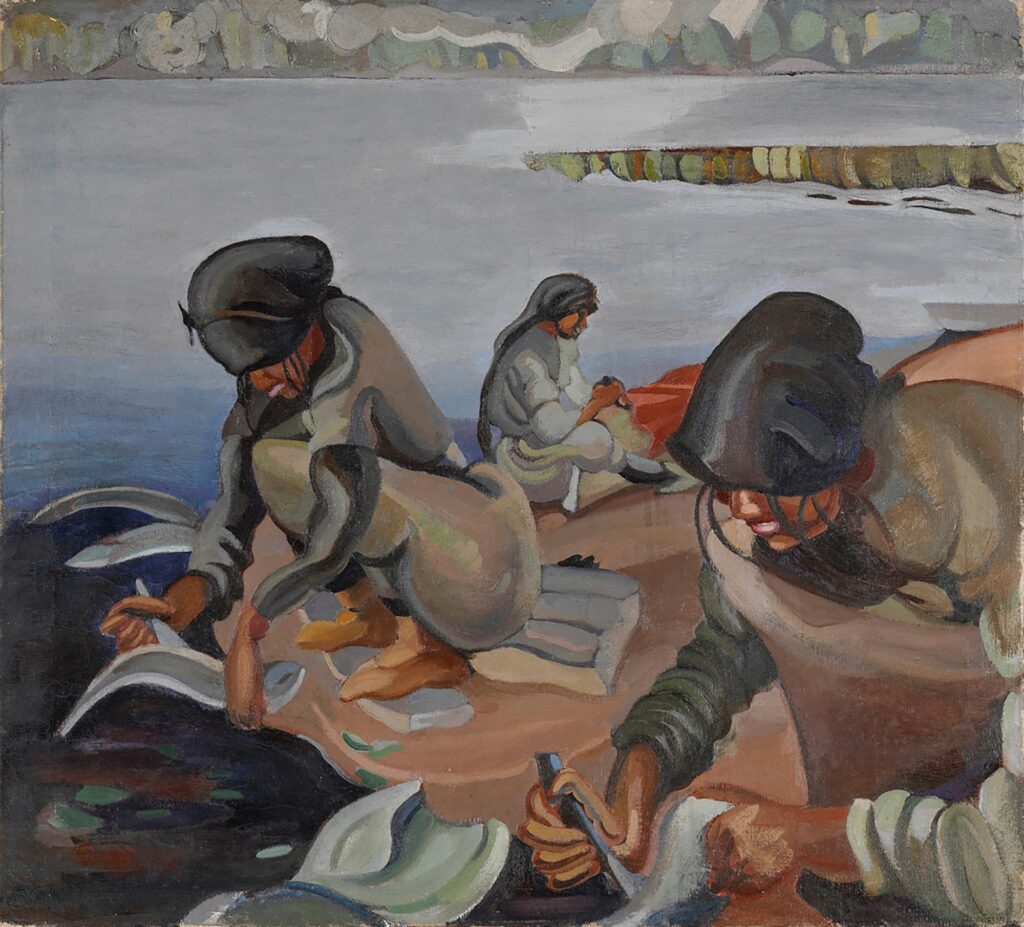
Pegi Nicol MacLeod, Women Cleaning Fish, c.1927

Pegi Nicol MacLeod, Self-Portrait, c.1928
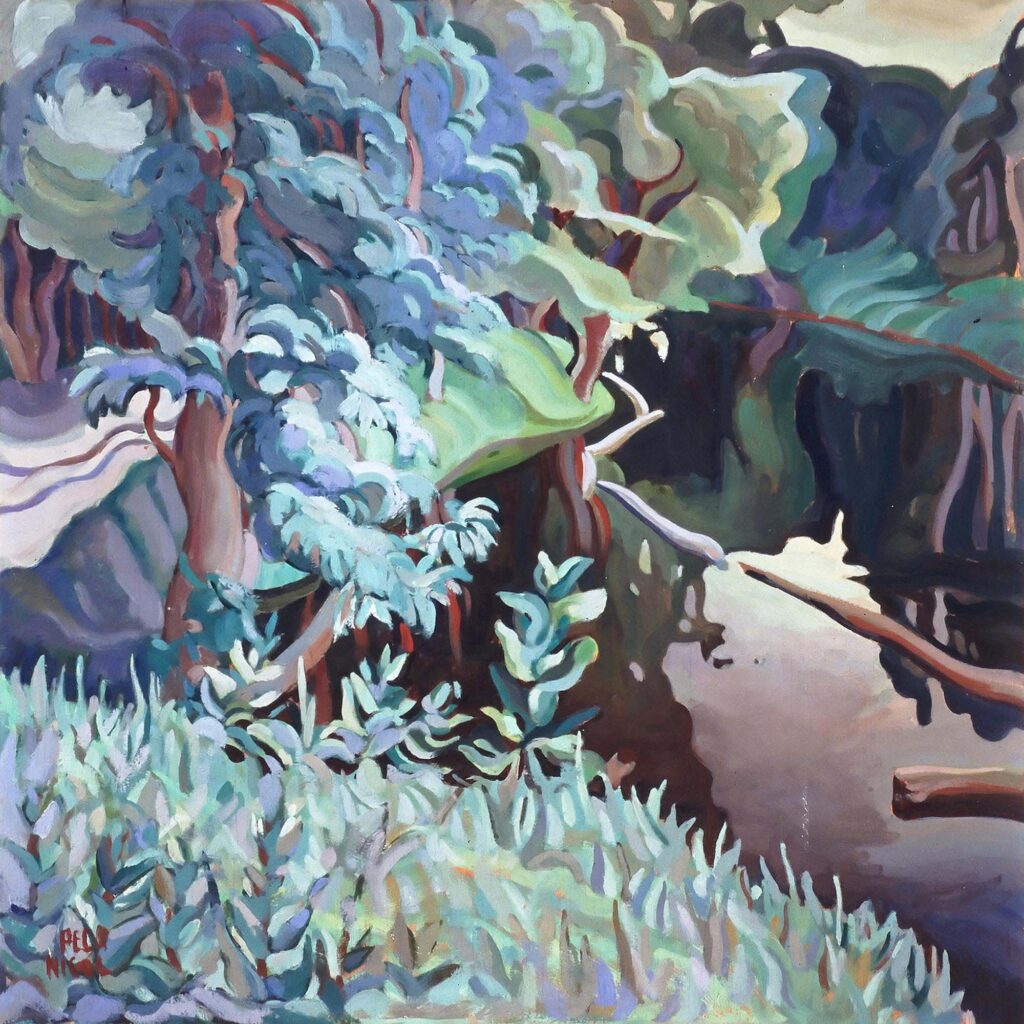
Pegi Nicol MacLeod, The Log Run, c.1930
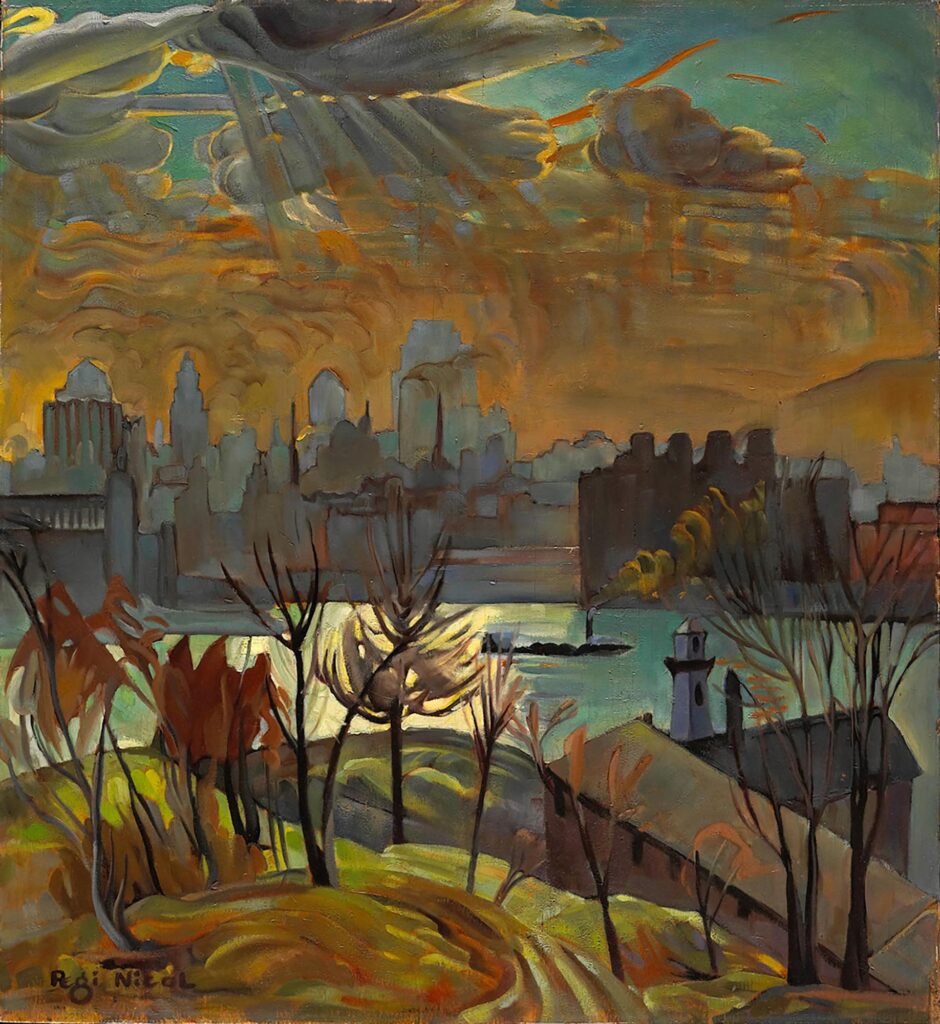
Pegi Nicol MacLeod, Montreal Harbour from St. Helen’s Island, 1933
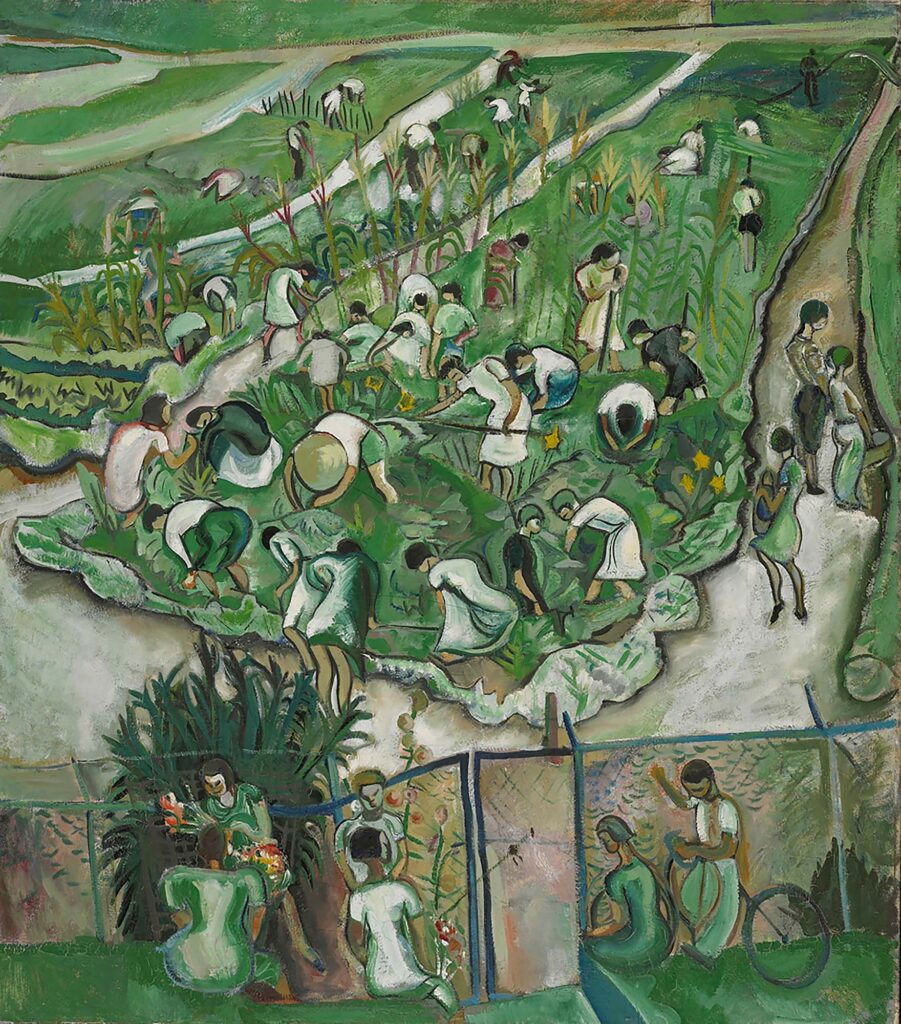
Pegi Nicol MacLeod, School in a Garden, c.1934
Pegi Nicol MacLeod, A Descent of Lilies, 1935
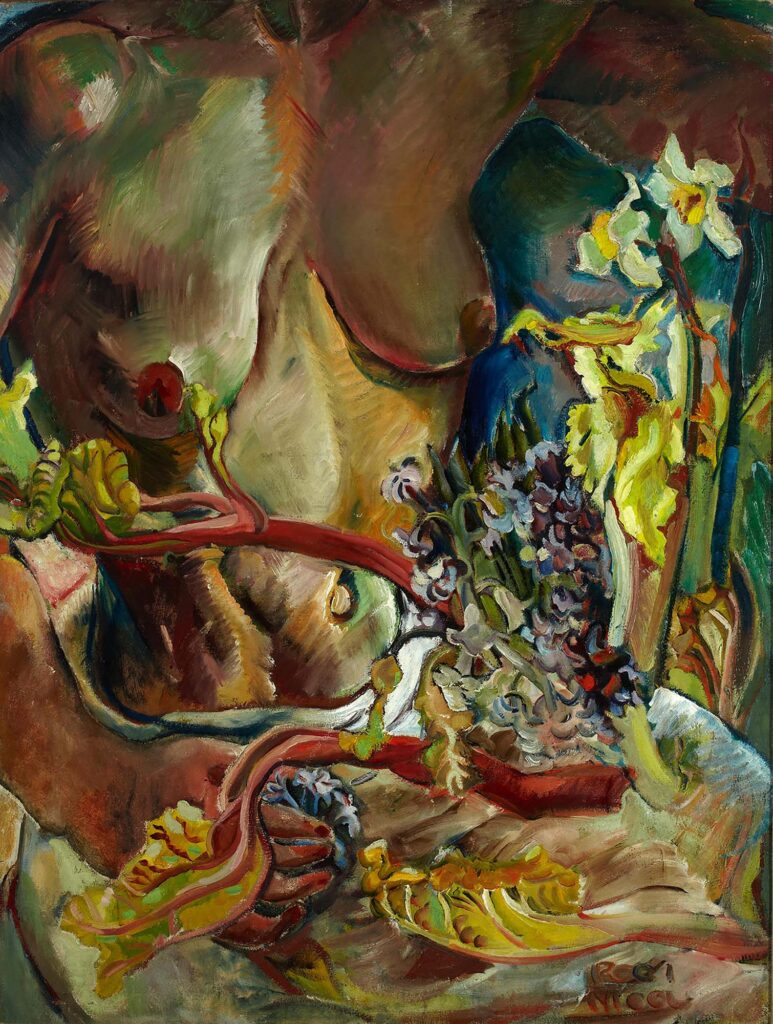
Pegi Nicol MacLeod, Torso and Plants, c.1935
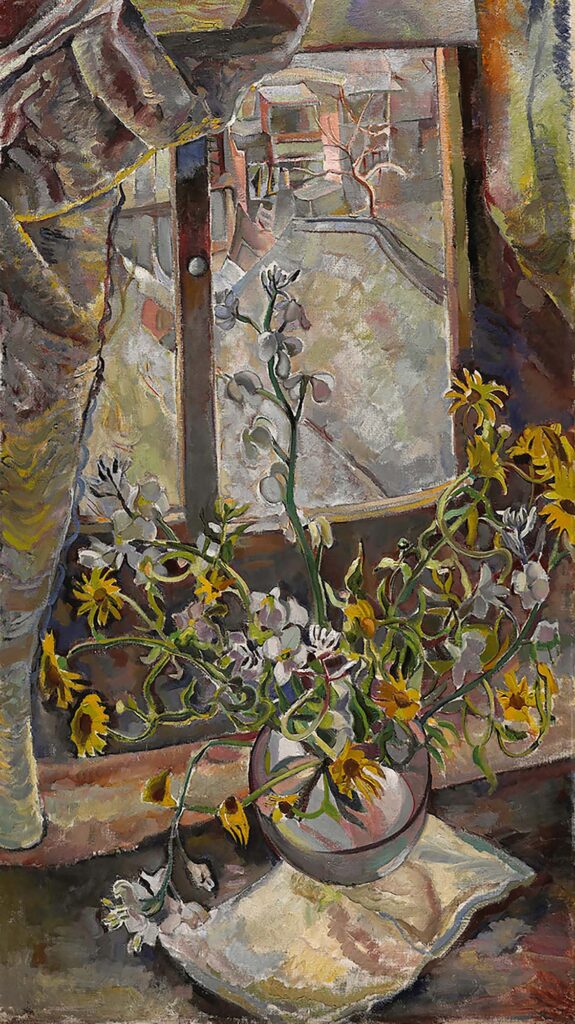
Pegi Nicol MacLeod, Cold Window, 1937
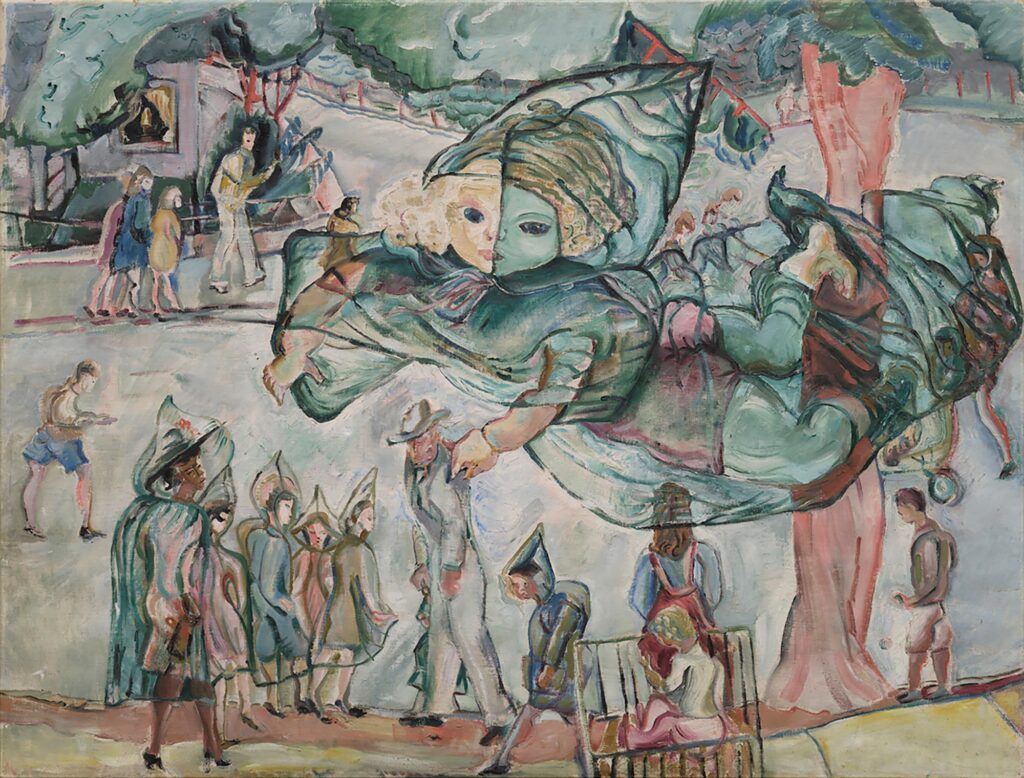
Pegi Nicol MacLeod, Children in Pliofilm, 1939
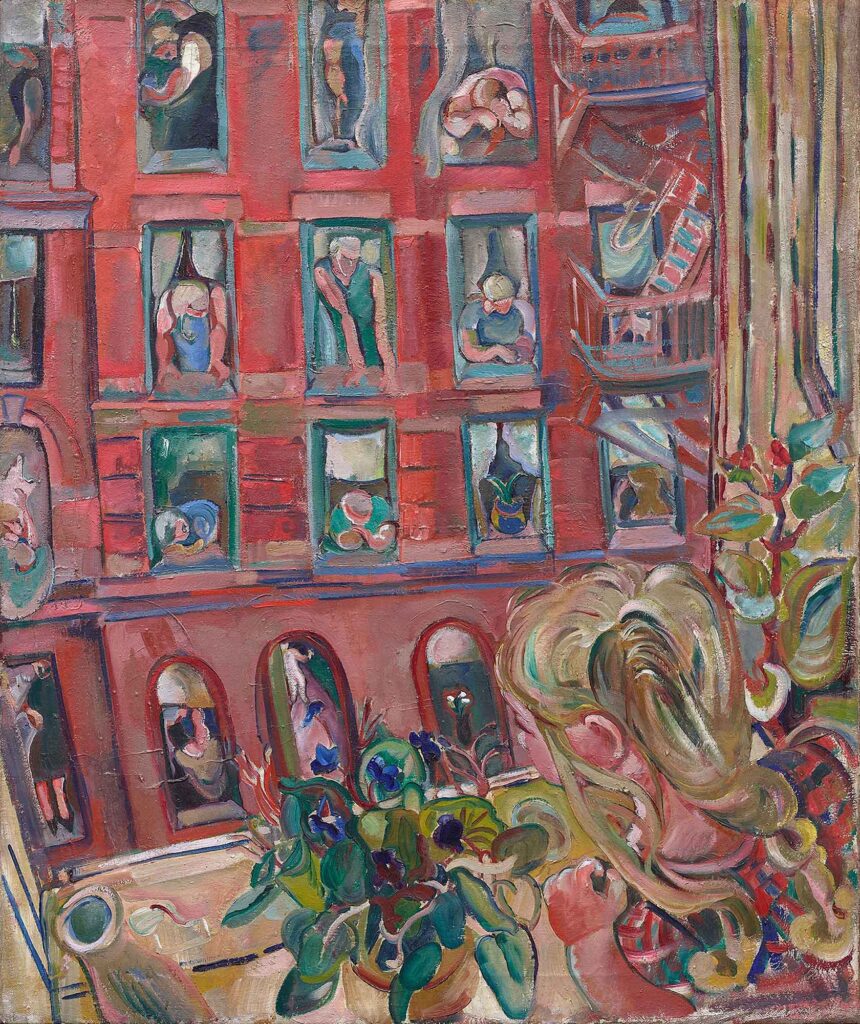
Pegi Nicol MacLeod, Young Girl at the Window, c.1941
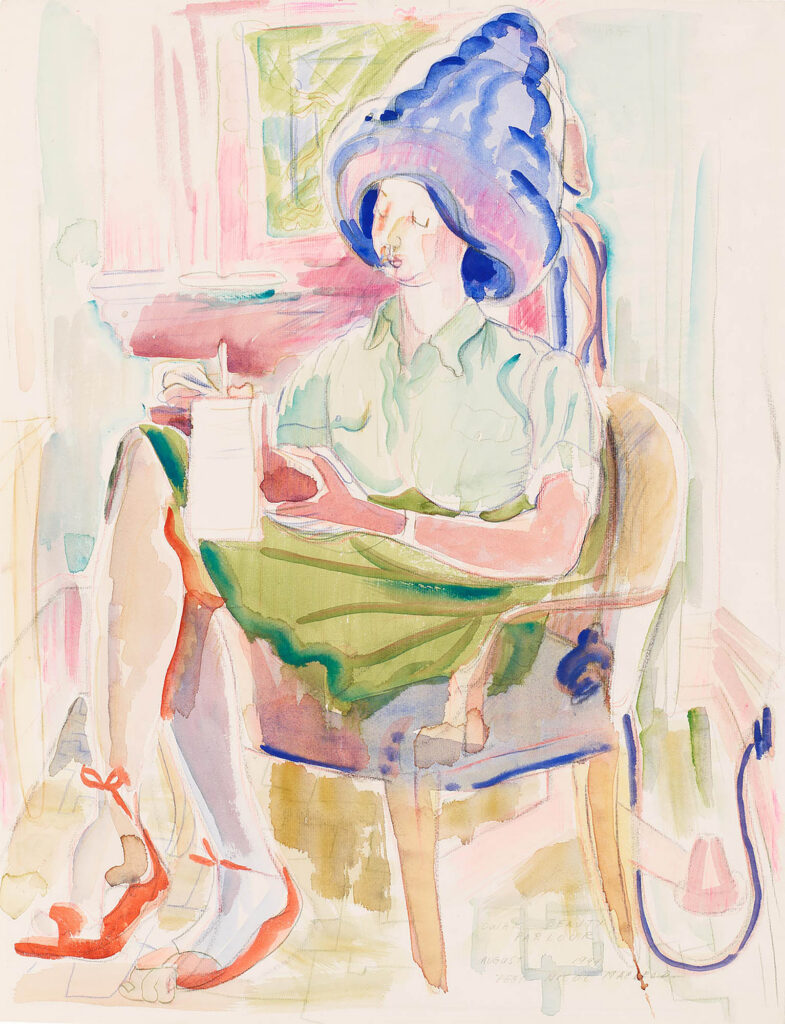
Pegi Nicol MacLeod, CWAC Beauty Parlour #1, 1944

Pegi Nicol MacLeod, Jump Rope, c.1945
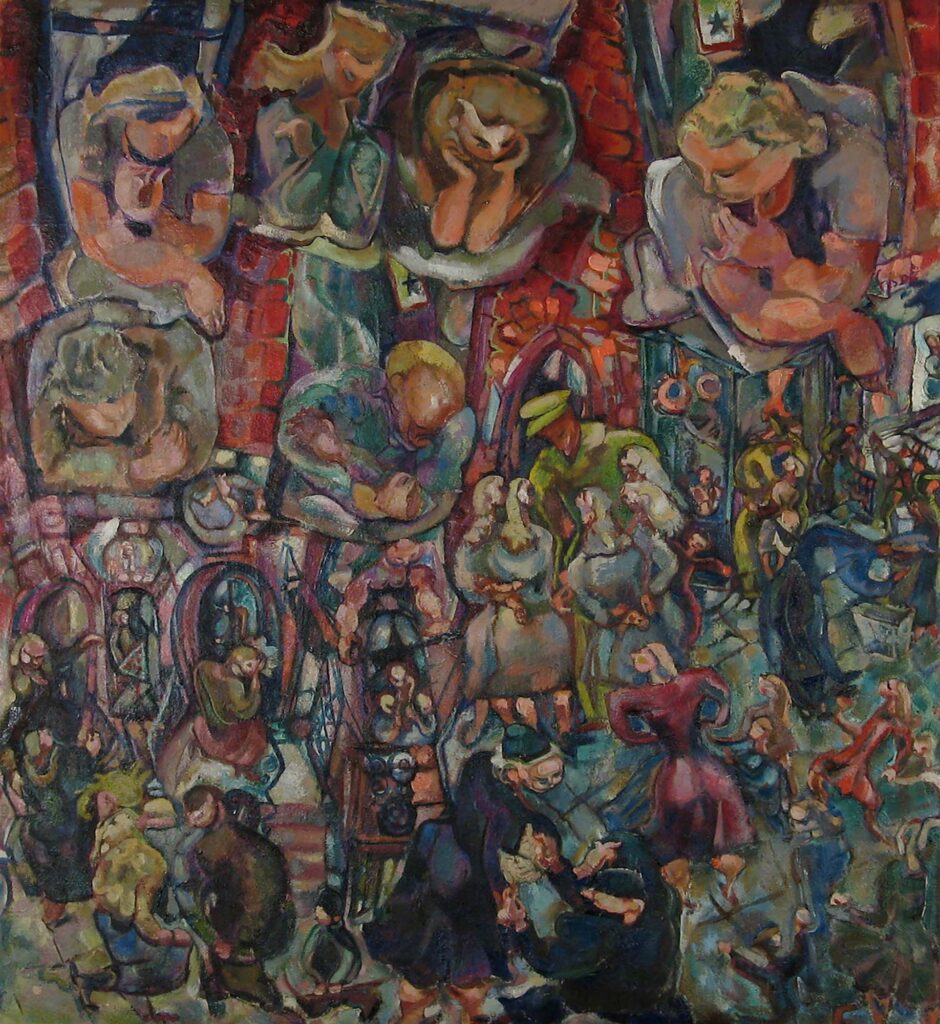
Pegi Nicol MacLeod, When Johnnie Comes Marching Home, c.1946