Young Girl at the Window, c.1941
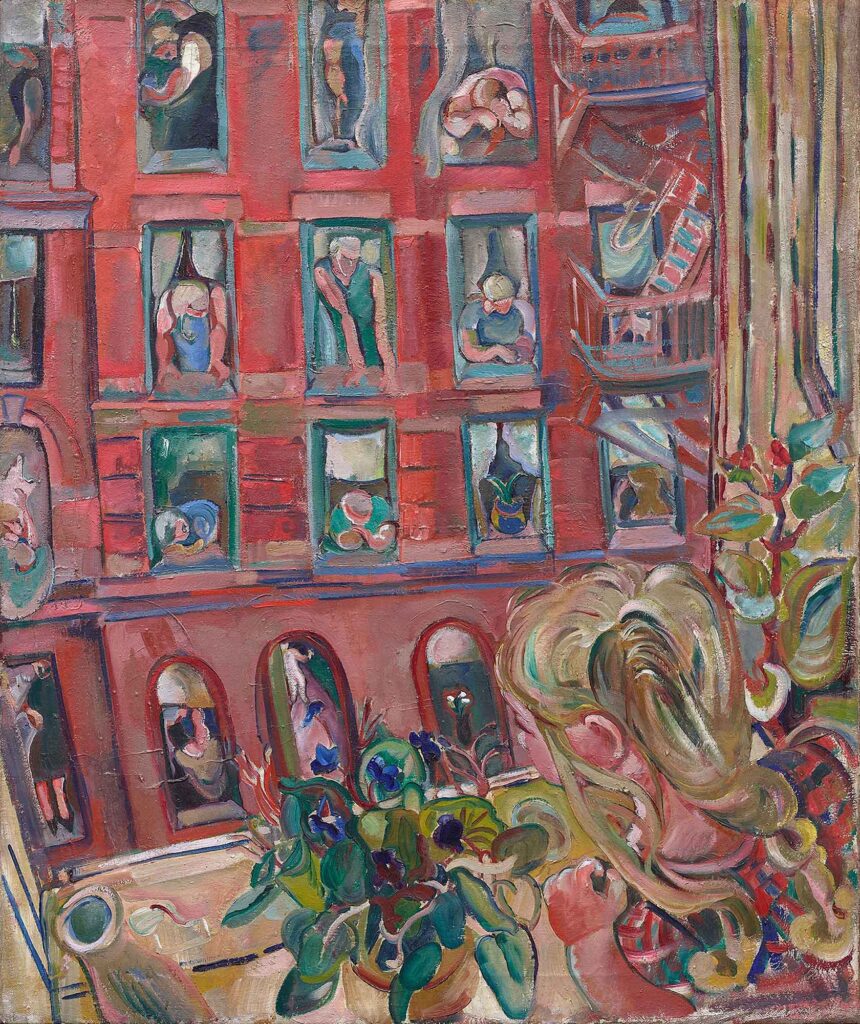
Pegi Nicol MacLeod, Young Girl at the Window, c.1941, oil on canvas, 80.7 x 68.5 cm, McMichael Canadian Art Collection, Kleinburg.
In contrast to the frenetic energy of many of her New York works, Young Girl at the Window captures a more contemplative moment. The painting distills several of MacLeod’s recurring concerns—her daughter, Jane, as muse; the motif of the window; and the blurred boundary between domestic interior and urban exterior—into a single composition that blends maternal intimacy and modernist abstraction. In doing so, the work stands as a formal synthesis of some of her central artistic subjects: the intimacy of motherhood, the dynamic spatial perspective of her New York street scenes, and the use of modernist visual language to animate her work.
In the painting’s foreground, a young girl, likely Jane, stands with her back to the viewer. Her blonde hair mirrors the swirling brushwork enlivening the entire scene. She leans over a window ledge adorned with potted plants, peering towards the street below. Across the narrow divide, a red-brick apartment building stretches upward, animated by numerous windows, each one revealing glimpses of the occupants inside.
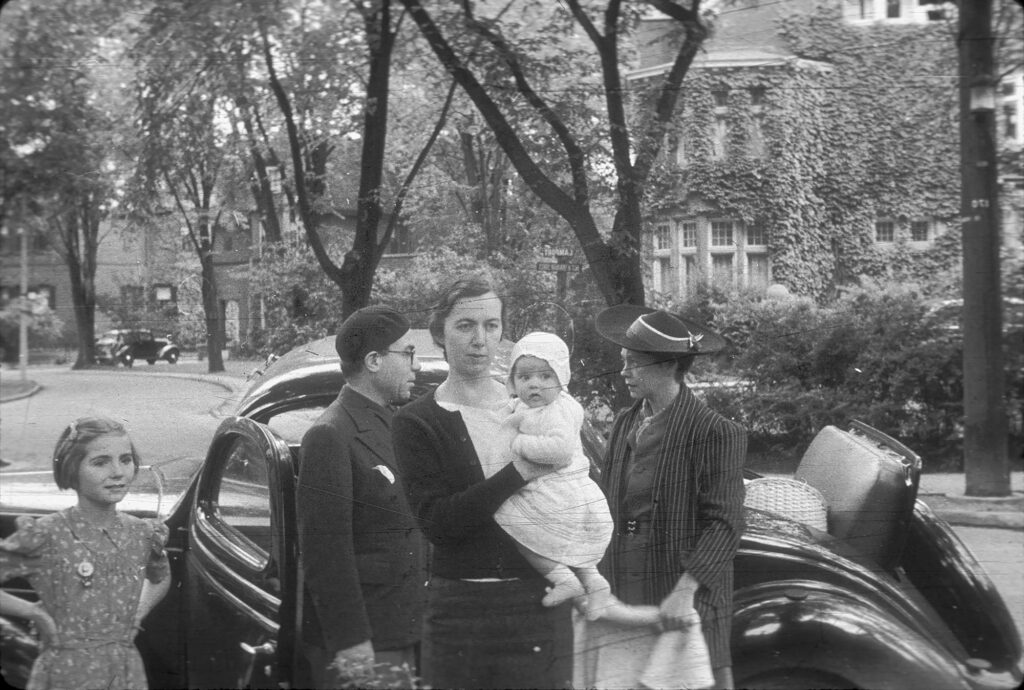
Louise Comfort's daughter, René Cera, Louise Comfort (holding Jane), and Pegi in Toronto, June 1938.
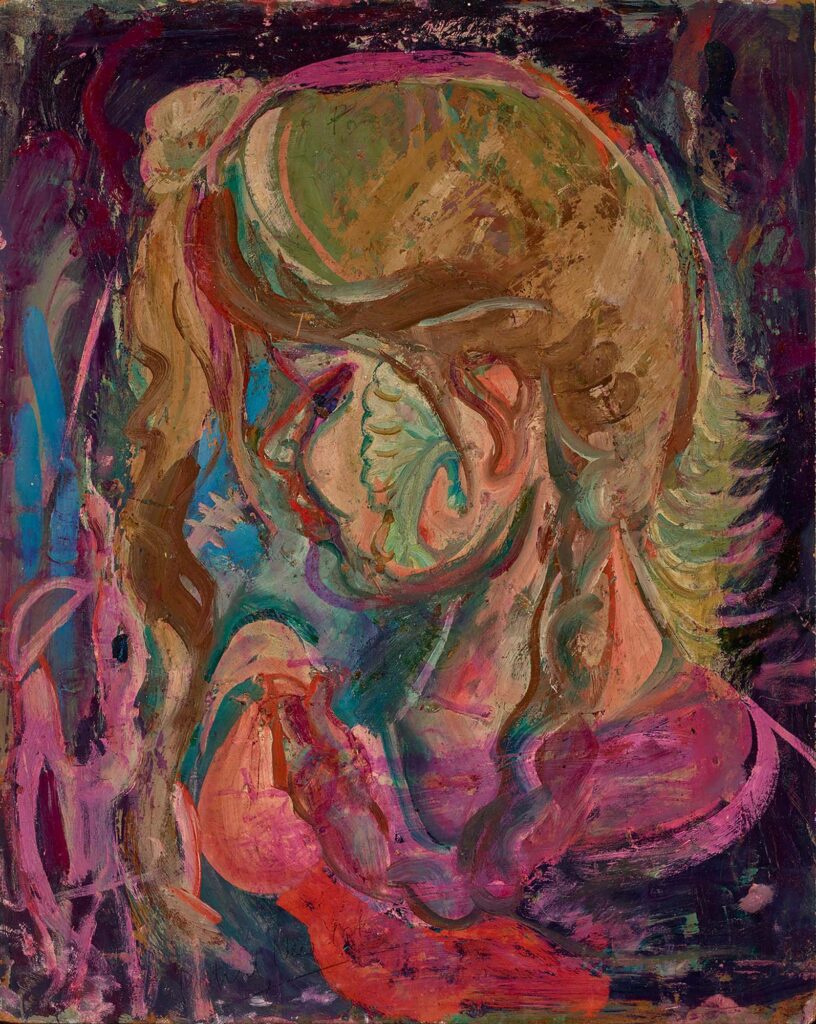
Pegi Nicol MacLeod, Portrait of Jane MacLeod, oil on Masonite, 49.5 x 39.3 cm, Library and Archives Canada, Ottawa.
Soon after their marriage in 1936, Pegi and Norman MacLeod moved to New York, and the its dense street life became one of her most constant subjects. The bustling city and her daughter, Jane, were never-ending sources of inspiration for MacLeod. As critic and curator Donald Buchanan observed, “She tried to put down on canvas and paper every aspect of the chaotic bustle that met her eyes from her windows on Eighty-Eighth Street; she wished to leave nothing out. As a result, in many of those pictures, the surface overflows with figures in motion, it is packed with now sinuous and graceful, now wavering and erratic, lines and shapes.”
By framing her daughter’s quiet observation against the visual noise of city life, MacLeod crystallizes her fascination with the act of seeing itself. The dynamic lines and warm tones of the work evoke the chaotic yet intimate energy of New York, where private and public spaces blur in a dense, interconnected world. Unlike her more crowded Manhattan Cycle canvases, Young Girl at the Window isolates a single moment of observation, offering a balance between the intimacy of home and the intense energy of the city beyond.
Gallery
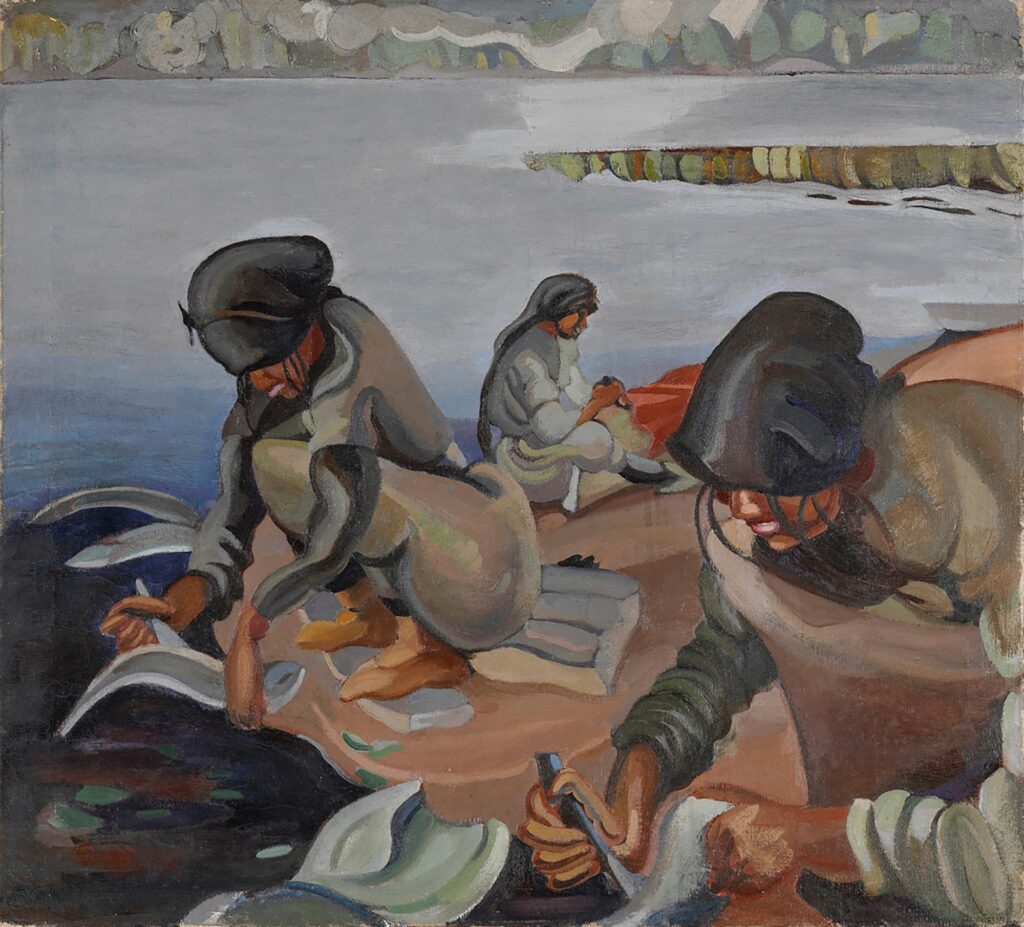
Pegi Nicol MacLeod, Women Cleaning Fish, c.1927

Pegi Nicol MacLeod, Self-Portrait, c.1928

Pegi Nicol MacLeod, The Log Run, c.1930
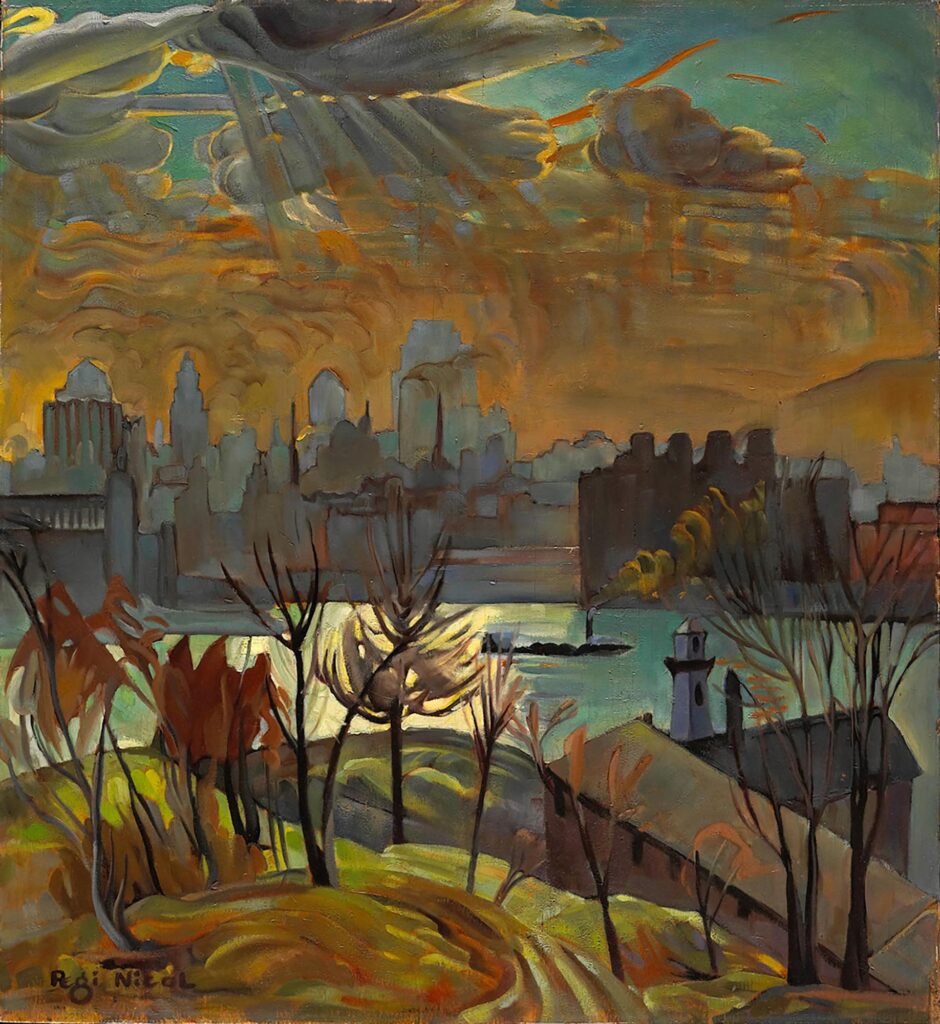
Pegi Nicol MacLeod, Montreal Harbour from St. Helen’s Island, 1933
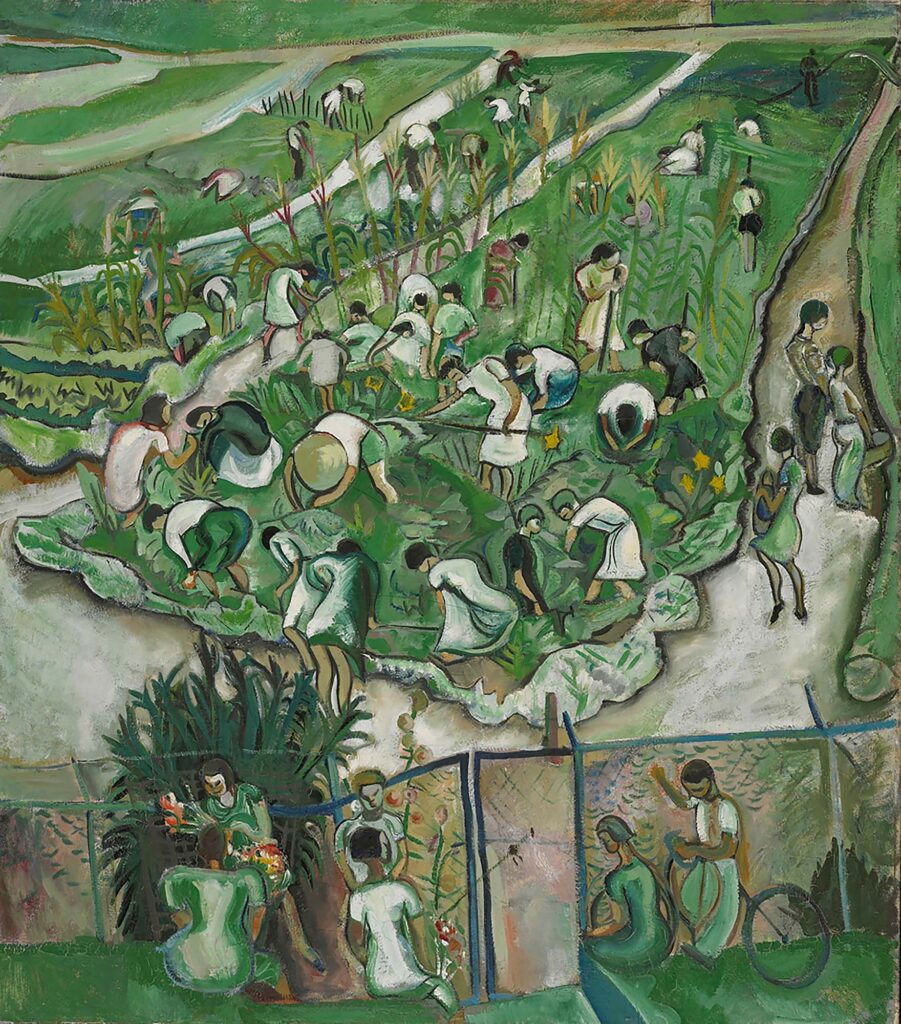
Pegi Nicol MacLeod, School in a Garden, c.1934
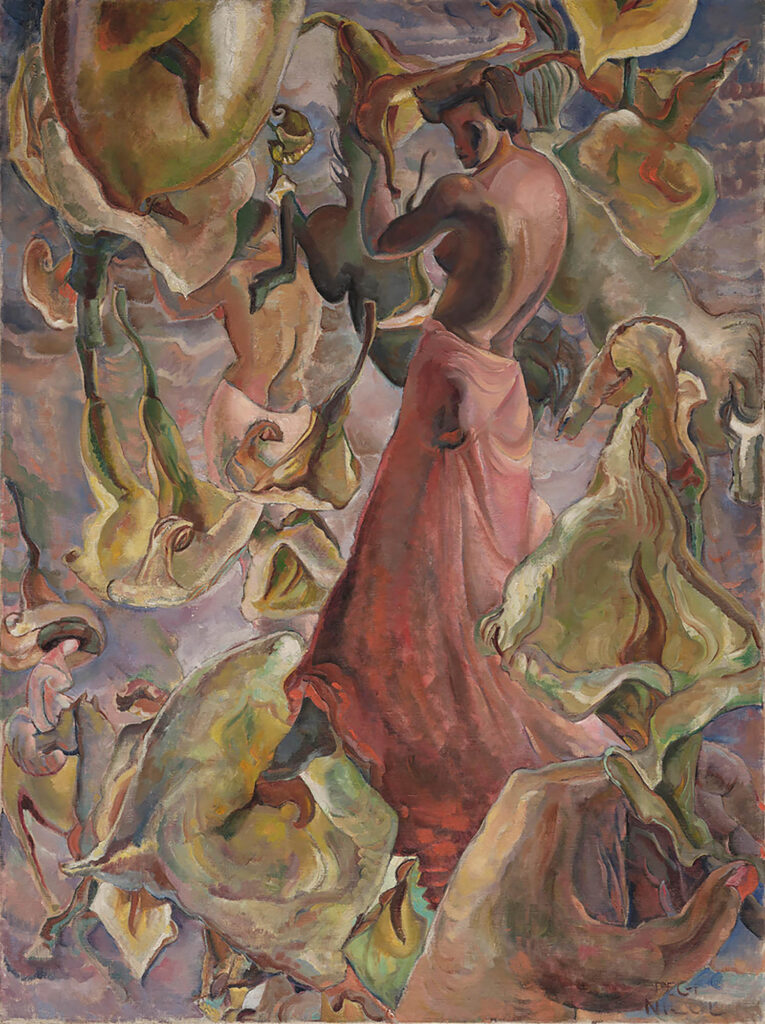
Pegi Nicol MacLeod, A Descent of Lilies, 1935
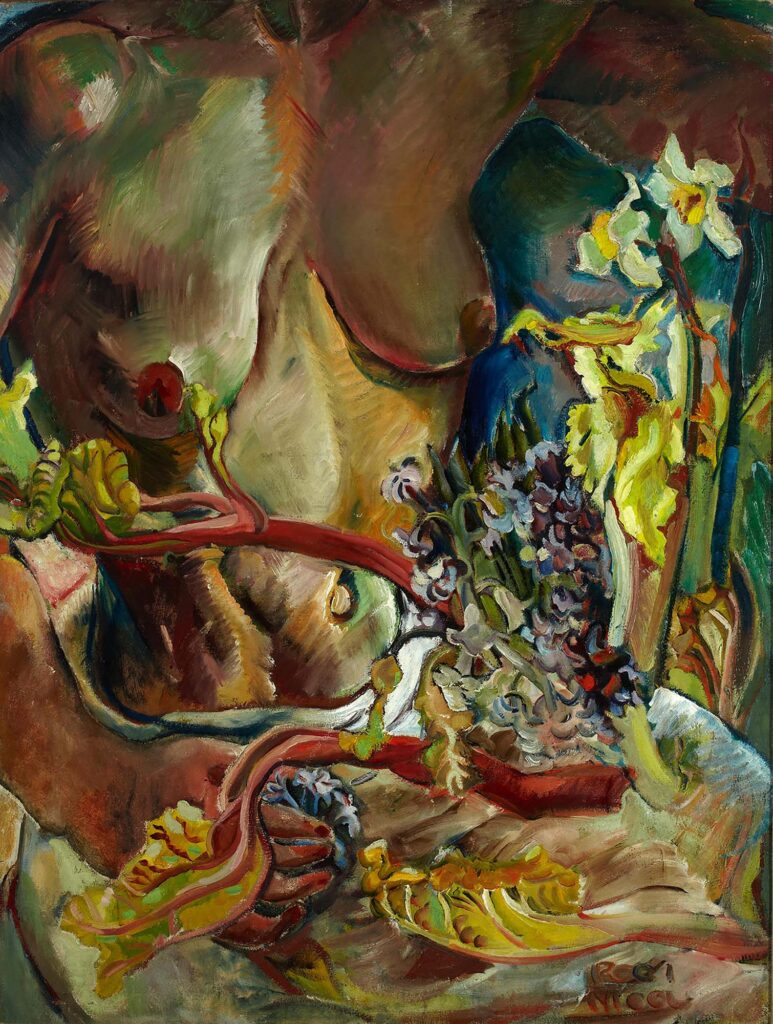
Pegi Nicol MacLeod, Torso and Plants, c.1935
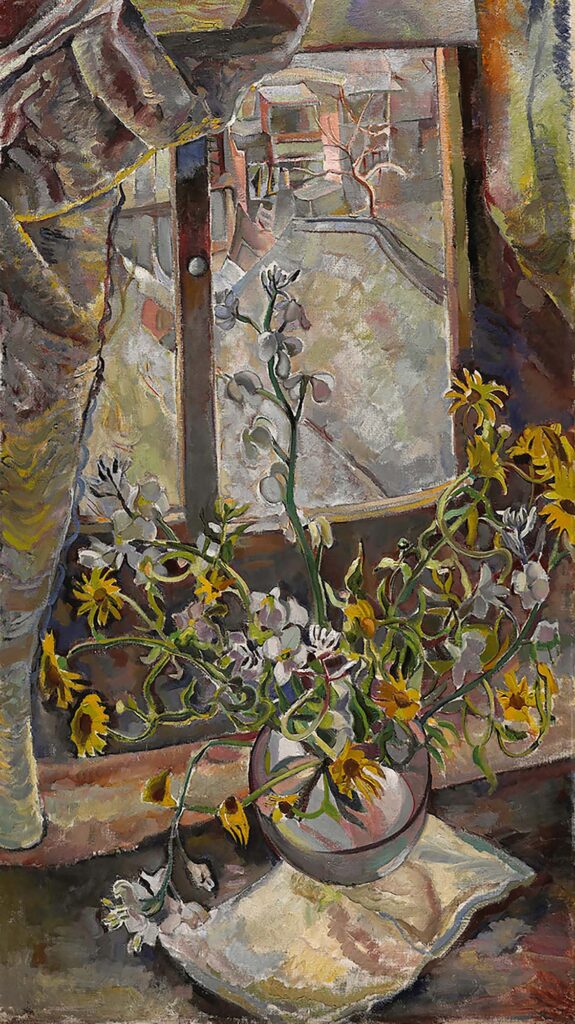
Pegi Nicol MacLeod, Cold Window, 1937
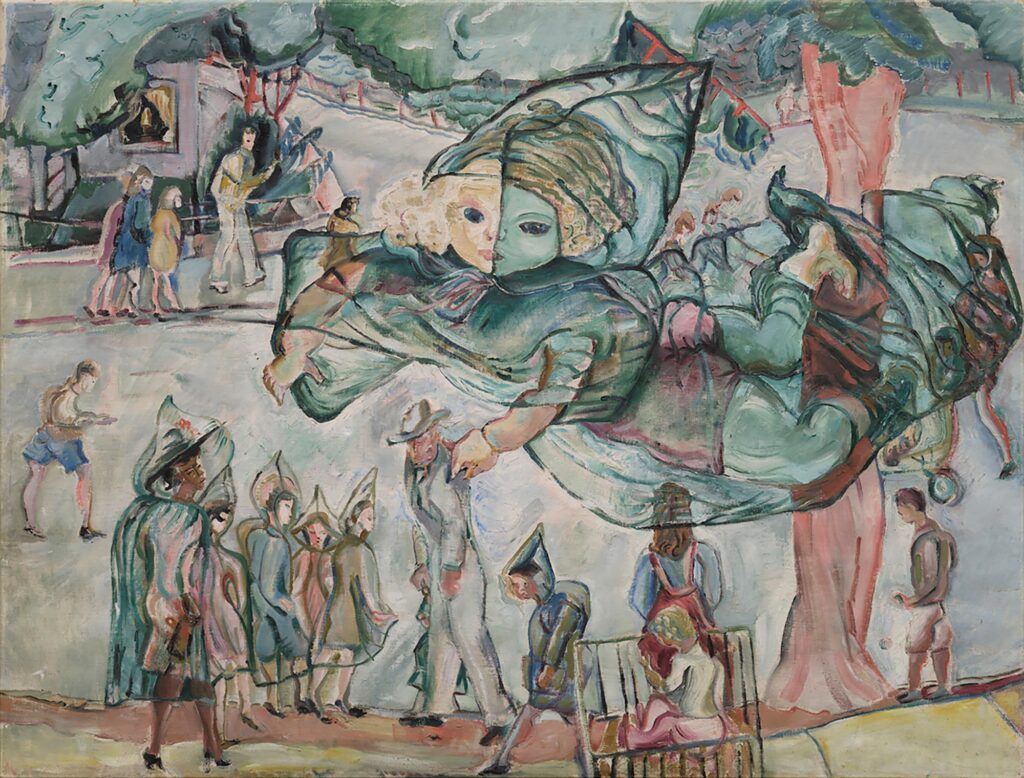
Pegi Nicol MacLeod, Children in Pliofilm, 1939
Pegi Nicol MacLeod, Young Girl at the Window, c.1941
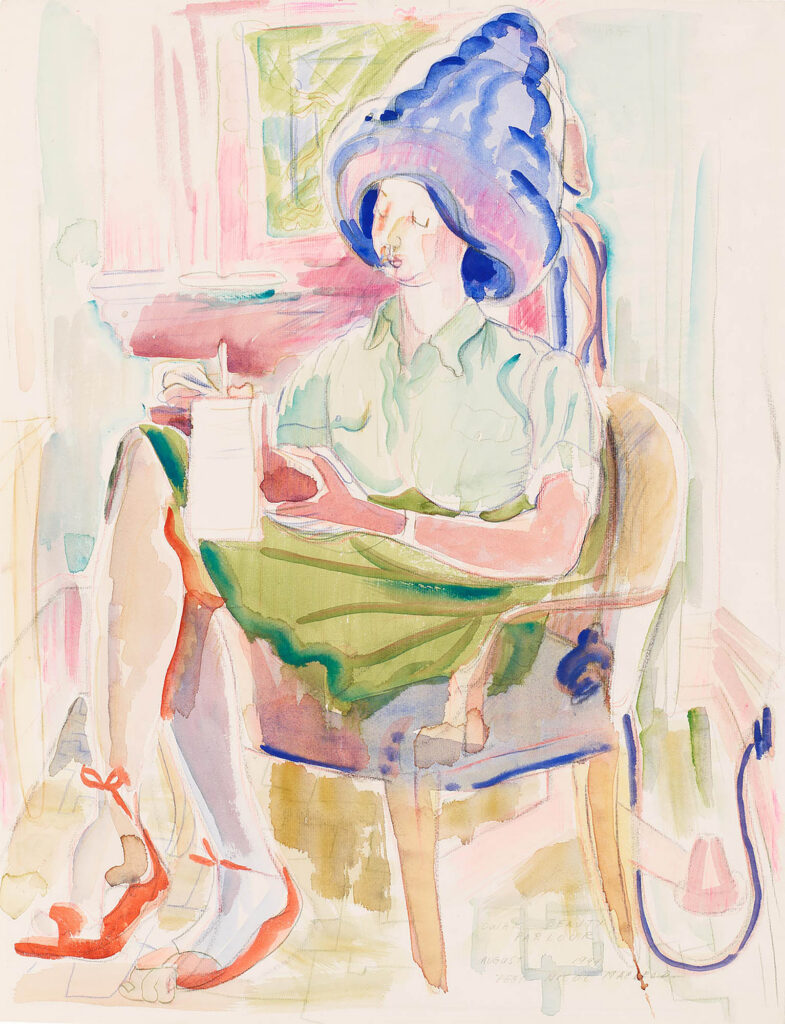
Pegi Nicol MacLeod, CWAC Beauty Parlour #1, 1944

Pegi Nicol MacLeod, Jump Rope, c.1945
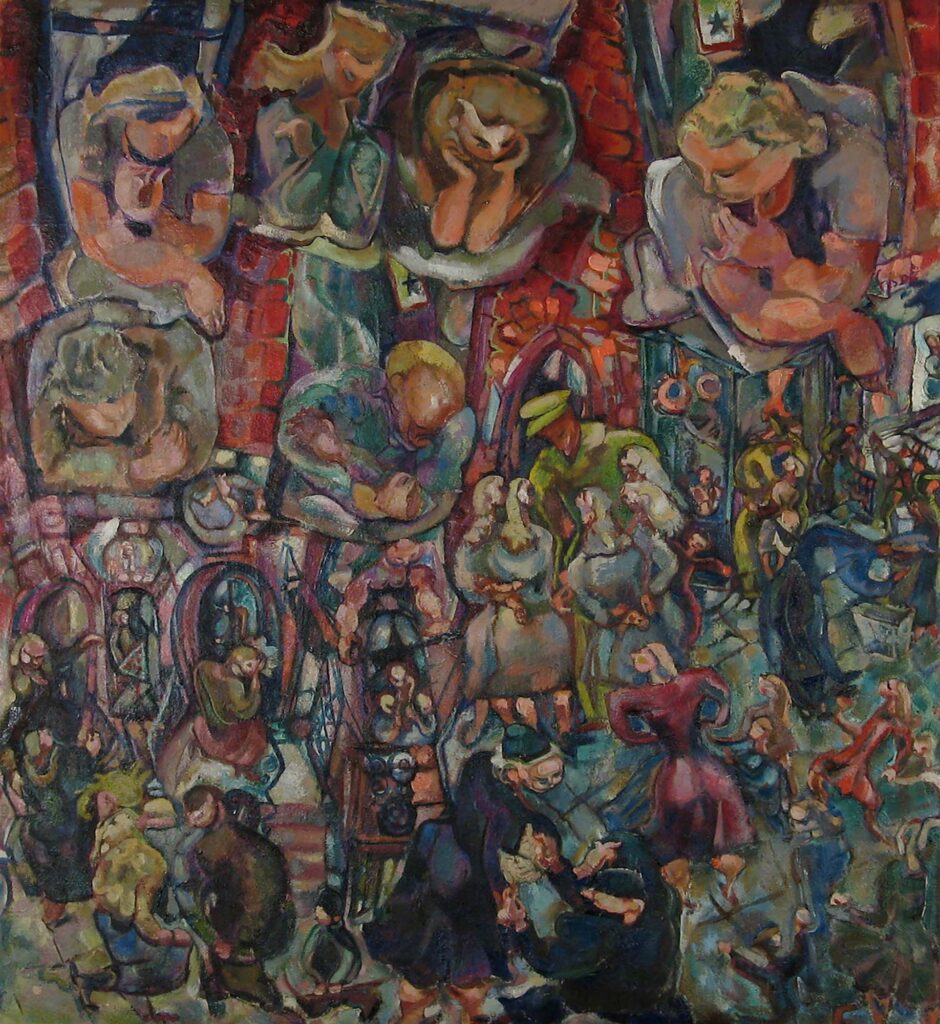
Pegi Nicol MacLeod, When Johnnie Comes Marching Home, c.1946