Self-Portrait, c.1928
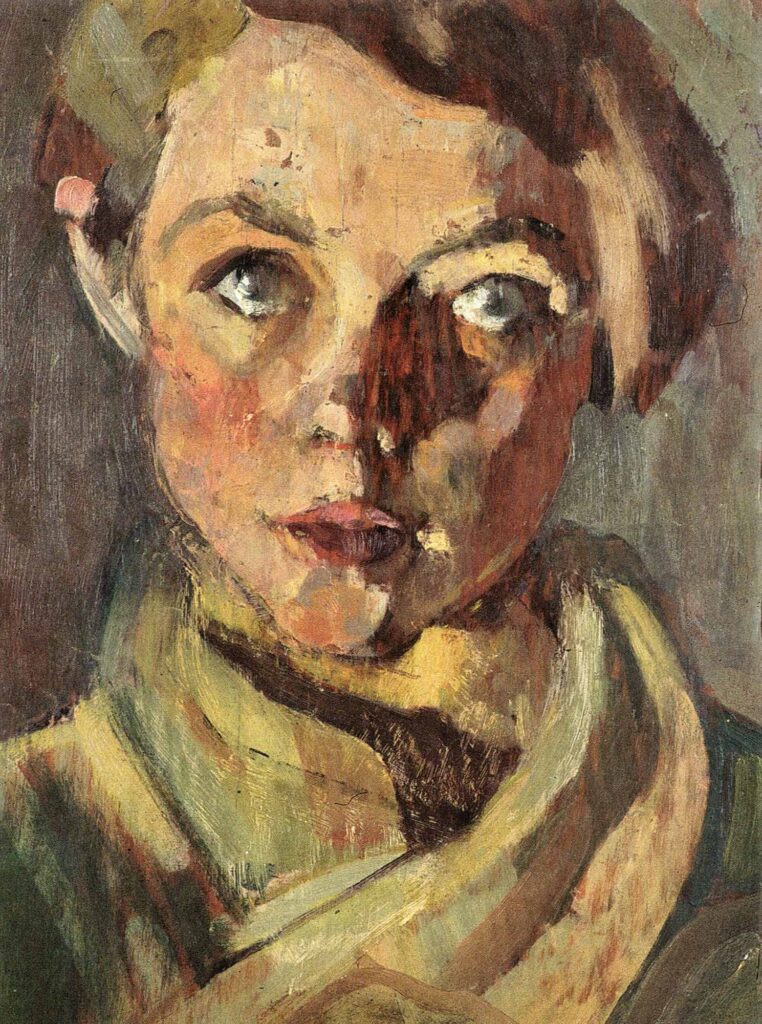
Pegi Nicol MacLeod, Self-Portrait, c.1928, oil on plywood, 30 x 23 cm, Agnes Etherington Art Centre, Kingston.
Self-Portrait is an important early work in MacLeod’s long engagement with the genre—one she pursued with dedication for more than a decade. The three-quarter-length portrait captures the artist head-on, gazing intently at the viewer. Her short bobbed haircut frames a face rendered in patchy brush strokes of orange, beige, and muddy purple. A winter scarf painted in ochres, dark greens, and browns is wrapped around her neck. The focal point is the artist’s large, expressive eyes, which are surrounded by a bright whiteness that pierces through the muted palette and draws the viewer into an intimate engagement.
Among the earliest of her self-representations, this painting demonstrates the experimental qualities that would come to define her practice: gestural brushwork, a willingness to leave surfaces unfinished, and an emphasis on immediacy over polish. A close look reveals areas that show the plywood underneath—noticeable patches of bare wood sit between the subject’s nose and left eye and in other areas above her left eyebrow. Spots on her cheeks and forehead are also unfinished. These areas allude to the artist’s process and encourage close, sustained looking.
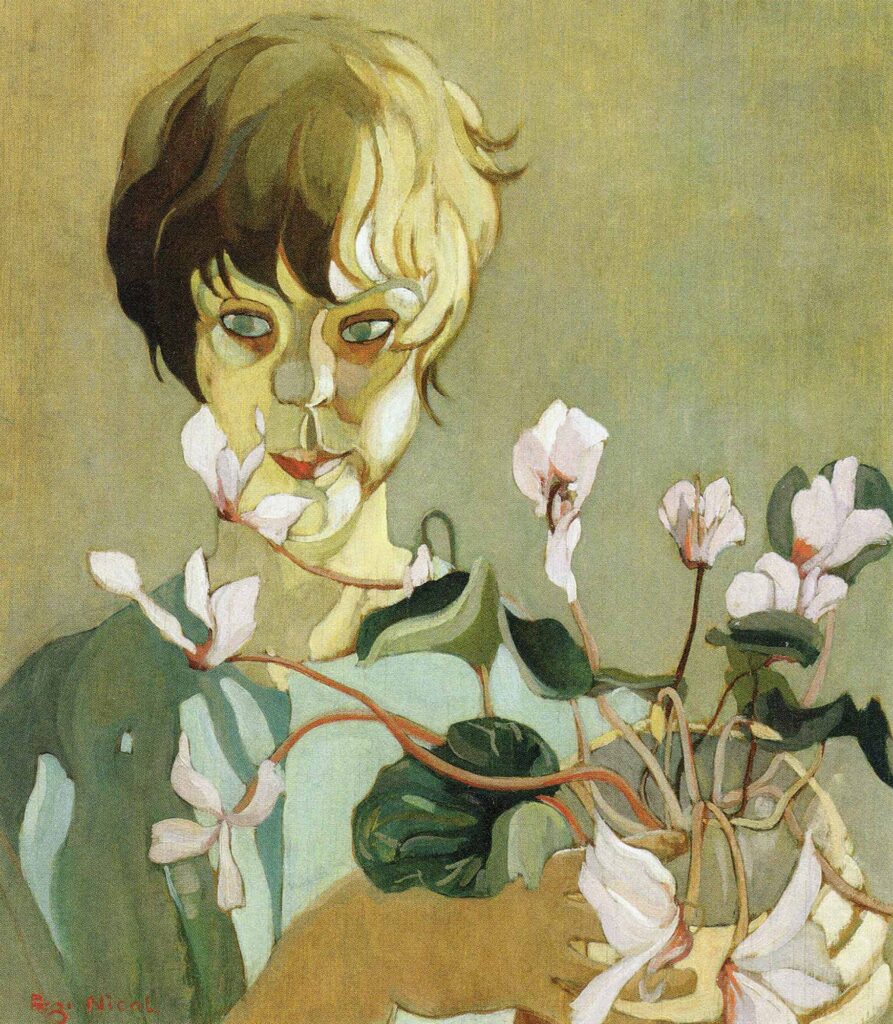
Pegi Nicol MacLeod, The Slough (recto), 1928, oil on board, 61 x 54.7 cm, private collection.
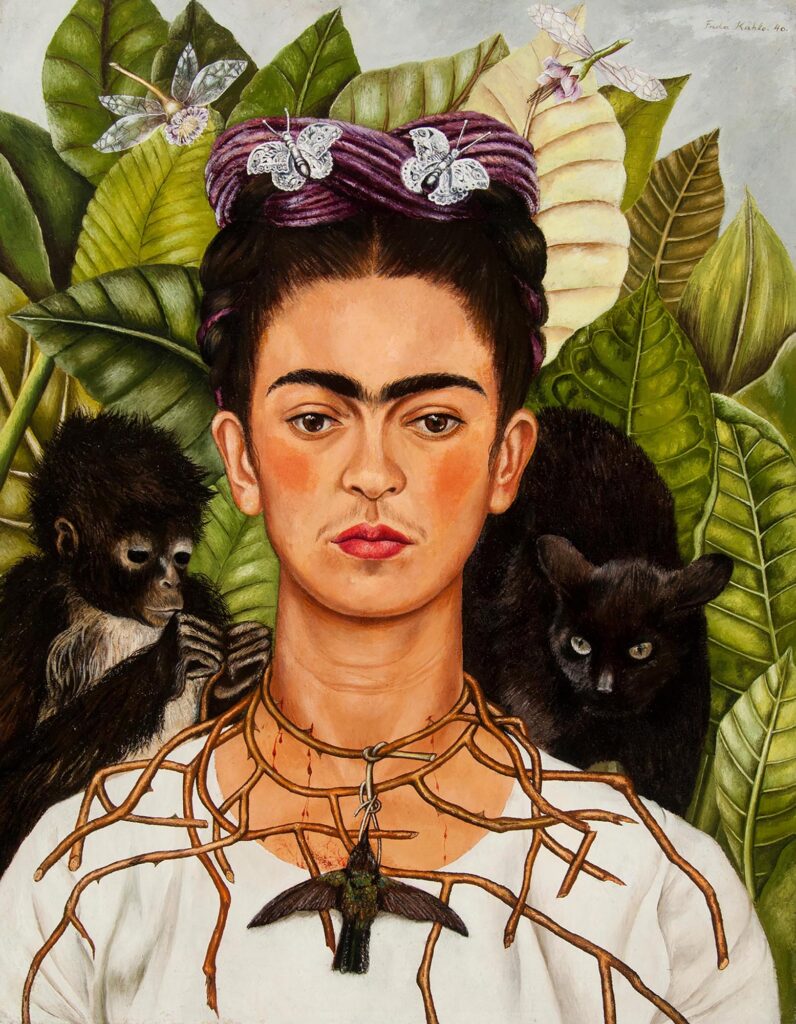
Frida Kahlo, Untitled [Self-portrait with Thorn Necklace and Hummingbird], 1940, oil on canvas mounted to board, 62.5 x 48 cm, Nickolas Murray Collection of Mexican Art, Harry Ransom Center, The University of Texas at Austin.
Critics and colleagues described MacLeod’s painting style as “rushed” or “too animated to see all at once.” But here the uneven surfaces and gestural handling create a vivid impression of the sitter rather than a fully resolved likeness. MacLeod gave Self-Portrait to Richard Finnie (1906–1987), who remembered her as “pretty in a pixieish way, with large, blue eyes set in an oval face... a true Bohemian in her outlook, dress and deportment,” and also recalled that she left him with “an indelible impression vividly enduring to this day.” The self-portrait echoes Finnie’s recollection.
This painting forms part of a sustained exploration of identity and self-representation that included works such as The Slough, 1928—a double-sided portrait painted as a wedding gift for Marian and Frank (F.R.) Scott—and Costume for a Cold Studio, c.1930. Like Frida Kahlo (1907–1954) and Vincent van Gogh (1853–1890), MacLeod used self-portraiture as a site of introspection and experimentation. Through her gestural brushwork and exploration of the self, she helped expand the visual language of modernist self-representation in Canadian art.
Gallery
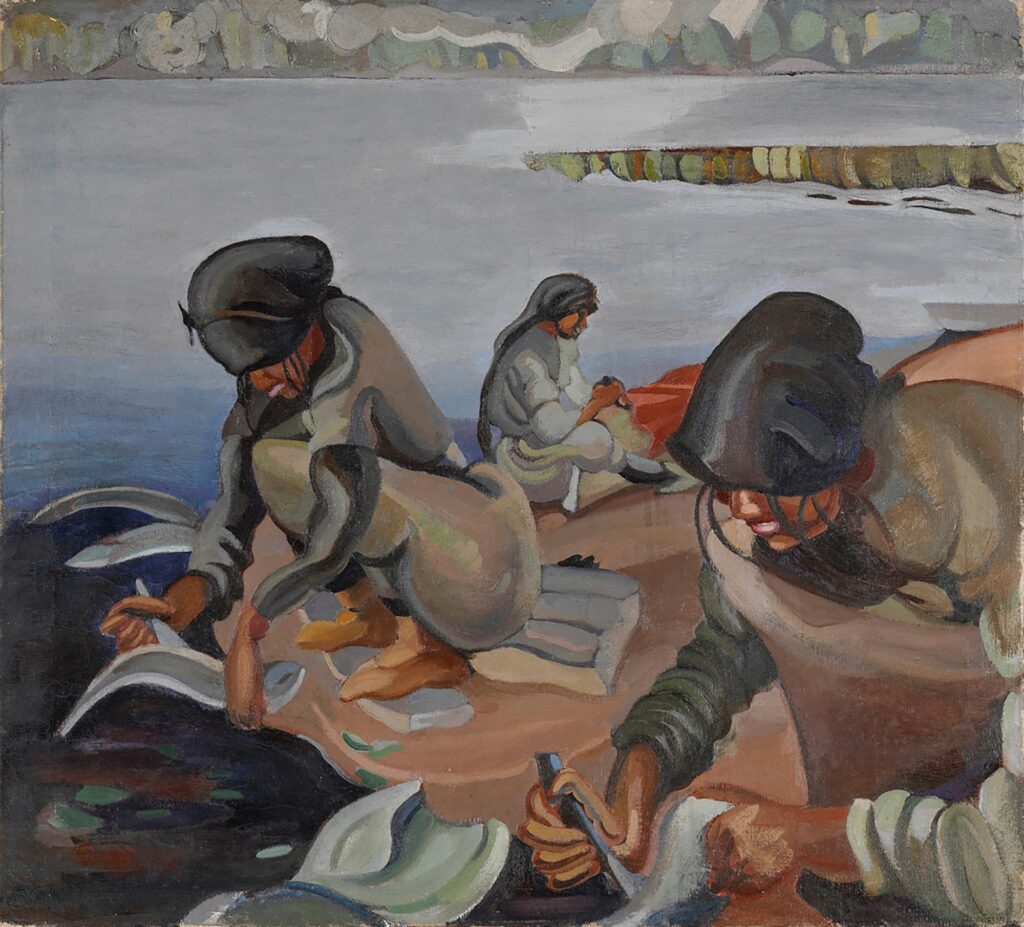
Pegi Nicol MacLeod, Women Cleaning Fish, c.1927

Pegi Nicol MacLeod, Self-Portrait, c.1928
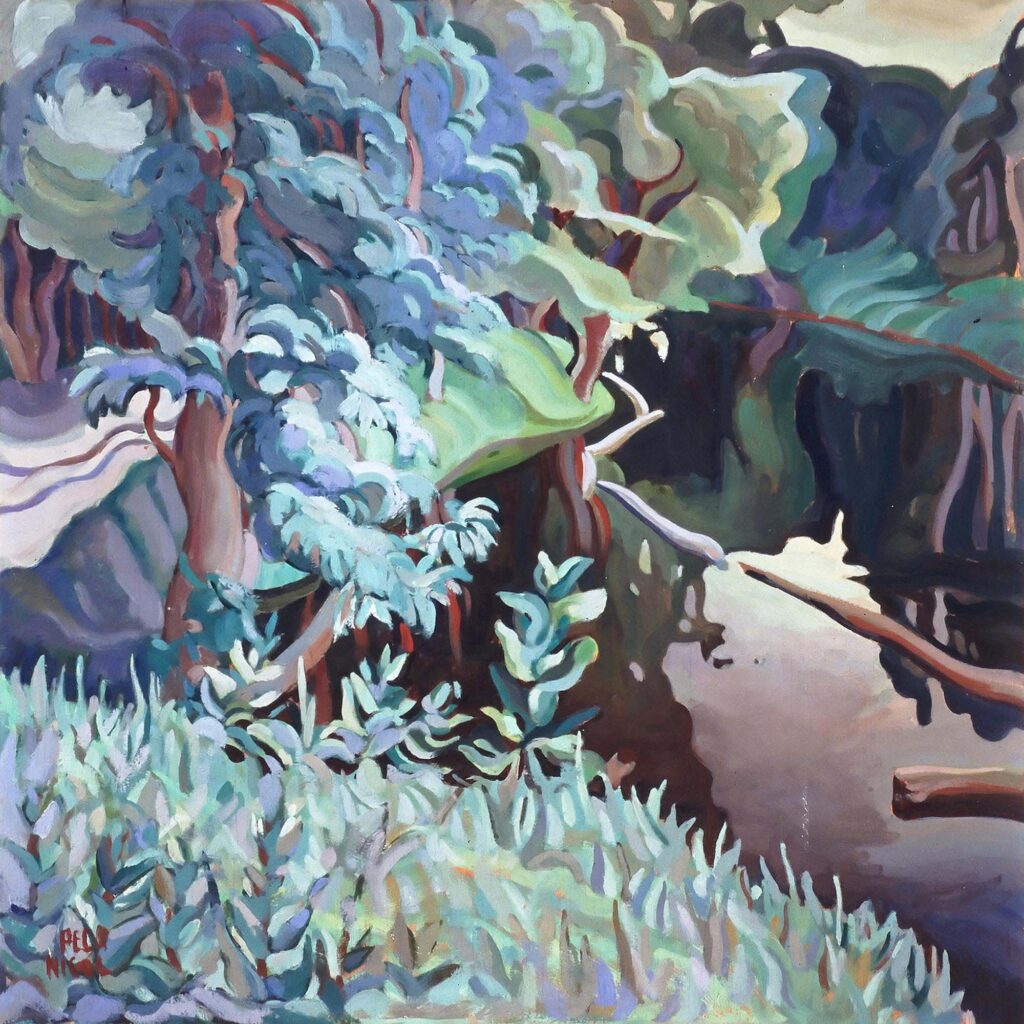
Pegi Nicol MacLeod, The Log Run, c.1930
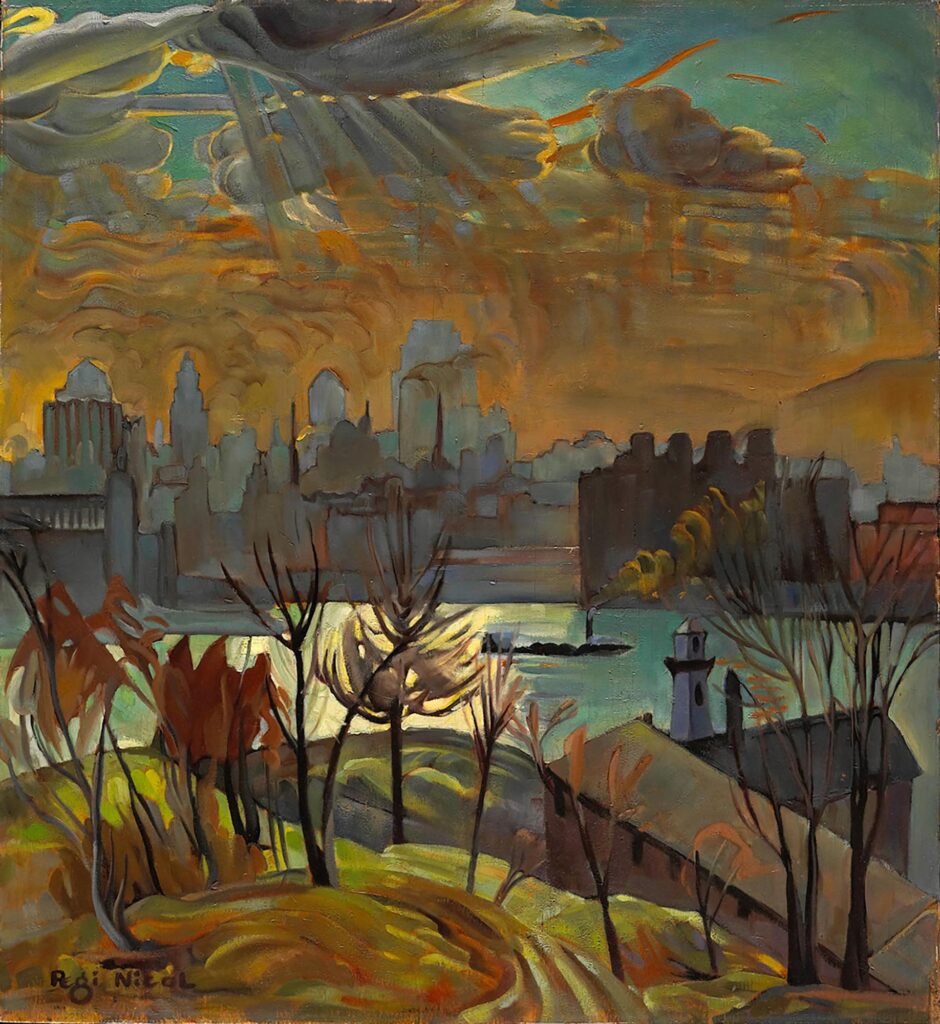
Pegi Nicol MacLeod, Montreal Harbour from St. Helen’s Island, 1933
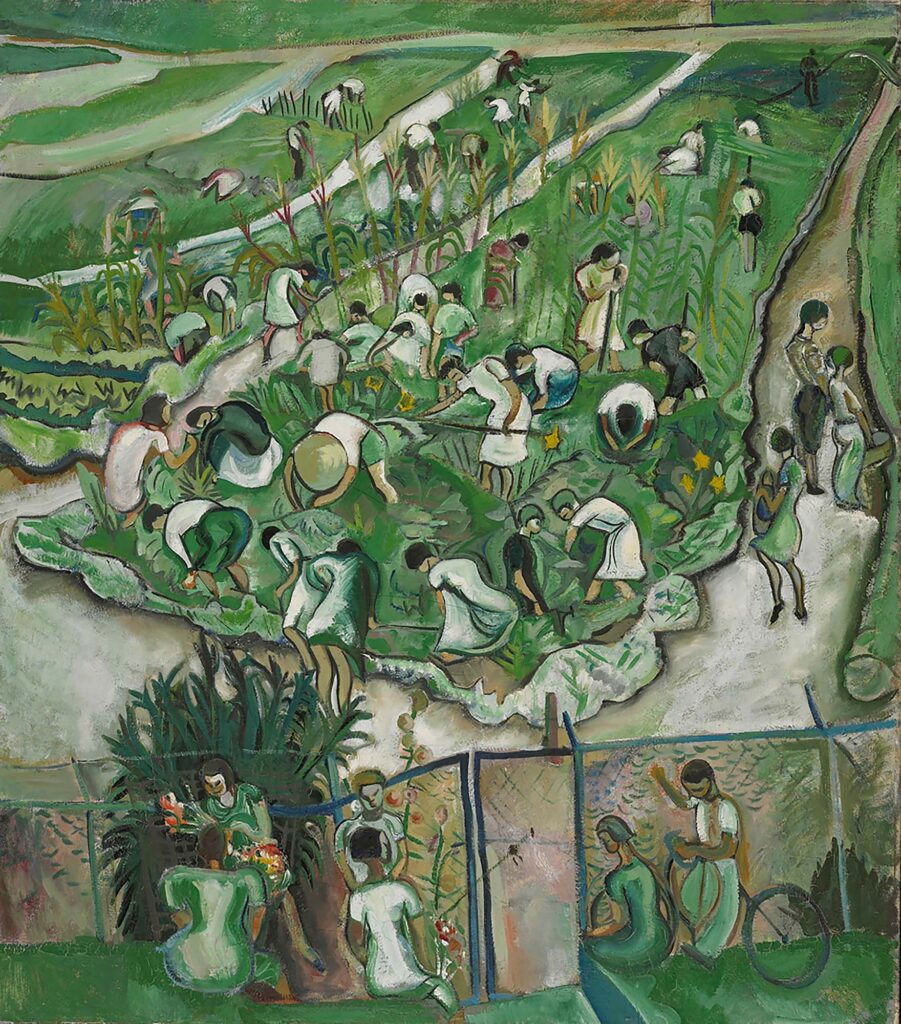
Pegi Nicol MacLeod, School in a Garden, c.1934
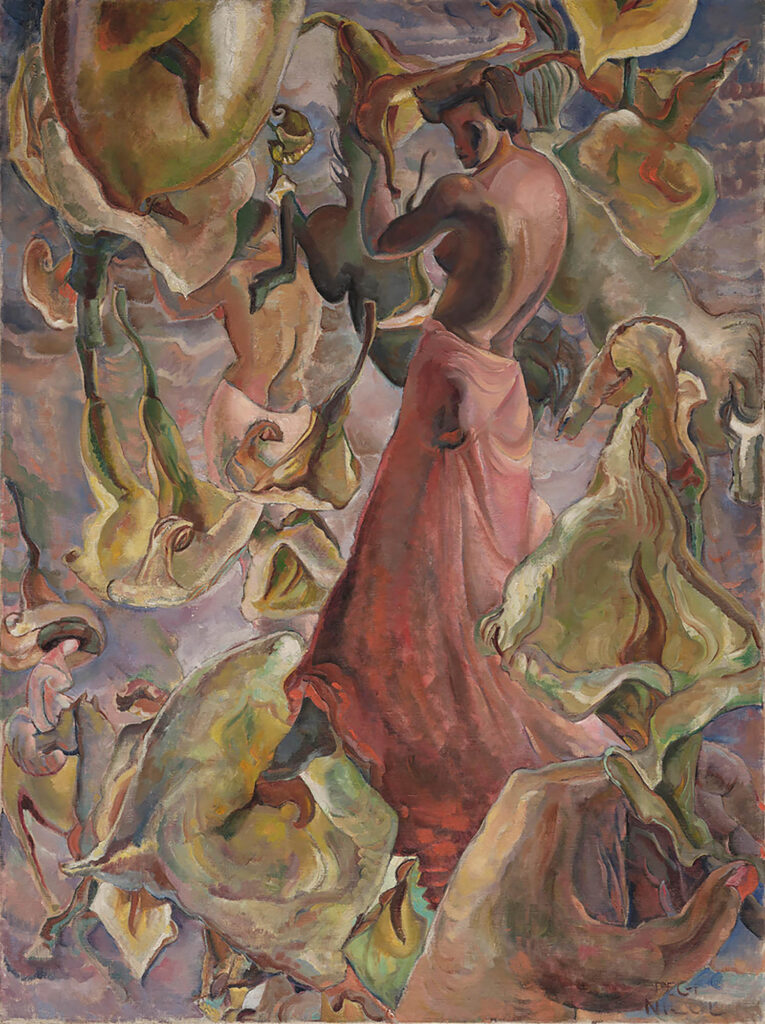
Pegi Nicol MacLeod, A Descent of Lilies, 1935
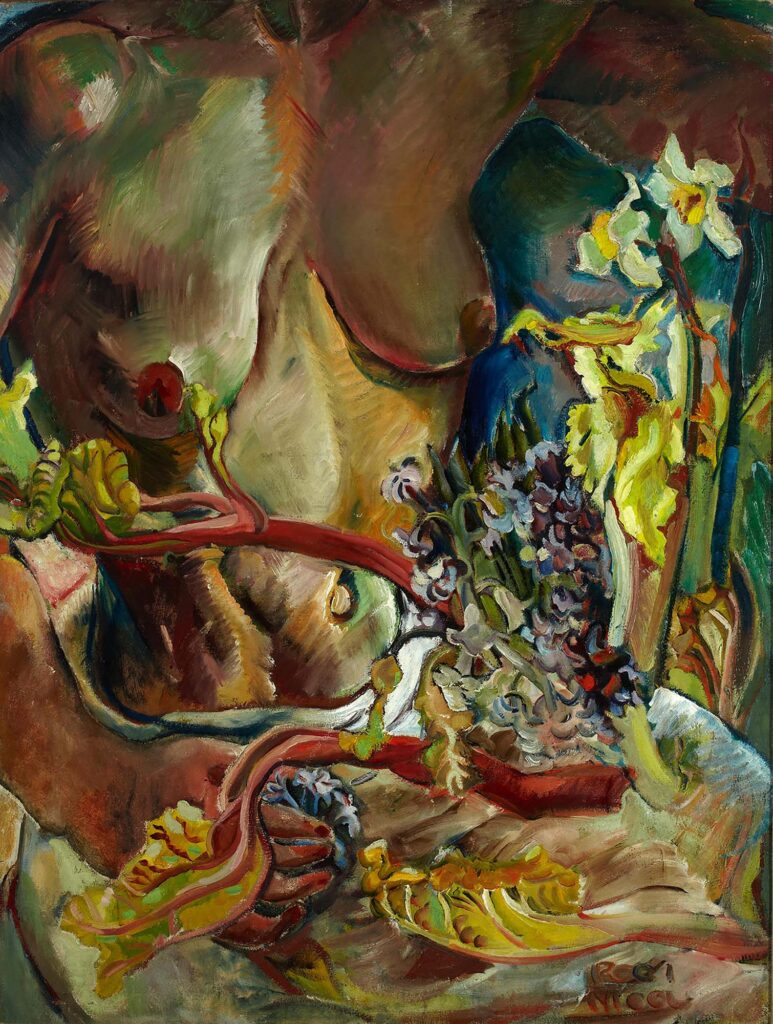
Pegi Nicol MacLeod, Torso and Plants, c.1935
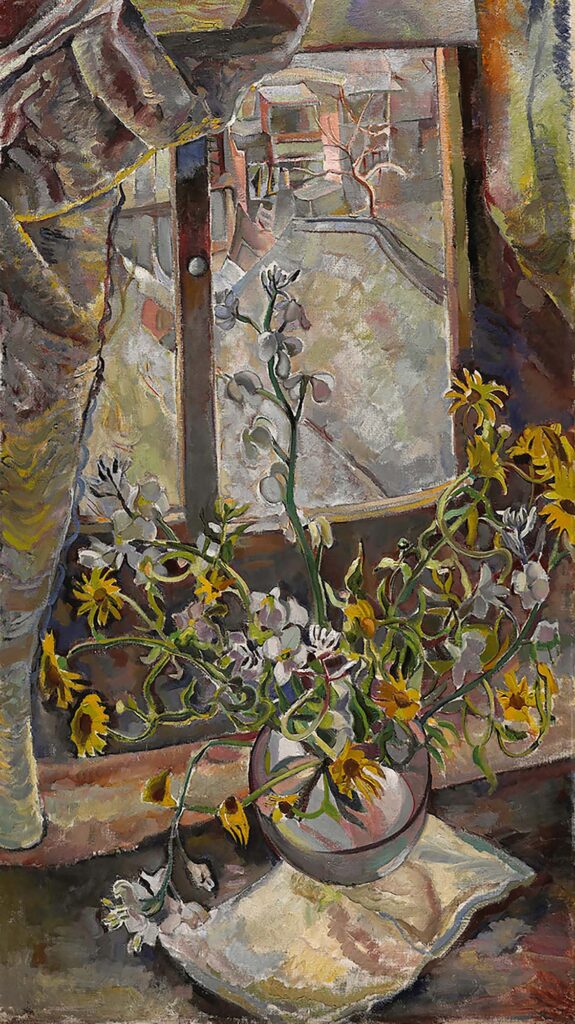
Pegi Nicol MacLeod, Cold Window, 1937
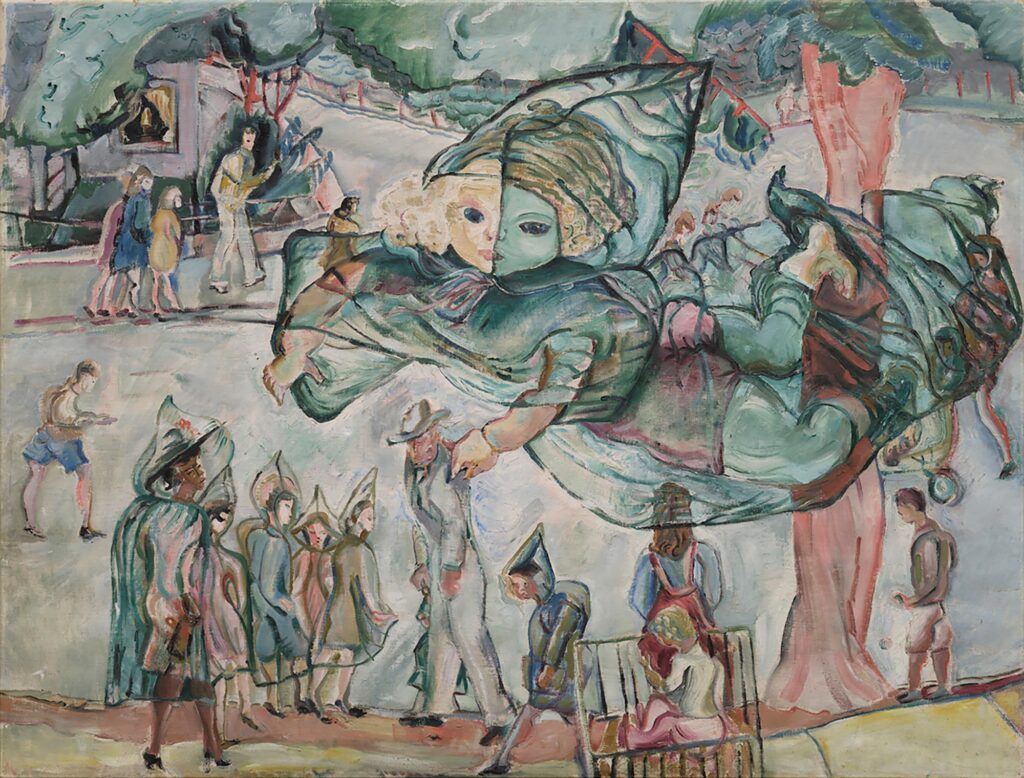
Pegi Nicol MacLeod, Children in Pliofilm, 1939
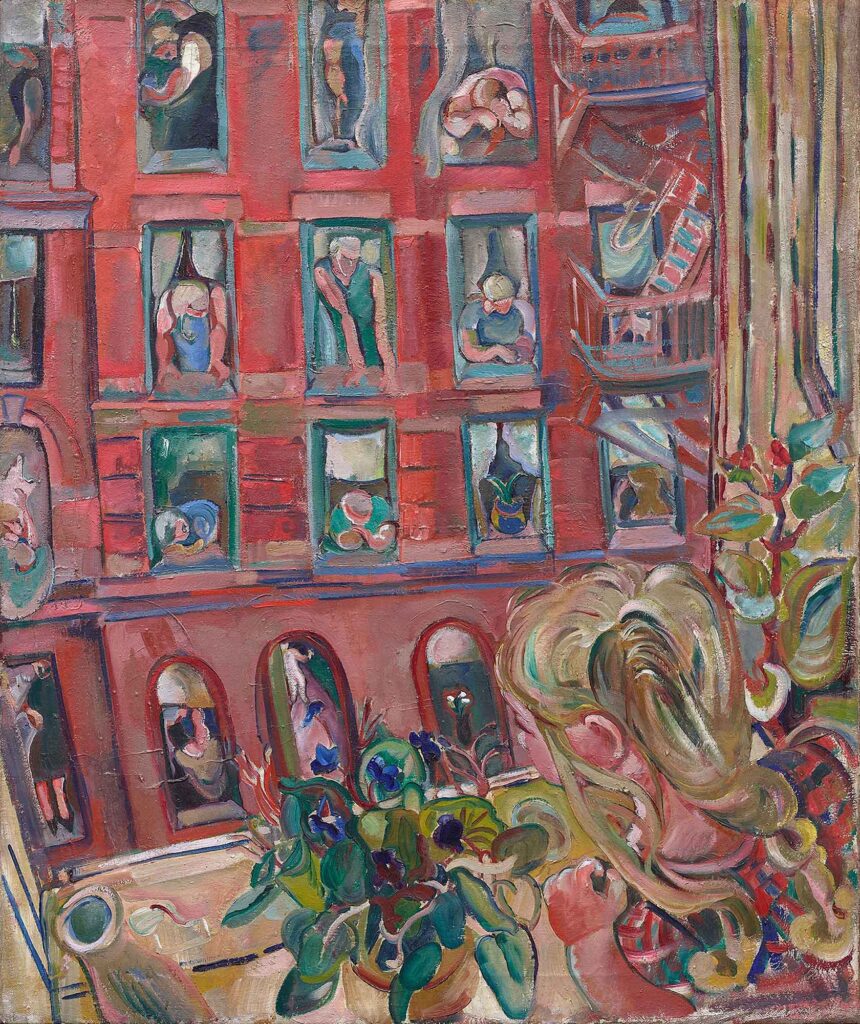
Pegi Nicol MacLeod, Young Girl at the Window, c.1941
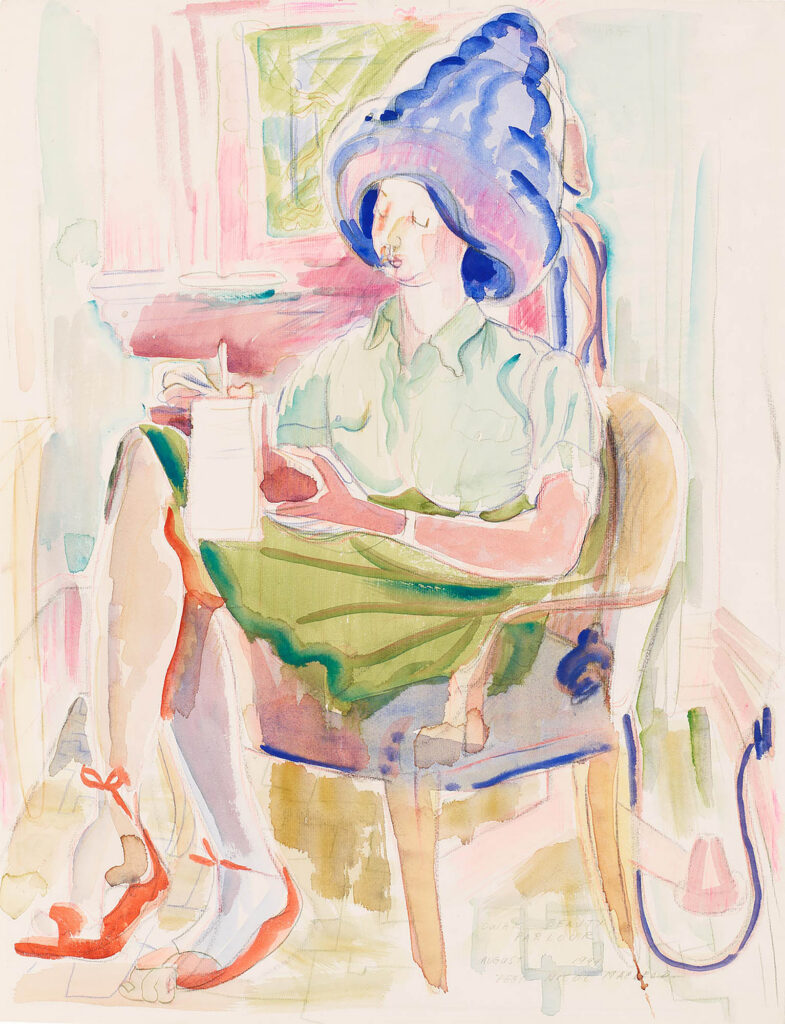
Pegi Nicol MacLeod, CWAC Beauty Parlour #1, 1944

Pegi Nicol MacLeod, Jump Rope, c.1945
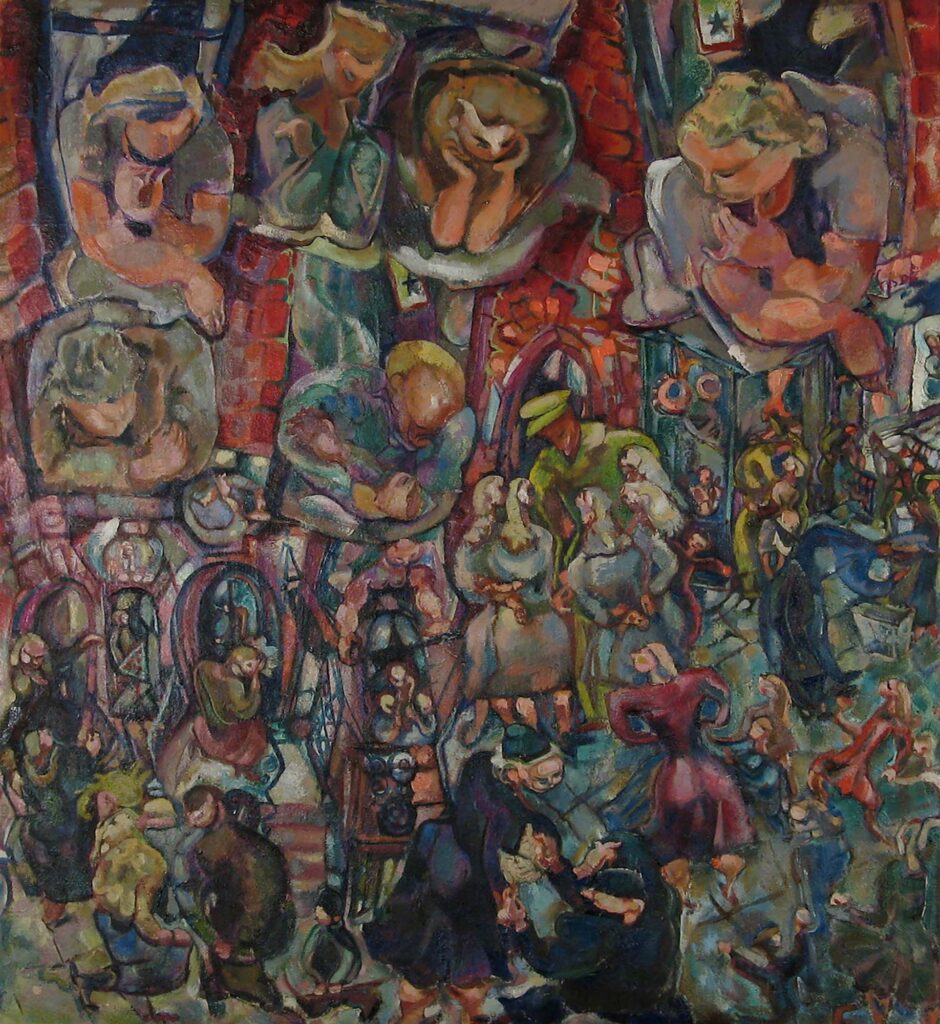
Pegi Nicol MacLeod, When Johnnie Comes Marching Home, c.1946