Torso and Plants, c.1935
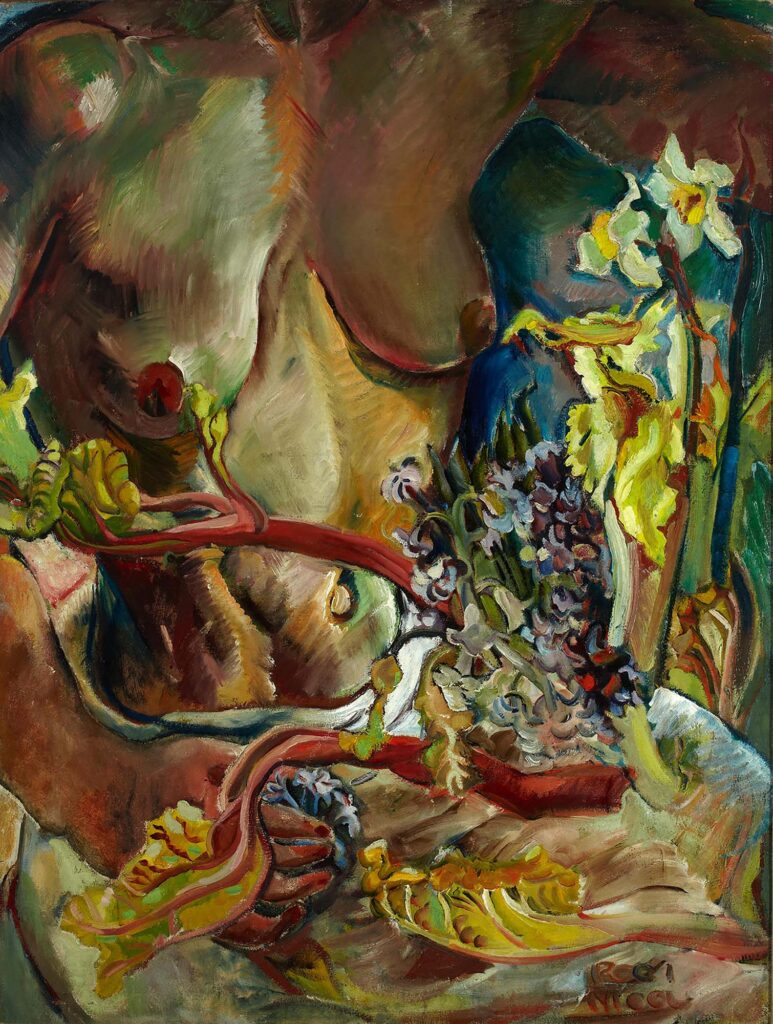
Pegi Nicol MacLeod, Torso and Plants, c.1935, oil on canvas, 90.9 x 68.7 cm, Robert McLaughlin Gallery, Oshawa.
Torso and Plants, seen as a major exploration of the nude in Canadian art in the 1930s, was remarkable for its unique merging of the genres of still life, portraiture, and the nude in a painting that challenges the parameters of all three. At a time when the nude was an uncommon subject in Canadian painting, MacLeod’s experimentation stands out for its refusal to conform to any single genre. The work underscores the tension between the body, nature, and the act of representation.
The painting depicts the artist’s torso, cropped at the neck, painted with angular strokes of green, yellow, blue, and pink. Seated with a cloth draped across her lap, MacLeod is almost overtaken by a vibrant mass of daffodils, hyacinths, and rhubarb stems that press up against the picture plane. Her body is not rendered as a passive object but is instead animated by her brushwork, resisting objectification and generating a restless interplay between figure and nature. As art scholar Anna Hudson writes, “She presents herself as a studio nude and, in so doing, includes the artist among the still-life objects arranged for aesthetic contemplation.” MacLeod’s painting operates as a kind of self-portrait (although her head is conspicuously absent), positioning the work as both a study of female anatomy and a still life. The painting cannot be read as an idealized nude, a conventional self-portrait, or a simple still life.
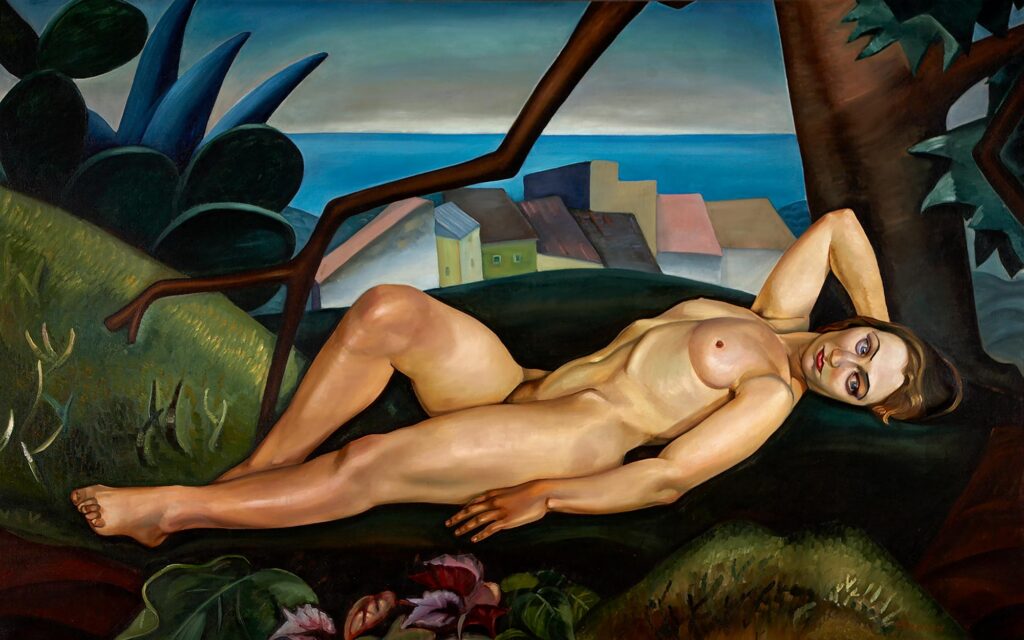
Prudence Heward, Girl Under a Tree, 1931, oil on canvas, 123 x 194 cm, Art Gallery of Hamilton.
Flowers and rhubarb dominate the centre of the composition, blurring distinctions between body and nature. Curator Laura Brandon has argued that the rhubarb, a known purgative, is a symbolic allusion to MacLeod’s 1935 abortion, although there is no direct evidence to confirm this reading. Nonetheless, the presence of rhubarb, a more unusual choice than the flowers or other traditional still-life motifs, invites deeper consideration.
Within the Canadian context, MacLeod’s approach was highly original. Lilias Torrance Newton (1896–1980) and Prudence Heward (1896–1947) also produced striking nudes in the 1930s, but their works often provoked mixed reactions or outright censorship, reflecting the public’s discomfort with direct or psychologically charged representations of women. First exhibited in early 1936, and later featured in Yearbook of the Arts in Canada, edited by painter Bertram Brooker (1888–1955), Torso and Plants exemplifies MacLeod’s bold reimagining of the nude, underscoring it as a site of self-expression.
Gallery
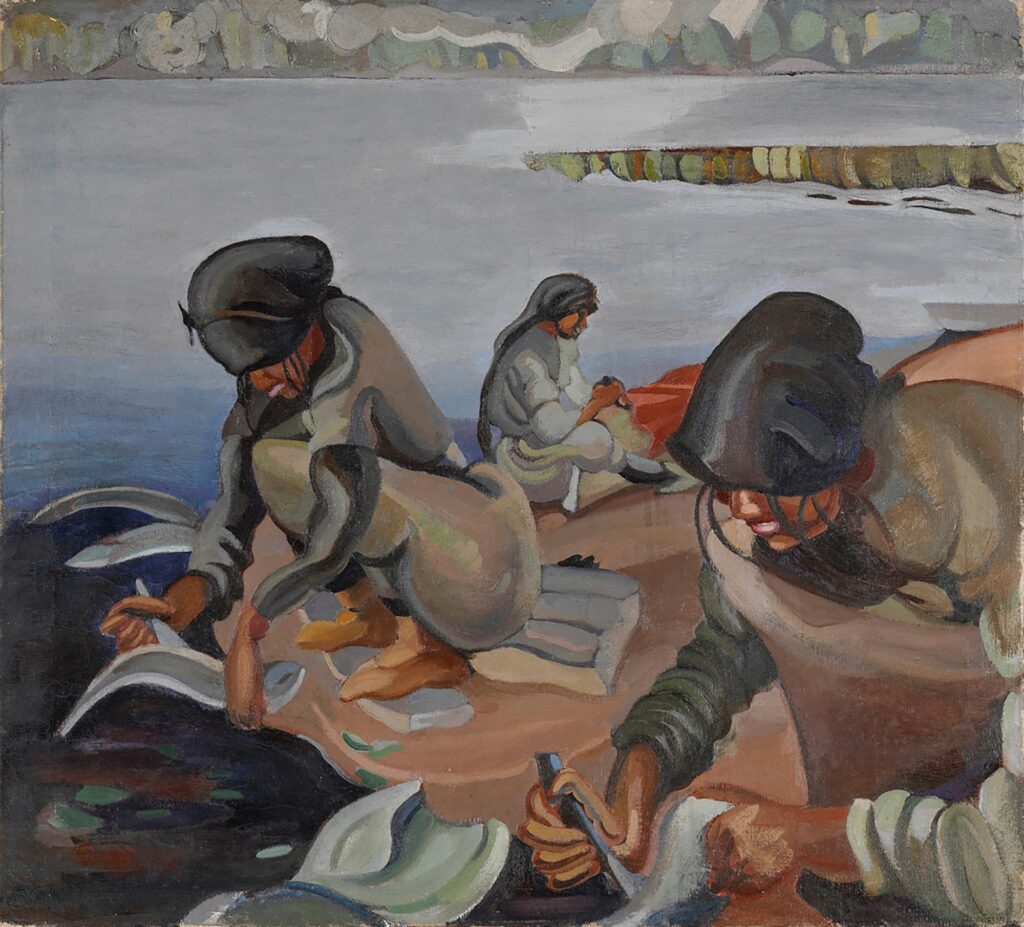
Pegi Nicol MacLeod, Women Cleaning Fish, c.1927

Pegi Nicol MacLeod, Self-Portrait, c.1928
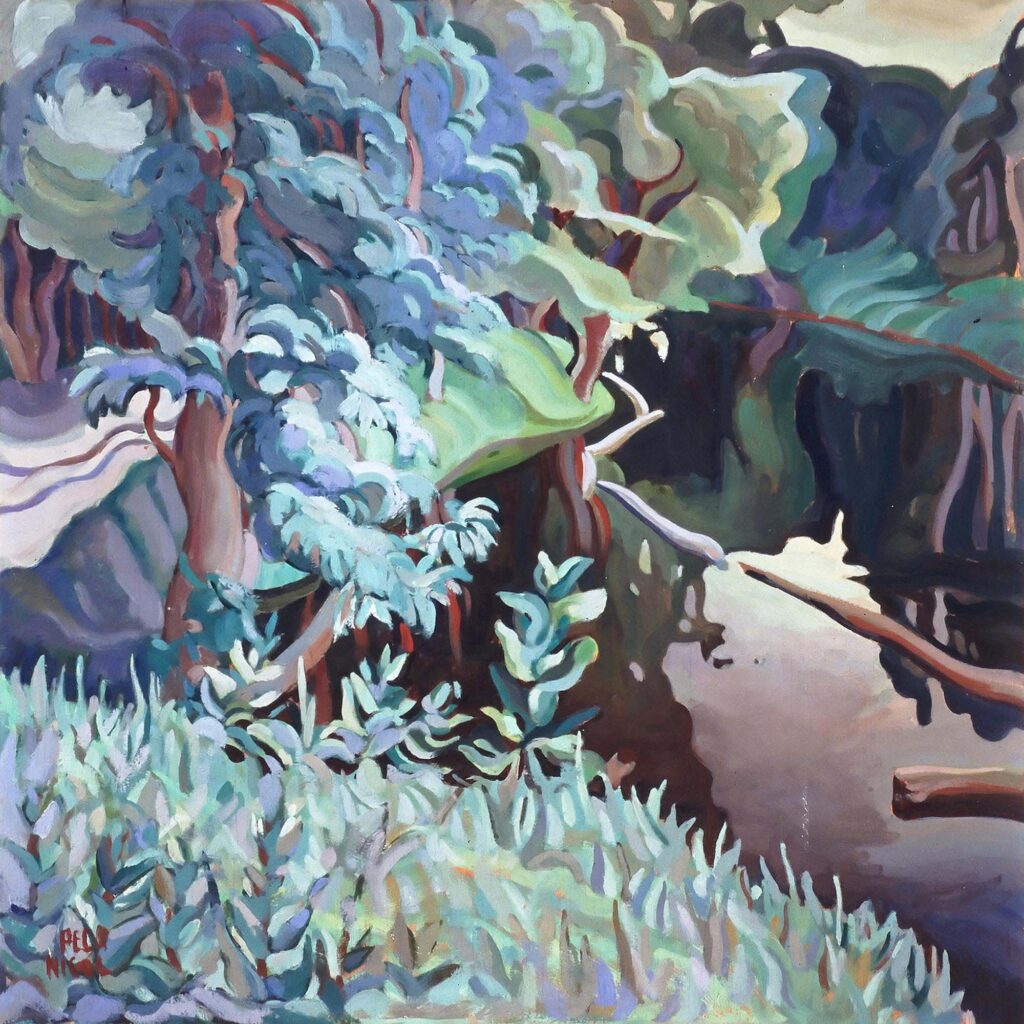
Pegi Nicol MacLeod, The Log Run, c.1930
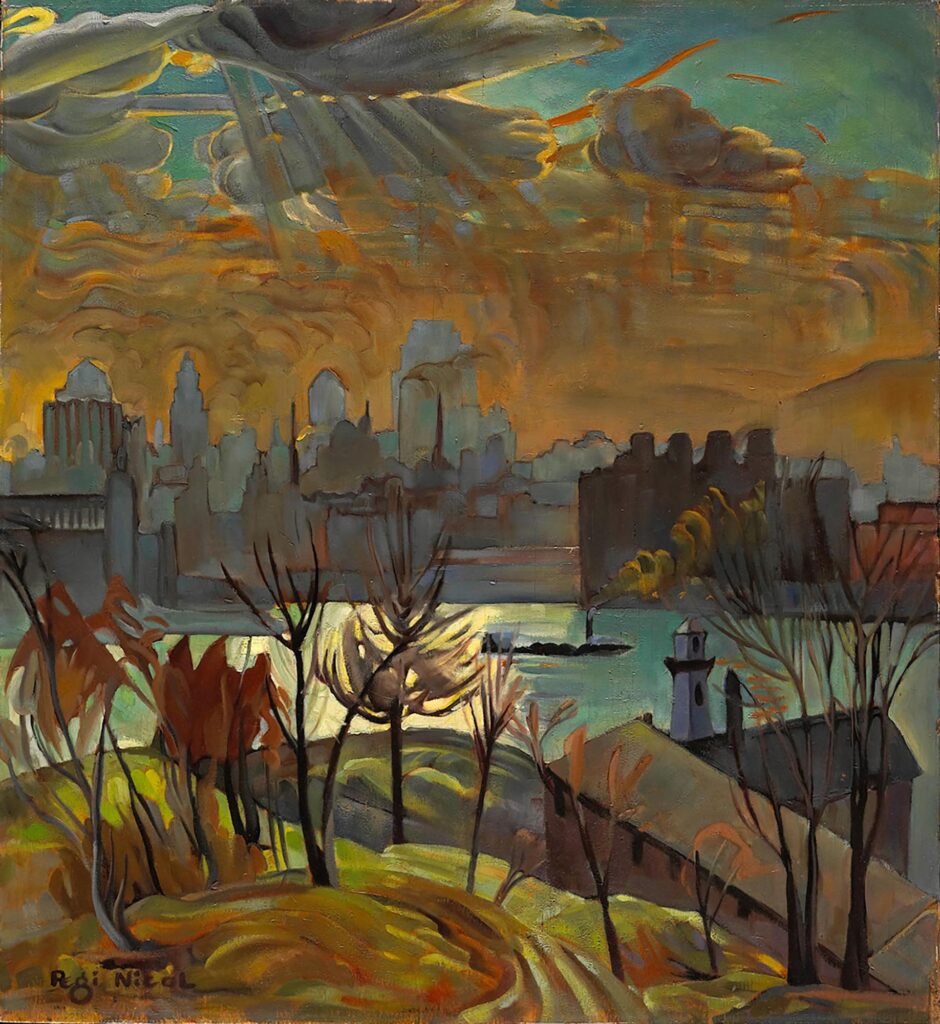
Pegi Nicol MacLeod, Montreal Harbour from St. Helen’s Island, 1933
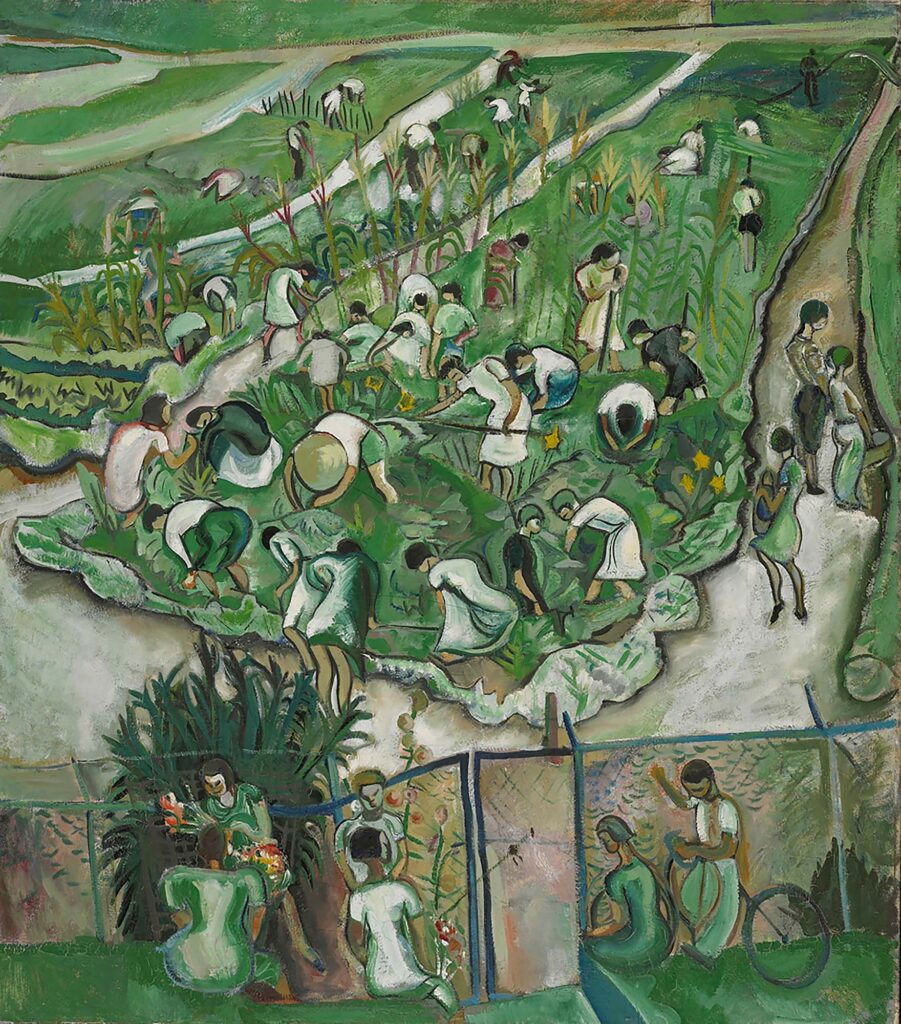
Pegi Nicol MacLeod, School in a Garden, c.1934
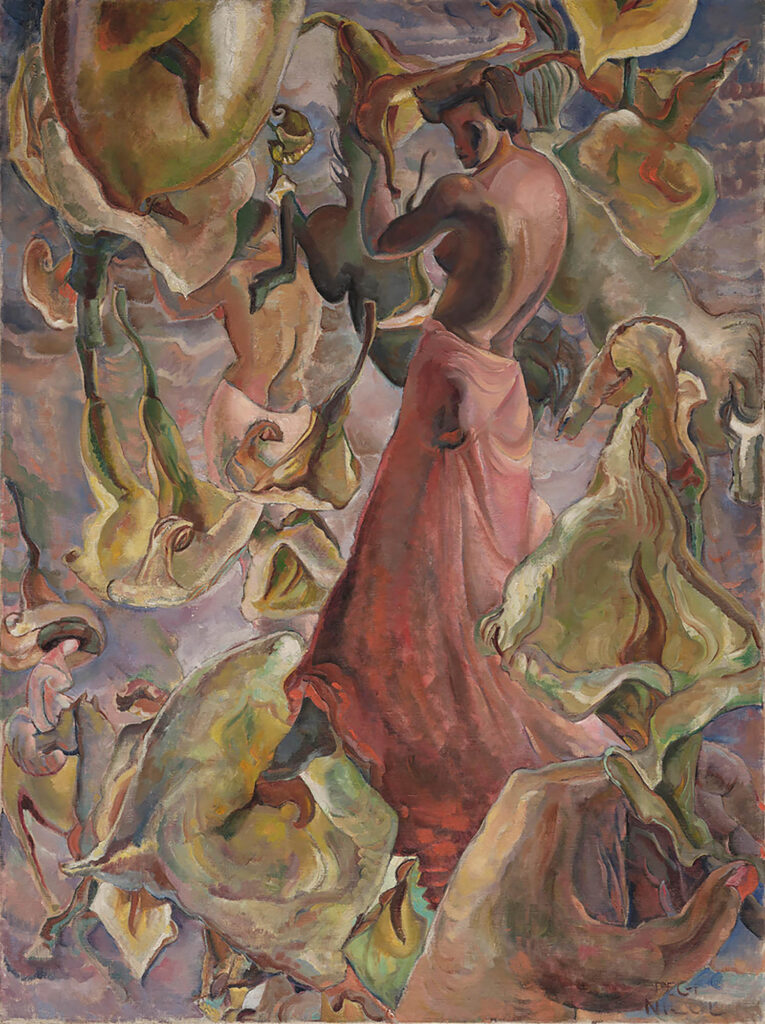
Pegi Nicol MacLeod, A Descent of Lilies, 1935
Pegi Nicol MacLeod, Torso and Plants, c.1935
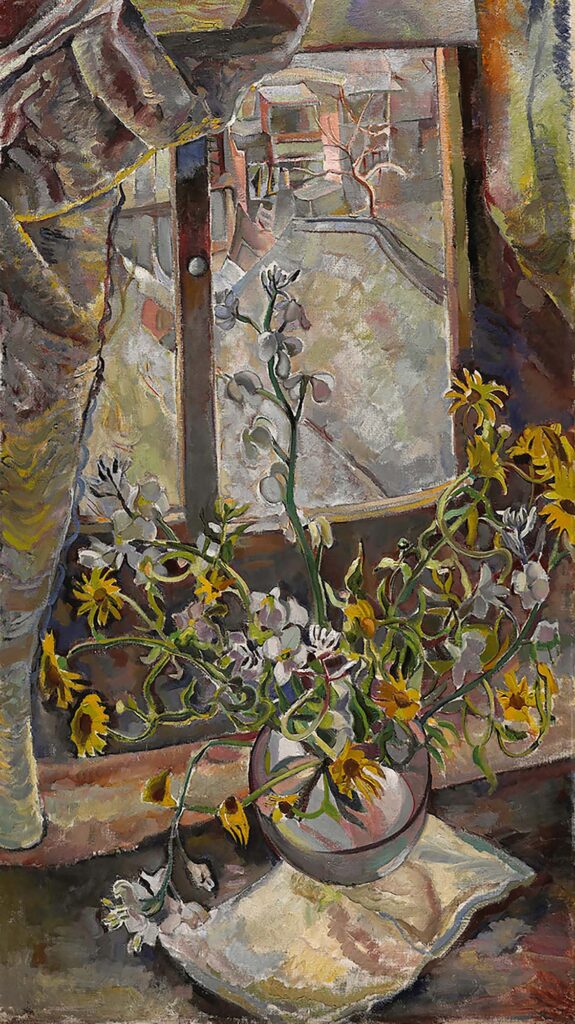
Pegi Nicol MacLeod, Cold Window, 1937
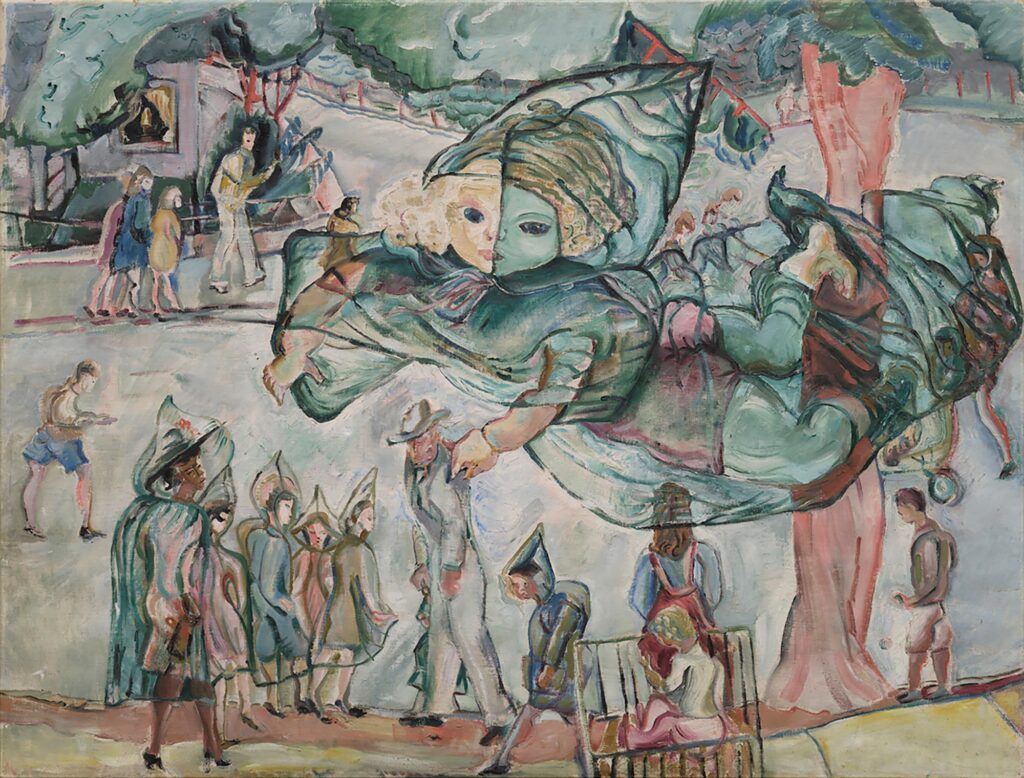
Pegi Nicol MacLeod, Children in Pliofilm, 1939
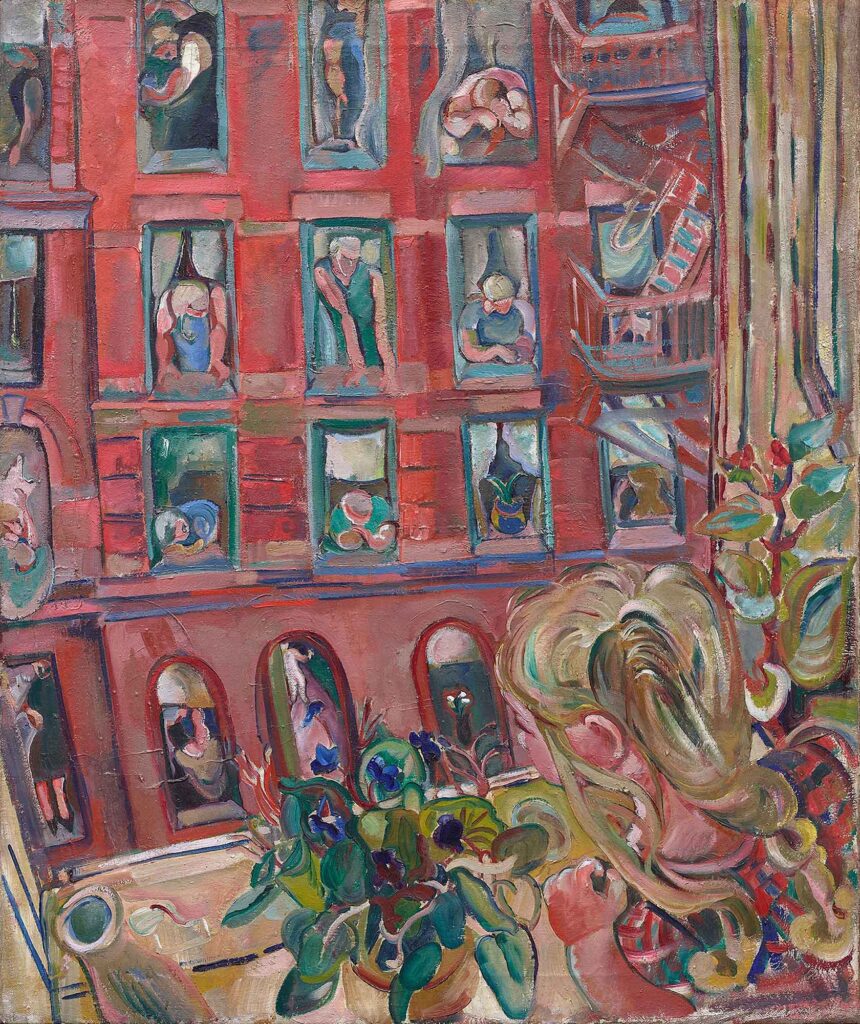
Pegi Nicol MacLeod, Young Girl at the Window, c.1941
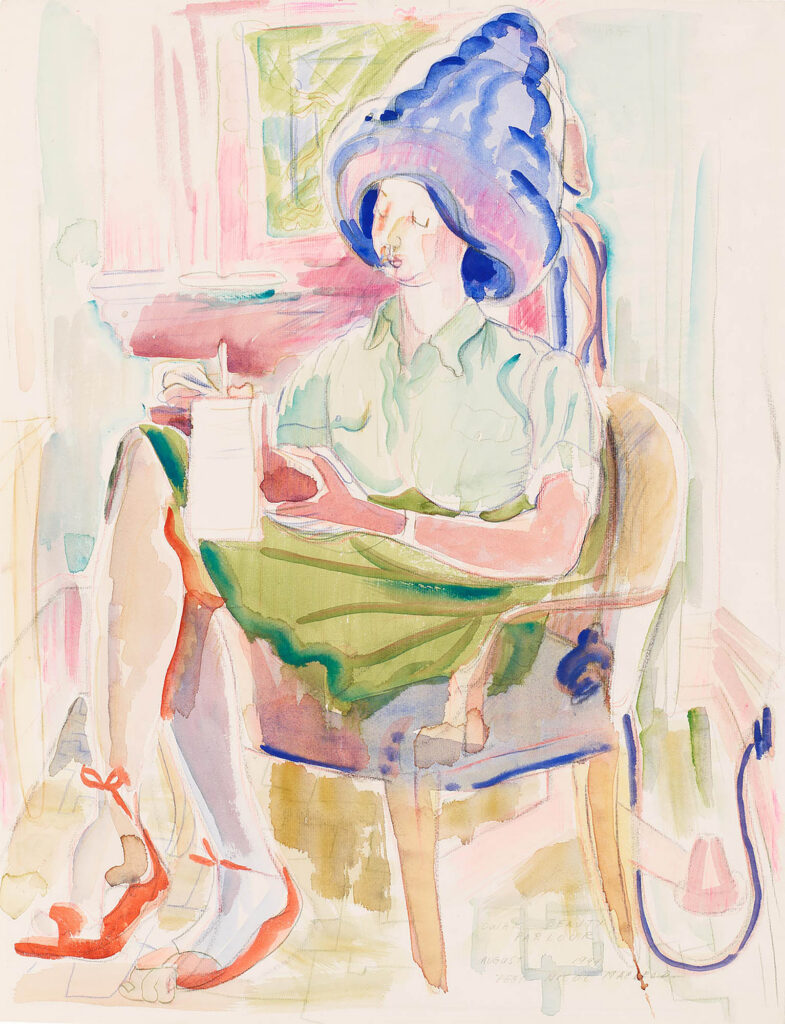
Pegi Nicol MacLeod, CWAC Beauty Parlour #1, 1944

Pegi Nicol MacLeod, Jump Rope, c.1945
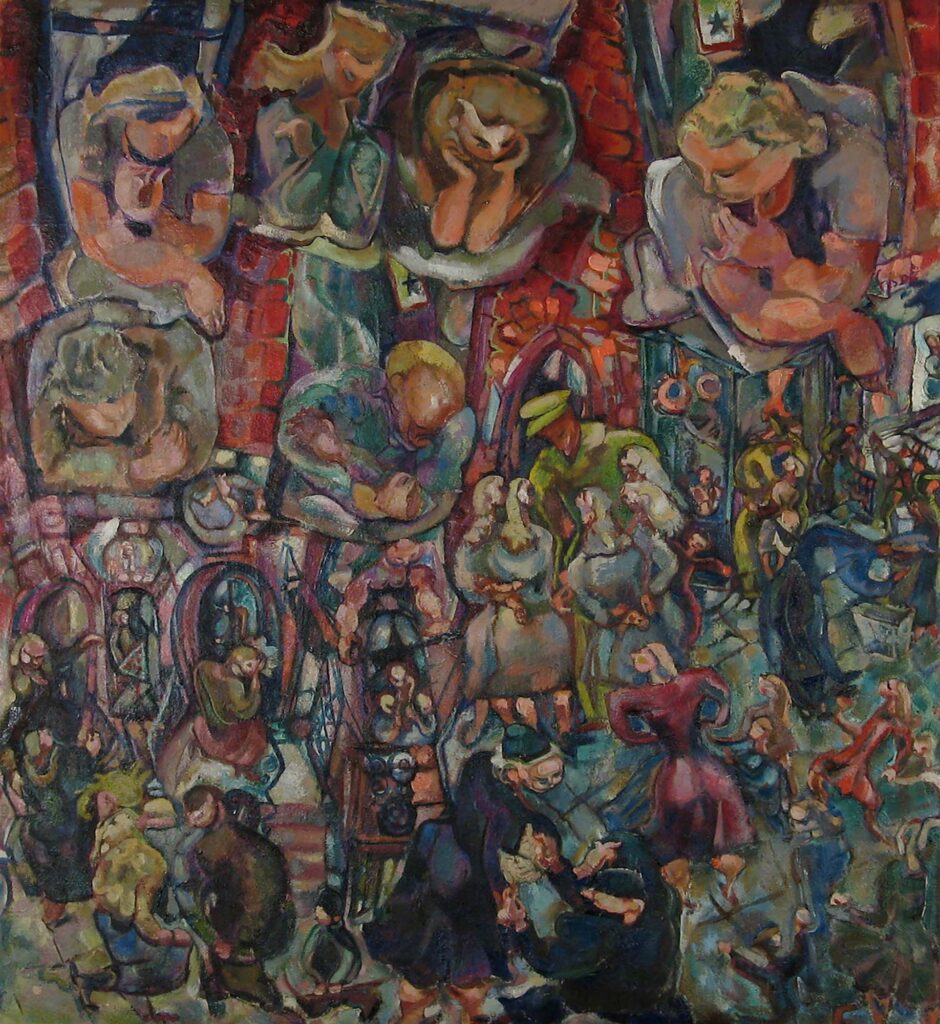
Pegi Nicol MacLeod, When Johnnie Comes Marching Home, c.1946