The Log Run, c.1930
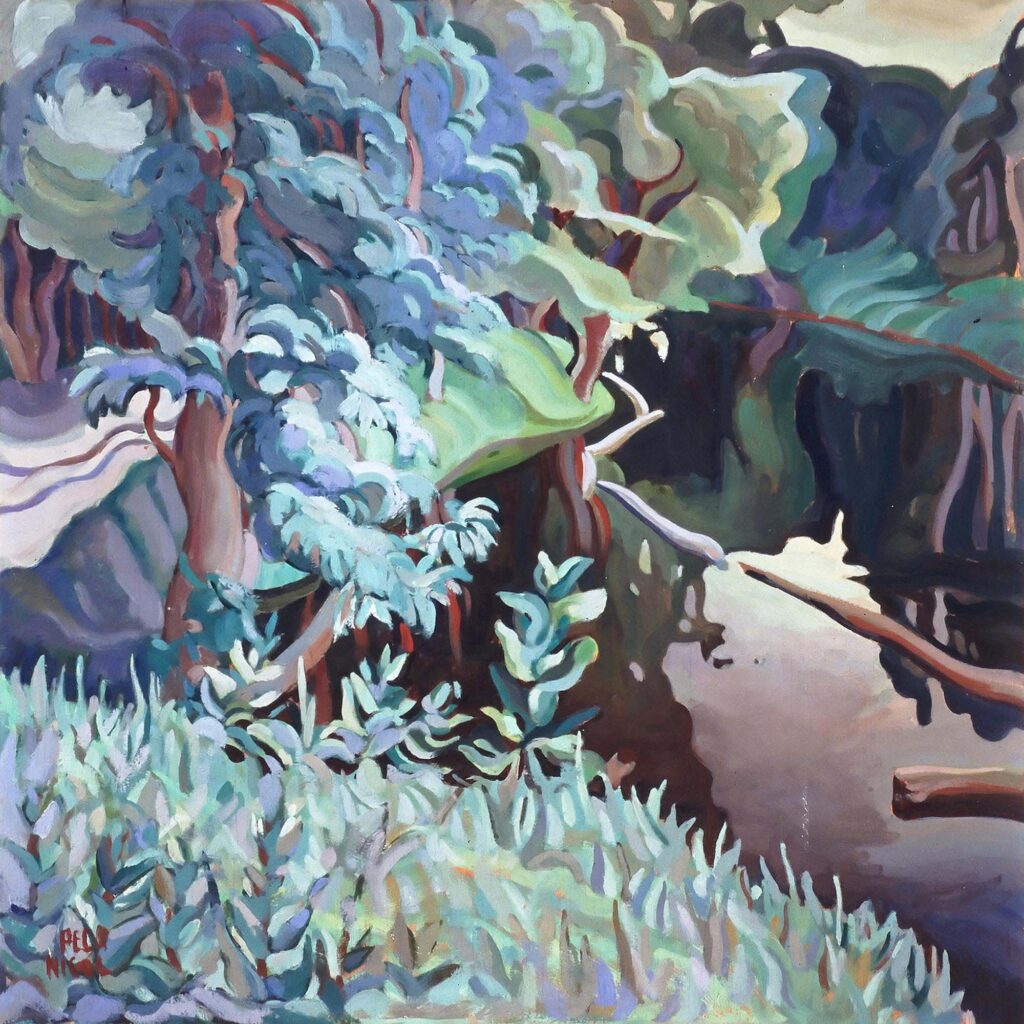
Pegi Nicol MacLeod, The Log Run, c.1930, oil on board, 59.7 x 59.7 cm, private collection.
The Log Run was an early breakthrough in Pegi Nicol MacLeod’s career, establishing her as one of Canada’s rising artists. This small oil-on-board painting depicts a dense forest scene in front of the Gatineau River. It features twisting tree trunks and lush foliage in cool tones of green, blue, lavender, and soft purple, giving the work a dreamlike, almost abstract quality. A row of logs bisects the river, echoing the solitary trees found in works like Jack Pine, 1916–17, by Tom Thomson (1877–1917) or Stormy Weather, Georgian Bay, 1921, by F.H. Varley (1881–1969).
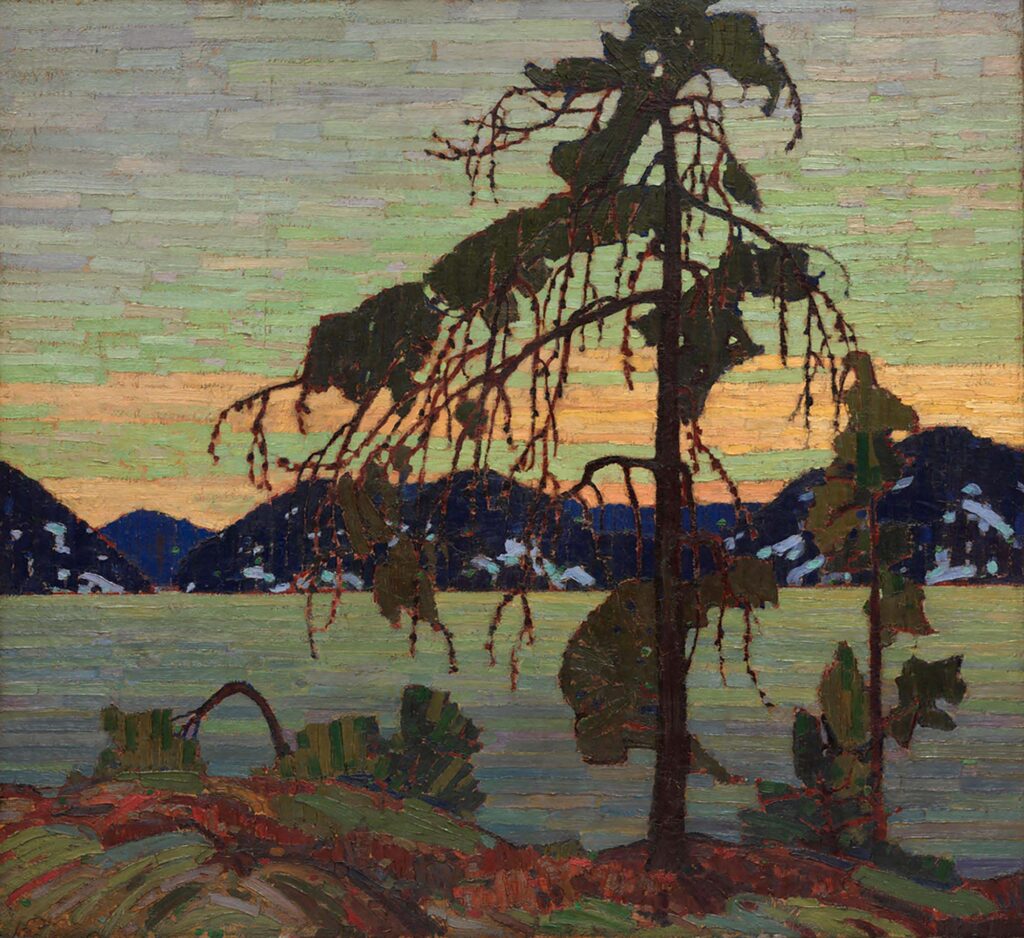
Tom Thomson, Jack Pine, 1916–17, oil on canvas, 127.9 x 139.8 cm, National Gallery of Canada, Ottawa.
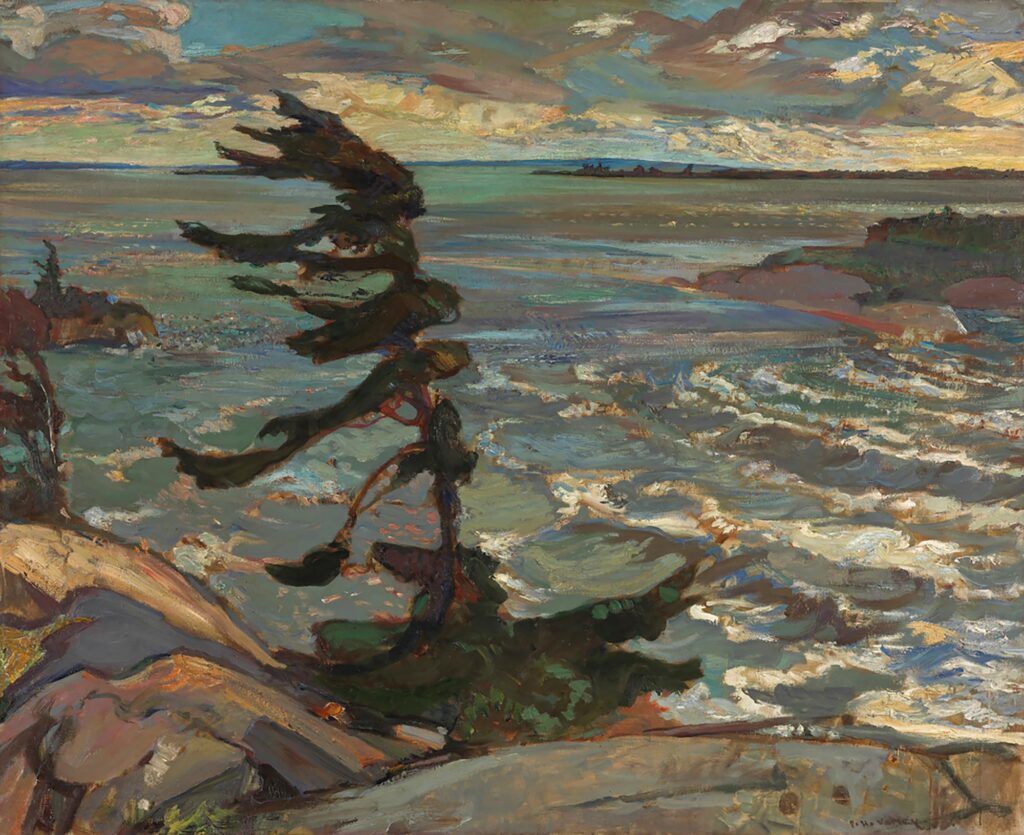
F.H. Varley, Stormy Weather, Georgian Bay, 1921, oil on canvas, 132.6 x 162.8 cm, National Gallery of Canada, Ottawa.
Awarded the prestigious Willingdon Prize in 1931, this piece brought MacLeod national recognition at a moment when landscape painting was seen as embodying Canadian identity. Her achievement was significant—she won out over other notable entrants, including Nan Cheney (1897–1985), Charles Comfort (1900–1994), George Pepper (1903–1962), and F.H. Varley. This early landscape demonstrates her ability to translate the artistic debates of her time into a distinctive personal style.
The interplay of light and shadow in The Log Run creates a dramatic atmosphere, and while the composition echoes the kind of brushwork and some of the palette popularized by the Group of Seven, MacLeod’s treatment feels more intimate and immediate. In 1951, a critic noted these qualities, observing that “the deftly executed light and shadow, keen perspective, and glowing colours add to the beauty of the Quebec countryside.” The composition is animated by the bold, sweeping brush strokes that would become a feature of MacLeod’s later style. They create a dynamic rhythm across the canvas, while the reflective surface of the water captures the shadows of overhanging branches, enhancing the work’s spatial depth.
By 1930, the Group of Seven’s landscape aesthetic had come to define Canadian
modernism, and The Log Run clearly engages with this visual language through its bold use of colour, loose brushwork, and symbolic framing. Yet the painting departs from the Group’s more monumental treatment of wilderness. In her Post-Impressionist handling of this seemingly unpopulated stretch of the Gatineau River, MacLeod compresses space to create a scene that feels intimate and immersive. Though she would ultimately make a name for herself as a portraitist and figure painter, this early landscape work indicates her engagement with the artistic movements of her time.
Gallery
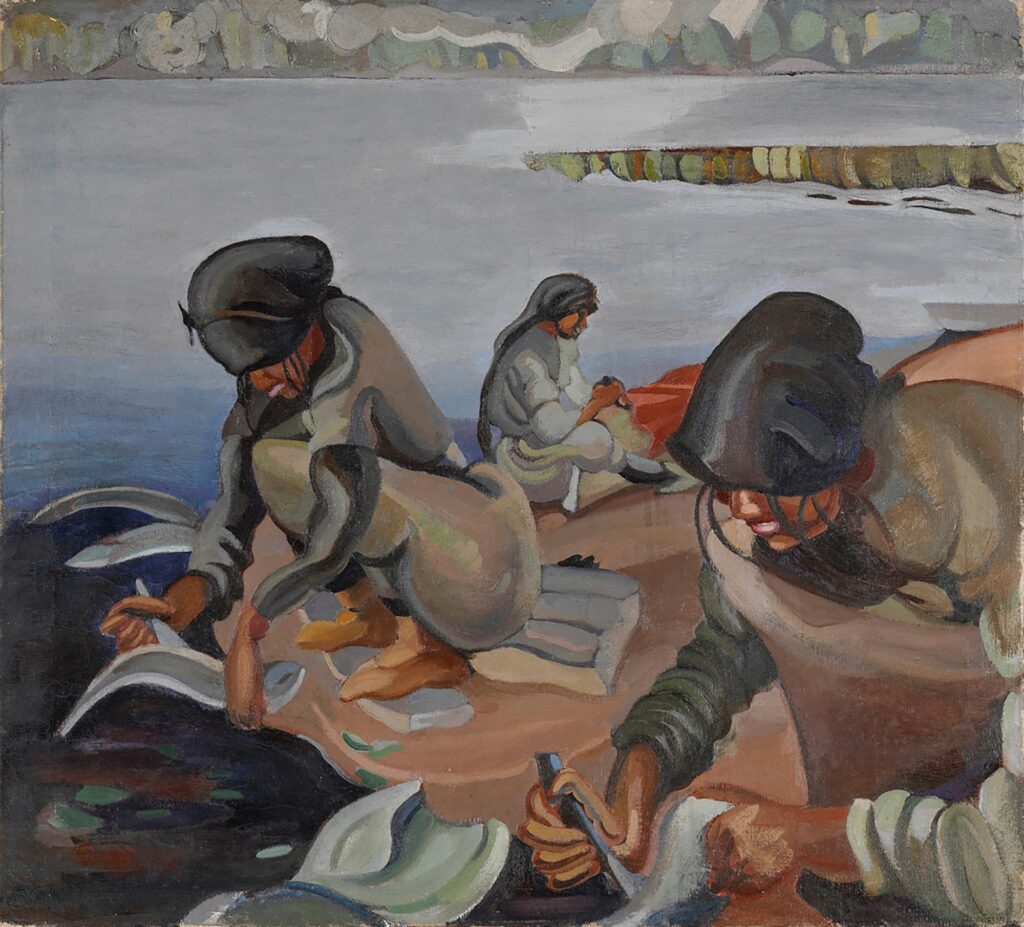
Pegi Nicol MacLeod, Women Cleaning Fish, c.1927

Pegi Nicol MacLeod, Self-Portrait, c.1928
Pegi Nicol MacLeod, The Log Run, c.1930
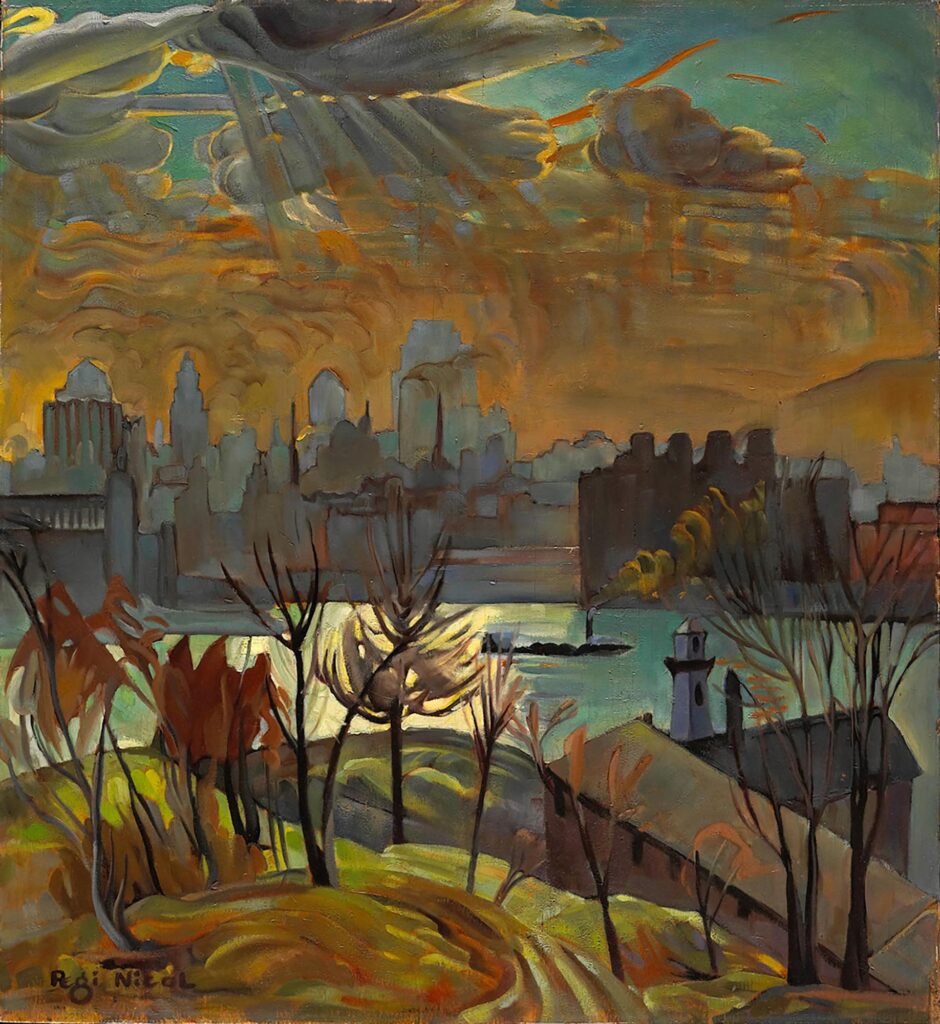
Pegi Nicol MacLeod, Montreal Harbour from St. Helen’s Island, 1933
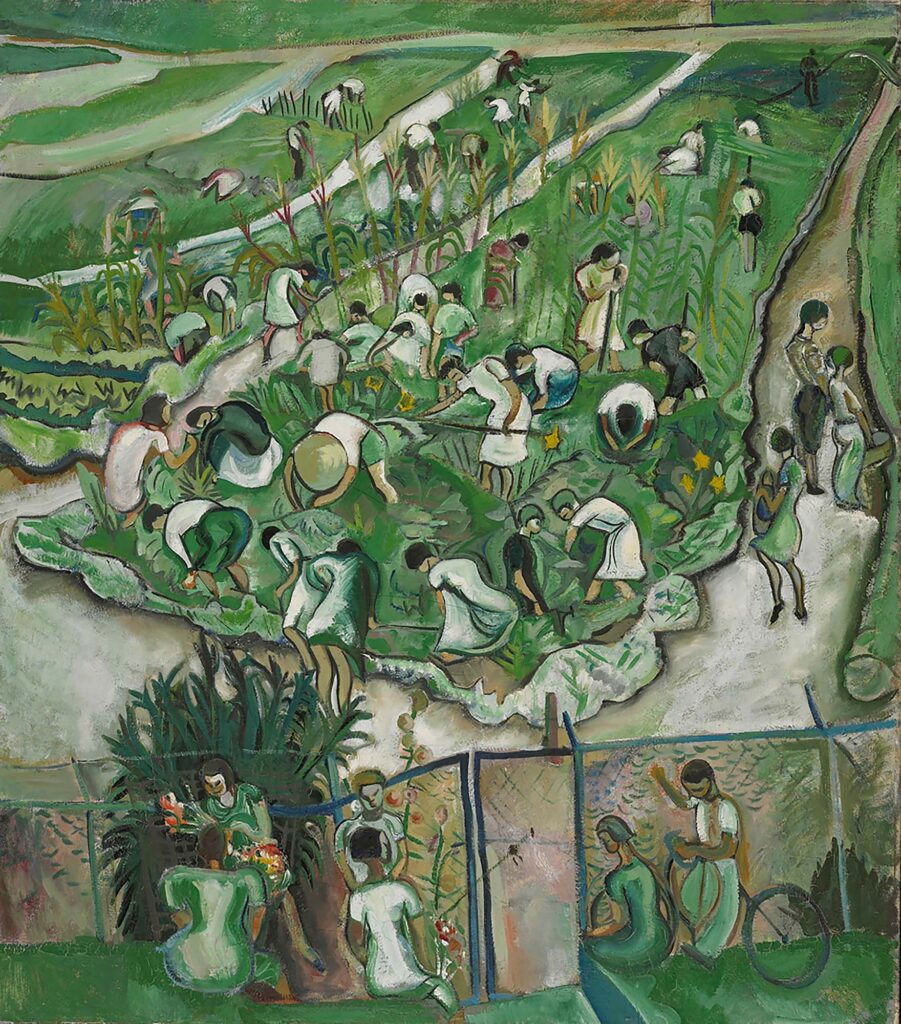
Pegi Nicol MacLeod, School in a Garden, c.1934
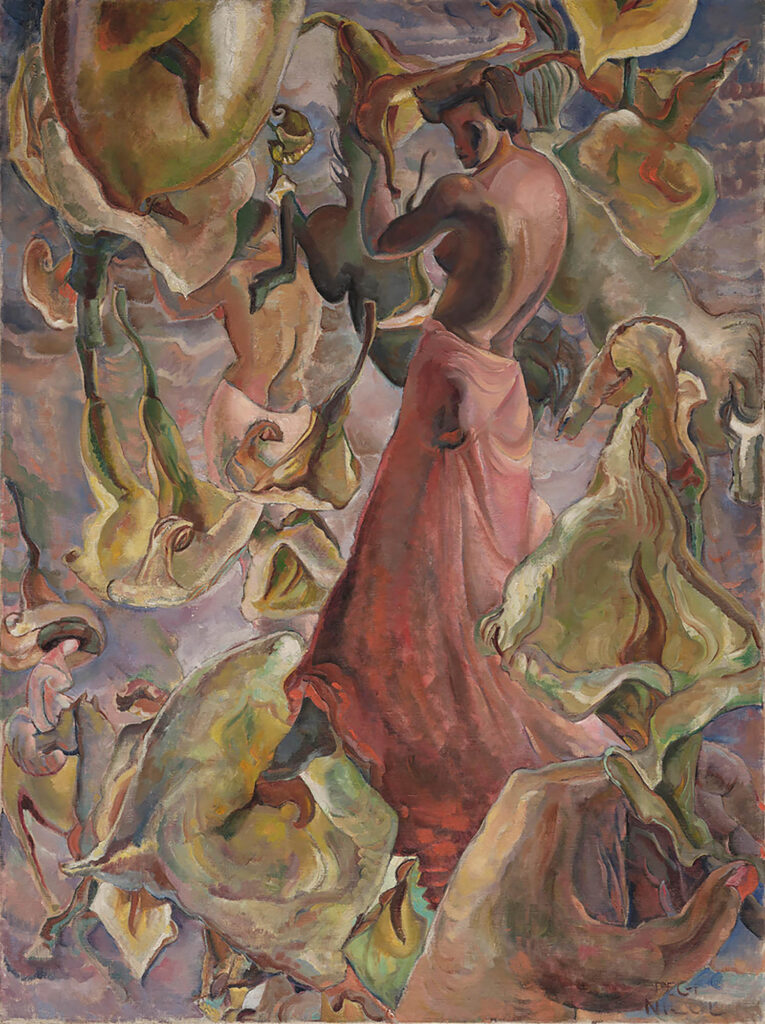
Pegi Nicol MacLeod, A Descent of Lilies, 1935
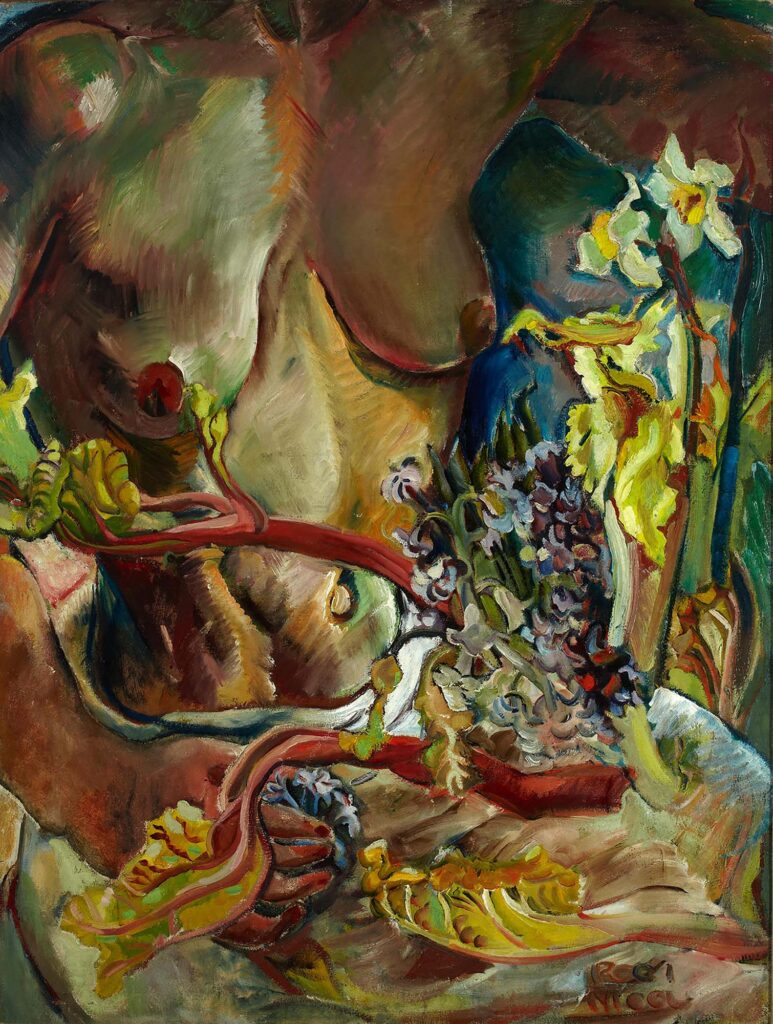
Pegi Nicol MacLeod, Torso and Plants, c.1935
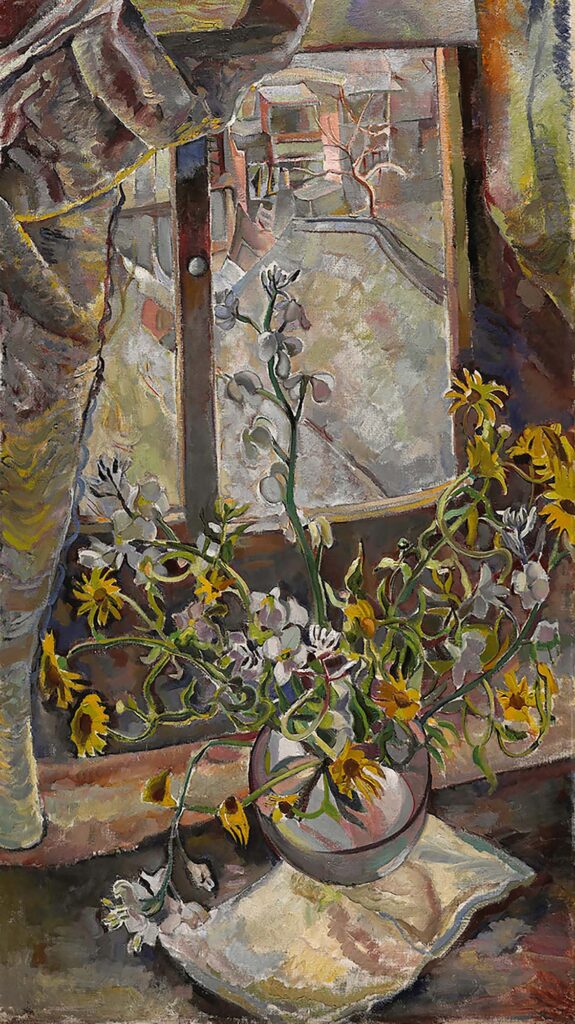
Pegi Nicol MacLeod, Cold Window, 1937
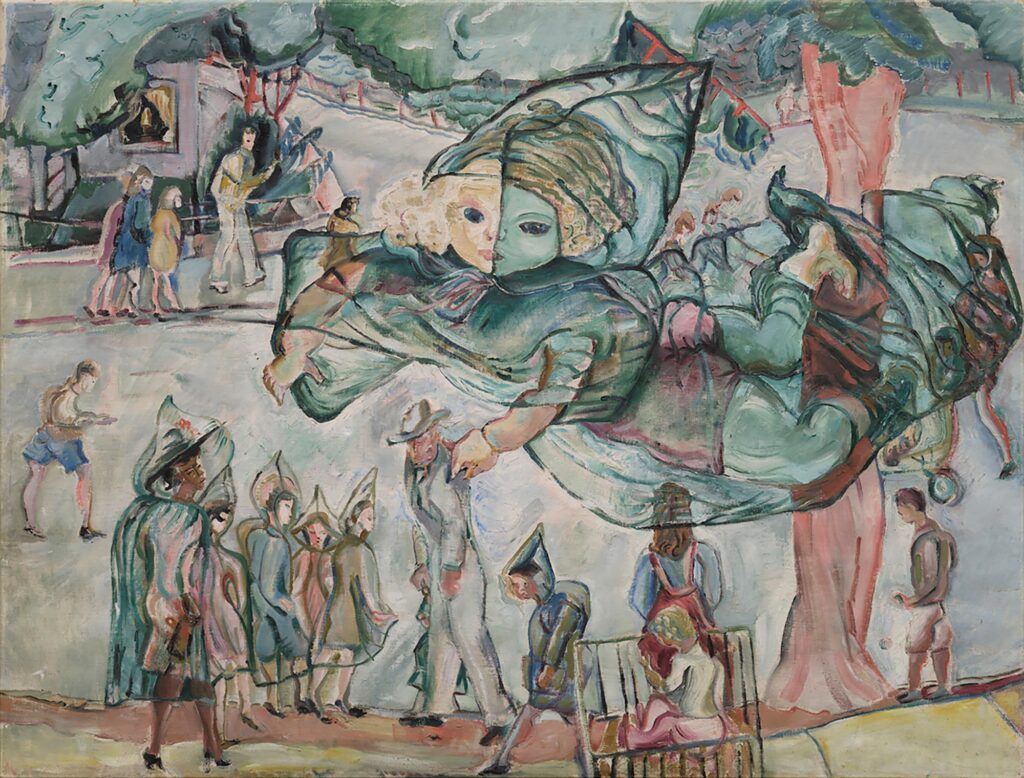
Pegi Nicol MacLeod, Children in Pliofilm, 1939
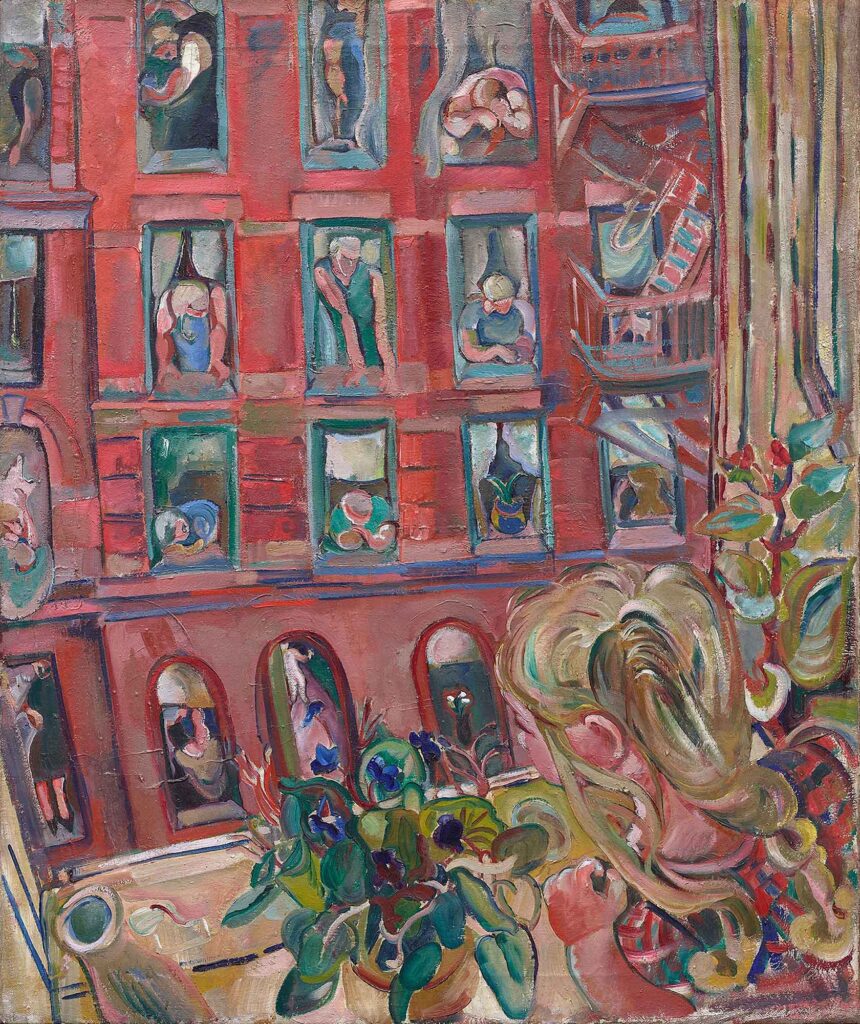
Pegi Nicol MacLeod, Young Girl at the Window, c.1941
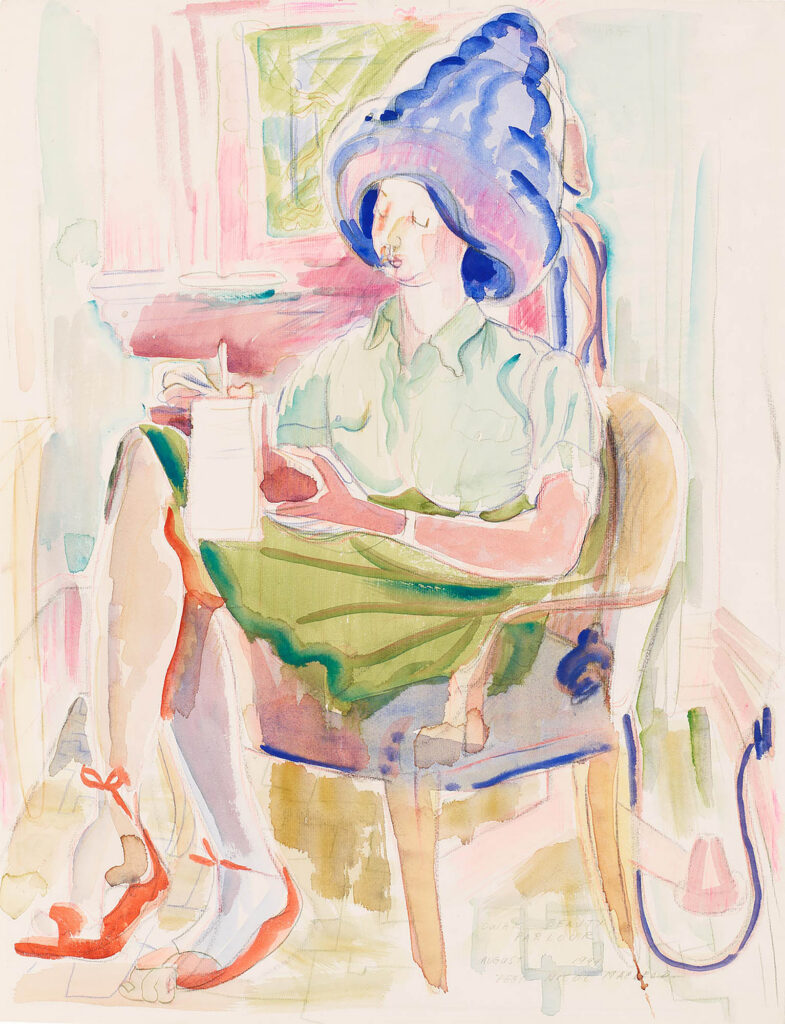
Pegi Nicol MacLeod, CWAC Beauty Parlour #1, 1944

Pegi Nicol MacLeod, Jump Rope, c.1945
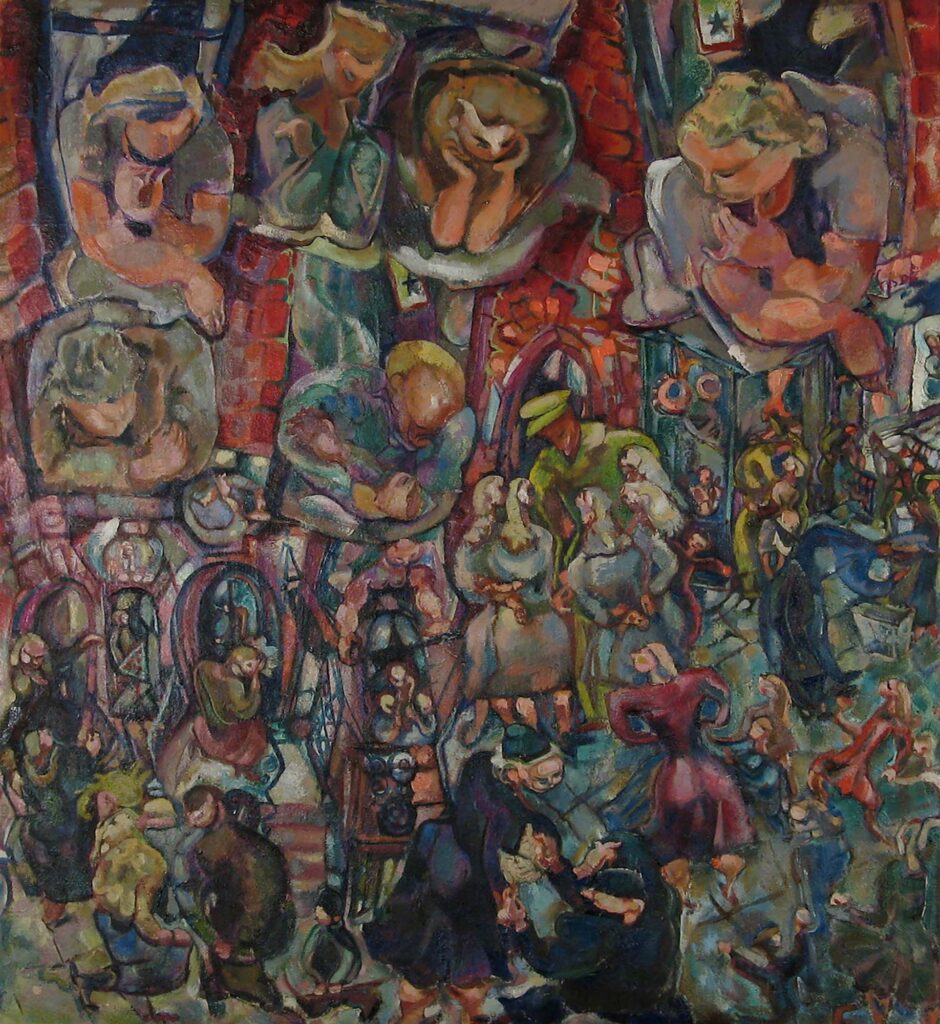
Pegi Nicol MacLeod, When Johnnie Comes Marching Home, c.1946