David Ruben Piqtoukun, Airplane, 1995

David Ruben Piqtoukun, Airplane, 1995, Brazilian soapstone and African wonderstone, 26 x 36.5 x 27.5 cm, Winnipeg Art Gallery.
In Airplane, Inuvialuk sculptor David Ruben Piqtoukun (1950–2026) reaches back to his first memory of colonial rupture—the day he and other small children from Paulatuk, Northwest Territories, were loaded without explanation onto an aircraft and flown to the Roman Catholic boarding school at Aklavik.
Carved from weighty Brazilian soapstone and dark African wonderstone, Airplane unfolds in three stacked registers. At ground level sits an igloo, a sign for home, kinship, and traditional stories, the sphere of relationships from which the child was taken and to which memory continually returns. Rising above, the stylized aircraft is pierced by an open-lattice belly—ribbed void, cargo hold, cage, fuselage turned trap—its negative spaces registering absence as palpably as mass. The contrast between the smooth, aerodynamic outer shell and the gridded interior structure echoes the split between the school’s surface rhetoric of care and the regimented containment within. Perched on top, a diminutive child figure, Piqtoukun’s younger self, rides the spine of the machine, neither swallowed nor thrown clear but holding on, situating agency literally above the instrument of removal.

Abraham Anghik Ruben, Silent Drum, 1999, Brazilian soapstone, 28.5 x 34.5 x 79 cm, Winnipeg Art Gallery.
That inversion is crucial. In the sculpture, the transport that severed language and land becomes a platform from which the Survivor surveys and narrates. Viewers often bring their own associations to airplanes—mobility, vacation, modernity—but the carving reorients the symbol toward histories of medevac, relocation, and school extraction that marked northern Indigenous life for decades. Museum educators note how this shift in meaning opens doors to empathy: once one understands that a plane could mean abduction, the suspended child reads as both memory and resilient witness. Traditionally, the Inuit have considered art as a vessel that remembers. Airplane functions ceremonially, communally, pedagogically—a stone that carries story
when words falter.
Of his experience in residential school, Piqtoukun recalled only the deafening airplane drone, the fear, the processing on arrival—hair shorn, clothing replaced—and the rules that defined what he later called an education in forgetting: do not speak your language, dress alike, obey, pray, assimilate. Ill-fitting shoes, foreign food, distance from parents, and a temper stoked by bewilderment made him, in his words, both a fighter and a lost child. Those charged reactions of confusion, severed speech, and bodily control reappear transmuted in stone. As such, Airplane becomes a compact monument to forced displacement and Inuit survivance.
Seen alongside the carvings of his brother Abraham Anghik Ruben (b.1951), whose
Silent Drum, 1999, mourns suppressed spiritual ancestries, Airplane maps the intimate scale of the assimilation policy within the residential schools: one small body, one flight, one enduring will to return. In the spirit of insistence by the Truth and Reconciliation Commission of Canada that truth precede reconciliation, Piqtoukun offers a tactile archive of that first flight out and the lifelong journey back. The child now rides above the fuselage. The story is his to steer.
Collection of Survivors’ Art
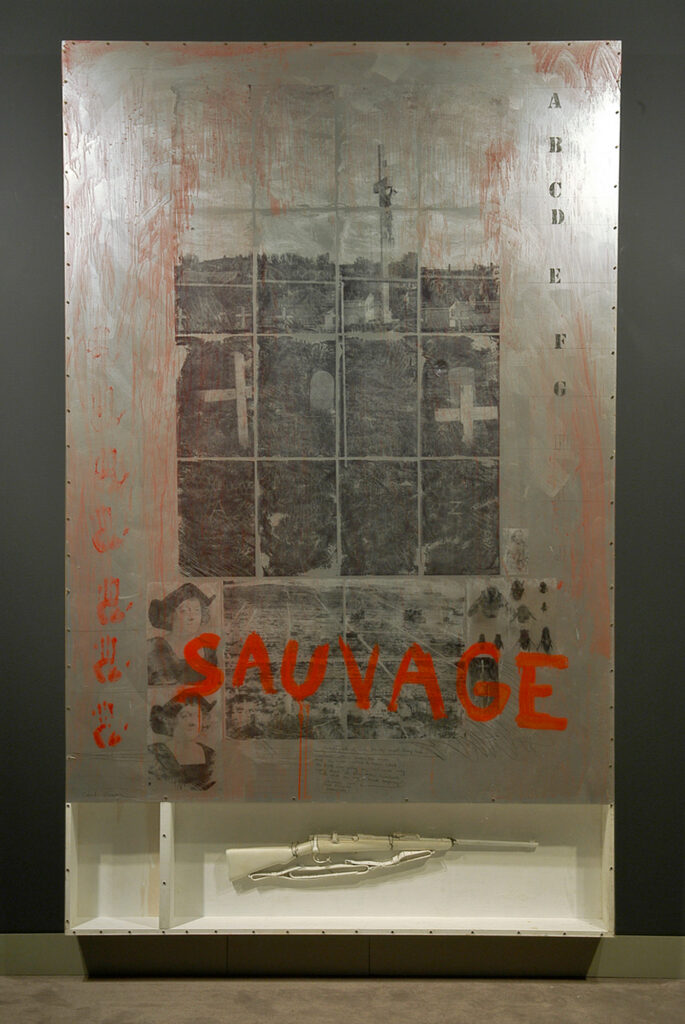
Carl Beam, Sauvage, 1988
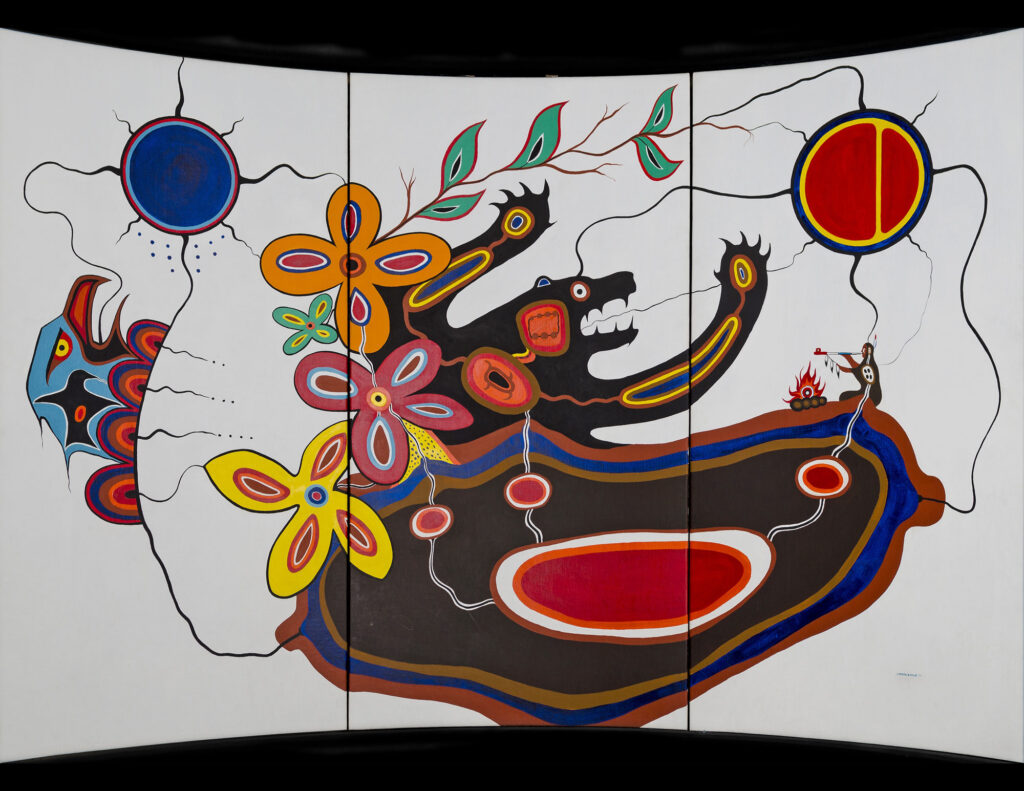
Jackson Beardy, Native World View, 1978

Henry Beaudry, Treaty No. 6, Battleford Area, n.d.

Mary Ceasar, Hair Being Cut by Nuns, 2017

Freda Diesing, Old Woman with Labret, 1973

Faye HeavyShield, Sisters, 1993

Robert Houle, Parfleches for the Last Supper, 1983

Alex Janvier, Blood Tears, 2001

Norval Morrisseau, The Gift, 1975

Ellen Neel, Kakaso'las, 1955–56
David Ruben Piqtoukun, Airplane, 1995

Jamasee Padluq Pitseolak, The Day After, 2010

Abraham Anghik Ruben, The Last Goodbye, 2001

Pitaloosie Saila, Strange Ladies, 2006

Allen Sapp, Recess at Onion Lake School, 1988

Henry Speck, Father Forgive Them, 1958

Adrian Stimson, Sick and Tired, 2005

Gerald Tailfeathers, Blood Camp, 1956

Lawrence Paul Yuxweluptun, Indian Residential School, Leaving the Shallow Graves and Going Home, 2022