Alex Janvier, Blood Tears, 2001

Alex Janvier, Blood Tears, 2001, acrylic on linen, 128.3 x 177.8 x 7 cm, Janvier Gallery, Cold Lake.
Alex Janvier (1935–2024), Denesuliné of Cold Lake First Nations, Alberta, created Blood Tears as a double-sided acrylic painting on linen. The image on the front erupts in earthy ochres and muted reds, with thick trails of paint cascading like blood. Amid the abstraction, discernible forms emerge: a cross atop a brick-red building, evoking the residential school chapel, and a splayed human leg, conveying overwhelming sorrow. The impasto texture intensifies the rawness, as if the painting itself mourns what was stolen in the schools: childhood, language, culture, and kinship.

Alex Janvier, Blood Tears (back side), 2001, Janvier Gallery, Cold Lake.
The verso deepens this testimony. There, Janvier’s handwritten inscription catalogues
the “series of losses” inflicted by the residential school system: “childhood, language (Denesułine), culture, customs, parents, extended family, grandparents, elders’ knowledge, traditional beliefs.” He recounts being told his “Indian ways” were evil, his grandparents “evil,” and being “caught in a mess of evil and good” where obedience earned “top marks.” Punishments for speaking Denesuliné were ruthless—“to be strapped, and severely punished!”—and summers without Elders left a void. His words culminate in a haunting truth: “Many, many died of broken bodies, of twisted conflicting mental difference. Most died with ‘Broken spirit.’… The rest are permanently,
‘Live in fear.’ The rest will take their silence to their graves as many have to this day.” This inscription, functioning as an artist’s manifesto, transforms the canvas into a sovereign declaration, reclaiming narrative from colonial silence.
From a perspective rooted in kanawâpâtahmowin (seeing with responsibility), Blood Tears embodies miýikosiwin (the gift of vision and creativity). Janvier’s Dene heritage infuses the abstraction with organic lines inspired by beadwork and birchbark patterns learned from his mother, asserting cultural continuity in defiance of erasure. The painting’s duality—front as emotional outpouring, back as factual indictment—mirrors the Indigenous Turn, the recent movement to validate Indigenous knowledge and practices, reorienting art history through Indigenous ways of knowing and understanding the world.
Curators have prioritized Blood Tears in exhibitions that address residential school legacies, where its freestanding display revealing both sides of the canvas invites direct engagement. This public impact has in turn amplified its truth telling. Artist and curator Tanya Harnett (b.1970) has noted Janvier’s courage in confronting this history, underscoring how his willingness to make it visible within a major institution opened space for Indigenous curators to bring the same subject matter into their own practice.
Ultimately, Blood Tears is an act of cultural revitalization. Though it depicts harm, it
stands as a monument to survival, reasserting Indigenous identity within contemporary art. Janvier, a Survivor of Blue Quills Residential School from 1942 to 1952, created this work on his sixty-sixth birthday. It stands as a powerful act of visual sovereignty, transforming the trauma of residential school experiences into a living archive of memory and resilience, embedding it with layers of personal and collective grief. Janvier once said, “Art is what saved me in those residential schools.” Here, he models how creation can overcome oppression. In our era of reconciliation, the painting prompts reflection on education’s dual role in trauma and healing, urging us to honour Survivors and rebuild through truth and justice.
Collection of Survivors’ Art
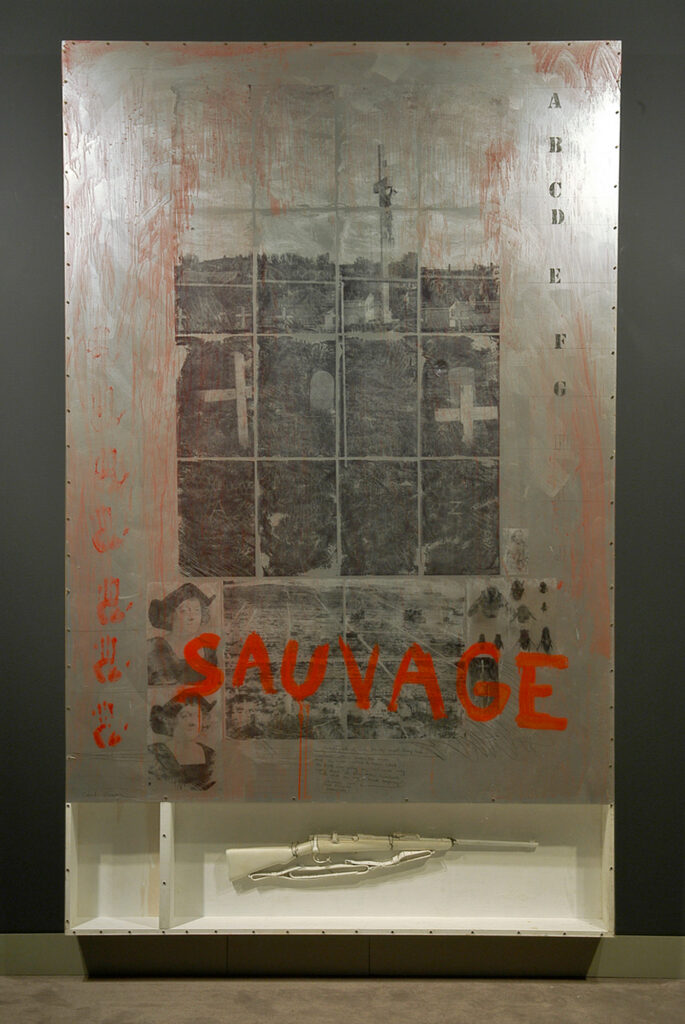
Carl Beam, Sauvage, 1988
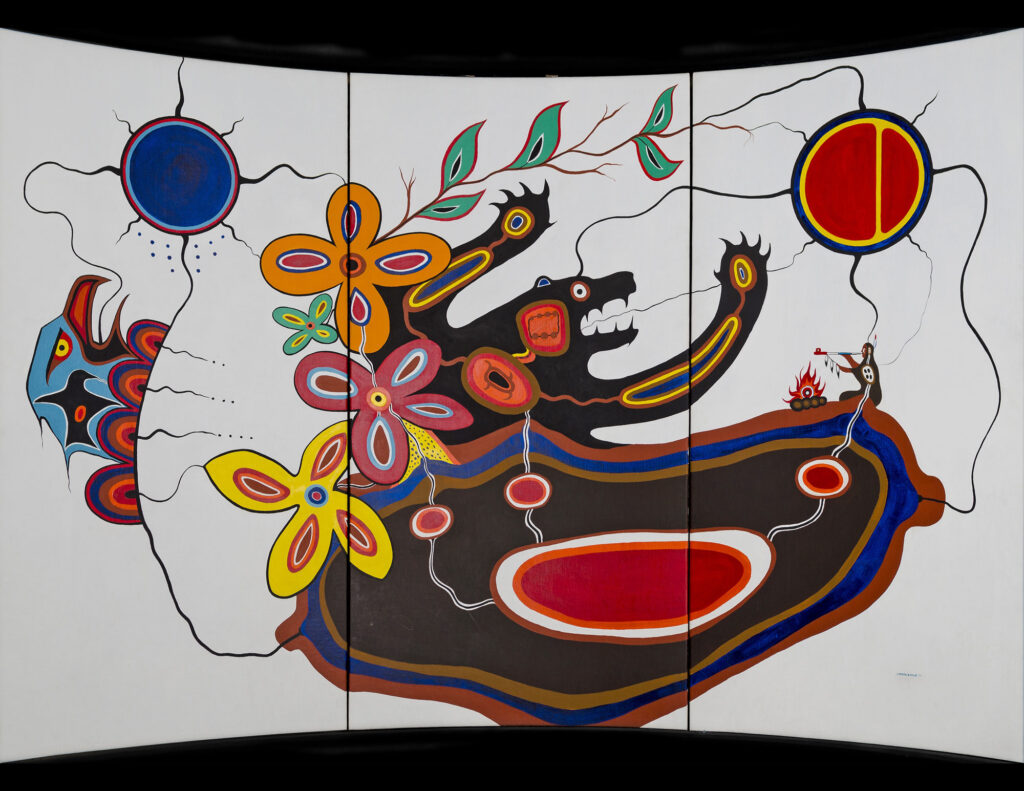
Jackson Beardy, Native World View, 1978

Henry Beaudry, Treaty No. 6, Battleford Area, n.d.

Mary Ceasar, Hair Being Cut by Nuns, 2017

Freda Diesing, Old Woman with Labret, 1973

Faye HeavyShield, Sisters, 1993

Robert Houle, Parfleches for the Last Supper, 1983
Alex Janvier, Blood Tears, 2001

Norval Morrisseau, The Gift, 1975

Ellen Neel, Kakaso'las, 1955–56

David Ruben Piqtoukun, Airplane, 1995

Jamasee Padluq Pitseolak, The Day After, 2010

Abraham Anghik Ruben, The Last Goodbye, 2001

Pitaloosie Saila, Strange Ladies, 2006

Allen Sapp, Recess at Onion Lake School, 1988

Henry Speck, Father Forgive Them, 1958

Adrian Stimson, Sick and Tired, 2005

Gerald Tailfeathers, Blood Camp, 1956

Lawrence Paul Yuxweluptun, Indian Residential School, Leaving the Shallow Graves and Going Home, 2022