Pitaloosie Saila, Strange Ladies, 2006

Pitaloose Saila, Strange Ladies, 2006, lithograph, 38.1 x 57.2 cm, Dorset Fine Arts, Toronto.
Strange Ladies by Inuit artist Pitaloosie Saila (1942–2021) from Kinngait (Cape Dorset), Nunavut, is a haunting lithograph born of her own experiences of forcible displacement and institutional control. In the 1950s, following a traumatic accident that broke her back, Saila was evacuated from her community—first by a visiting Canadian official and his nurse-wife, then under the government’s tuberculosis quarantine policy that sent hundreds of Inuit south between 1950 and 1957 for “treatment.”

Oviloo Tunnillie, This Has Touched My Life, 1991–92, Serpentinite (Tatsiituq); woman, 16.7 x 9.5 x 7 cm; woman and child, 16.5 x 19.2 x 10.5 cm; man, 18.5 x 9 x 5.25 cm; car, 3 x 9.2 x 4.2 cm, signed with syllabics, Canadian Museum of History, Gatineau.
Far from home, Saila encountered figures of religious, medical, and bureaucratic colonial authority whose presence left a lasting impression. In Strange Ladies, she portrays three pallid women—a fashionably veiled lady she had glimpsed in Montreal, a stern nun, and an aloof nurse—set against an eerie yellow field that underscores the malaise of her hospital stay. “I remember being afraid of those nurses,” Saila later recalled, and her choice to render them in stiff, detached poses speaks both to her childhood fear and to the broader trauma of Inuit removal from land and kin. In this way, Saila’s autobiographical imagery can be read alongside the sculptural work of Oviloo Tunnillie (1949–2014), whose practice likewise reflected on her experiences in southern tuberculosis treatment centres, linking both artists through shared histories of displacement, bodily vulnerability, and resilience.
Although Strange Ladies does not depict residential schools directly, it resonates with the same visual themes of cultural estrangement, erasure of identity, and the fear engendered by colonial systems. By focusing on the women’s Western dress consisting of veiled hats, starched habits, and clinical uniforms, Saila heightens the absence of Inuit clothing, which are rich repositories of identity, status, and collective knowledge. Traditional garments declare one’s role and community; here, their absence becomes a marker of exile and powerlessness. The sparseness of the composition—no hospital beds or signage, only the three figures arrayed in silent judgment—forces viewers into ethical witnessing. These Strange Ladies stand in for all the so-called help that came at the cost of autonomy and cultural continuity.
Saila’s portrayal of female agents of colonial control complicates assumptions about gender and power. By showing these women as complicit in supposedly benevolent institutions—religion cloaked as charity, health care as salvation—she subverts narratives of universal sisterhood and exposes how humanitarian rhetoric masked coercion. The result is a disturbing inversion: the women who “cared”
for her body also participated in a system that treated Inuit as passive bodies, medically quarantined and spiritually detached.
In an Inuit worldview that prizes memory as living testimony, Strange Ladies functions as a visual archive. Memory is medicine; recalling injustices is a communal obligation. Through her lithograph, Saila witnesses her own fear and channels the wider Cape Dorset tradition of art as cultural preservation. These three figures and the violent backdrop they imply demand that we remember the many ways colonial systems uprooted Inuit lives. They remind us that displacement was not confined to residential schools but extended into every institution that claimed to help. For readers concerned with institutional violence, cultural resilience, and Indigenous visual sovereignty, Saila’s Strange Ladies stands as an essential testament to the cracks in colonial benevolence and to the enduring power of Inuit memory.
Collection of Survivors’ Art
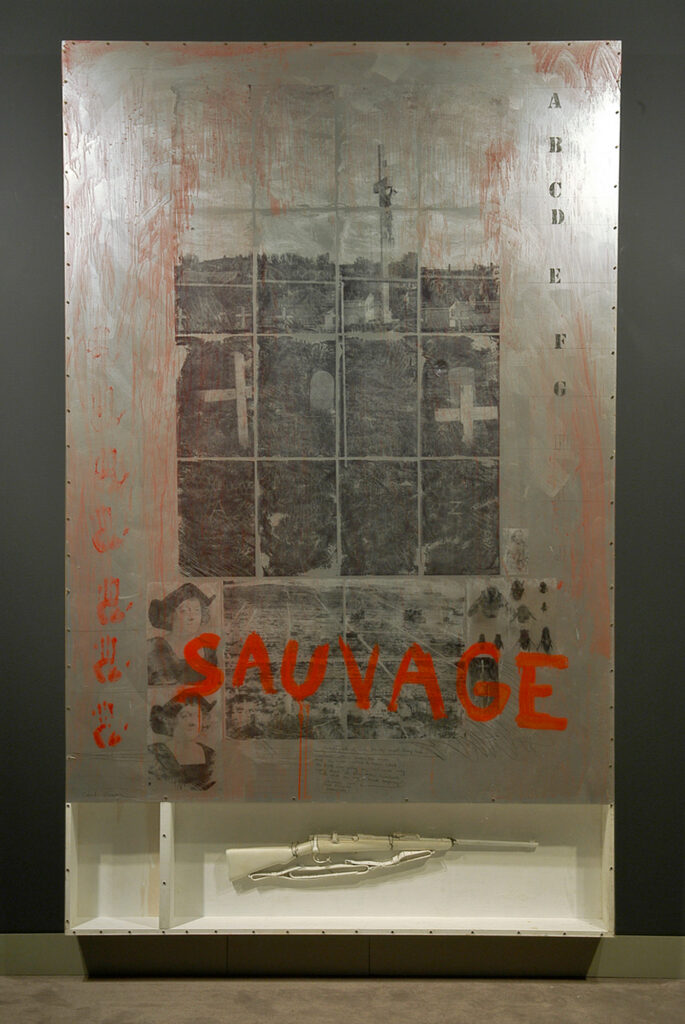
Carl Beam, Sauvage, 1988
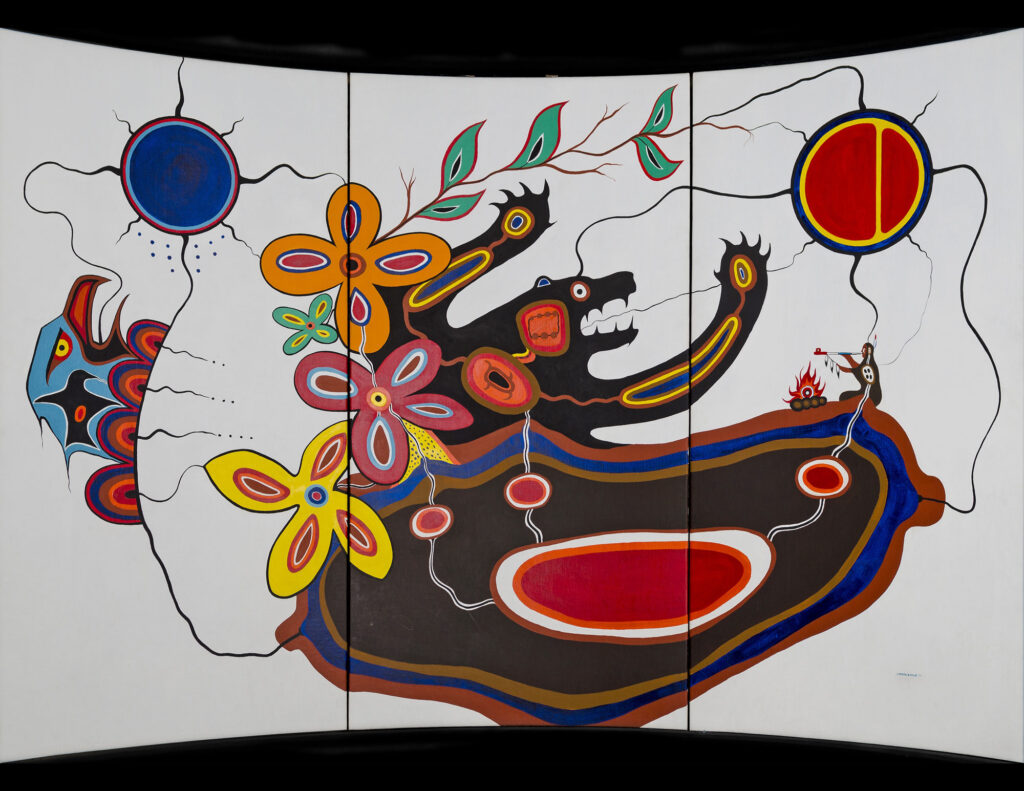
Jackson Beardy, Native World View, 1978

Henry Beaudry, Treaty No. 6, Battleford Area, n.d.

Mary Ceasar, Hair Being Cut by Nuns, 2017

Freda Diesing, Old Woman with Labret, 1973

Faye HeavyShield, Sisters, 1993

Robert Houle, Parfleches for the Last Supper, 1983

Alex Janvier, Blood Tears, 2001

Norval Morrisseau, The Gift, 1975

Ellen Neel, Kakaso'las, 1955–56

David Ruben Piqtoukun, Airplane, 1995

Jamasee Padluq Pitseolak, The Day After, 2010

Abraham Anghik Ruben, The Last Goodbye, 2001
Pitaloosie Saila, Strange Ladies, 2006

Allen Sapp, Recess at Onion Lake School, 1988

Henry Speck, Father Forgive Them, 1958

Adrian Stimson, Sick and Tired, 2005

Gerald Tailfeathers, Blood Camp, 1956

Lawrence Paul Yuxweluptun, Indian Residential School, Leaving the Shallow Graves and Going Home, 2022