Carl Beam, Sauvage, 1988
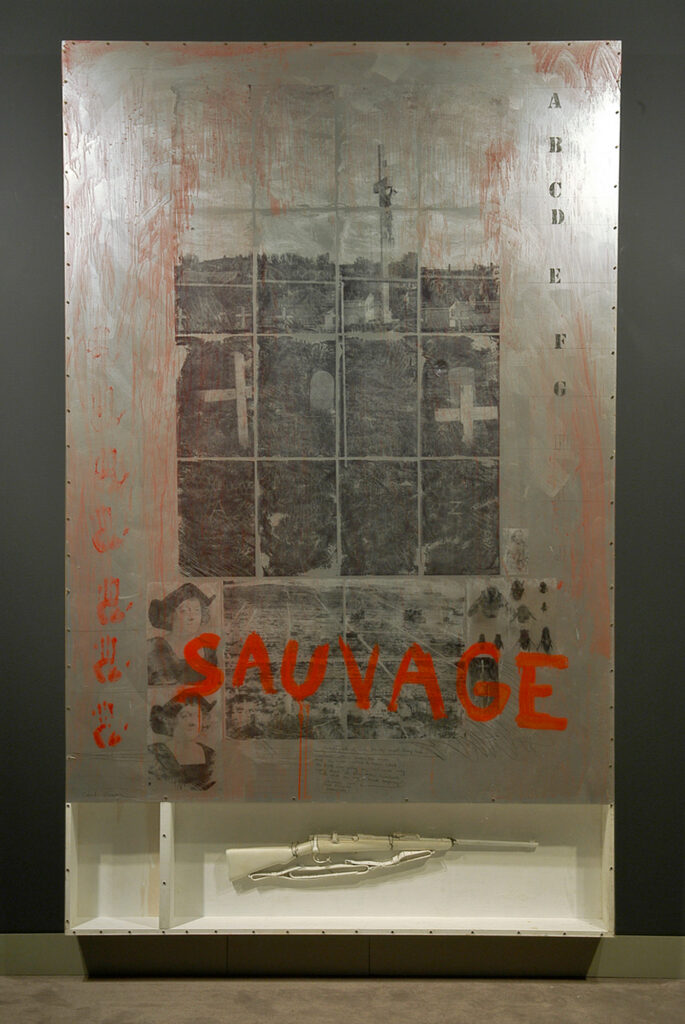
Carl Beam, Sauvage, 1988, mixed media on acrylic panel with painted wood and found object (rifle), 308 x 109.9 x 15 cm (with integral frame), National Gallery of Canada, Ottawa.
The large mixed-media assemblage Sauvage is widely recognized as the first direct artistic reference by Anishinaabe artist Carl Beam (1943–2005) of M’Chigeeng First Nation, Ontario, to his experience at Garnier High School. The title—the French word for “savage”—reclaims a word historically used to demean and dehumanize Indigenous Peoples. By making it the work’s title, Beam confronts the colonial gaze head-on, turning the insult into a statement of resistance. As such, it is both a personal reckoning and a public indictment.

Garnier High School (also known as Spanish Indian Residential School), Spanish, Ontario, 1950s, photographer unknown.

Carl Beam, Spanish Reunion ’88 Poster, 1988, serigraph, 66.3 x 50.9 cm, private collection.
The work fuses painting on Plexiglas, found objects (including a rifle), and layered photographic imagery. At its centre is a searing juxtaposition: an image of Jesus Christ on the cross, located in the graveyard of the school, and a photograph of post–atomic bomb devastation in Hiroshima, Japan. This pairing is deliberate and unsparing. The crucifixion, central to the Catholic Church’s self-image, is overlaid with the burial site of Indigenous children who suffered under the same “civilizing” mission. Sauvage functions as an act of truth telling with the force of lived memory. The graveyard becomes a symbol of the residential school system’s objective of erasing Indigenous languages, cultures, and spiritual sovereignty. The Hiroshima image amplifies this comparison, situating the harm within the framework of twentieth-century global atrocities.
Created in 1988, the piece predates the landmark public disclosures of widespread abuse by Survivors such as Phil Fontaine in 1990. It stands as an early and unsanctioned declaration of truth, naming the violence of the residential school system before it entered mainstream public discourse. In doing so, Sauvage participates in a long Indigenous tradition of speaking across imposed silences, using the authority of art to reveal what official histories have denied.
For Indigenous viewers, the work affirms the depth of loss and trauma, recognizing that residential schools were not sites of education but instruments of cultural genocide. For non-Indigenous audiences, it dismantles the protective myths of benevolence surrounding church and state, compelling them to confront the residential school system as an assault on life and spirit.
When the National Gallery of Canada acquired Sauvage in 2009, it acknowledged the historical and artistic significance of Beam’s first direct reference to his residential school experience. The work remains a sovereign record—an Indigenous archive that refuses erasure and demands witness. In confronting the viewer with these intertwined images of faith and devastation, Sauvage insists that reconciliation must begin with a full recognition of the harm done.
Collection of Survivors’ Art
Carl Beam, Sauvage, 1988
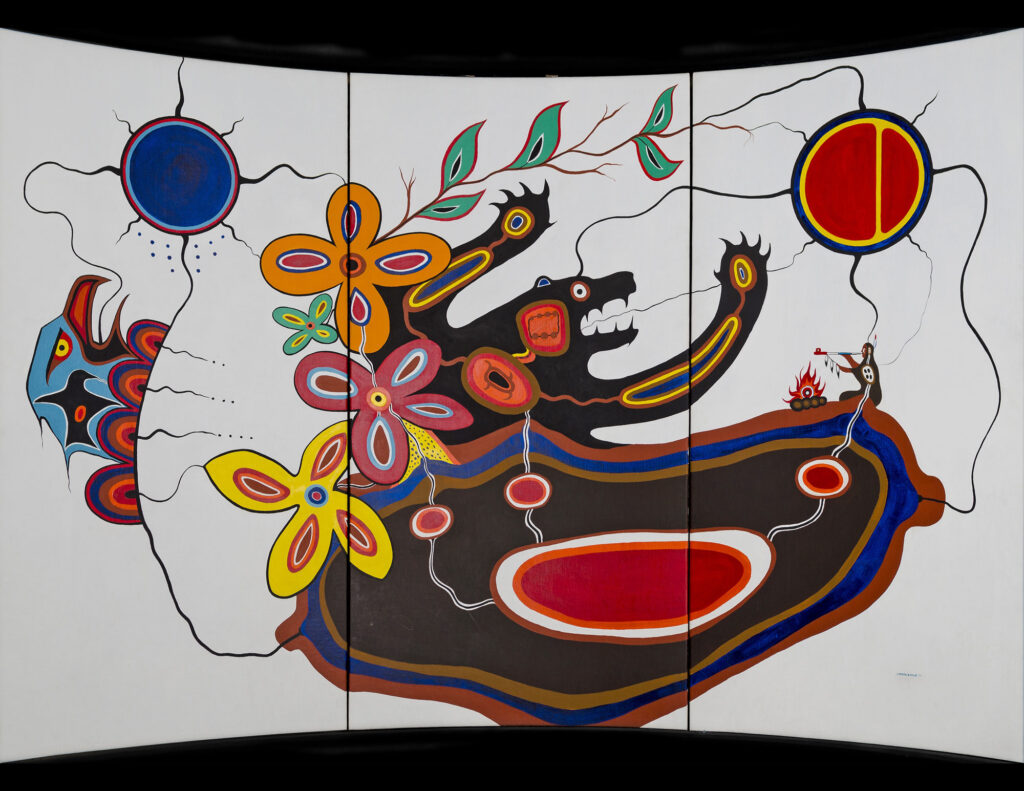
Jackson Beardy, Native World View, 1978

Henry Beaudry, Treaty No. 6, Battleford Area, n.d.

Mary Ceasar, Hair Being Cut by Nuns, 2017

Freda Diesing, Old Woman with Labret, 1973

Faye HeavyShield, Sisters, 1993

Robert Houle, Parfleches for the Last Supper, 1983

Alex Janvier, Blood Tears, 2001

Norval Morrisseau, The Gift, 1975

Ellen Neel, Kakaso'las, 1955–56

David Ruben Piqtoukun, Airplane, 1995

Jamasee Padluq Pitseolak, The Day After, 2010

Abraham Anghik Ruben, The Last Goodbye, 2001

Pitaloosie Saila, Strange Ladies, 2006

Allen Sapp, Recess at Onion Lake School, 1988

Henry Speck, Father Forgive Them, 1958

Adrian Stimson, Sick and Tired, 2005

Gerald Tailfeathers, Blood Camp, 1956

Lawrence Paul Yuxweluptun, Indian Residential School, Leaving the Shallow Graves and Going Home, 2022