Ellen Neel, Kakaso’las, 1955–56

Ellen Neel, Kakaso’las, 1955–56, 8 m x 3.5 m x .6 m, Museum of Anthropology, University of British Columbia, Vancouver.
Carved and painted in the classical Kwakwaka’wakw style, Kakaso’las by Ellen Neel (1916–1966) features Thunderbird, Bear, and Dzunukwa (Wild Woman of the Woods). Each figure embodies the balance between the worlds of Kwakwaka’wakw transformation and visual law. The pole demonstrates Neel’s mastery of proportion and concision. Her symmetrical rhythm of ovoids, U-forms, and triangles traces her lineage, while her crisp blend of colours and smooth cedar surfaces assert her distinct hand. Neel created this totem pole only a few years after Canada repealed its Potlatch ban in 1951, a time when large ceremonial carvings had barely begun to re-emerge from prohibition. To carve a monumental pole in that moment,
let alone as a woman artist, was an act of profound defiance. The work declared that Kwakwaka’wakw visual law was not extinguished but alive, adaptable, and sovereign. In that way, the pole’s public presence quietly re-educated a nation that had long suppressed the ceremonies from which such art emerged.

Ellen Neel (second from left) and family at work on a pole, 1955, photograph by Donald C. McLeod.
Neel is a pivotal figure in Northwest Coast art history—the first woman in Canada recognized as a professional totem-pole carver. Trained by her grandfather Charlie James (1867–1937) and her uncle Mungo Martin (1881–1962), Neel carried forward an ancestral lineage of Kwakwaka’wakw design while transforming it through modern adaptation. Kakaso’las, carved in the mid-1950s with the assistance of her family, embodies both survival and resurgence. The title, meaning “People-on-the-Outside,” refers to a family crest within Neel’s own matrilineal heritage, asserting identity in a time when Indigenous women’s roles in public art were seldom acknowledged.
Kakaso’las was originally installed at the Totem Park residences at University of British Columbia (UBC) and later stood for decades at Brockton Point in Stanley Park, where it was viewed by thousands of visitors. The pole has now entered a new chapter. In September 2024, through collaboration between UBC’s Museum of Anthropology and Neel’s descendants, Kakaso’las was relocated to the museum. This move reflects a broader shift in stewardship from civic display to cultural care and honours the Neel family’s wish to see the pole preserved within a context that acknowledges its history as both family legacy and national landmark.
Kakaso’las continues to teach. Its relocation restores the pole to Indigenous custodianship and to a curatorial framework informed by dialogue with the Neel family. What began as an act of assertion in 1955 endures as an act of relationship. The pole stands as evidence of history and also as living testimony to Neel’s vision. She believed that carving could be art, livelihood, ceremony, and education all at once and that through such work, the curve of the blade might shape the curve of the future.
As recalled by Neel’s grandniece, artist Mary Anne Barkhouse (b.1961), Neel was both a designer and an entrepreneur, running Totem Art Studios in Vancouver, employing family members, and marketing carvings ranging from full-scale poles to small souvenir works.
Her initiative joined artistry with survival. What some mid-century commentators dismissed as “tourist art” was in fact an innovative strategy—a way to circulate cultural form and sustain her family amid limited economic opportunity. The “commercial” nature of her practice, Barkhouse argues, must be understood not as dilution but as resilience, carving a space for Indigenous women’s creativity within colonial economies.
Collection of Survivors’ Art
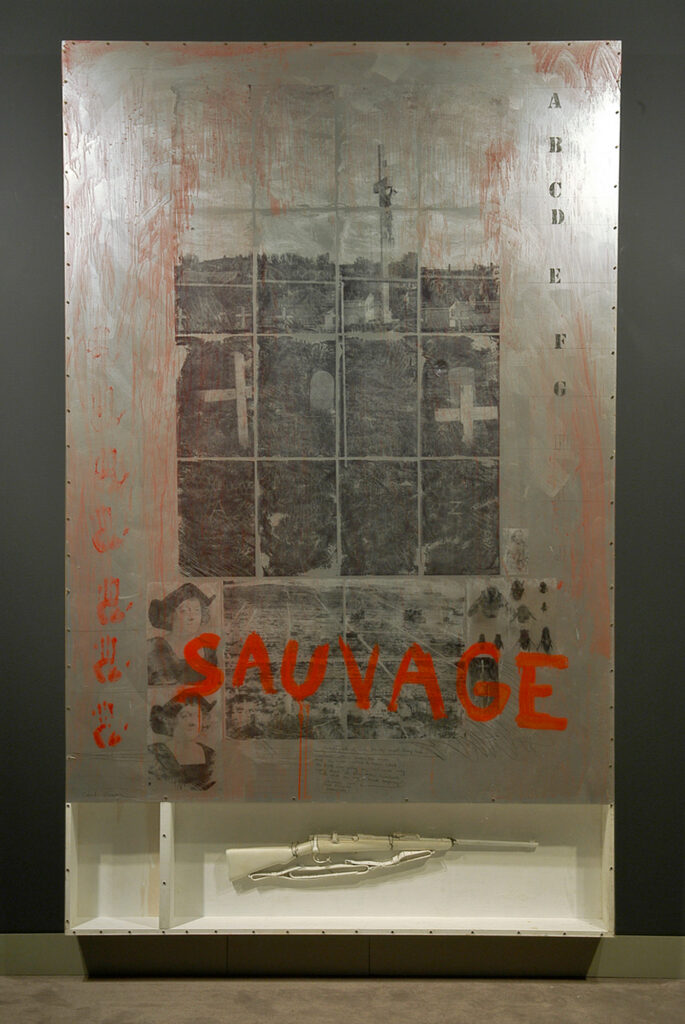
Carl Beam, Sauvage, 1988
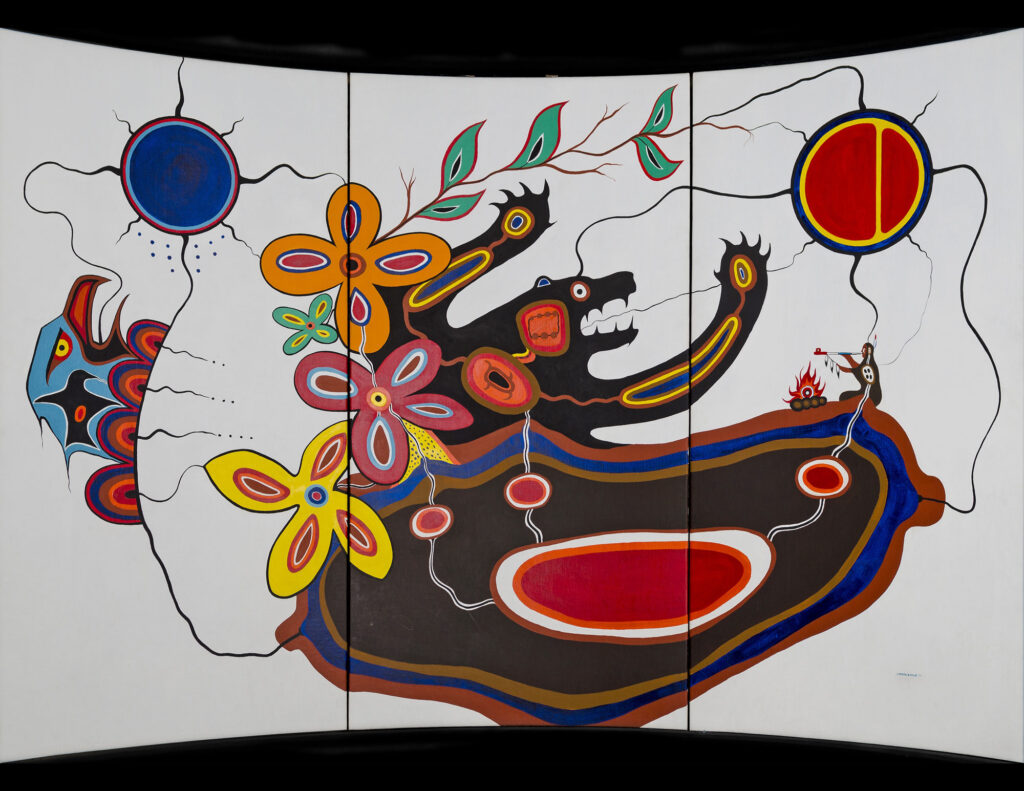
Jackson Beardy, Native World View, 1978

Henry Beaudry, Treaty No. 6, Battleford Area, n.d.

Mary Ceasar, Hair Being Cut by Nuns, 2017

Freda Diesing, Old Woman with Labret, 1973

Faye HeavyShield, Sisters, 1993

Robert Houle, Parfleches for the Last Supper, 1983

Alex Janvier, Blood Tears, 2001

Norval Morrisseau, The Gift, 1975
Ellen Neel, Kakaso'las, 1955–56

David Ruben Piqtoukun, Airplane, 1995

Jamasee Padluq Pitseolak, The Day After, 2010

Abraham Anghik Ruben, The Last Goodbye, 2001

Pitaloosie Saila, Strange Ladies, 2006

Allen Sapp, Recess at Onion Lake School, 1988

Henry Speck, Father Forgive Them, 1958

Adrian Stimson, Sick and Tired, 2005

Gerald Tailfeathers, Blood Camp, 1956

Lawrence Paul Yuxweluptun, Indian Residential School, Leaving the Shallow Graves and Going Home, 2022