Mary Caesar, Hair Being Cut by Nuns, 2017

Mary Ceasar, Hair Being Cut by Nuns, 2017, acrylic on canvas, 24 x 20 cm, private collection.
In Hair Being Cut by Nuns by Mary Caesar (b.1947), Kaska Dena of Liard First Nation, Yukon, the act of haircutting becomes a fraught symbolic gesture. The scissors or shears, handled by a nun, sever more than hair—they target identity, agency, and continuity. Caesar renders this act with bold, saturated colours and strong, simple forms. The figures appear almost flattened, with their emotional weight carried instead in gesture and gaze. The girl’s centrally framed face is shown with tears or a haunted expression. In this way, Caesar externalizes the interior wound, making the viewer a witness to a moment of violence intended to silence, demean, and dislocate. The backdrop is less defined, letting the figures take precedence, but traces of institutional architecture or austere lines may allude to the institutional setting.
Through stark contrast and clear composition, Caesar forces us to confront the colonial logic embedded in such rituals. The haircut, under the guise of “civilizing,” is exposed as a tool of control or assimilation. Yet, the painting holds space for grief and resistance, too—the mere fact of its existence reclaims the traumatic site. As such, it becomes a profound image that summons absence, erasure, and survival in the same visual language.

Mary Caesar, Flashbacks and Memories, 2017, acrylic on canvas, 30 x 40 cm, Daylu Dena Council.
Another of Caesar’s works from the same year, Flashbacks and Memories, 2017, depicts a school and the abuse inflicted by a nun. This painting shifts the focus from a symbolic ritual to the lived environment and the experience of structural violence. Here, Caesar gives us an institutional panorama—buildings, dormitories, corridors—infused with emotional tension. The nun looms large and gestures menacingly, administering punishment. Caesar represents herself in a submissive posture, isolated and stooped, underscoring her vulnerability within the vast, impersonal architecture.
The two paintings operate as companion pieces: one capturing the performative, symbolic rupture of the haircut, and the other laying bare the underlying system of control that made such ruptures possible—the school, the nuns, and the structures of discipline. Caesar’s expressive vivid palette, at times flat, at times harsh, works against sentimentality. It demands, rather than invites, the viewer’s attention.
These works also speak to memory and the often painful need to remember. They function as archive, testimony, and moral provocation. They disrupt the silence that colonial institutions enforced. By centring Indigenous experience in her aesthetic logic, Caesar resists the erasure that the residential school system sought to impose. The paintings invite a related engagement: we are asked not merely to look but to reckon, to feel, to consider complicity and the possibilities of repair.
The emotional force of these works lies in their balance of personal vulnerability and collective witness. Caesar does not reduce her subject to victimhood, nor does she offer facile uplift. Rather, she holds tension between pain and resilience, memory and loss, silence and testimony. In doing so, her paintings contribute to a visual archive of trauma, survival, and ongoing responsibility. They demand that Canada, and the viewers, remember and engage as implicated witnesses, not passive sympathizers.
Collection of Survivors’ Art
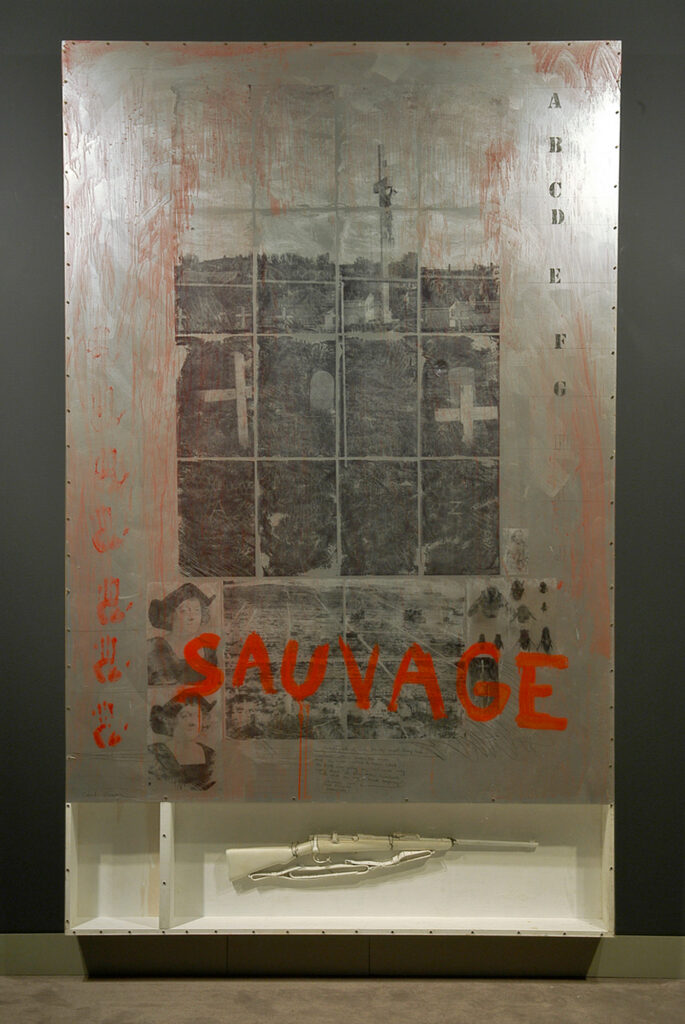
Carl Beam, Sauvage, 1988
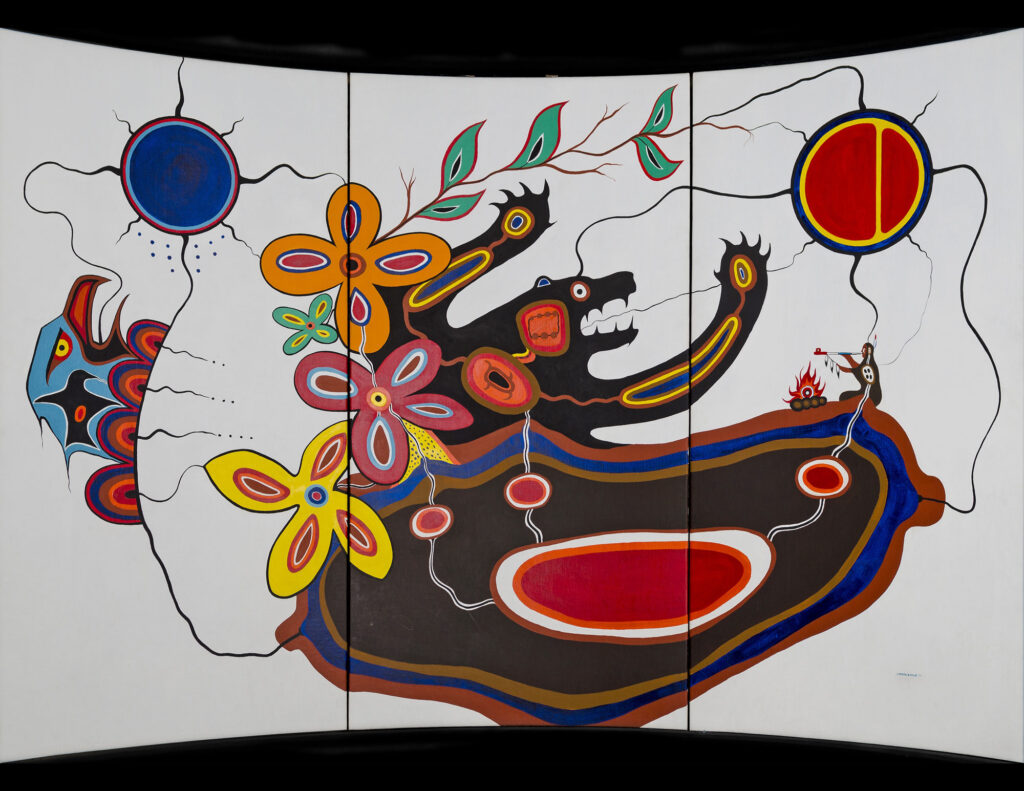
Jackson Beardy, Native World View, 1978

Henry Beaudry, Treaty No. 6, Battleford Area, n.d.
Mary Ceasar, Hair Being Cut by Nuns, 2017

Freda Diesing, Old Woman with Labret, 1973

Faye HeavyShield, Sisters, 1993

Robert Houle, Parfleches for the Last Supper, 1983

Alex Janvier, Blood Tears, 2001

Norval Morrisseau, The Gift, 1975

Ellen Neel, Kakaso'las, 1955–56

David Ruben Piqtoukun, Airplane, 1995

Jamasee Padluq Pitseolak, The Day After, 2010

Abraham Anghik Ruben, The Last Goodbye, 2001

Pitaloosie Saila, Strange Ladies, 2006

Allen Sapp, Recess at Onion Lake School, 1988

Henry Speck, Father Forgive Them, 1958

Adrian Stimson, Sick and Tired, 2005

Gerald Tailfeathers, Blood Camp, 1956

Lawrence Paul Yuxweluptun, Indian Residential School, Leaving the Shallow Graves and Going Home, 2022