Faye HeavyShield, Sisters, 1993

Faye HeavyShield, Sisters, 1993, shoes altered with plaster, gesso, and acrylic paint, outside diameter installed: 105 cm, McMichael Canadian Art Collection, Kleinburg.

Faye HeavyShield, Numerous, 2013, embossed ink-jet prints on paper (fifty-five components), each component approximately 18 x 12.8 cm, Alberta Foundation for the Arts, Edmonton.
The installation Sisters by Kainai (Blood) sculptor and installation artist Faye HeavyShield (b.1953) consists of six (sometimes documented as seven) pairs of high-heeled shoes altered with plaster, gesso, and matte paint, placed heel-to-toe in an outward-facing circle on the floor. Scuffed, stiffened, and effectively unwearable, the shoes stand in for bodies that are absent yet palpably present.
HeavyShield attended St. Mary’s Residential School in Cardston, Alberta. In Sisters, she transforms the humblest of readymade objects, second-hand women’s pumps, into a vigil for
the generations of Indigenous girls and women shaped by residential and day schools. In
their arrangement, she reconfigures these accoutrements of femininity into a formation of protection. The circle, sacred geometry across Niitsitapi (Blackfoot) cultures, signals community continuity, prayer, and the cyclical endurance of life. Because the shoes face outward, the ring reads as watchful; the sisters guard one another against forces that once entered the circle to harm: church, state, and assimilation.
Material choices deepen the resonance. The plastered leather takes on a hoof-like profile, evoking deer or horse tracks around a drum, linking women’s footprints to land, animal kin, and ceremony disrupted by residential schools—yet never fully severed. The monochrome finish recalls clerical black and the restrained palette of Catholic ritual, marking the impact of mission life while reassigning its symbols to Indigenous authority. HeavyShield has described the work as being about women’s strength and the power found in turning inward for protection. The shoes become both armour and prayer.
Silence does the speaking. No names, photographs, or documents accompany the piece; instead, viewers encounter emptiness and must supply memory. Standing inside or beside the ring, viewers feel invited—and obliged—to complete it, to witness for relatives who did not return or who returned changed. In that participatory demand, Sisters aligns with Indigenous witnessing practices: testimony is relational and reciprocal, activated when we accept responsibility to remember and retell.
The installation’s economy of means, its simple repetition, humble scale, and floor-level placement, models an aesthetic of respect over spectacle. HeavyShield indexes violence through what remains rather than re-enacting harm.
Read alongside other works in her practice,
such as Numerous, 2013, Sisters functions as an emotional archive. Each empty shoe is a container for story; together, they hold collective grief and resilience. In gallery contexts devoted to truth and reconciliation, the installation operates as symbolic resistance. It mourns
losses wrought by residential schools and the institutions that enforced them, but it also affirms the enduring network of Indigenous women whose collective strength carried languages, teachings, and one another
through that history. Quiet, unadorned, and unforgettable, Sisters speaks through its circle: we are here, we hold each other, we remember.
Collection of Survivors’ Art
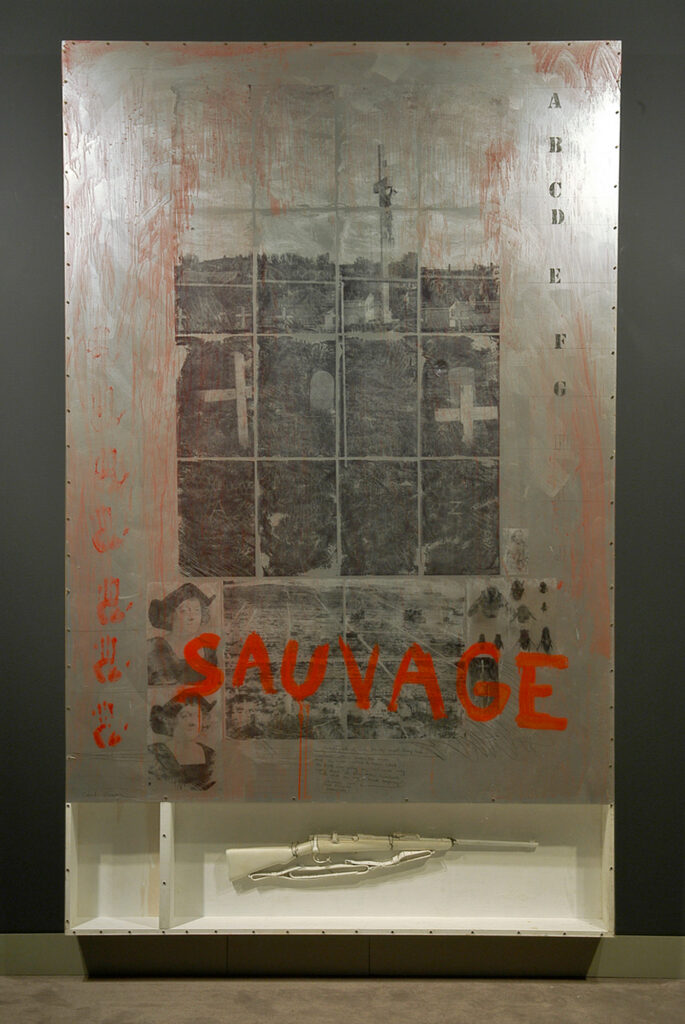
Carl Beam, Sauvage, 1988
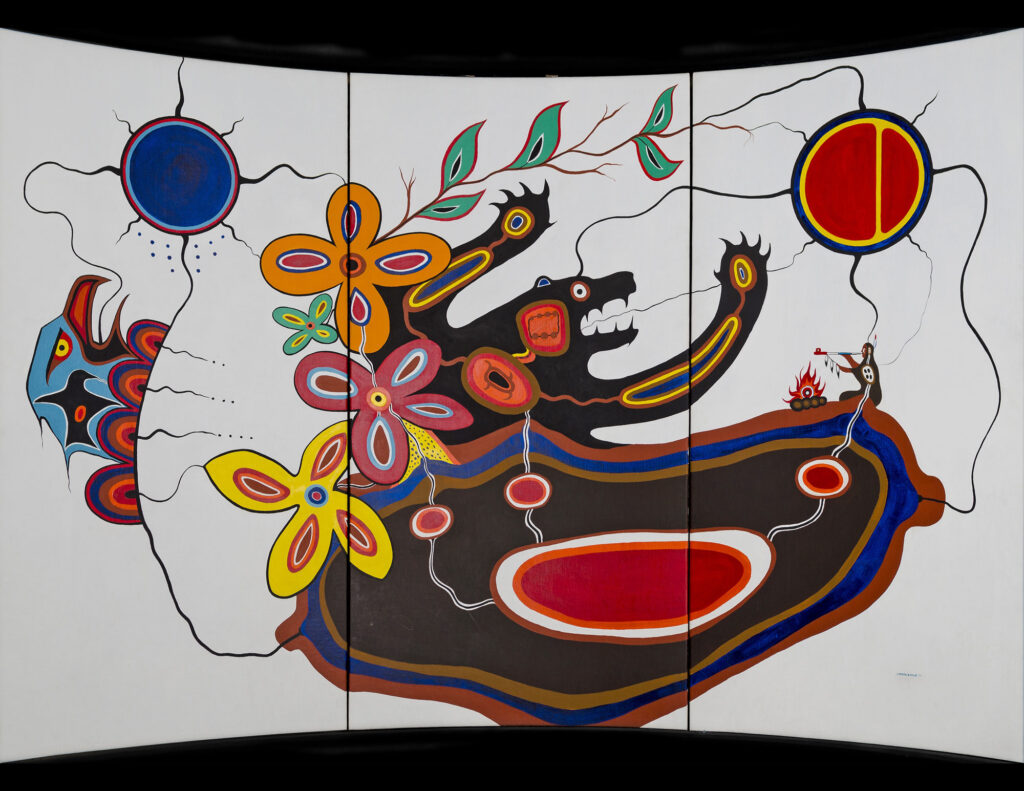
Jackson Beardy, Native World View, 1978

Henry Beaudry, Treaty No. 6, Battleford Area, n.d.

Mary Ceasar, Hair Being Cut by Nuns, 2017

Freda Diesing, Old Woman with Labret, 1973
Faye HeavyShield, Sisters, 1993

Robert Houle, Parfleches for the Last Supper, 1983

Alex Janvier, Blood Tears, 2001

Norval Morrisseau, The Gift, 1975

Ellen Neel, Kakaso'las, 1955–56

David Ruben Piqtoukun, Airplane, 1995

Jamasee Padluq Pitseolak, The Day After, 2010

Abraham Anghik Ruben, The Last Goodbye, 2001

Pitaloosie Saila, Strange Ladies, 2006

Allen Sapp, Recess at Onion Lake School, 1988

Henry Speck, Father Forgive Them, 1958

Adrian Stimson, Sick and Tired, 2005

Gerald Tailfeathers, Blood Camp, 1956

Lawrence Paul Yuxweluptun, Indian Residential School, Leaving the Shallow Graves and Going Home, 2022