Freda Diesing, Old Woman with Labret, 1973

Freda Diesing, Old Woman with Labret, 1973, alder, cedar bark, hair, abalone shell, pigment, 20.3 x 22.9 x 15.2 cm, Audain Art Museum, Whistler.
Carved from alder and detailed with cedar bark, human hair, and abalone shell, Old Woman with Labret by Haida artist Freda Diesing (1925–2002) depicts an Elder woman whose labret, the carved ornament worn below the lower lip, was traditionally a mark of lineage and high social status among Haida women. Only women of chiefly families wore labrets, signifying wisdom, beauty, and authority. In Diesing’s hands, the figure represented in this mask becomes a conduit for ancestral law: she represents matrilineal continuity and the dignity of women as cultural bearers. Diesing reclaims the labret, once denigrated under colonial beauty norms, as a sign of strength, agency, and identity.

Freda Diesing, Mask, n.d., alder, pigment, 19.6 x 23.1 x 13.9 cm, Royal BC Museum, Victoria.
The mask’s expressive carving—finely incised lines radiating from the mouth, deeply set
eyes, and the tactile adornment of cedar and shell—bridges past and present. The open
mouth suggests breath or utterance: a voice
re-emerging. In the Haida world view, masks are animate presences rather than static objects; when worn during a dance, they speak. Even as a gallery piece, Old Woman with Labret retains that vitality, inviting recognition of Indigenous womanhood as both historical and ongoing.
The Elder woman is at once ancestor and contemporary figure—a reminder that the values she embodies still shape community life, from governance to art and ceremony.
Born in Prince Rupert, British Columbia, Diesing began carving in her forties, inspired by Haida artists Iljuwas Bill Reid (1920–1998) and Robert Davidson (b.1946). She was among the first women of her generation to carve totemic forms publicly and to teach them formally.
Like many Indigenous children of her time,
she attended a Catholic residential school, an experience that separated her from her language and community. Yet, the trajectory of her life and art would become a reversal of that disconnection. Through carving, Diesing transformed loss into instruction and tradition into a living pedagogy.
In returning to her community for its truth, beauty, and directness, Diesing modelled an ethic of seeing and creating grounded in responsibility rather than self-expression. Her pedagogy, established through the Freda Diesing School of Northwest Coast Art at Coast Mountain College, has extended this philosophy to a new generation of carvers, including Dempsey Bob (b.1948), Don Yeomans (b.1958), and Norman Tait (1941–2016). Through them and others, her influence continues to shape the renewal of Indigenous carving traditions across the Northwest Coast.
Old Woman with Labret stands as both homage and prophecy. It looks backward to ancestral women of status who upheld social and spiritual order and forward to future artists reclaiming cultural authority through formline and cedar. Diesing’s mask demonstrates that ancient stories remain alive—not as relics of the past but as presences that still teach, speak, and define the terms of beauty, leadership, and kinship today.
Collection of Survivors’ Art
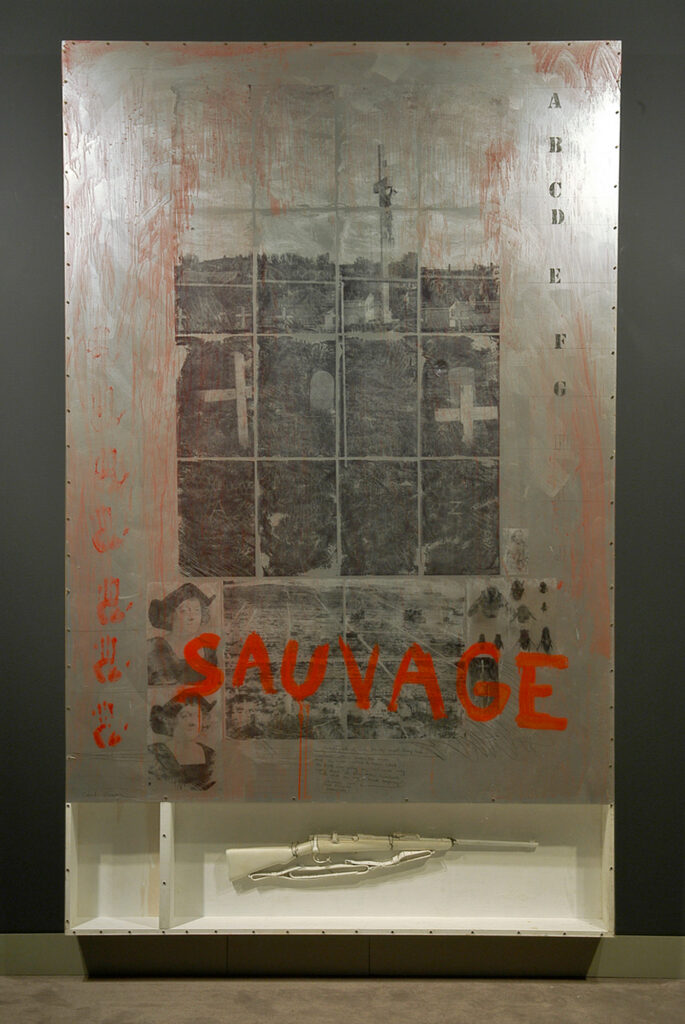
Carl Beam, Sauvage, 1988
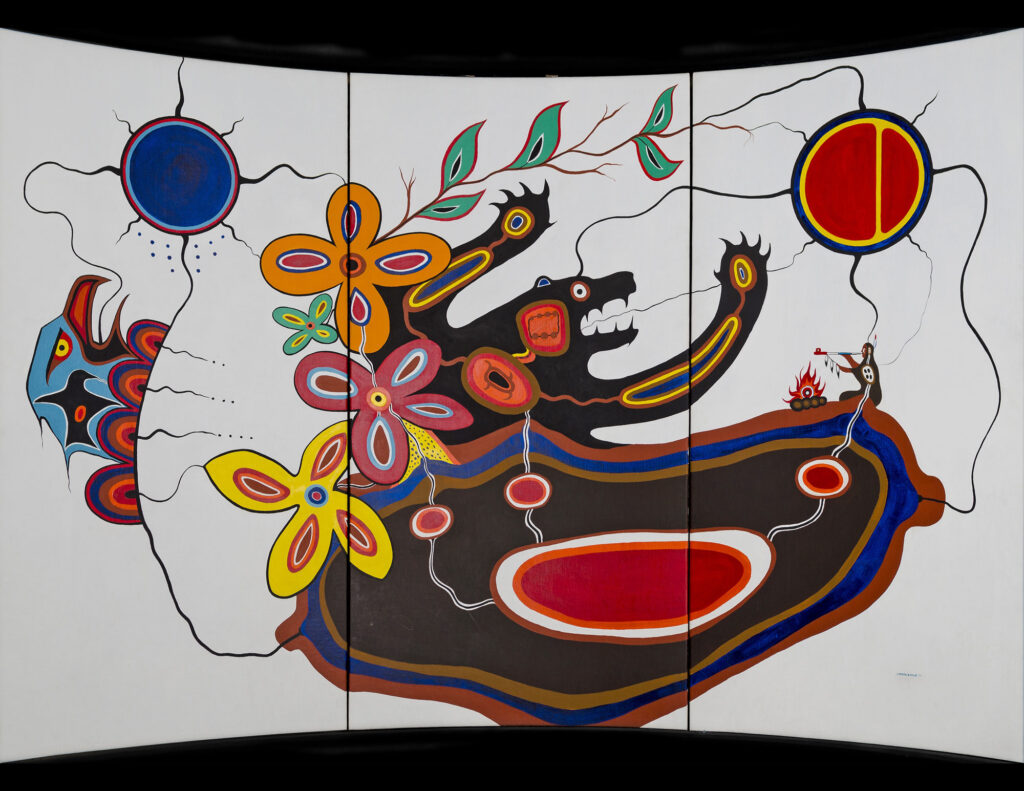
Jackson Beardy, Native World View, 1978

Henry Beaudry, Treaty No. 6, Battleford Area, n.d.

Mary Ceasar, Hair Being Cut by Nuns, 2017
Freda Diesing, Old Woman with Labret, 1973

Faye HeavyShield, Sisters, 1993

Robert Houle, Parfleches for the Last Supper, 1983

Alex Janvier, Blood Tears, 2001

Norval Morrisseau, The Gift, 1975

Ellen Neel, Kakaso'las, 1955–56

David Ruben Piqtoukun, Airplane, 1995

Jamasee Padluq Pitseolak, The Day After, 2010

Abraham Anghik Ruben, The Last Goodbye, 2001

Pitaloosie Saila, Strange Ladies, 2006

Allen Sapp, Recess at Onion Lake School, 1988

Henry Speck, Father Forgive Them, 1958

Adrian Stimson, Sick and Tired, 2005

Gerald Tailfeathers, Blood Camp, 1956

Lawrence Paul Yuxweluptun, Indian Residential School, Leaving the Shallow Graves and Going Home, 2022