Jamasee Padluq Pitseolak, The Day After, 2010

Jamasee Padluq Pitseolak, The Day After, 2010, hand-painted drypoint etching, 49.5 x 38.1 cm, Museum of Anthropology, University of British Columbia, Vancouver.
In The Day After, Inuit artist Jamasee Padluq Pitseolak (b.1968) from Kinngait (Cape Dorset), Nunavut, uses jagged linework, inscribed text, and distorted human shapes to evoke the psychic dislocation that follows abuse. The adult figure looms, limbs contorted, gripping or overpowering the child while fractured backgrounds and scratched surfaces bleed into one another. The scratched title “THE DAY AFTER” above a school desk and chair signals a temporal rupture—what lingers beyond the moment itself. As described in a contemporary newspaper account, black streaks between the figures are partially sheathed in olive green, a colour Pitseolak associated with his experience of abuse. The image does not depict the act itself but instead registers its psychic residue: memory, disorientation, and the sense of being marked. That experience remains close to the surface; in speaking publicly about the work, Pitseolak reportedly broke down when attempting to recount what had been done to him as a child. The work thus inhabits the space between what can be shown and what resists narration, allowing absence and fragment to carry its emotional force.
The Student, 2010, operates as a brutal counterpoint. Here, the violence is immediate.
A bathtub intervenes as a domestic and vulnerable space, but within it, the child is exposed and dominated by an adult presence. The asymmetrical scale, the harsh stabs of diagonal slashes, and the unsettling colour contrast between a pallid red and a garish green intensify the moral imbalance. The adult figure, fully coloured in green, appears monstrous in posture and gesture. The child, smaller and seated, becomes the vulnerable site of the image’s tension. In The Student, Pitseolak
makes visible the predatory proximity of that institutional authority.
The works function as a pair: The Student anchors the violence in corporeal immediacy, while The Day After opens the aperture into its psychological residue. They act as interlocking sites of memory and resistance, each transforming trauma into a fragmentary but potent visual testimony. The pairing invites viewers to shift between moment and memory, between trauma’s immediate wound and its lasting echo. Pitseolak’s decision to work on paper, using etching and painted drypoint, further distances him from more representational forms of narrative, allowing his scenes to register as memory spaces rather than re-enactments.
Pitseolak has emphasized that these works were made for himself and were not directed to external viewers. This decision confers agency over disclosure: he shapes what is revealed, what is held back, and how the gaze is negotiated. The aesthetic choices of fragmentation, abstraction, and restraint are part of an ethics of witnessing, one that resists turning trauma into commodity or spectacle. It is an insistence that even silenced stories deserve to be seen—but on their own terms.
These works also implicate the viewer. The blank spaces, the slashes, and the distortions require interpretive labour. The viewer must pause, sense the rupture, confront discomfort, and bear responsibility. The figures are not legible in full; we see the residue, not the full event. It is a refusal of closure—a reminder
that trauma remains alive, that reconciliation cannot efface memory, and that witnessing
must persist. In this way, Pitseolak asserts a sovereignty of memory: his own, but nonetheless communal, calling us into a shared responsibility of remembrance. In doing so, he rejects spectacle and voyeurism, opting for careful allusion, rupture, and silence as his tools of disclosure.
Collection of Survivors’ Art
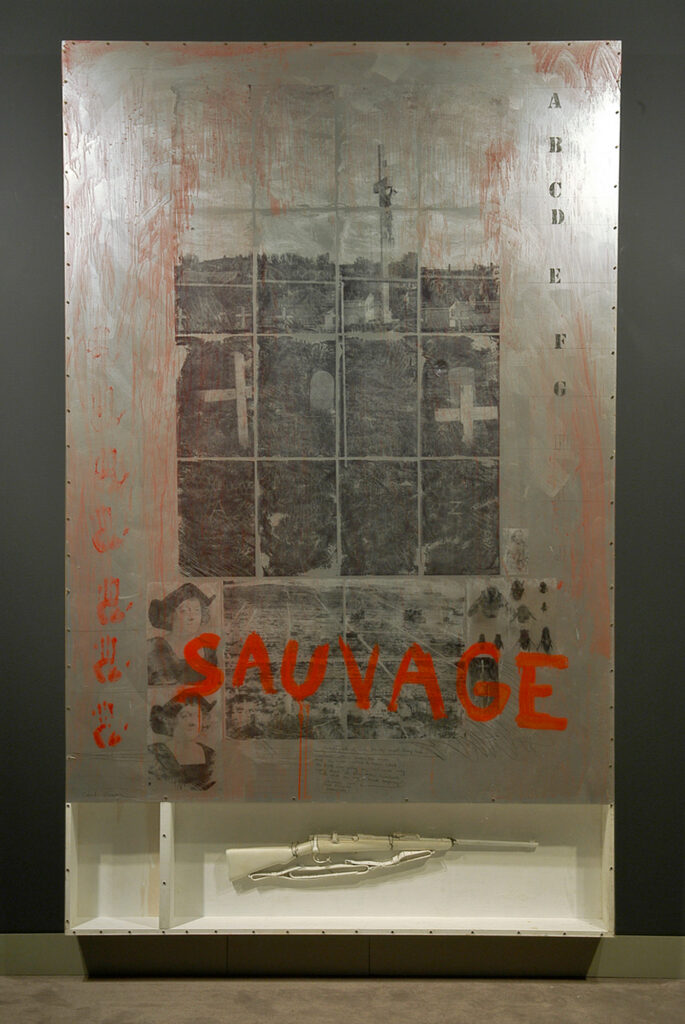
Carl Beam, Sauvage, 1988
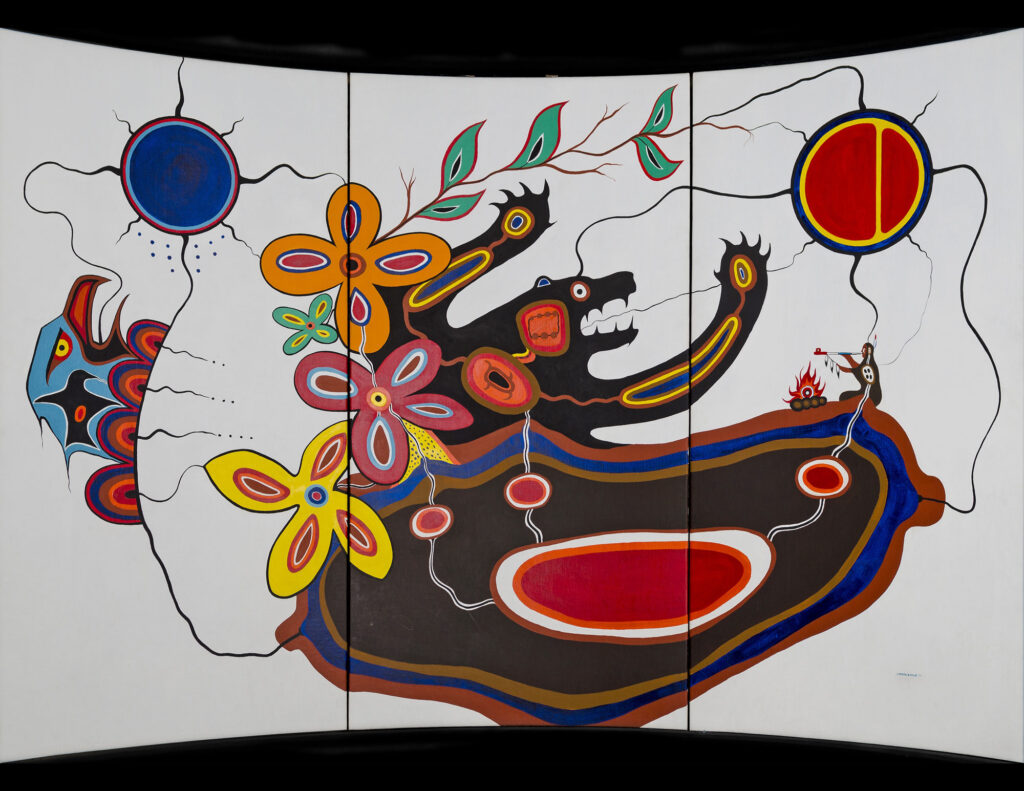
Jackson Beardy, Native World View, 1978

Henry Beaudry, Treaty No. 6, Battleford Area, n.d.

Mary Ceasar, Hair Being Cut by Nuns, 2017

Freda Diesing, Old Woman with Labret, 1973

Faye HeavyShield, Sisters, 1993

Robert Houle, Parfleches for the Last Supper, 1983

Alex Janvier, Blood Tears, 2001

Norval Morrisseau, The Gift, 1975

Ellen Neel, Kakaso'las, 1955–56

David Ruben Piqtoukun, Airplane, 1995
Jamasee Padluq Pitseolak, The Day After, 2010

Abraham Anghik Ruben, The Last Goodbye, 2001

Pitaloosie Saila, Strange Ladies, 2006

Allen Sapp, Recess at Onion Lake School, 1988

Henry Speck, Father Forgive Them, 1958

Adrian Stimson, Sick and Tired, 2005

Gerald Tailfeathers, Blood Camp, 1956

Lawrence Paul Yuxweluptun, Indian Residential School, Leaving the Shallow Graves and Going Home, 2022