Alan Syliboy, Grandmother 1, 1997

Alan Syliboy, Grandmother 1, 1997, mixed media on paper, 50.8 x 68.6 cm.
In Grandmother 1, Mi’kmaw artist Alan Syliboy (b.1952) focuses on a grandmother figure, rendered in a black-and-white photograph, sitting at a kitchen table. Her face conveys both endurance and quiet presence, resting her head on her hand as though in contemplation. Surrounding her, he overlays luminous fields of colour—yellows, turquoise, and reds—that transform the domestic space into one suffused with sacred energy. Petroglyph-inspired motifs dance across the surface: spirals, dotted lines, plants, and a stylized figure with outstretched arms. These markings recall Mi’kmaw rock carvings, some thousands of years old, translating ancestral knowledge into a contemporary visual idiom.
In this layering, Syliboy creates a dialogue between past and present, photograph and painting, memory and imagination. The grandmother at the kitchen table becomes more than an individual portrait—she embodies the intergenerational transmission of knowledge and the resilience of women who held families and traditions together in the face of colonial disruption. The painted motifs do not merely decorate the photograph but reclaim the image, reasserting Mi’kmaw presence and visual sovereignty over a scene of everyday life.

Alan Syliboy, Tuft’s Cove Survivor, 1999, acrylic, watercolour pencil, ink, and photo transfer on illustration board, 76 x 101.5 cm, Art Gallery of Nova Scotia, Halifax.
At the time when Syliboy was raised in Millbrook First Nation, Nova Scotia, Mi’kmaw language and cultural identity were actively suppressed in the schools. Experiencing this early dissociation, he turned to art as both refuge and resistance, sketching “under the table” when he was discouraged from expressing himself creatively. Two women were especially formative in his development: his grandmother Rachael Marshall, whose teachings and presence rooted him in kinship traditions, and artist Shirley Bear (1936–2022), who mentored him in connecting contemporary painting with ancestral Mi’kmaw visual knowledge. These influences inform Grandmother 1, a work that honours matriarchal guidance and reclaims suppressed cultural traditions through vibrant, living imagery.
Grandmother 1 exemplifies Syliboy’s statement that his work is about “family, searching, struggle, and strength.” The grandmother figure becomes a symbol of survival amid assimilation policies that sought to sever language, kinship, and culture. By enveloping her in petroglyph-inspired imagery, Syliboy honours her presence and also positions her within a continuum of Mi’kmaw origin stories. Spirals evoke cycles of time, dots suggest stars or constellations, and stylized figures invoke ancestors and spiritual guardians. The overlay of colour and form transforms the mundane into the sacred, insisting that cultural endurance is not confined to ceremonial contexts but lives
in everyday acts of care, resilience, and remembrance.
Ultimately, Grandmother 1 operates on two registers: as a personal tribute and as a
collective statement. It esteems the artist’s
own grandmother while also representing the countless matriarchs whose teachings, stories, and perseverance sustained Indigenous families through centuries of cultural oppression. By merging vivid contemporary painting with ancient petroglyph traditions, Syliboy enacts a form of reclamation, asserting that Mi’kmaw cultural presence is continuous as well as radiant, resilient, and evolving. Through this work, Syliboy affirms that art can be both remembrance and resistance. Grandmother 1 testifies to the unbroken thread of ancestral knowledge, carried through women’s strength, and illuminates the enduring vitality of Mi’kmaw culture.
Collection of A New Generation of Witness

Sonny Assu, Leila’s Desk, 2013

Michael Barber, A Silent Sky, 2022

Christi Belcourt, Giniigaaniimenaaning (Looking Ahead), 2012

Rebecca Belmore, Apparition, 2013

Rain Cabana-Boucher, Laying Flowers, 2021–24

Quill Christie-Peters, Portrait of Ste. Margaret’s Residential School and All It Could Not Contain, 2018

Dana Claxton, Headdress – Shadae and her Girlz, 2023

Beau Dick, The Ghost Confined to the Chair, 2012
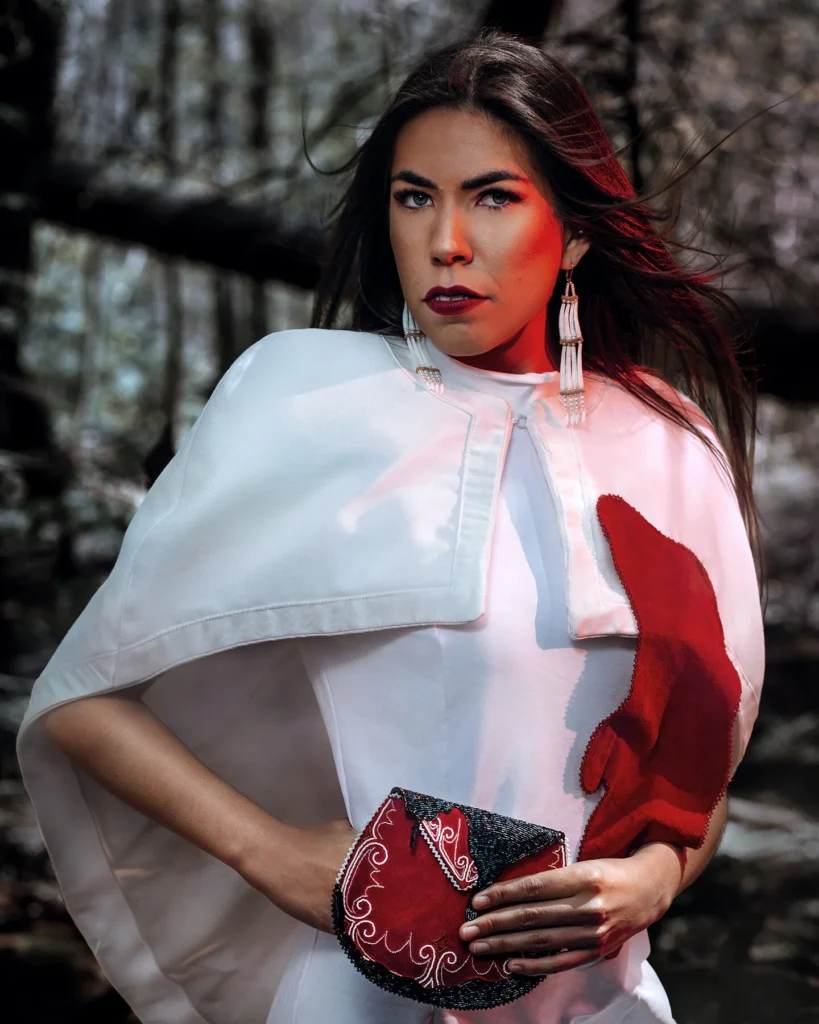
Oakley Rain Wysote Gray, Bleeding Heart Cape – M’st No’gmaq (All My Relations), 2021

7IDANsuu James Hart, Reconciliation Pole: Honouring a Time Before, During and After Canada’s Indian Residential Schools, 2015–17

Emma Hassencahl-Perley, White Flag, 2015

Brent Henry, English Only!, 2021

Shawn Hunt, Flipping the Bird, 2014

Lisa Jackson, Savage, 2009
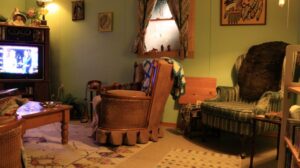
Ursula Johnson, ITHA: The Livingroom, 2021

Siassie Kenneally, All the Things That I Have Seen, 2016

Jake Kimble, It’s All So Incredibly Loud, 2025

Duane Linklater, i want to forget the english language, ulterior, 2020/23

Jim Logan, National Pastimes, 1991

Luke Marston, Bentwood Box, 2009

Kevin McKenzie, Being Indigenous, 2024

Meryl McMaster, Truth to Power, 2017

Kent Monkman, The Scream, 2017

Caroline Monnet, The Black Case, 2014

Tim Moore, Erasure Is Futile, 2021

Peter Morin, This is what happens when you perform the memory of the land (parts 1 and 2), 2013
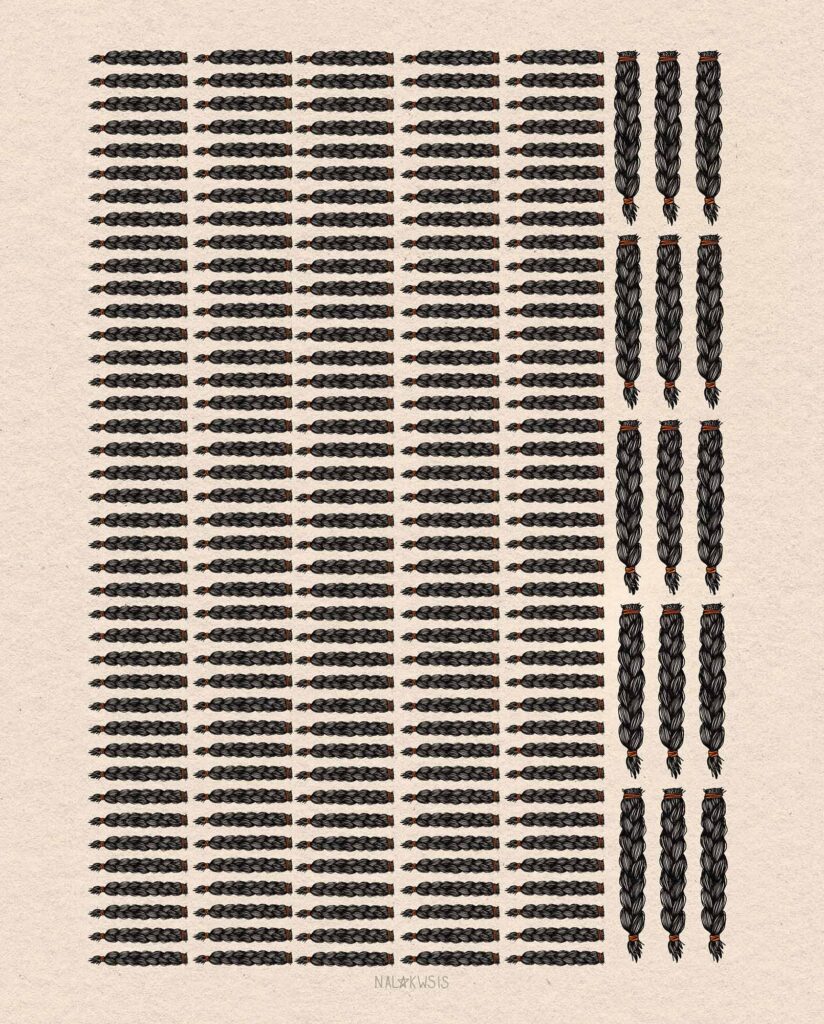
Saige “Nalakwsis” Mukash, 215 Braids, 2021

Nadia Myre, Indian Act, 2000–2002

Carey Newman, Witness Blanket, 2013–14

Davidee Ningeok, Sr., Residential School Nightmare, 2015

Shelley Niro, The Shirt, 2003

Luke Parnell, Neon Reconciliation Explosion, 2020

Dionne Paul, Her First Day of School, 2013
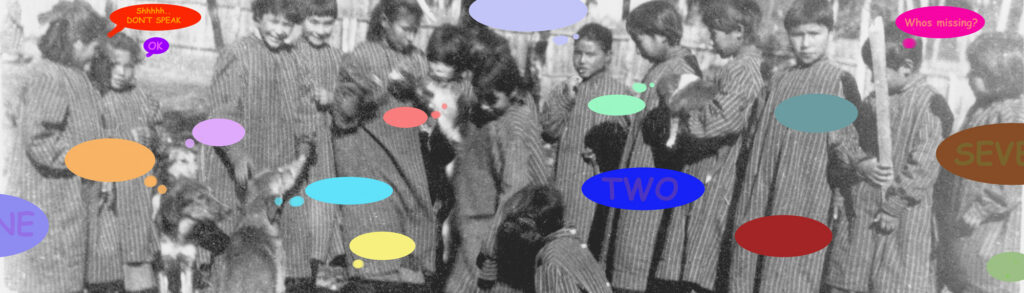
Edward Poitras, Don’t Speak, 2015

Barry Pottle, Yale Dormitory (Residential School), North West River, Labrador, 2015

Teharihulen Michel Savard, Reciprocity (Réciprocité), 2009

Jason Sikoak, Sacrilege, 2015

Greg Staats, Do’-gah – I don’t know [shrugging shoulders], 2020, archival pigment print on canvas on pine stretcher, oil, earth, Indian tobacco ash (edition 2 of 3), 142 x 175.3 x 2.5 cm, Agnes Etherington Art Centre, Kingston.
Alan Syliboy, Grandmother 1, 1997

Jeff Thomas, Broken Treaties, 1613–, 2020
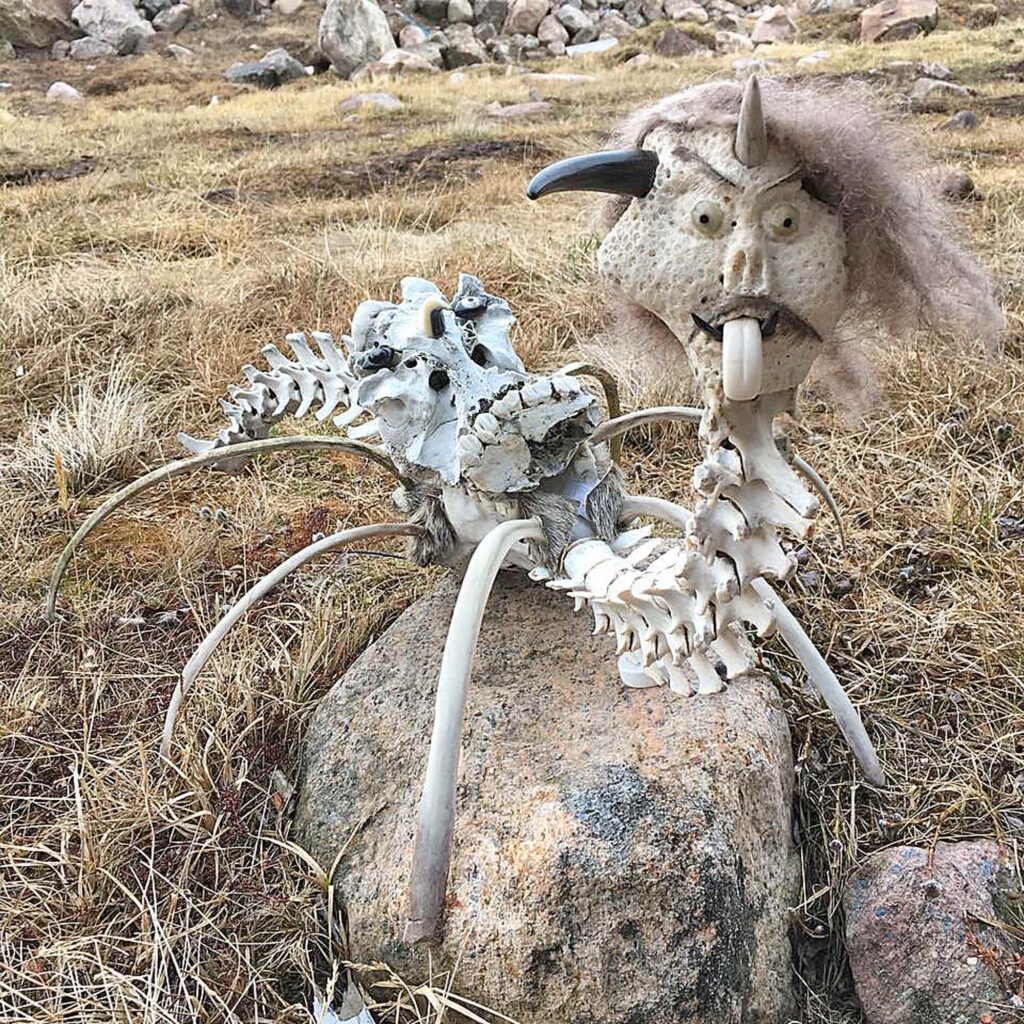
Jesse Tungilik, The Spirit of Intergenerational Trauma, 2019

Tania Willard, Be a Good Girl, 2017