Nadia Myre, Indian Act, 2000–2002

Nadia Myre, Indian Act, 2000–2002, glass beads, pages from the “Indian Act,” adhesive tape, thread, felt, 42.5 x 34.6 x 1.7 cm, installation view from Nadia Myre: Tout ce qui reste – Scattered Remains, November 2017–May 2018, Montreal Museum of Fine Arts.
In Indian Act, Nadia Myre (b.1974) of Kitigan Zibi Anishinabeg First Nation, Quebec, stages a decisive encounter between the colonial legal framework that has governed Indigenous lives in Canada and an Indigenous practice—beadwork—whose codes, labour, and protocols surpass that system. Across fifty-six pages of the Act, Myre and community members replaced every printed word with white glass beads and filled the background with red beads. The result is both illegible and hyper-legible: illegible because the words are obscured and hyper-legible because the repetition and weight of beading amplify the law’s totalizing presence. Meaning
is no longer read but worked—through hands, stitches, and the durational rhythms of a beading circle.
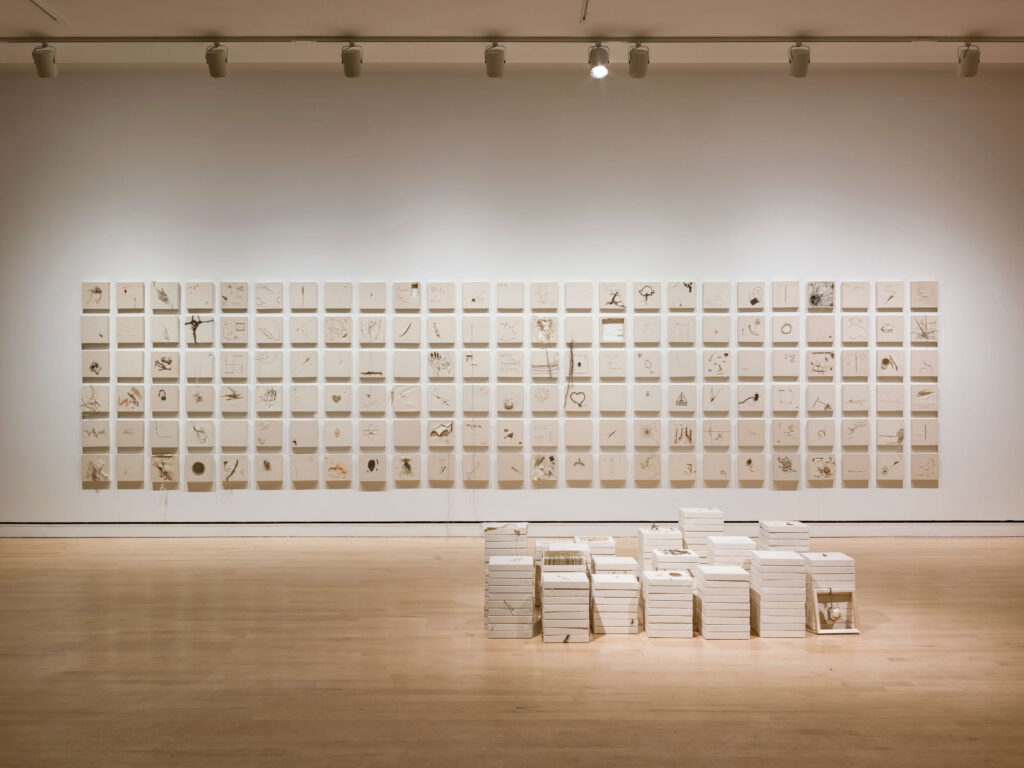
Nadia Myre, The Scar Project, 2005–13, rope, wool, thread, nails, and perforations on canvas, 25.5 x 25.5 cm (each element), Musée national des beaux-arts du Québec.
This transformation matters politically. The
1876 Indian Act is still a living instrument of governance. By reworking it through collective labour, Myre dislodges its bureaucratic authority and resituates it in relation through collective beading practices that bring participants into shared space and exchange, a place where knowledge is produced and shared. Weekly “beading bees” became sites of gathering and counter-legality where the bead, a unit of care, replaced the word, a unit of control. In exhibition, this serial installation produces a sense of accumulation: each page similar but not the same, marked by many hands rather than a single author. The work highlights “gaps in translation” between text and beadwork, which function less as deficits than as spaces of ethical encounter. With the rise of discourse surrounding the Truth and Reconciliation Commission of Canada (TRC), Indian Act gained renewed significance. It became a model of aesthetics as counter-jurisprudence, materializing
the endurance of law while demonstrating how Indigenous practice can overwrite it through relation, repetition, and care.
If Indian Act re-patterns the law, The Scar Project, 2005–13, turns toward the intimate archive of the body. Over many years, Myre invited participants to stitch their scars into small canvases and to write accompanying narratives. The project is both workshop
and installation, a process of shared making and a visual field of hundreds of repaired surfaces, each bearing pain and resilience. Unlike projects that mobilize or use community, The Scar Project is non-extractive, leaving trauma in place. Participants retain authorship over their squares; Myre’s role was that of host and assembler. As the project travelled from friendship centres to museums and biennials, its circle of contributors expanded, forming a commons of scars. Indigenous and non-Indigenous wounds appear together, reframing harm as uneven but shared and refusing the singular narrative of trauma often projected onto Indigenous art.
In TRC and post-TRC contexts, its relevance is clear. The Scar Project offers a practical aesthetics of testimony that neither sensationalizes nor silences wounds. It creates conditions for scars to be named, seen, and held, transforming the exhibition into a temporary community of care. Along with Indian Act, both works exemplify art as testimony and care, remaking structures of harm into forms of resilience and knowledge.
Collection of A New Generation of Witness

Sonny Assu, Leila’s Desk, 2013

Michael Barber, A Silent Sky, 2022

Christi Belcourt, Giniigaaniimenaaning (Looking Ahead), 2012

Rebecca Belmore, Apparition, 2013

Rain Cabana-Boucher, Laying Flowers, 2021–24

Quill Christie-Peters, Portrait of Ste. Margaret’s Residential School and All It Could Not Contain, 2018

Dana Claxton, Headdress – Shadae and her Girlz, 2023

Beau Dick, The Ghost Confined to the Chair, 2012
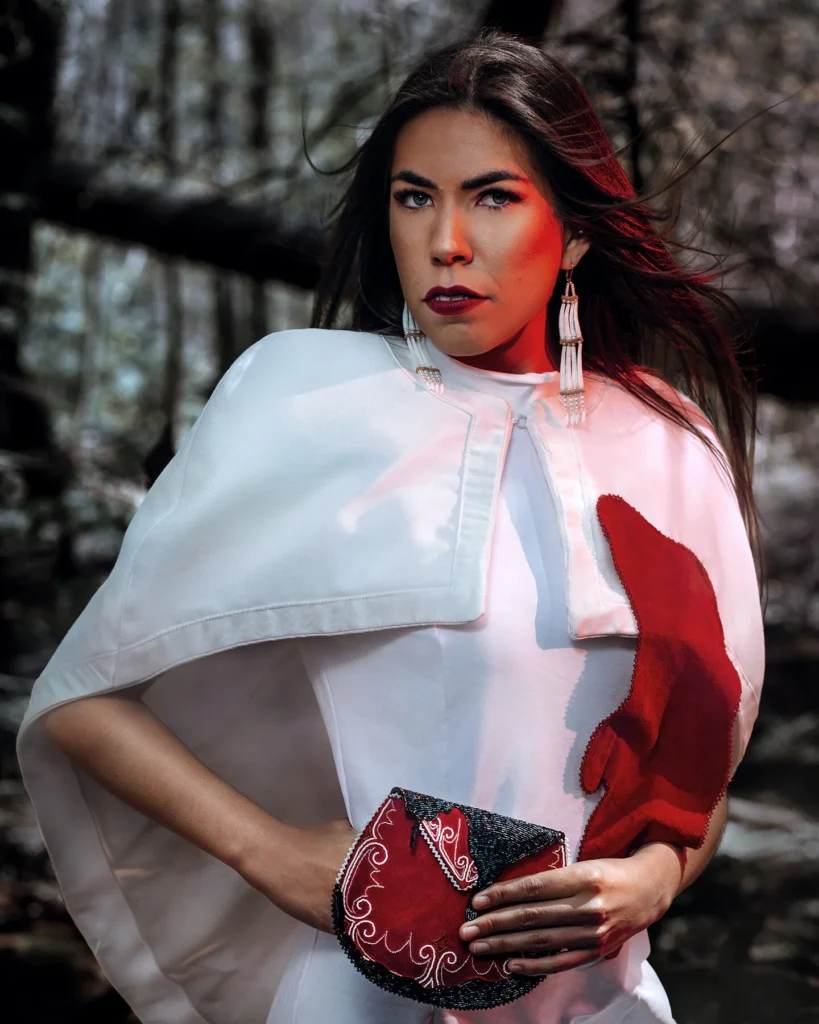
Oakley Rain Wysote Gray, Bleeding Heart Cape – M’st No’gmaq (All My Relations), 2021

7IDANsuu James Hart, Reconciliation Pole: Honouring a Time Before, During and After Canada’s Indian Residential Schools, 2015–17

Emma Hassencahl-Perley, White Flag, 2015

Brent Henry, English Only!, 2021

Shawn Hunt, Flipping the Bird, 2014

Lisa Jackson, Savage, 2009
Ursula Johnson, ITHA: The Livingroom, 2021

Siassie Kenneally, All the Things That I Have Seen, 2016

Jake Kimble, It’s All So Incredibly Loud, 2025

Duane Linklater, i want to forget the english language, ulterior, 2020/23

Jim Logan, National Pastimes, 1991

Luke Marston, Bentwood Box, 2009

Kevin McKenzie, Being Indigenous, 2024

Meryl McMaster, Truth to Power, 2017

Kent Monkman, The Scream, 2017

Caroline Monnet, The Black Case, 2014

Tim Moore, Erasure Is Futile, 2021

Peter Morin, This is what happens when you perform the memory of the land (parts 1 and 2), 2013
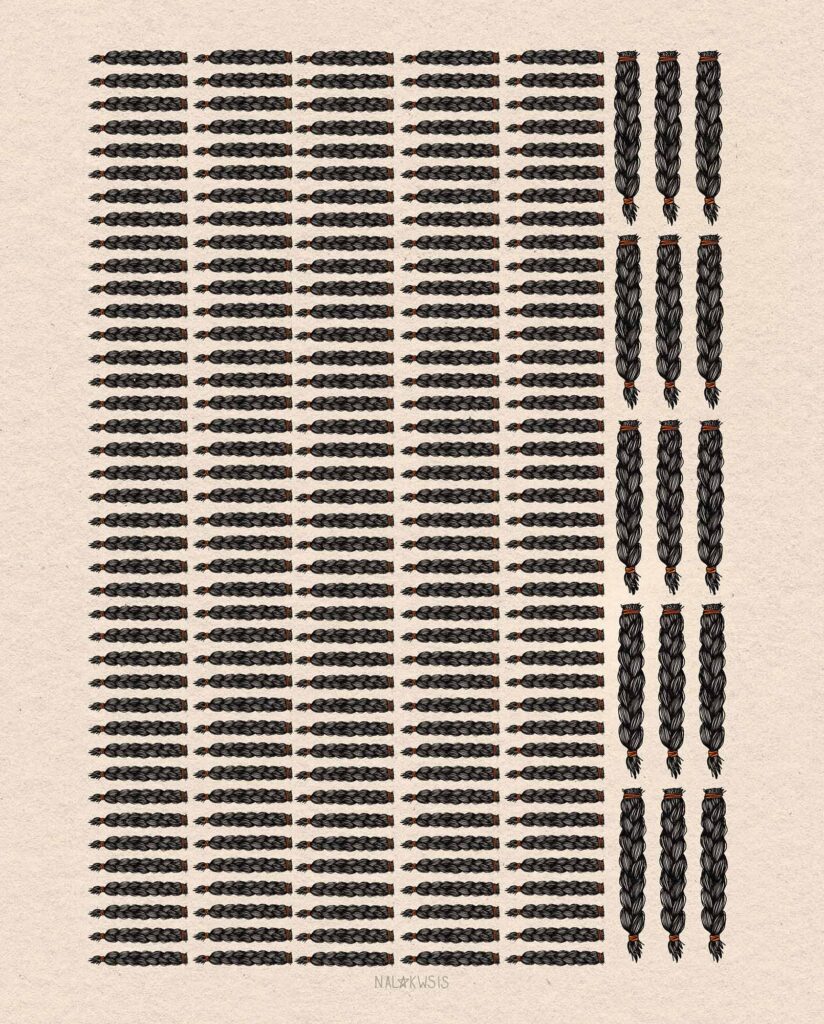
Saige “Nalakwsis” Mukash, 215 Braids, 2021
Nadia Myre, Indian Act, 2000–2002

Carey Newman, Witness Blanket, 2013–14

Davidee Ningeok, Sr., Residential School Nightmare, 2015

Shelley Niro, The Shirt, 2003

Luke Parnell, Neon Reconciliation Explosion, 2020

Dionne Paul, Her First Day of School, 2013
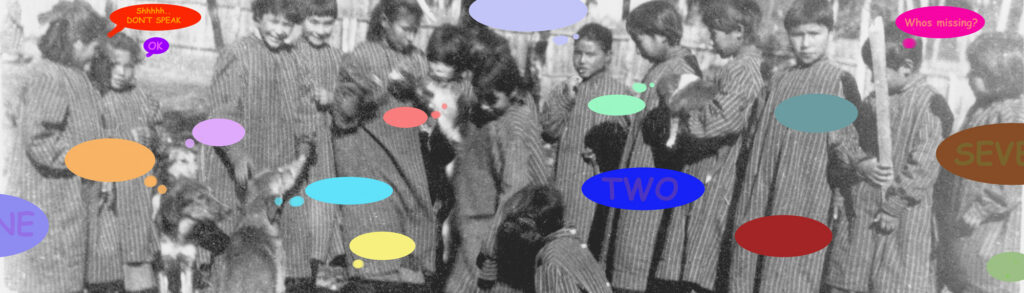
Edward Poitras, Don’t Speak, 2015

Barry Pottle, Yale Dormitory (Residential School), North West River, Labrador, 2015

Teharihulen Michel Savard, Reciprocity (Réciprocité), 2009

Jason Sikoak, Sacrilege, 2015

Greg Staats, Do’-gah – I don’t know [shrugging shoulders], 2020, archival pigment print on canvas on pine stretcher, oil, earth, Indian tobacco ash (edition 2 of 3), 142 x 175.3 x 2.5 cm, Agnes Etherington Art Centre, Kingston.

Alan Syliboy, Grandmother 1, 1997

Jeff Thomas, Broken Treaties, 1613–, 2020
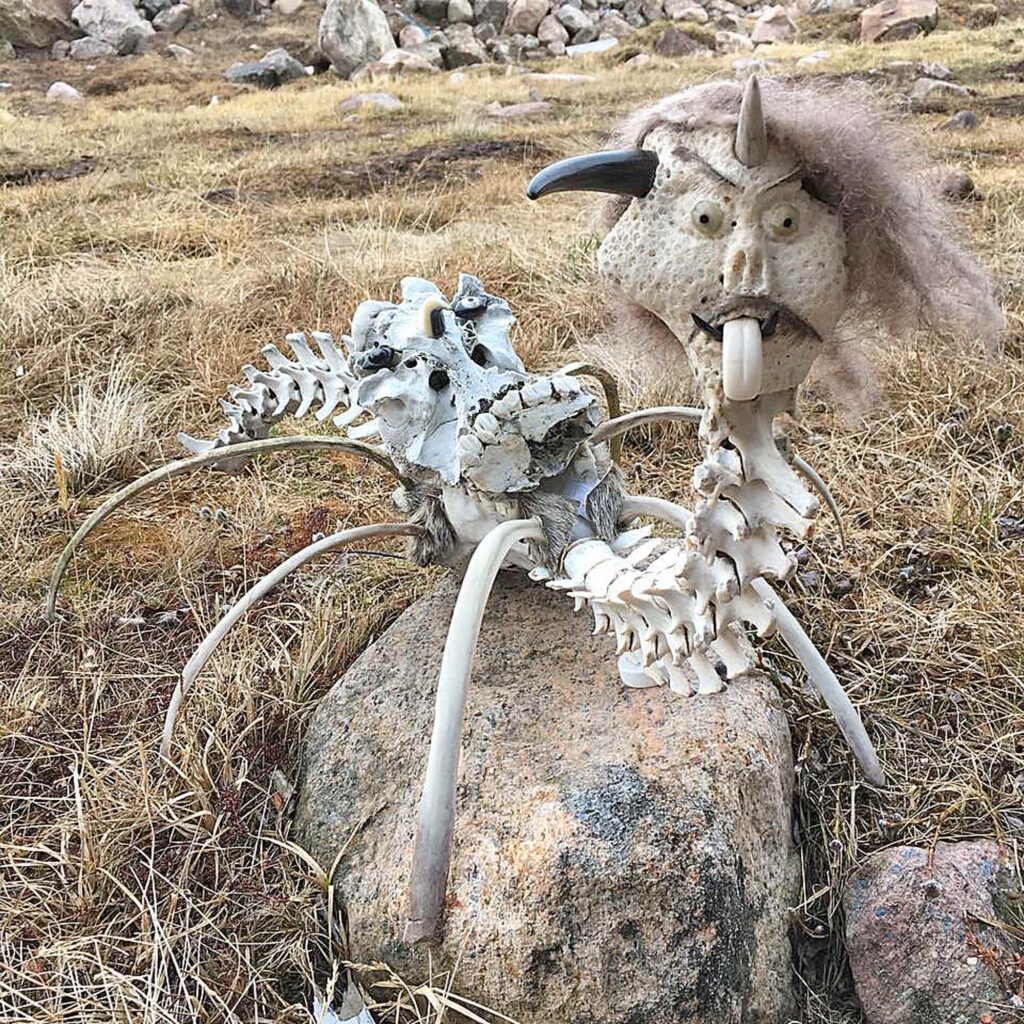
Jesse Tungilik, The Spirit of Intergenerational Trauma, 2019

Tania Willard, Be a Good Girl, 2017