Tim Moore, Erasure is Futile, 2021

Tim Moore, Erasure is Futile, 2021, mixed media sculpture (collaged map, casted erasers), dimensions variable.
Erasure is Futile by Métis artist Tim Moore (b.1974) is a mixed-media sculpture composed of a stacked tower of erasers that sit on a collaged map of Saskatchewan. Each eraser is cast and stamped with a number signifying the watermark found on Métis scrip once issued to Métis people under Canada’s fraudulent land‐grant program. The erasers, tools literally meant to obliterate marks on paper, here become emblems of colonial erasure. They recall not only the invalidated scrip that was supposed to extinguish Métis land claims but also the broader cultural violence enacted through residential schools and other assimilationist policies. As such, the sculpture is an urgent act of visual testimony that weaves together personal and collective histories of Métis dispossession and resilience.
Moore’s grandfather was taken from his home
at the age of seven to a residential school, and
he never returned. His story is the haunting presence behind these materials. By casting erasers stamped with scrip numbers in rubber and piling them like geological strata, Moore renders visible the sedimented layers of generational trauma. Yet, in their tactile materiality and resolute stacking, the erasers refuse to vanish. Their mass embodies what Moore names in the title: attempts to erase Indigenous Peoples and their claims to land ultimately fail.
Underpinning the erasers is the map—a torn, reassembled canvas of colonial Saskatchewan whose jagged edges and overlapping fragments mirror the ruptures wrought by scrip and residential schooling. Where the government sought to impose a seamless grid of survey lines and bureaucratic control, Moore’s collage reclaims land visually, insisting on Métis presence within and across those same borders. The map becomes a ground of visual knowledge in the Indigenous sense—a relational, land‐based archive encoded with place names and also with stories of removal, endurance, and return. Moore’s use of collage and assemblage recalls gestures of détournement, or the reuse of cultural objects in new contexts to critique their original meaning. Still, his work is animated by a distinctly Indigenous modernity, one that embraces adaptation and survivance rather than rupture or abstraction for its own sake. The erasers and map, read together, enact a counter‐memory that disrupts dominant narratives of progress and benevolence, demanding instead that we acknowledge the mechanical violences—erasers, scrip, residential schools—that have sought to nullify Métis identity.
Erasure is Futile thus stands as both memorial and manifesto. It honours Moore’s grandfather and all Métis children torn from kin and land while proclaiming in material form that Métis culture endures through creative reclamation. The sculpture’s restrained but varied palette underscores its bareness and directness, amplifying the ethical imperative to witness
and act. In Moore’s hands, erasers become instruments of revelation rather than oblivion, and the map transforms from a tool of division into a tapestry of collective memory. As a work of Indigenous visual knowledge, Erasure is Futile offers new guidelines for how museums and archives might display objects of colonial origin—not as curiosities or relics but as living testimonies in a wider project of truth, reconciliation, and self‐determined resurgence.
Gallery of A New Generation of Witness

Sonny Assu, Leila’s Desk, 2013

Michael Barber, A Silent Sky, 2022

Christi Belcourt, Giniigaaniimenaaning (Looking Ahead), 2012

Rebecca Belmore, Apparition, 2013

Rain Cabana-Boucher, Laying Flowers, 2021–24

Quill Christie-Peters, Portrait of Ste. Margaret’s Residential School and All It Could Not Contain, 2018

Dana Claxton, Headdress – Shadae and her Girlz, 2023

Beau Dick, The Ghost Confined to the Chair, 2012
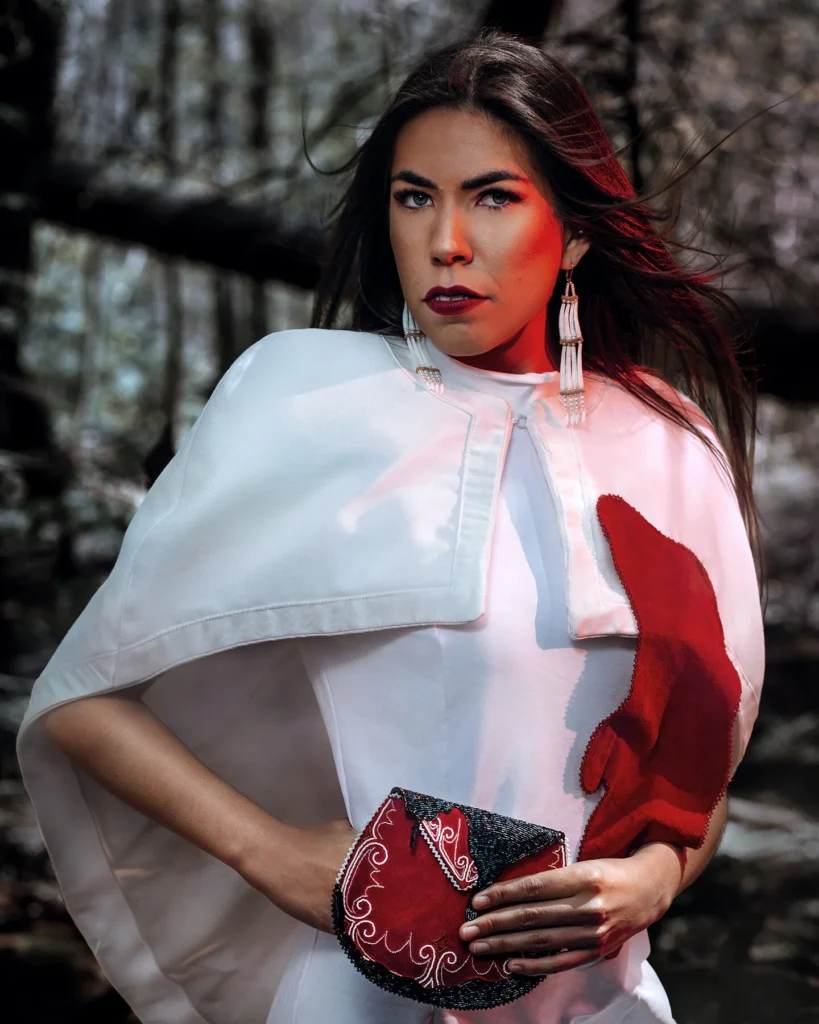
Oakley Rain Wysote Gray, Bleeding Heart Cape – M’st No’gmaq (All My Relations), 2021

7IDANsuu James Hart, Reconciliation Pole: Honouring a Time Before, During and After Canada’s Indian Residential Schools, 2015–17

Emma Hassencahl-Perley, White Flag, 2015

Brent Henry, English Only!, 2021

Shawn Hunt, Flipping the Bird, 2014

Lisa Jackson, Savage, 2009
Ursula Johnson, ITHA: The Livingroom, 2021

Siassie Kenneally, All the Things That I Have Seen, 2016

Jake Kimble, It’s All So Incredibly Loud, 2025

Duane Linklater, i want to forget the english language, ulterior, 2020/23

Jim Logan, National Pastimes, 1991

Luke Marston, Bentwood Box, 2009

Kevin McKenzie, Being Indigenous, 2024

Meryl McMaster, Truth to Power, 2017

Kent Monkman, The Scream, 2017

Caroline Monnet, The Black Case, 2014
Tim Moore, Erasure Is Futile, 2021

Peter Morin, This is what happens when you perform the memory of the land (parts 1 and 2), 2013
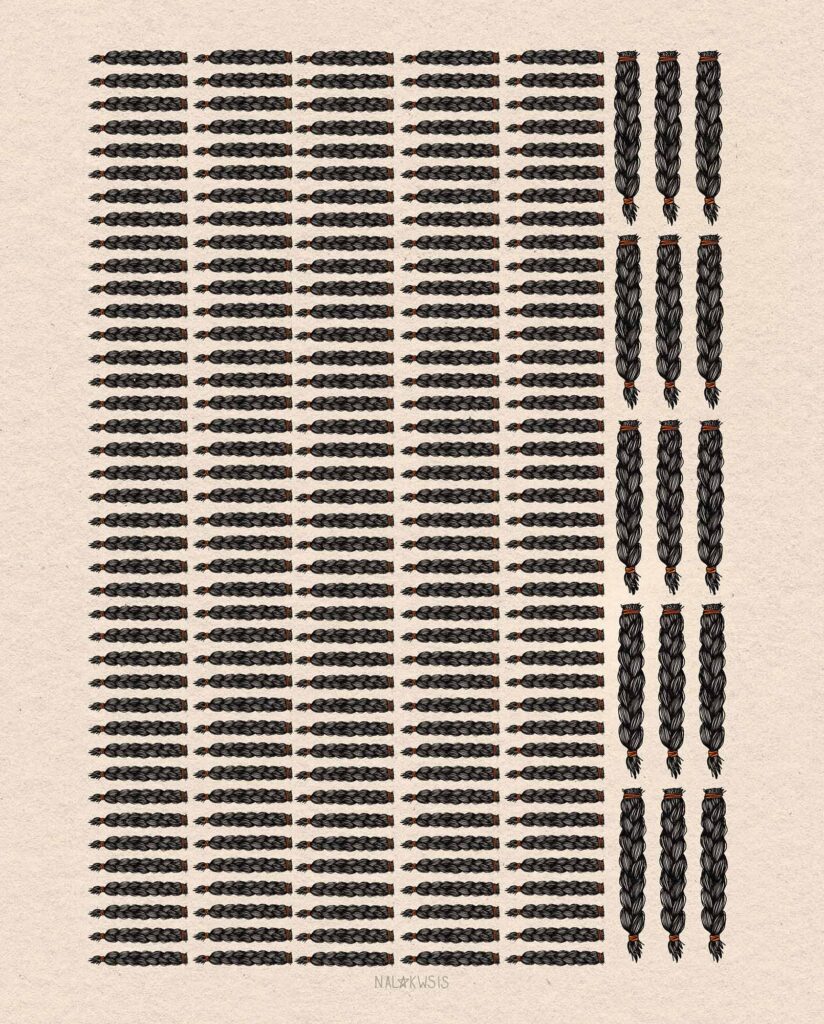
Saige “Nalakwsis” Mukash, 215 Braids, 2021

Nadia Myre, Indian Act, 2000–2002

Carey Newman, Witness Blanket, 2013–14

Davidee Ningeok, Sr., Residential School Nightmare, 2015

Shelley Niro, The Shirt, 2003

Luke Parnell, Neon Reconciliation Explosion, 2020

Dionne Paul, Her First Day of School, 2013
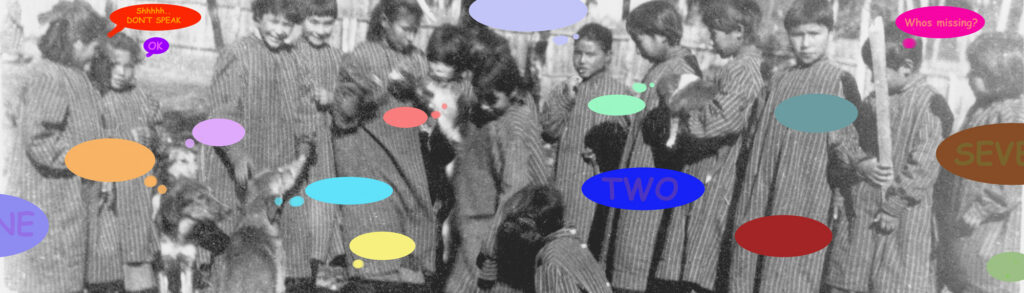
Edward Poitras, Don’t Speak, 2015

Barry Pottle, Yale Dormitory (Residential School), North West River, Labrador, 2015

Teharihulen Michel Savard, Reciprocity (Réciprocité), 2009

Jason Sikoak, Sacrilege, 2015

Greg Staats, Do’-gah – I don’t know [shrugging shoulders], 2020, archival pigment print on canvas on pine stretcher, oil, earth, Indian tobacco ash (edition 2 of 3), 142 x 175.3 x 2.5 cm, Agnes Etherington Art Centre, Kingston.

Alan Syliboy, Grandmother 1, 1997

Jeff Thomas, Broken Treaties, 1613–, 2020
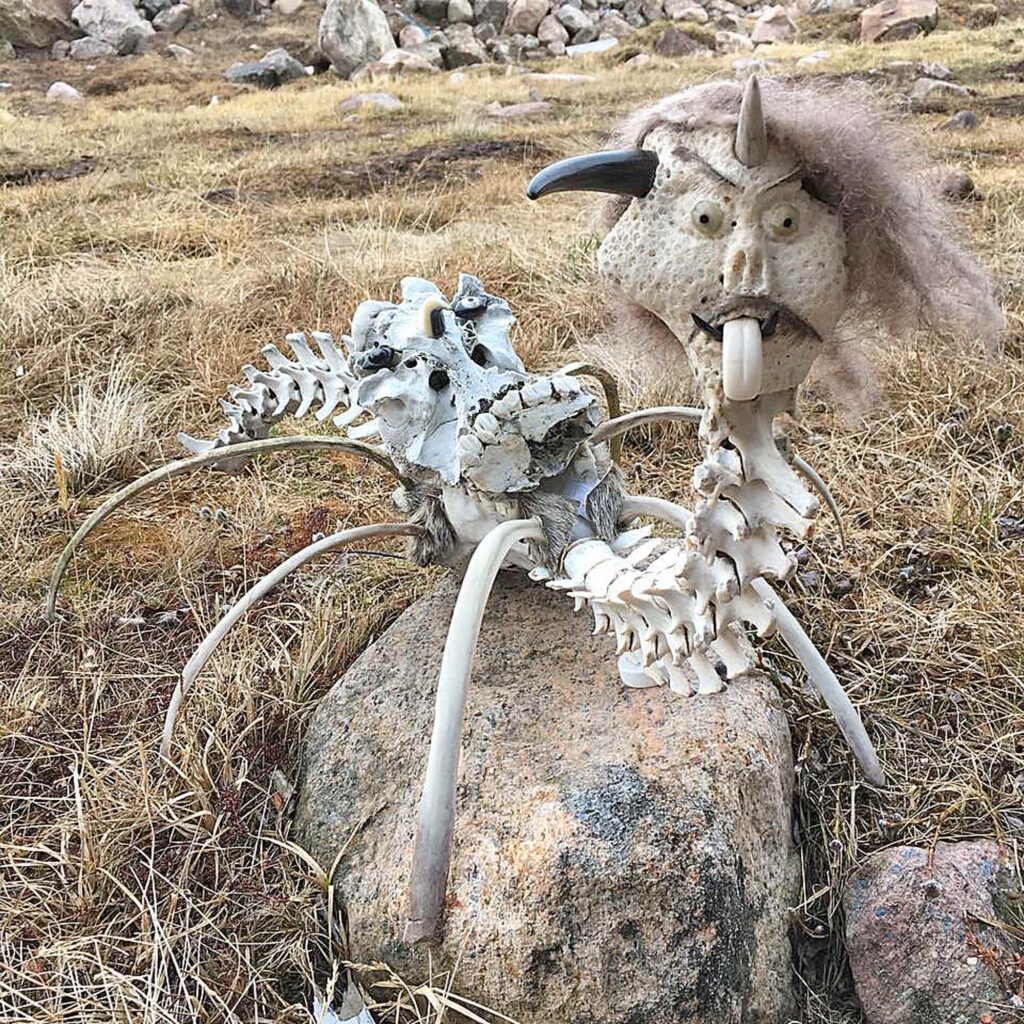
Jesse Tungilik, The Spirit of Intergenerational Trauma, 2019

Tania Willard, Be a Good Girl, 2017