Quill Christie-Peters, Portrait of Ste. Margaret’s Residential School and All It Could Not Contain, 2018

Quill Christie-Peters, Portrait of Ste. Margaret’s Residential School and All It Could Not Contain, 2018, acrylic on canvas, 60.9 x 91.4 cm.
In Portrait of Ste. Margaret’s Residential School and All It Could Not Contain, Anishinaabe artist Quill Christie-Peters (b.1992) renders the facade of the school in muted grey, its rectangular windows symbolizing surveillance and confinement. This rigid geometry is disrupted by vibrant Woodland-style colours, fluid forms, and cascading figures. Painted in turquoise, crimson, black, and magenta, these spectral presences burst through and beyond the school’s walls, their movements expansive and uncontainable. They embody the children, spirits, and stories the institution sought to suppress but could never destroy. Christie-Peters’s refusal to fix them in static suffering aligns with the concept of survivance.
Circles recur throughout the painting: orbs cradled by figures, cosmic seeds, and cellular constellations that counter the school’s rigid rectangularity. These circular motifs invoke Indigenous cosmologies of balance and renewal, asserting continuity against the linear logic of colonial education. Sacred landscapes emerge from the abstract forms, dissolving institutional authority into luminous fragments and blood-red accents. What appears at first as a school portrait is reframed as a vision of cultural continuity that exceeds containment.

Sherry Starr and Wab Kinew lead the grand entrance at the second annual Orange Shirt Day Survivors Walk and Pow Wow on National Day for Truth and Reconciliation, Winnipeg, 2022, photograph by John Woods / The Canadian Press.
The painting’s searing orange ground further amplifies this reframing. Orange recalls the collective mourning of Orange Shirt Day and
the grassroots memorials that followed the confirmation of the presence of unmarked graves at residential school sites. Across Canada, orange fabric, children’s shoes, and floral offerings have been laid on the steps of churches and legislatures, transforming sites of power into spaces of grief and accountability. Christie-Peters’s use of orange resonates with this visual language: the school is not isolated in grey but engulfed in a field of memory, grief, and public defiance.
Exhibited in spilling out, spilling over at the University of Saskatchewan in 2022, Portrait of Ste. Margaret’s Residential School and All It Could Not Contain exemplifies Christie-Peters’s commitment to art as a sovereign act. By channelling her father’s lived experience at this school while refusing to reproduce trauma as spectacle, she reorients representation toward resurgence and continuity. Memory here is personal but also intergenerational, threading past violence into present resistance and future sovereignty.
Ultimately, this work is both memorial
and defiance. Like the Orange Shirt Day commemorations it visually echoes, it demands that remembrance remain unsettled, ongoing, and collective. In this way, Christie-Peters affirms that, in addition to being a witness to colonial harm, Indigenous art is a practice of truth telling that transforms mourning into survivance and containment into ongoing renewal.
Collection of A New Generation of Witness

Sonny Assu, Leila’s Desk, 2013

Michael Barber, A Silent Sky, 2022

Christi Belcourt, Giniigaaniimenaaning (Looking Ahead), 2012

Rebecca Belmore, Apparition, 2013

Rain Cabana-Boucher, Laying Flowers, 2021–24
Quill Christie-Peters, Portrait of Ste. Margaret’s Residential School and All It Could Not Contain, 2018

Dana Claxton, Headdress – Shadae and her Girlz, 2023

Beau Dick, The Ghost Confined to the Chair, 2012
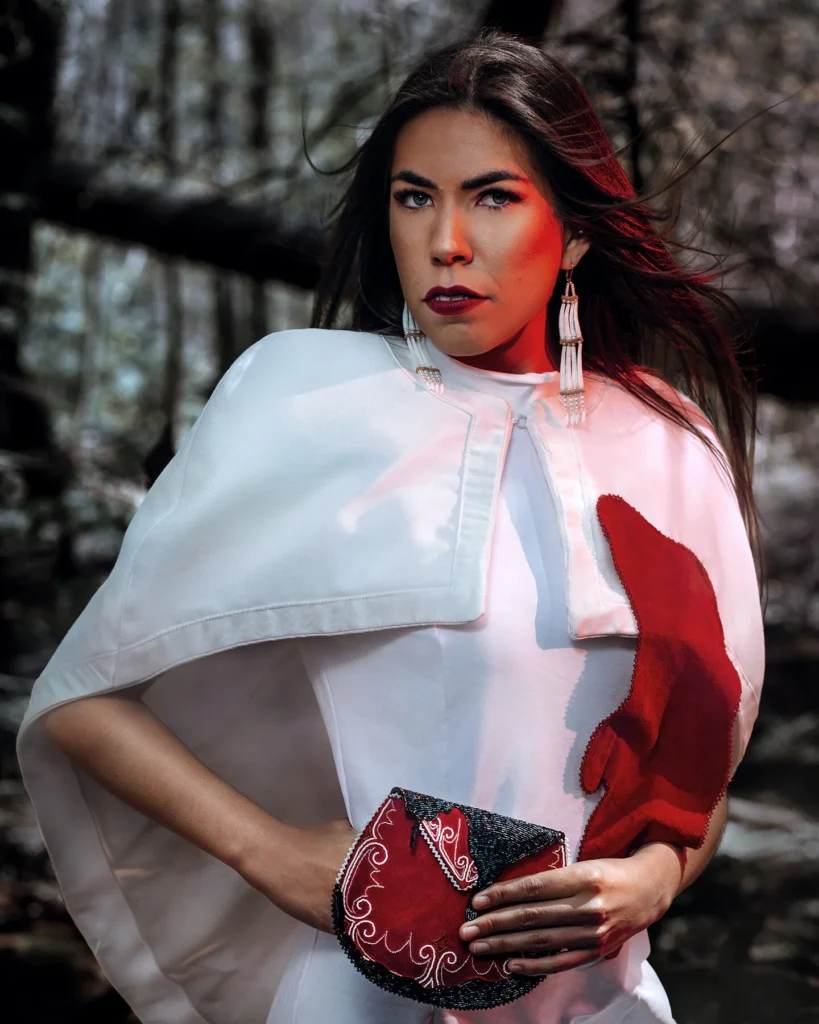
Oakley Rain Wysote Gray, Bleeding Heart Cape – M’st No’gmaq (All My Relations), 2021

7IDANsuu James Hart, Reconciliation Pole: Honouring a Time Before, During and After Canada’s Indian Residential Schools, 2015–17

Emma Hassencahl-Perley, White Flag, 2015

Brent Henry, English Only!, 2021

Shawn Hunt, Flipping the Bird, 2014

Lisa Jackson, Savage, 2009
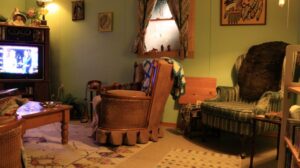
Ursula Johnson, ITHA: The Livingroom, 2021

Siassie Kenneally, All the Things That I Have Seen, 2016

Jake Kimble, It’s All So Incredibly Loud, 2025

Duane Linklater, i want to forget the english language, ulterior, 2020/23

Jim Logan, National Pastimes, 1991

Luke Marston, Bentwood Box, 2009

Kevin McKenzie, Being Indigenous, 2024

Meryl McMaster, Truth to Power, 2017

Kent Monkman, The Scream, 2017

Caroline Monnet, The Black Case, 2014

Tim Moore, Erasure Is Futile, 2021

Peter Morin, This is what happens when you perform the memory of the land (parts 1 and 2), 2013
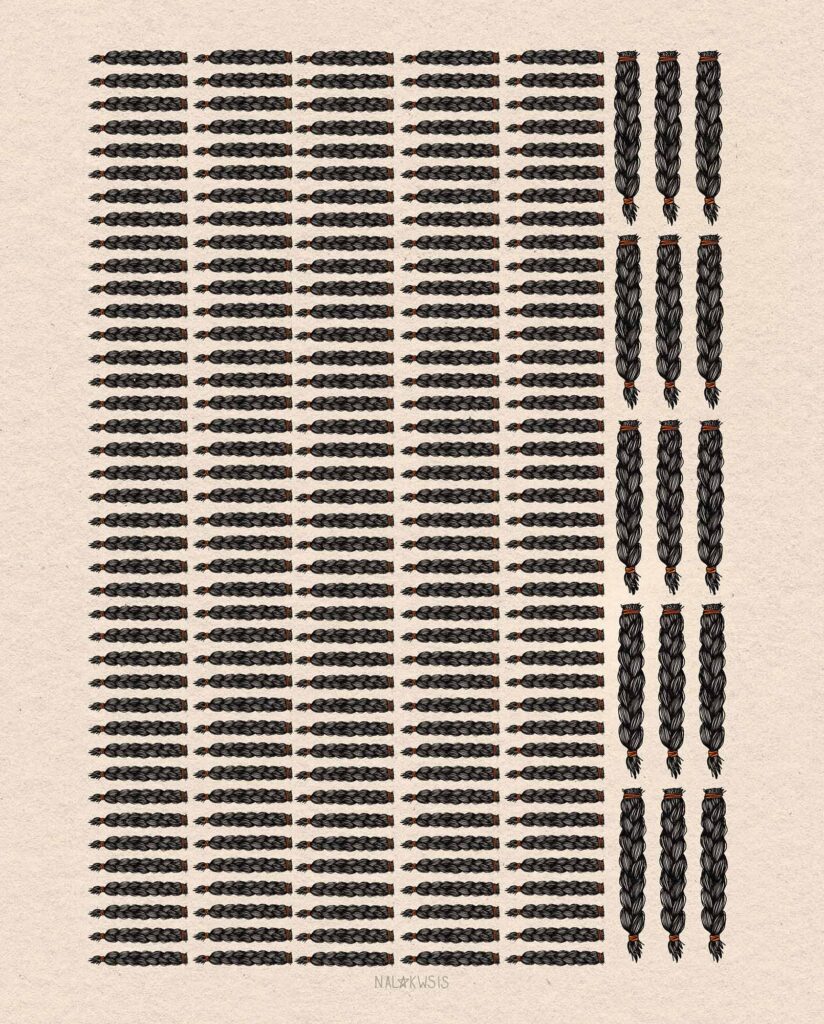
Saige “Nalakwsis” Mukash, 215 Braids, 2021

Nadia Myre, Indian Act, 2000–2002

Carey Newman, Witness Blanket, 2013–14

Davidee Ningeok, Sr., Residential School Nightmare, 2015

Shelley Niro, The Shirt, 2003

Luke Parnell, Neon Reconciliation Explosion, 2020

Dionne Paul, Her First Day of School, 2013
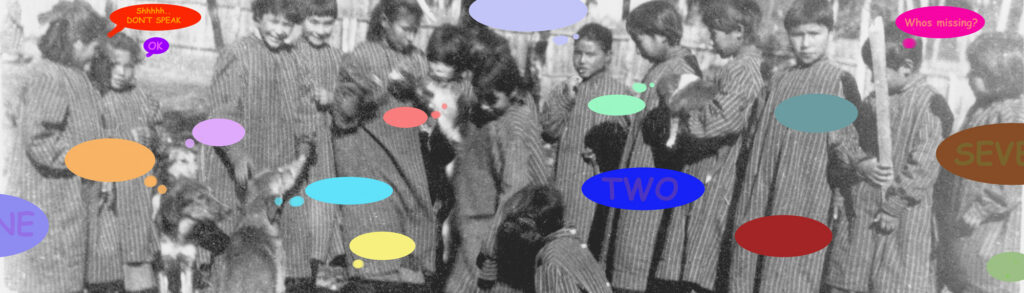
Edward Poitras, Don’t Speak, 2015

Barry Pottle, Yale Dormitory (Residential School), North West River, Labrador, 2015

Teharihulen Michel Savard, Reciprocity (Réciprocité), 2009

Jason Sikoak, Sacrilege, 2015

Greg Staats, Do’-gah – I don’t know [shrugging shoulders], 2020, archival pigment print on canvas on pine stretcher, oil, earth, Indian tobacco ash (edition 2 of 3), 142 x 175.3 x 2.5 cm, Agnes Etherington Art Centre, Kingston.

Alan Syliboy, Grandmother 1, 1997

Jeff Thomas, Broken Treaties, 1613–, 2020
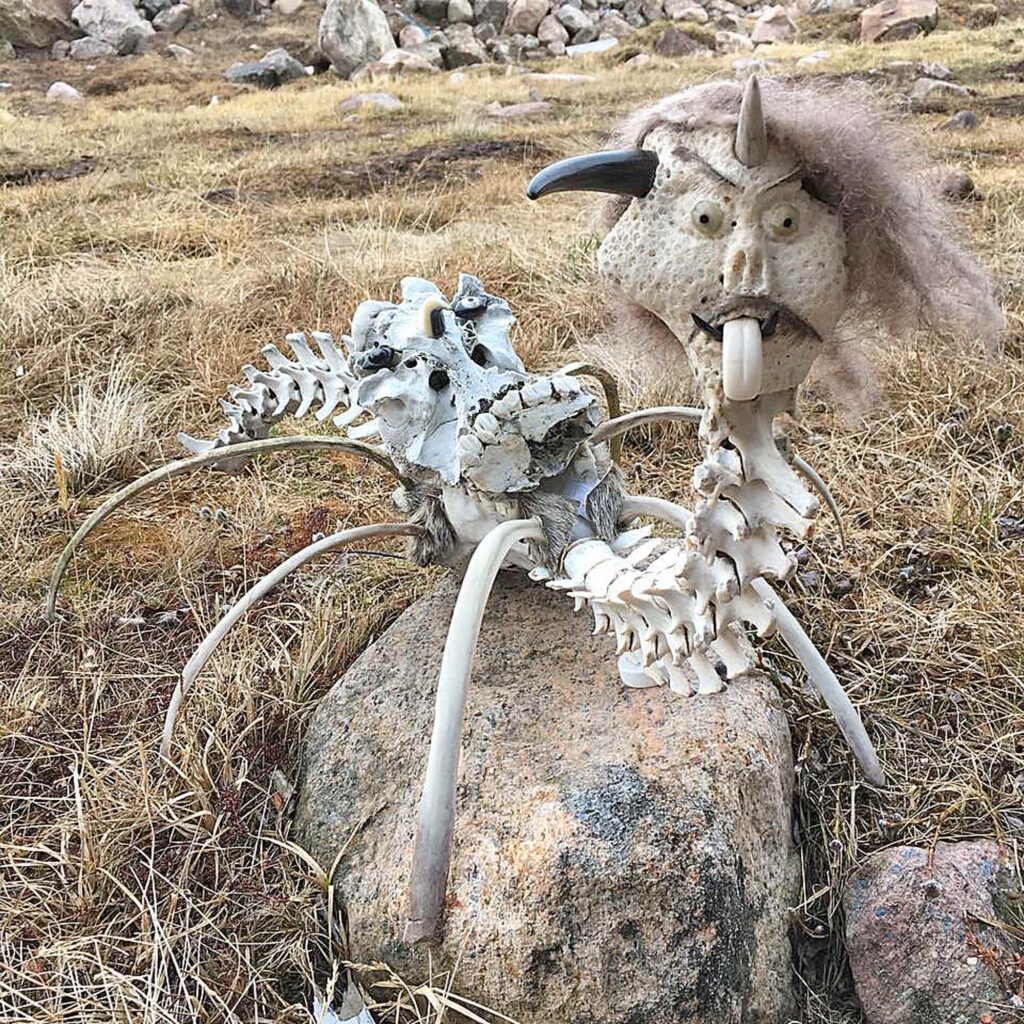
Jesse Tungilik, The Spirit of Intergenerational Trauma, 2019

Tania Willard, Be a Good Girl, 2017