Siassie Kenneally, All the Things That I Have Seen, 2016

Siassie Kenneally, All the Things That I Have Seen, 2016, ink and coloured pencil, 76.2 x 58.4 cm, Dorset Fine Arts, Toronto.
All the Things That I Have Seen, a lithograph by Inuk artist Siassie Kenneally (1969–2018) from Kinngait (Cape Dorset), Nunavut, almost ceremonially gathers together hundreds of minute icons, from her mother’s qulliq (oil lamp) and a harpoon to John Lennon’s spectacles and a lone Royal Canadian Mounted Police badge. In assembling this visual ledger, she witnesses loss, resilience, and the intergenerational severances imposed by Western institutions on Inuit communities.
At the heart of the circle, the qulliq glows as
the ancestral hearth—the source of warmth, ceremony, and kinship. Directly around it, we encounter a portrait of her grandfather Reverend Agiak Petaulassie, an Anglican minister whose very office embodies the entanglements of church authority in Inuit homelands. The adjacent chalice, Bible, and communion cracker stand in for the ways Christianity reshaped Inuit spiritual life and began the long project of linguistic and cultural displacement, echoing the role of residential schools in severing young people from their languages and relations.
Radiating outward, Kenneally draws both traditional tools—seal-skin mittens, ulu knives, bone scrapers—and first-encountered southern objects—telephones, stop signs, vinyl records. These “things I remember” evoke the medical dislocations of the 1950s tuberculosis quarantines, when Inuit bodies were routinely removed southward and treated as faceless subjects of state “care”—much like children in residential schools. The inclusion of her own disc-number portrait (E7) and an image of the tuberculosis bacillus itself confronts that colonial health apparatus head-on.
Beyond Kenneally’s immediate community,
the outer rings of the image extend to global events—war zones, hurricanes, space shuttles—signifying that Inuit experiences of dispossession and trauma resonate with other peoples’ histories of colonial violence. Yet, by meticulously naming and rendering every single object she “wanted to draw,” Kenneally reclaims the right to self-definition. Inuit are not passive subjects but active narrators of their own histories.
The circular format holds additional meaning.
It recalls drum-dance circles, the waxing and waning of the moon over family camps at Saaturittuq, and the cyclical nature of memory and ceremony in Inuit ways of knowing. Time in this drawing does not march; rather, it spirals, linking ancestors to children and the communal past to present testimony.
Drawn in the wake of her son’s suicide, Kenneally’s All the Things That I Have Seen operates on many levels: as a visual requiem and a declaration of survivance, as a work of art and a living archive. It is an intimate, concentric map of personal and collective memory that circles through Inuit worlds and the upheavals of colonial authority. It lays bare the church, health systems, and colonial governance that sought to define Inuit futures, while at the same time weaving an unbroken thread of Inuit visual knowledge rooted in land, language, and ceremony. In this act of drawing, Kenneally insists that Inuit testimonies be seen, memories honoured, and spirit sustained.
Gallery of A New Generation of Witness

Sonny Assu, Leila’s Desk, 2013

Michael Barber, A Silent Sky, 2022

Christi Belcourt, Giniigaaniimenaaning (Looking Ahead), 2012

Rebecca Belmore, Apparition, 2013

Rain Cabana-Boucher, Laying Flowers, 2021–24

Quill Christie-Peters, Portrait of Ste. Margaret’s Residential School and All It Could Not Contain, 2018

Dana Claxton, Headdress – Shadae and her Girlz, 2023

Beau Dick, The Ghost Confined to the Chair, 2012
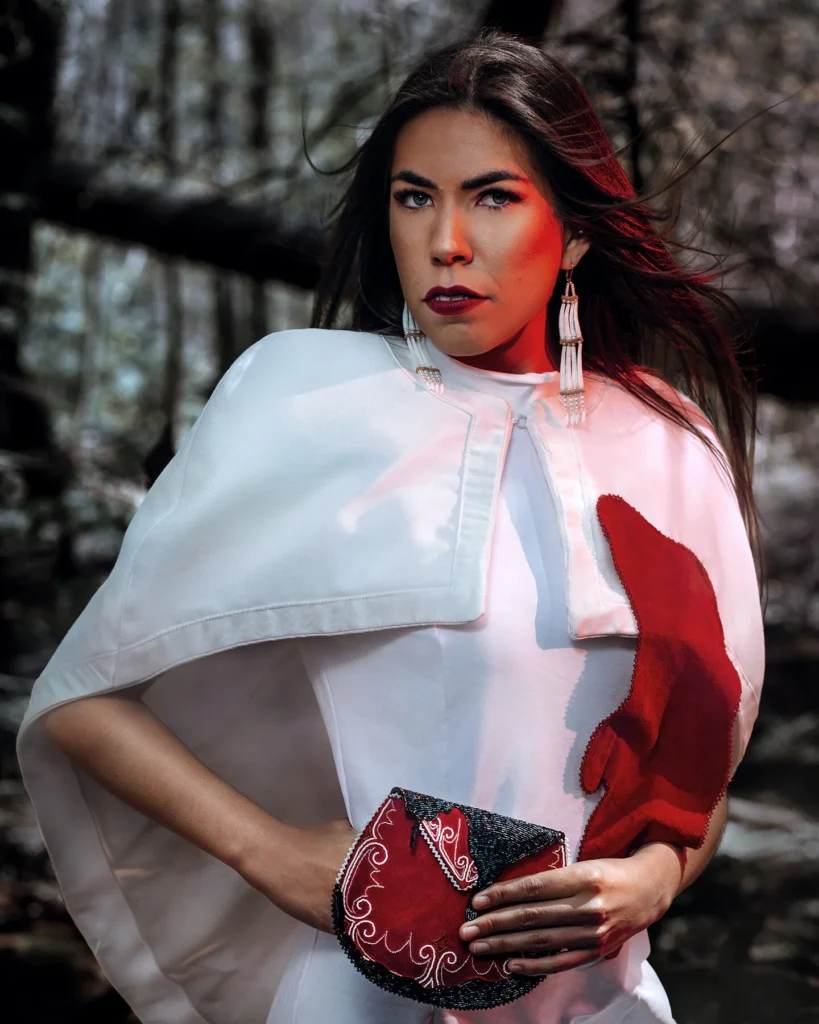
Oakley Rain Wysote Gray, Bleeding Heart Cape – M’st No’gmaq (All My Relations), 2021

7IDANsuu James Hart, Reconciliation Pole: Honouring a Time Before, During and After Canada’s Indian Residential Schools, 2015–17

Emma Hassencahl-Perley, White Flag, 2015

Brent Henry, English Only!, 2021

Shawn Hunt, Flipping the Bird, 2014

Lisa Jackson, Savage, 2009
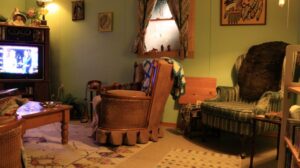
Ursula Johnson, ITHA: The Livingroom, 2021
Siassie Kenneally, All the Things That I Have Seen, 2016

Jake Kimble, It’s All So Incredibly Loud, 2025

Duane Linklater, i want to forget the english language, ulterior, 2020/23

Jim Logan, National Pastimes, 1991

Luke Marston, Bentwood Box, 2009

Kevin McKenzie, Being Indigenous, 2024

Meryl McMaster, Truth to Power, 2017

Kent Monkman, The Scream, 2017

Caroline Monnet, The Black Case, 2014

Tim Moore, Erasure Is Futile, 2021

Peter Morin, This is what happens when you perform the memory of the land (parts 1 and 2), 2013
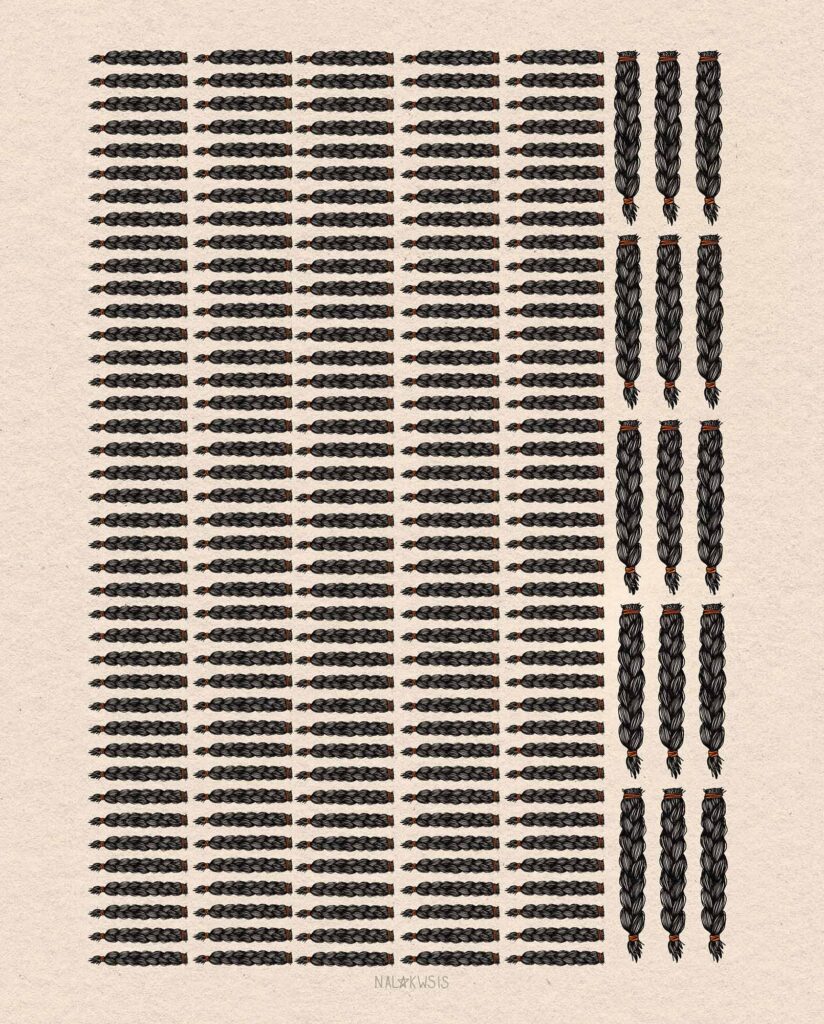
Saige “Nalakwsis” Mukash, 215 Braids, 2021

Nadia Myre, Indian Act, 2000–2002

Carey Newman, Witness Blanket, 2013–14

Davidee Ningeok, Sr., Residential School Nightmare, 2015

Shelley Niro, The Shirt, 2003

Luke Parnell, Neon Reconciliation Explosion, 2020

Dionne Paul, Her First Day of School, 2013
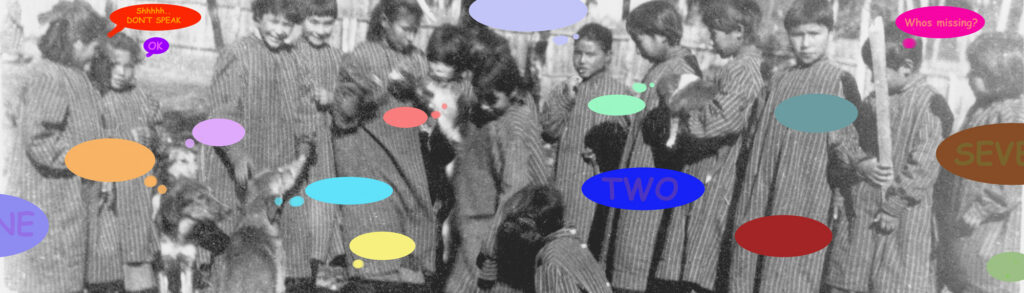
Edward Poitras, Don’t Speak, 2015

Barry Pottle, Yale Dormitory (Residential School), North West River, Labrador, 2015

Teharihulen Michel Savard, Reciprocity (Réciprocité), 2009

Jason Sikoak, Sacrilege, 2015

Greg Staats, Do’-gah – I don’t know [shrugging shoulders], 2020, archival pigment print on canvas on pine stretcher, oil, earth, Indian tobacco ash (edition 2 of 3), 142 x 175.3 x 2.5 cm, Agnes Etherington Art Centre, Kingston.

Alan Syliboy, Grandmother 1, 1997

Jeff Thomas, Broken Treaties, 1613–, 2020
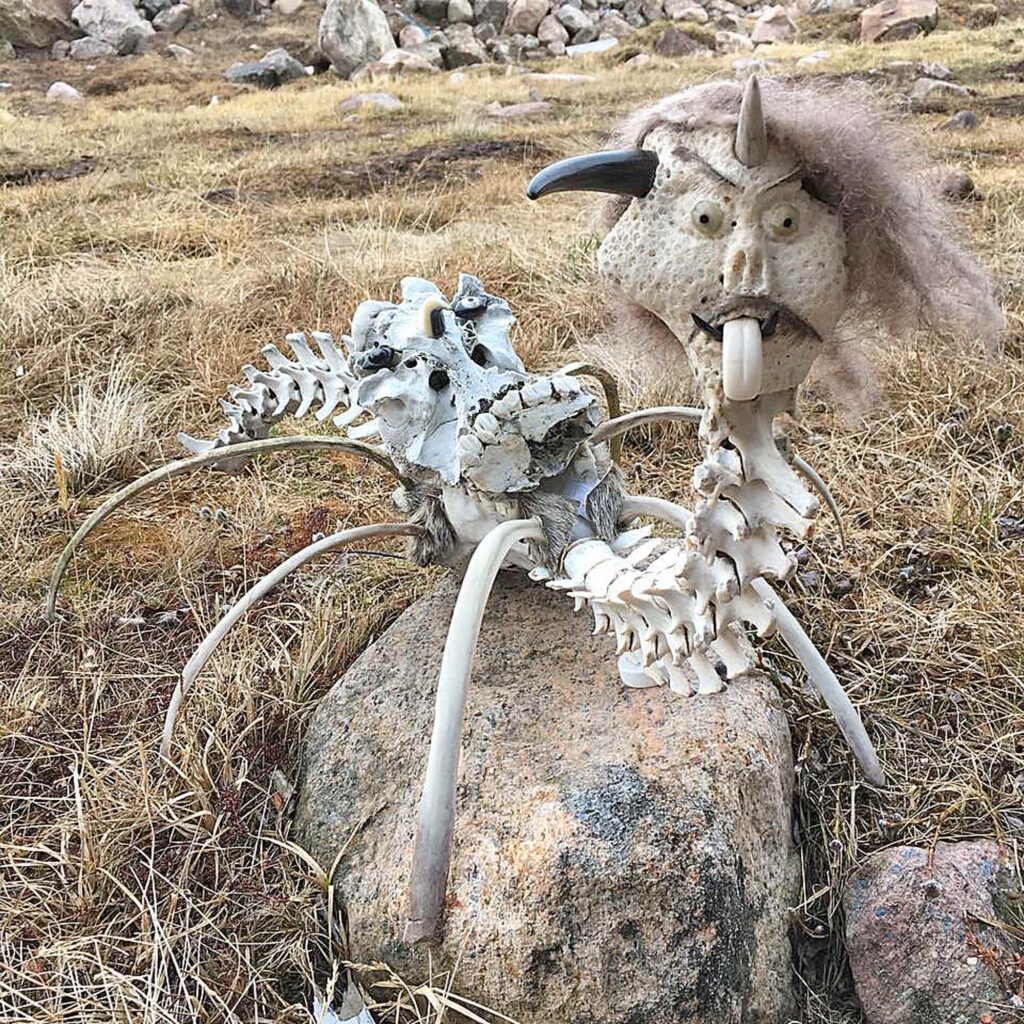
Jesse Tungilik, The Spirit of Intergenerational Trauma, 2019

Tania Willard, Be a Good Girl, 2017