Kent Monkman, The Scream, 2017

Kent Monkman, The Scream, 2017, acrylic on canvas, 213.4 x 335.3 cm, Denver Art Museum.
In his monumental acrylic painting The Scream, Cree artist Kent Monkman (b.1965) depicts scarlet-coated Royal Canadian Mounted Police officers and black-robed clergy swarming across a sunlit yard outside a modest house. Mothers claw, kick, and stretch their arms toward children being wrenched away, two male relatives lie felled in the grass, and a Mountie on the porch directs the roundup as others pursue fleeing youngsters into the fields. The emotional fulcrum is the mother in blue, body torqued forward, mouth open in a sound we cannot hear but instantly understand: the existential cry that gives the painting its title. Monkman’s reference to the famous work by Edvard Munch (1863–1944) is deliberate. Where Munch’s terror is undefined, here, the reason for the scream is incontrovertible.
With The Scream, Monkman seizes a genre long used to glorify empires—the nineteenth-century European history painting—and repurposes it to expose one of Canada’s least-pictured state crimes: the forcible taking of Indigenous children to place in residential schools and, by extension, the Sixties Scoop of Indigenous children from their families and contemporary child-welfare removals. Painted for the cross-country exhibition Shame and Prejudice: A Story of Resilience, the canvas crystallizes countless Survivor testimonies into a single, searing tableau.

Installation view of Shame and Prejudice: A Story of Resilience, a project by Kent Monkman on view from January 26 to March 5, 2017, at the University of Toronto Art Centre, date unknown, photograph by Toni Hafkenscheid.

Kent Monkman, Dance to Miss Chief (still), 2010, colour video, English and German with English subtitles, 4 min and 49 sec.
Monkman collapses time through costume. Authorities wear historically specific uniforms and many Indigenous figures appear in mid-twentieth-century dress, signalling that state-sanctioned child apprehension spanned generations. A cleric hoists a toddler whose underwear is exposed; this vulnerability foreshadows the physical and sexual abuses that awaited. Ancestral witnesses in the forms of crows and raptors wheel overhead, with one crow even diving at an officer, while storm clouds mass beyond the bright foreground—nature mirroring moral darkness. Colour and light heighten the impact. The lush summer palette of green grass and blue sky makes the violence more jarring; in contrast, Mountie red slashes the composition like wounds across the land. Monkman’s baroque staging, including diagonals of straining limbs and choreographed clusters of struggle, guides the eye cinematically; yet, it denies aesthetic detachment. Viewers are trapped: to look is to witness, to look away is to refuse that responsibility.
The Scream is unusual in that Monkman’s Two-Spirit alter ego, Miss Chief Eagle Testickle, does not appear within the scene. In accompanying texts, she admits the pain is too deep to narrate. Exhibition installations intensified the encounter: darkened galleries, cradleboards, and children’s crafts positioned this work as vigil as much as painting.
Widely circulated online and acquired by the Denver Art Museum, The Scream entered
public consciousness as an image of cultural genocide in action. Educators deploy it to open conversations that statistics alone cannot, Survivors recognize their families’ stories,
and settler viewers confront complicity. In reclaiming the massive scale of national art for Indigenous truth, Monkman transforms a scream of grief into a public demand for accountability—art as testimony, commemoration, and a call to act in the unfinished
work of reconciliation.
Gallery of A New Generation of Witness

Sonny Assu, Leila’s Desk, 2013

Michael Barber, A Silent Sky, 2022

Christi Belcourt, Giniigaaniimenaaning (Looking Ahead), 2012

Rebecca Belmore, Apparition, 2013

Rain Cabana-Boucher, Laying Flowers, 2021–24

Quill Christie-Peters, Portrait of Ste. Margaret’s Residential School and All It Could Not Contain, 2018

Dana Claxton, Headdress – Shadae and her Girlz, 2023

Beau Dick, The Ghost Confined to the Chair, 2012
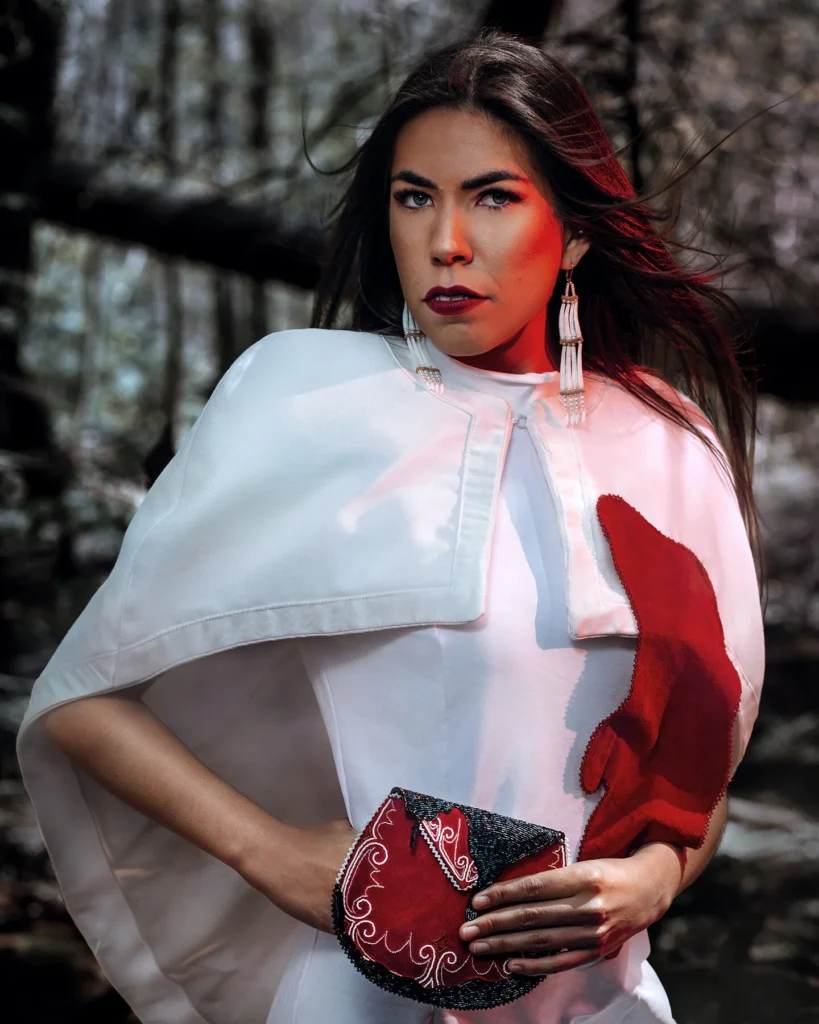
Oakley Rain Wysote Gray, Bleeding Heart Cape – M’st No’gmaq (All My Relations), 2021

7IDANsuu James Hart, Reconciliation Pole: Honouring a Time Before, During and After Canada’s Indian Residential Schools, 2015–17

Emma Hassencahl-Perley, White Flag, 2015

Brent Henry, English Only!, 2021

Shawn Hunt, Flipping the Bird, 2014

Lisa Jackson, Savage, 2009
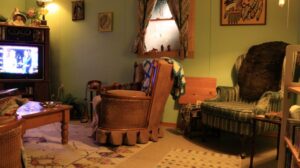
Ursula Johnson, ITHA: The Livingroom, 2021

Siassie Kenneally, All the Things That I Have Seen, 2016

Jake Kimble, It’s All So Incredibly Loud, 2025

Duane Linklater, i want to forget the english language, ulterior, 2020/23

Jim Logan, National Pastimes, 1991

Luke Marston, Bentwood Box, 2009

Kevin McKenzie, Being Indigenous, 2024

Meryl McMaster, Truth to Power, 2017
Kent Monkman, The Scream, 2017

Caroline Monnet, The Black Case, 2014

Tim Moore, Erasure Is Futile, 2021

Peter Morin, This is what happens when you perform the memory of the land (parts 1 and 2), 2013
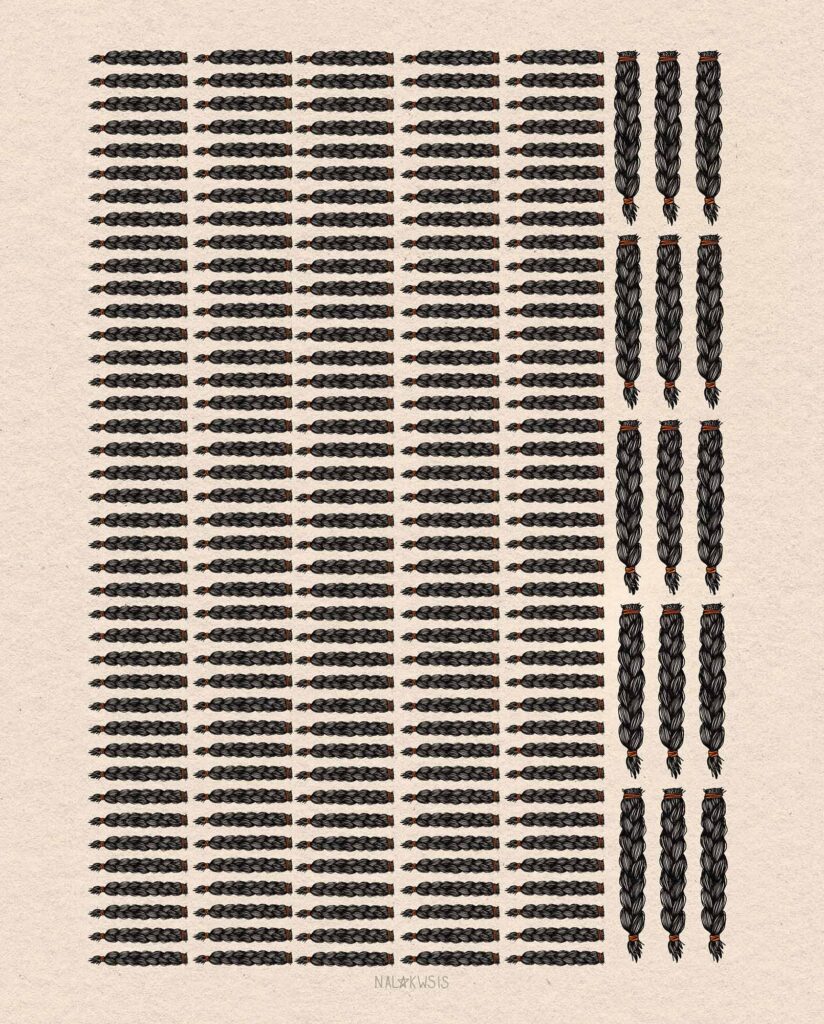
Saige “Nalakwsis” Mukash, 215 Braids, 2021

Nadia Myre, Indian Act, 2000–2002

Carey Newman, Witness Blanket, 2013–14

Davidee Ningeok, Sr., Residential School Nightmare, 2015

Shelley Niro, The Shirt, 2003

Luke Parnell, Neon Reconciliation Explosion, 2020

Dionne Paul, Her First Day of School, 2013
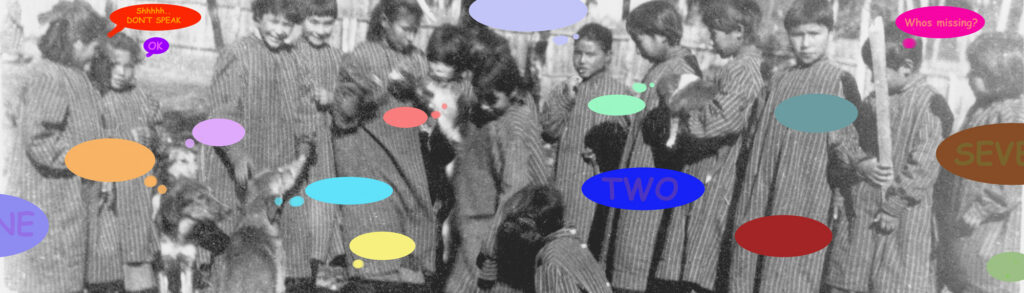
Edward Poitras, Don’t Speak, 2015

Barry Pottle, Yale Dormitory (Residential School), North West River, Labrador, 2015

Teharihulen Michel Savard, Reciprocity (Réciprocité), 2009

Jason Sikoak, Sacrilege, 2015

Greg Staats, Do’-gah – I don’t know [shrugging shoulders], 2020, archival pigment print on canvas on pine stretcher, oil, earth, Indian tobacco ash (edition 2 of 3), 142 x 175.3 x 2.5 cm, Agnes Etherington Art Centre, Kingston.

Alan Syliboy, Grandmother 1, 1997

Jeff Thomas, Broken Treaties, 1613–, 2020
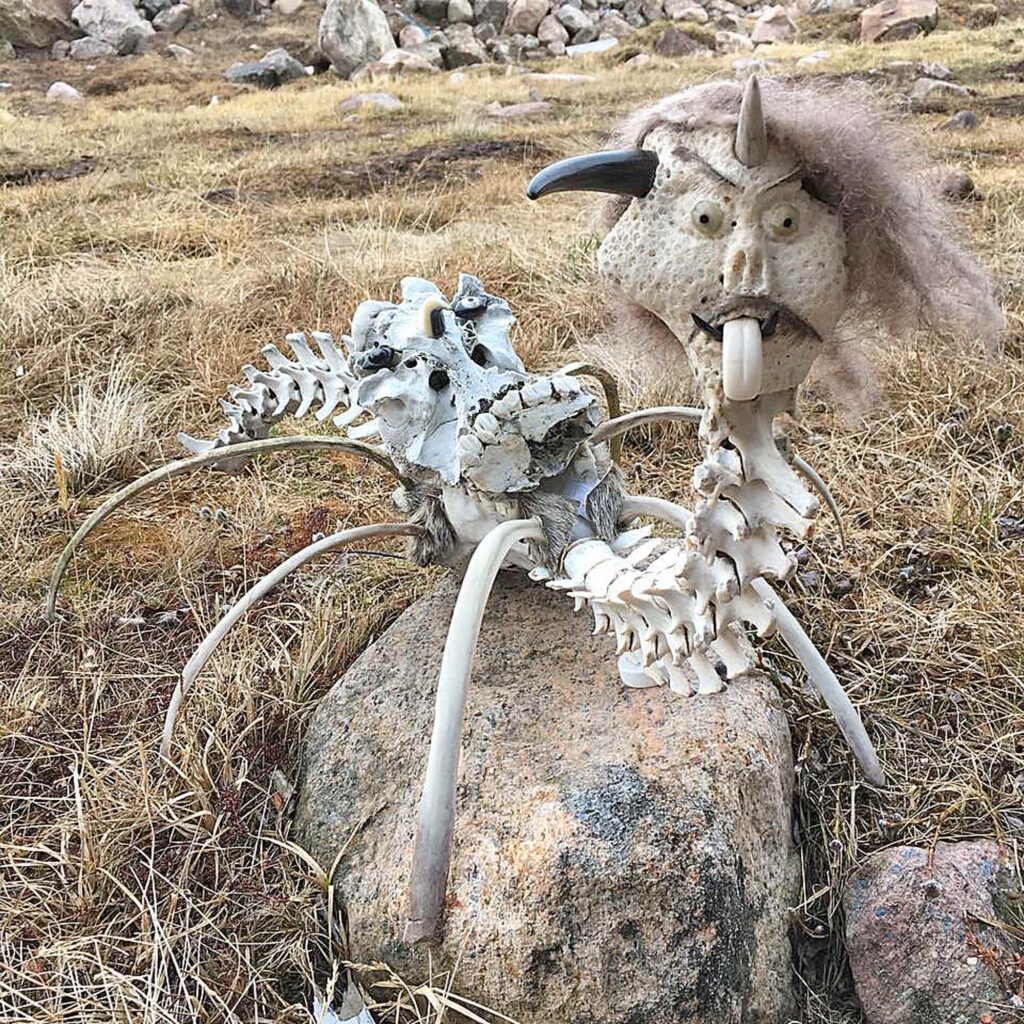
Jesse Tungilik, The Spirit of Intergenerational Trauma, 2019

Tania Willard, Be a Good Girl, 2017