Michael Barber, A Silent Sky, 2022

Michael Barber, A Silent Sky, 2022, reclaimed wooden doors, plywood birds and figure, dimensions variable (installed 365.8 x 243.8 x 274.3 cm), private collection.
Skies are usually filled with sound—birds, wind, voices—but in the installation A Silent Sky by Upper Mohawk artist Michael Barber (b.1967), they are silent, weighted with what cannot be spoken. The work brings together soaring wooden birds, a silhouetted child, and two distressed doors—each bearing the standing silhouette of a figure rendered in rust and resin, as if burned into the wood. The birds function as messengers, imagined as carrying words back to mothers whose children never returned from the residential schools. The door figures—upright, enduring—convey a grief that is embodied rather than collapsed: a presence that that refuses to disappear. The distressed doors are thresholds between inside and outside, between safety and exposure, and they become surfaces of memory as though marked by generations of footsteps and suppressed cries.
This artwork is shaped by Barber’s own family’s history. His grandmother had been forced into the Mohawk Institute in Ontario, the infamous Mush Hole, and her silence around that experience reverberated across generations, culminating in the unspoken grief that contributed to his father’s suicide. The title
itself invokes absence.
Barber’s material choices are central to his truth telling. Using gouged wood, resin, and layered pigments, he creates surfaces that feel wounded and scarred, metaphors for trauma that is carried in the body and the land. His panels are shaped to appear marked by endurance, made to look like they have lived through damage rather than simply depicting it, a quality that resonates not only with his own family history but with the endurance of Indigenous Peoples after the attempted erasure of the residential school era.

Secondary school students from Ontario’s Conseil scolaire catholique MonAvenir school board working on a mural, facilitated by Michael Barber, 2024, photographs by Michael Barber.
A key dimension of A Silent Sky is the participatory way in which it was made. Barber often works with students and community members, inviting them to paint birds or scuff doors. This collective involvement recalls how children in the schools carved symbols into dormitory walls, leaving behind traces of
their presence. The act of marking wood becomes both remembrance and repair, an intergenerational dialogue where youth acknowledge silenced histories and help to carry them forward. In this way, the work shifts from solitary expression to shared testimony, transforming silence into communal witness.
Visually and spatially, the installation transforms the gallery into a site of encounter and mourning. The layering of textures and the placement of objects force viewers to navigate thresholds, silences, and absences. They cannot be neutral; the installation demands that they consider their role as witnesses, as inheritors of unspoken histories, and as participants in reconciliation.
Ultimately, A Silent Sky stands as both elegy and resurgence. It testifies to the weight of silence imposed by residential schools while also allowing voices—through birds, doors, and collective gestures—to resound once again. Barber transforms private grief into public memory, insisting that silence itself must be heard and that art can become a vessel for truth telling, healing, and intergenerational survival.
Collection of A New Generation of Art

Sonny Assu, Leila’s Desk, 2013
Michael Barber, A Silent Sky, 2022

Christi Belcourt, Giniigaaniimenaaning (Looking Ahead), 2012

Rebecca Belmore, Apparition, 2013

Rain Cabana-Boucher, Laying Flowers, 2021–24

Quill Christie-Peters, Portrait of Ste. Margaret’s Residential School and All It Could Not Contain, 2018

Dana Claxton, Headdress – Shadae and her Girlz, 2023

Beau Dick, The Ghost Confined to the Chair, 2012
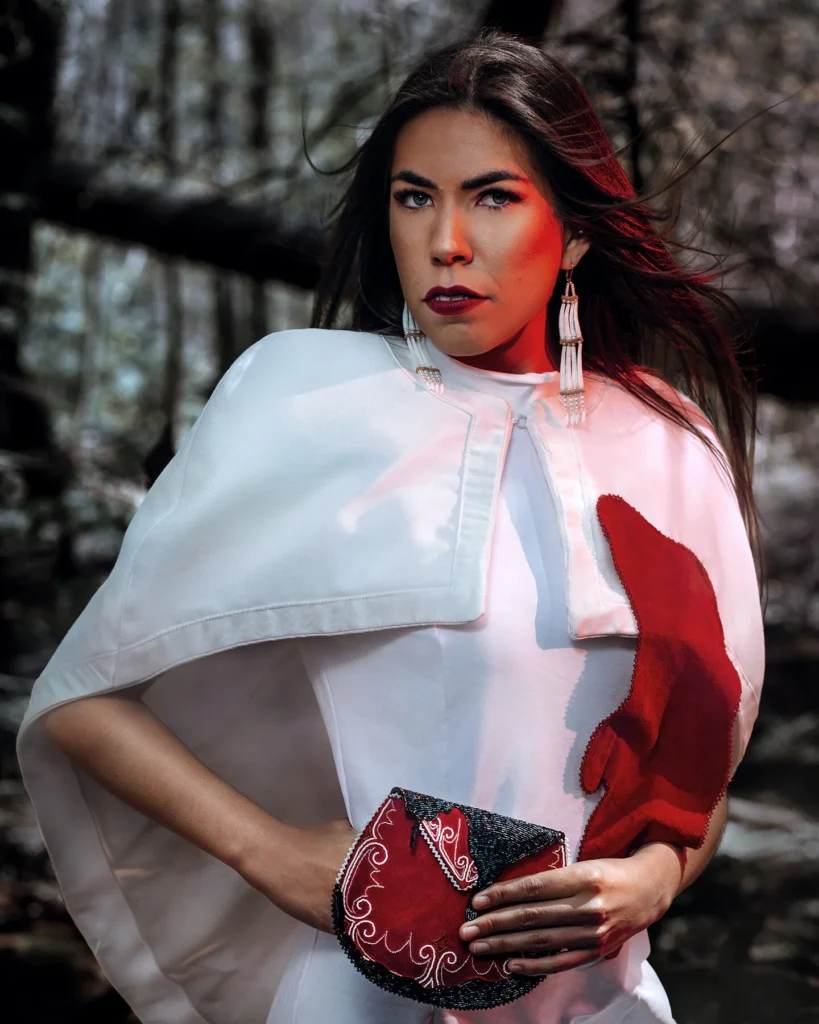
Oakley Rain Wysote Gray, Bleeding Heart Cape – M’st No’gmaq (All My Relations), 2021

7IDANsuu James Hart, Reconciliation Pole: Honouring a Time Before, During and After Canada’s Indian Residential Schools, 2015–17

Emma Hassencahl-Perley, White Flag, 2015

Brent Henry, English Only!, 2021

Shawn Hunt, Flipping the Bird, 2014

Lisa Jackson, Savage, 2009
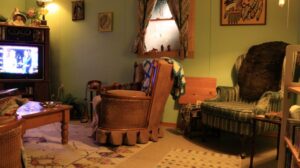
Ursula Johnson, ITHA: The Livingroom, 2021

Siassie Kenneally, All the Things That I Have Seen, 2016

Jake Kimble, It’s All So Incredibly Loud, 2025

Duane Linklater, i want to forget the english language, ulterior, 2020/23

Jim Logan, National Pastimes, 1991

Luke Marston, Bentwood Box, 2009

Kevin McKenzie, Being Indigenous, 2024

Meryl McMaster, Truth to Power, 2017

Kent Monkman, The Scream, 2017

Caroline Monnet, The Black Case, 2014

Tim Moore, Erasure Is Futile, 2021

Peter Morin, This is what happens when you perform the memory of the land (parts 1 and 2), 2013
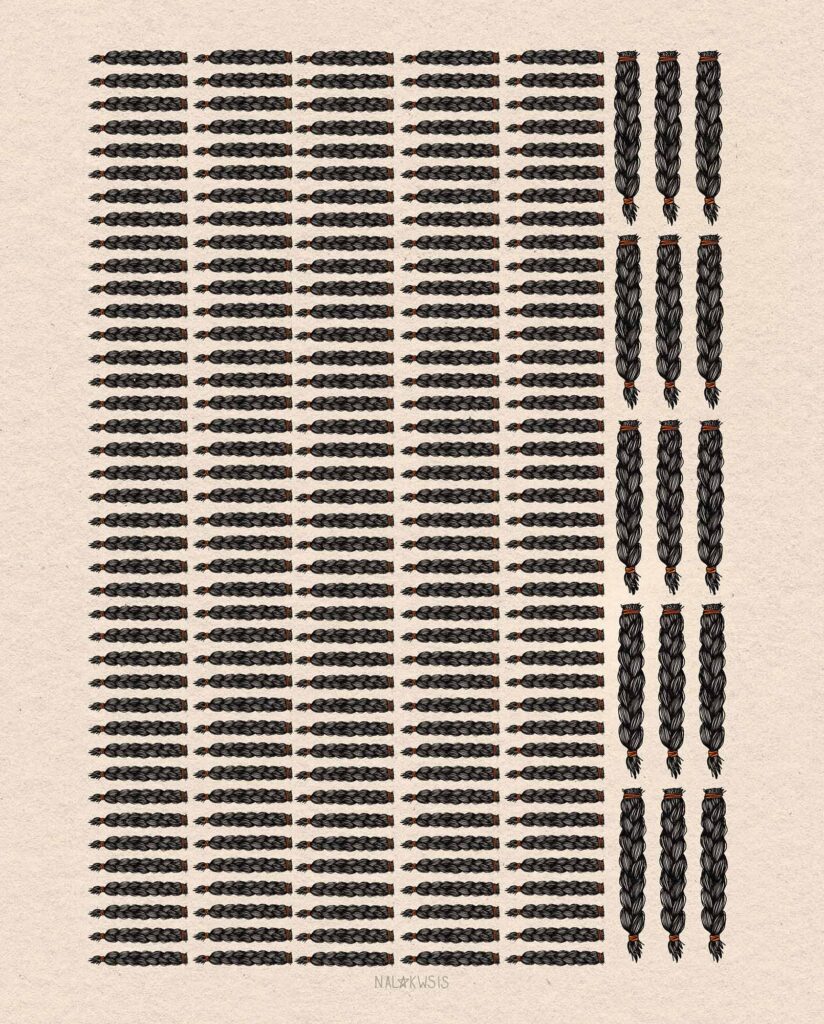
Saige “Nalakwsis” Mukash, 215 Braids, 2021

Nadia Myre, Indian Act, 2000–2002

Carey Newman, Witness Blanket, 2013–14

Davidee Ningeok, Sr., Residential School Nightmare, 2015

Shelley Niro, The Shirt, 2003

Luke Parnell, Neon Reconciliation Explosion, 2020

Dionne Paul, Her First Day of School, 2013
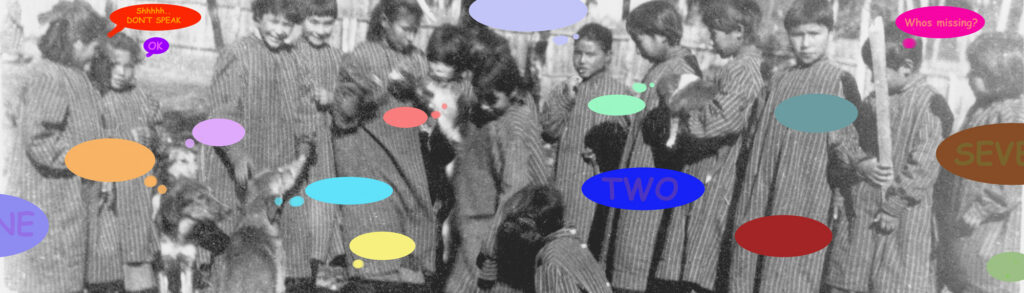
Edward Poitras, Don’t Speak, 2015

Barry Pottle, Yale Dormitory (Residential School), North West River, Labrador, 2015

Teharihulen Michel Savard, Reciprocity (Réciprocité), 2009

Jason Sikoak, Sacrilege, 2015

Greg Staats, Do’-gah – I don’t know [shrugging shoulders], 2020, archival pigment print on canvas on pine stretcher, oil, earth, Indian tobacco ash (edition 2 of 3), 142 x 175.3 x 2.5 cm, Agnes Etherington Art Centre, Kingston.

Alan Syliboy, Grandmother 1, 1997

Jeff Thomas, Broken Treaties, 1613–, 2020
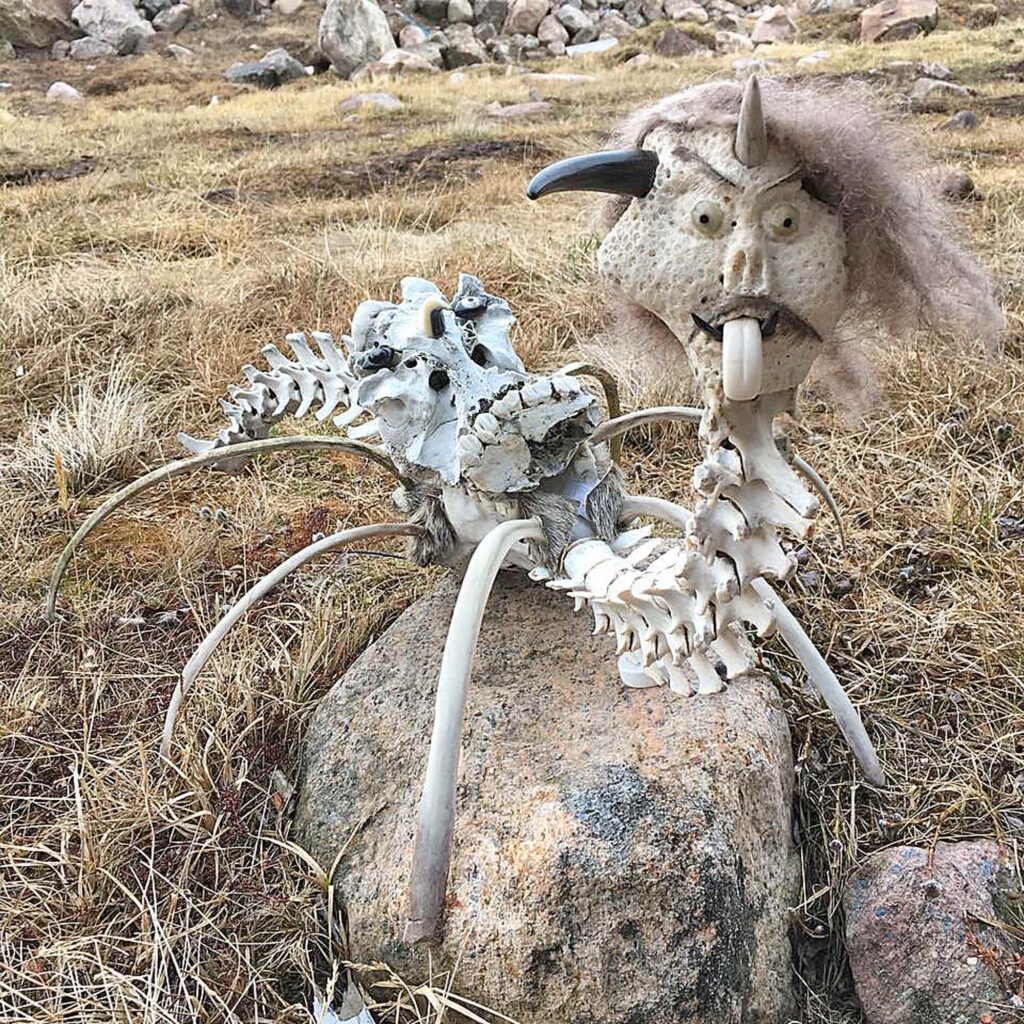
Jesse Tungilik, The Spirit of Intergenerational Trauma, 2019

Tania Willard, Be a Good Girl, 2017