Oakley Rain Wysote Gray, Bleeding Heart Cape – M’st No’gmaq (All My Relations), 2021
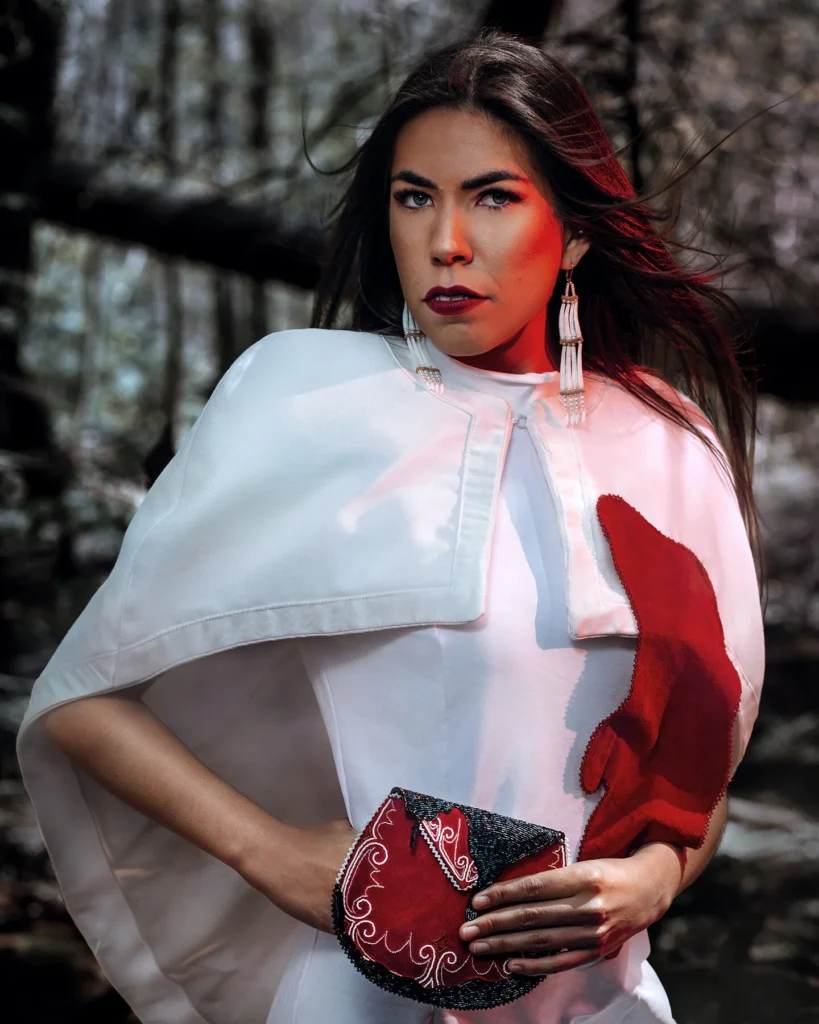
Oakley Rain Wysote Gray, Bleeding Heart Cape – M’st No’gmaq (All My Relations), from Mei Eimotieg (We Are Still Here), 2021, cotton, dupioni silk, beads, suede, fur, metal.
Bleeding Heart Cape – M’st No’gmaq (All My Relations) by Oakley Rain Wysote Gray of Listuguj Mi’gmaq First Nation, Quebec, functions as both wearable art and testimony. Situated at the intersection of memory, loss, identity, and resistance, the work externalizes the internal wounds inflicted by colonial systems, particularly through residential schools and disrupted family structures, by positioning the body as a site of lamentation. The metaphor is visceral: ripping children from family equals ripping hearts, rendered physical in fabric, colour, and beadwork.

Oakley Rain Wysote Gray, Wo’gumal (Cousin), from Mei Eimotieg (We Are Still Here), 2021, cotton, dupioni silk, beads, suede, fur, metal.

Oakley Rain Wysote Gray, Tapu’ijig sg’te’gmuj (Two Spirits), from Mei Eimotieg (We Are Still Here), 2021, cotton, dupioni silk, beads, suede, fur, metal.
Central to Bleeding Heart Cape is its use of symbolic colour and materials. The red that stains or appears in the piece is not decorative alone—it is blood, sacrifice, and grief but also endurance. Black evokes the recorded colonial laws and documentation: the Indian Act, inscriptions, official power. White, often part of the palette across Gray’s work, signals both contrast and aspiration: a longing for freedom, a purity of future identity unmarred by oppressive law, but also the danger of erasing trauma. The juxtaposition of white with blood and ink implicates appearance—at first glance perhaps clean, but stained; masked, but bearing history.
Beadwork and traditional Mi’kmaw visual forms such as curves and waves anchor the piece in lineage. They function not as ornament but as memory and storytelling. The red cape’s silhouette, a garment wrapping protectively around the shoulders and heart, draws the personal into the communal: loss is collective rather than private, reshaping community and compounding intergenerational trauma. The phrase “all my relations” signals that each life and each wound connects across families and across generations.
The cape’s wearability introduces a performative dimension: whoever wears it carries its burden. The body becomes the site of both vulnerability and witness. Visually, the work demands attention; culturally, it demands recognition. Moreover, in the context of conventional fashion—runway, display, and consumption—the piece subverts the emphasis on beauty, prestige, and consumption by insisting that the aesthetic must also carry a message, history, and ethics.
Unlike works that mobilize anger as their primary register, Bleeding Heart Cape’s power
lies in its elegy, its mourning, its willingness to pause and feel. Yet, it does not settle into grief. The work asserts both presence and identity through the language of kinship; “all my relations” resonates as a declaration of Indigenous continuity and relational responsibility. Nor is the image passive. There is deliberate agency in the creation of the piece; in the selection of colours, symbols, and narratives; and in making visible what colonial systems sought to obscure.
The work anticipates the risk that wearable art might commodify pain—that fashion could aestheticize rather than honour trauma. Gray addresses this through intent: the piece is grounded in education, remembrance, and representation rather than spectacle, standing explicitly against appropriation. By embedding narrative in every detail, by rooting the piece in the community memory of Listuguj, residential school stories, and ancestral loss, the work resists superficial reading.
Ultimately, Bleeding Heart Cape is a somatic, relational act of mourning, of bearing history, and of encounter. It asks the viewer to feel, to remember, to acknowledge. It asks the settler viewer to recognize their responsibility in the red garment’s blood, its ink, its shape. The cape is about loss, but it is also about love, relationships, endurance, and the refusal to be erased.
Collection of A New Generation of Witness

Sonny Assu, Leila’s Desk, 2013

Michael Barber, A Silent Sky, 2022

Christi Belcourt, Giniigaaniimenaaning (Looking Ahead), 2012

Rebecca Belmore, Apparition, 2013

Rain Cabana-Boucher, Laying Flowers, 2021–24

Quill Christie-Peters, Portrait of Ste. Margaret’s Residential School and All It Could Not Contain, 2018

Dana Claxton, Headdress – Shadae and her Girlz, 2023

Beau Dick, The Ghost Confined to the Chair, 2012
Oakley Rain Wysote Gray, Bleeding Heart Cape – M’st No’gmaq (All My Relations), 2021

7IDANsuu James Hart, Reconciliation Pole: Honouring a Time Before, During and After Canada’s Indian Residential Schools, 2015–17

Emma Hassencahl-Perley, White Flag, 2015

Brent Henry, English Only!, 2021

Shawn Hunt, Flipping the Bird, 2014

Lisa Jackson, Savage, 2009

Ursula Johnson, ITHA: The Livingroom, 2021

Siassie Kenneally, All the Things That I Have Seen, 2016

Jake Kimble, It’s All So Incredibly Loud, 2025

Duane Linklater, i want to forget the english language, ulterior, 2020/23

Jim Logan, National Pastimes, 1991

Luke Marston, Bentwood Box, 2009

Kevin McKenzie, Being Indigenous, 2024

Meryl McMaster, Truth to Power, 2017

Kent Monkman, The Scream, 2017

Caroline Monnet, The Black Case, 2014

Tim Moore, Erasure Is Futile, 2021

Peter Morin, This is what happens when you perform the memory of the land (parts 1 and 2), 2013
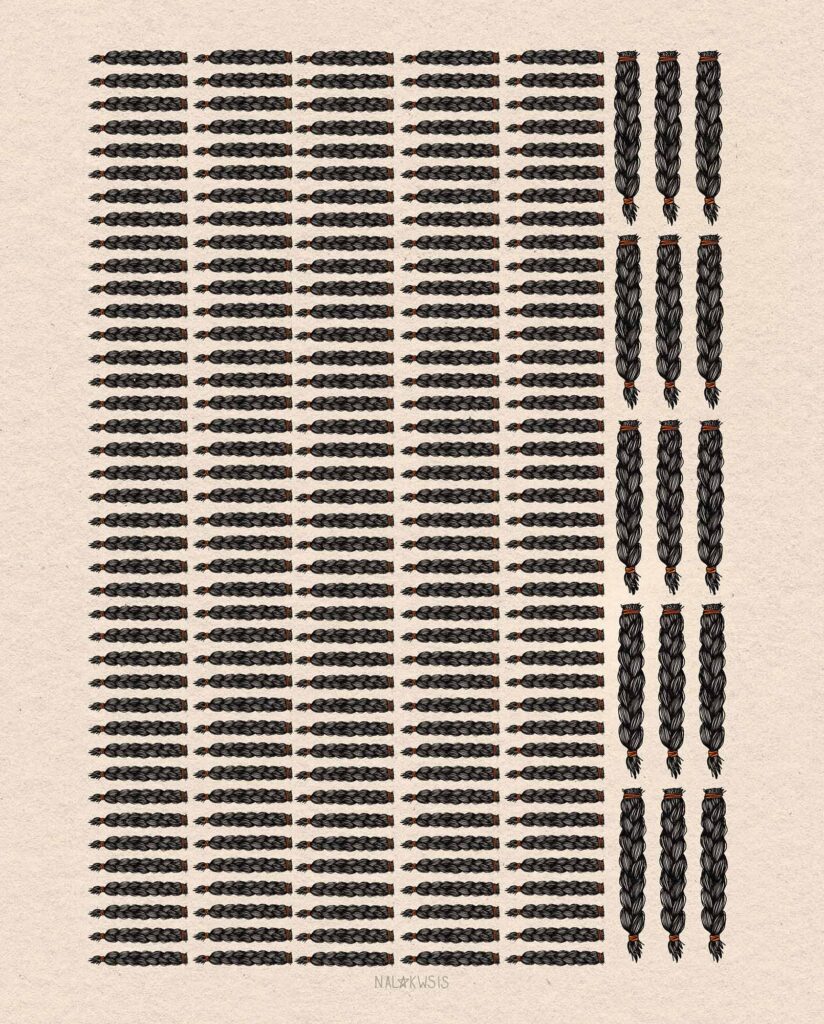
Saige “Nalakwsis” Mukash, 215 Braids, 2021

Nadia Myre, Indian Act, 2000–2002

Carey Newman, Witness Blanket, 2013–14

Davidee Ningeok, Sr., Residential School Nightmare, 2015

Shelley Niro, The Shirt, 2003

Luke Parnell, Neon Reconciliation Explosion, 2020

Dionne Paul, Her First Day of School, 2013
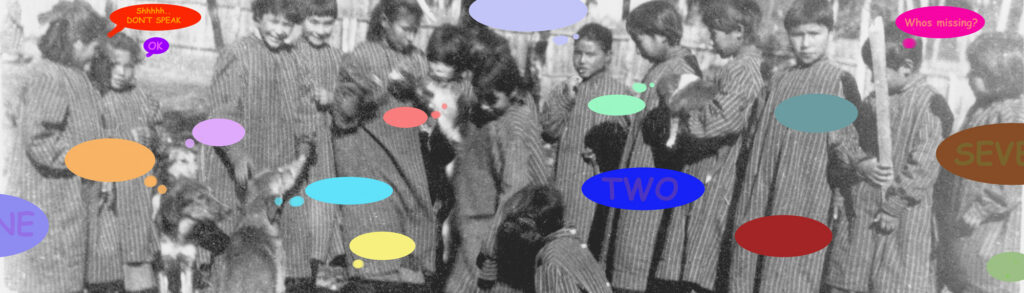
Edward Poitras, Don’t Speak, 2015

Barry Pottle, Yale Dormitory (Residential School), North West River, Labrador, 2015

Teharihulen Michel Savard, Reciprocity (Réciprocité), 2009

Jason Sikoak, Sacrilege, 2015

Greg Staats, Do’-gah – I don’t know [shrugging shoulders], 2020, archival pigment print on canvas on pine stretcher, oil, earth, Indian tobacco ash (edition 2 of 3), 142 x 175.3 x 2.5 cm, Agnes Etherington Art Centre, Kingston.

Alan Syliboy, Grandmother 1, 1997

Jeff Thomas, Broken Treaties, 1613–, 2020
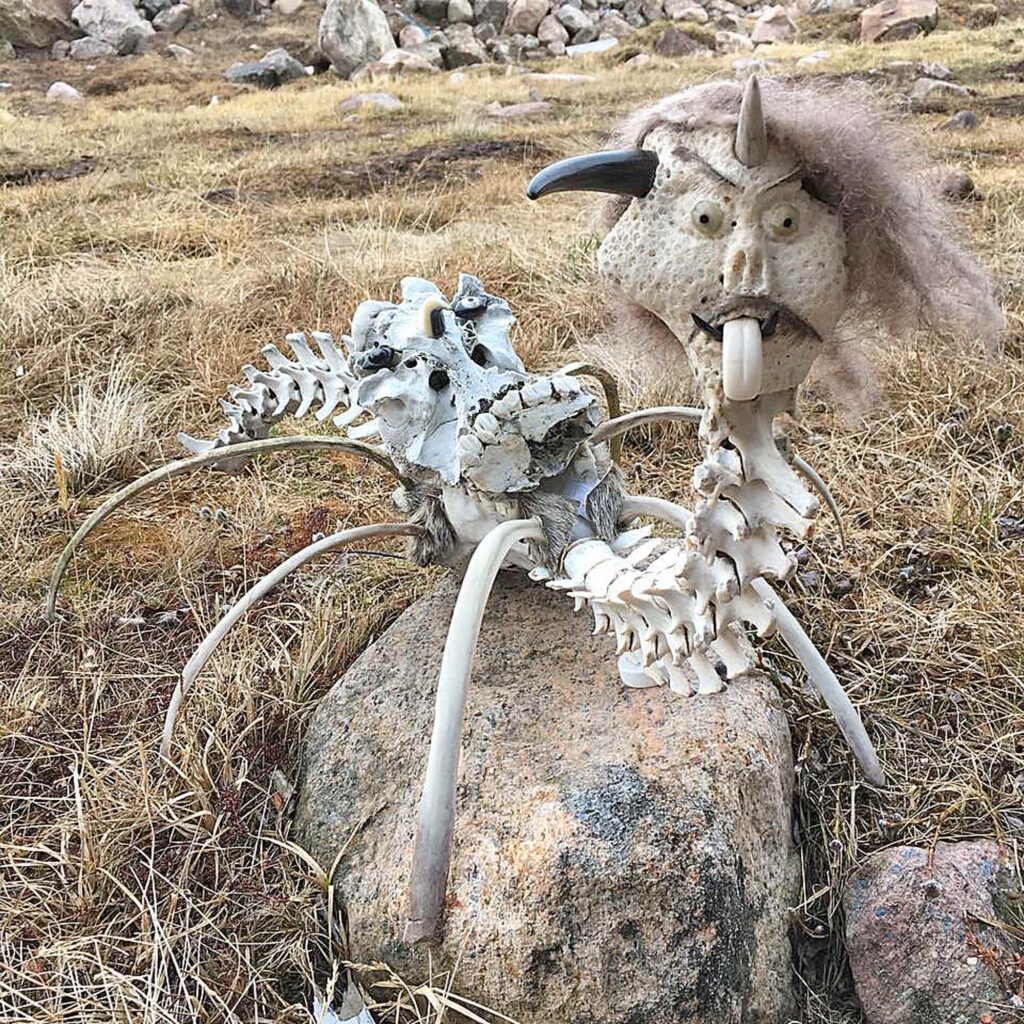
Jesse Tungilik, The Spirit of Intergenerational Trauma, 2019

Tania Willard, Be a Good Girl, 2017