Edward Poitras, Don’t Speak, 2015
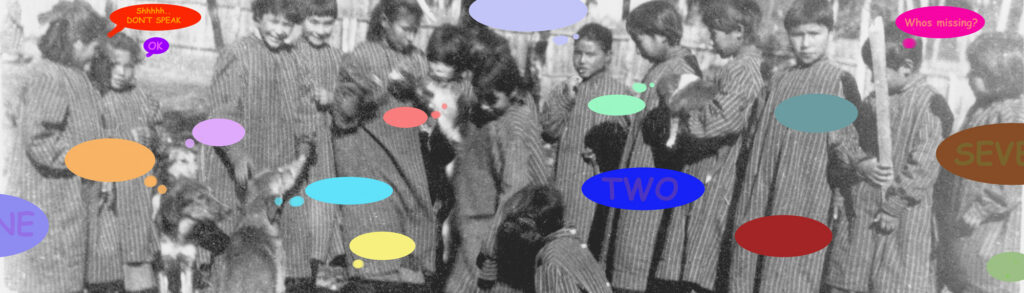
Edward Poitras, Don’t Speak, 2015, digital print on blue black paper mounted on wheat paste, 441.9 cm x 1.5 m, billboard project curated by Lori Blondeau, co-presented by AKA Artist-Run, PAVED Arts, and TRIBE Inc., Saskatoon, photograph by David LaRiviere.
Installed as a full-scale billboard overlooking a Saskatoon streetscape, Don’t Speak by mixed-media Cree and Métis artist Edward Poitras (b.1953) wrenches a 1909 photograph of uniformed Indigenous schoolgirls at Lac La Ronge (All Saints) Residential School, Saskatchewan, out of the archives and into the public space. The grayscale class portrait of rows of girls in striped dresses with a fenced yard behind them has been digitally overlaid with bright, candy-coloured cartoon speech and thought bubbles. One scarlet bubble near the top commands, “Shhhhh… DON’T SPEAK”; another tiny bubble answers, “OK.” Most hover mute, empty, or filled only with abstract colour. Against the subdued photograph, these graphic intrusions flare like warnings, insisting we reread what might once have passed as an innocuous school picture.
The bubbles do double duty. They name the linguistic repression at the heart of the residential school system—children punished
for speaking Cree, Dene, Saulteaux, or other mother tongues—while also signalling the internalization of that silencing. Because the admonition appears as if inside a child’s thought, authority has migrated inward; censorship lives in the self. The many blank bubbles hang like ghosts of unspoken stories, songs, questions, and kinship names, visual placeholders for languages forced underground yet still remembered.
Poitras has written that when he looks at the source image, he wonders what became of these girls—whether they grew to be mothers and grandmothers, whether their own children were taken, who went missing, who lost language, who got it back. That imagined future arcs through the billboard. Colour animates the black-and-white past, collapsing time so that the silenced children address drivers and pedestrians now. The paradox is deliberate: by broadcasting the command not to speak, the work compels speech. People ask, What is this? Whose children? Why silenced?
Presented in spring 2015 by Saskatoon artist-run centres TRIBE and PAVED Arts for TRIBE’s twentieth anniversary, Don’t Speak coincided with the concluding year of the Truth and Reconciliation Commission of Canada and its naming of cultural genocide. Sited in Saskatoon’s Riversdale district, long an Indigenous neighbourhood undergoing rapid change, the image confronted commuters for months, persisting into a federal election season. Local critics called it the defining artwork of the exhibition cycle. Viewers described feelings of heartbreak, anger, and urgency. In a medium normally reserved for advertising, Poitras broadcast historical accountability.
Don’t Speak is more than memorial. It is public pedagogy and invitation. By crediting the archival source and acknowledging families connected to the photograph, Poitras models respectful collaboration while returning these once-anonymous girls to collective memory. The billboard challenges settler silence, validates Indigenous experience, and gestures toward language resurgence—the possibility that those blank bubbles can yet be filled. In stopping us on the street, Don’t Speak transforms a century-old photograph into a living call to listen, to respond, and to ensure that such enforced quiet is never repeated.
Collection of A New Generation of Witness

Sonny Assu, Leila’s Desk, 2013

Michael Barber, A Silent Sky, 2022

Christi Belcourt, Giniigaaniimenaaning (Looking Ahead), 2012

Rebecca Belmore, Apparition, 2013

Rain Cabana-Boucher, Laying Flowers, 2021–24

Quill Christie-Peters, Portrait of Ste. Margaret’s Residential School and All It Could Not Contain, 2018

Dana Claxton, Headdress – Shadae and her Girlz, 2023

Beau Dick, The Ghost Confined to the Chair, 2012
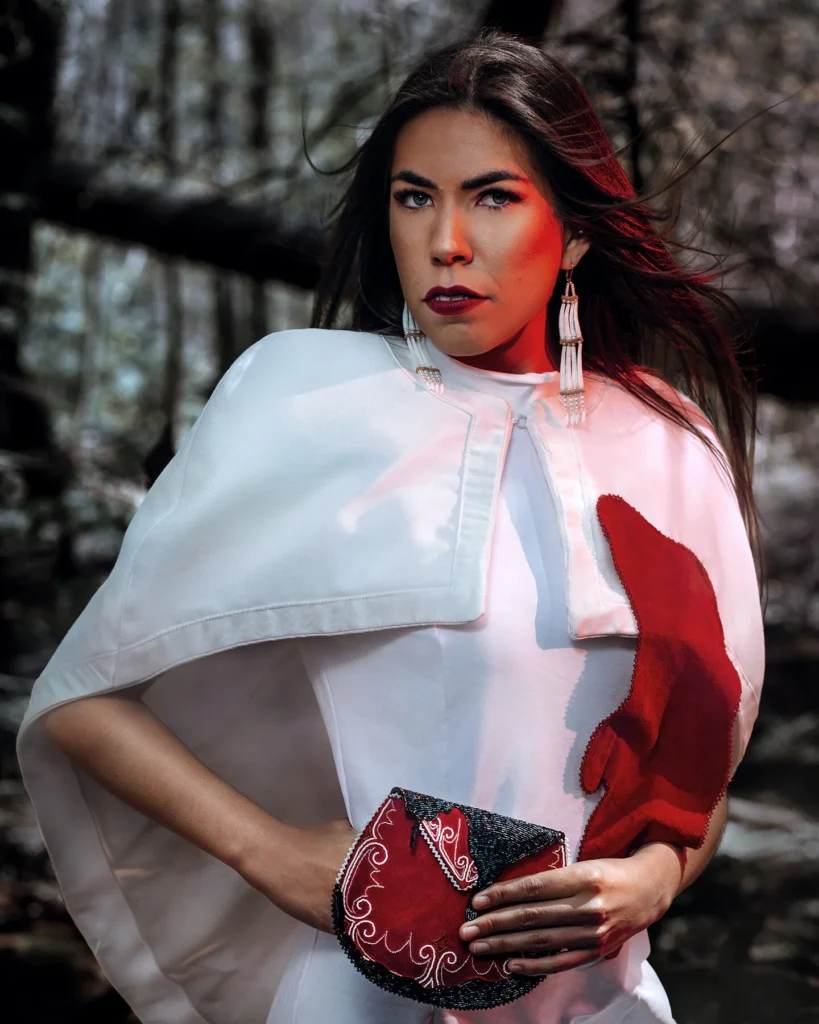
Oakley Rain Wysote Gray, Bleeding Heart Cape – M’st No’gmaq (All My Relations), 2021

7IDANsuu James Hart, Reconciliation Pole: Honouring a Time Before, During and After Canada’s Indian Residential Schools, 2015–17

Emma Hassencahl-Perley, White Flag, 2015

Brent Henry, English Only!, 2021

Shawn Hunt, Flipping the Bird, 2014

Lisa Jackson, Savage, 2009
Ursula Johnson, ITHA: The Livingroom, 2021

Siassie Kenneally, All the Things That I Have Seen, 2016

Jake Kimble, It’s All So Incredibly Loud, 2025

Duane Linklater, i want to forget the english language, ulterior, 2020/23

Jim Logan, National Pastimes, 1991

Luke Marston, Bentwood Box, 2009

Kevin McKenzie, Being Indigenous, 2024

Meryl McMaster, Truth to Power, 2017

Kent Monkman, The Scream, 2017

Caroline Monnet, The Black Case, 2014

Tim Moore, Erasure Is Futile, 2021

Peter Morin, This is what happens when you perform the memory of the land (parts 1 and 2), 2013
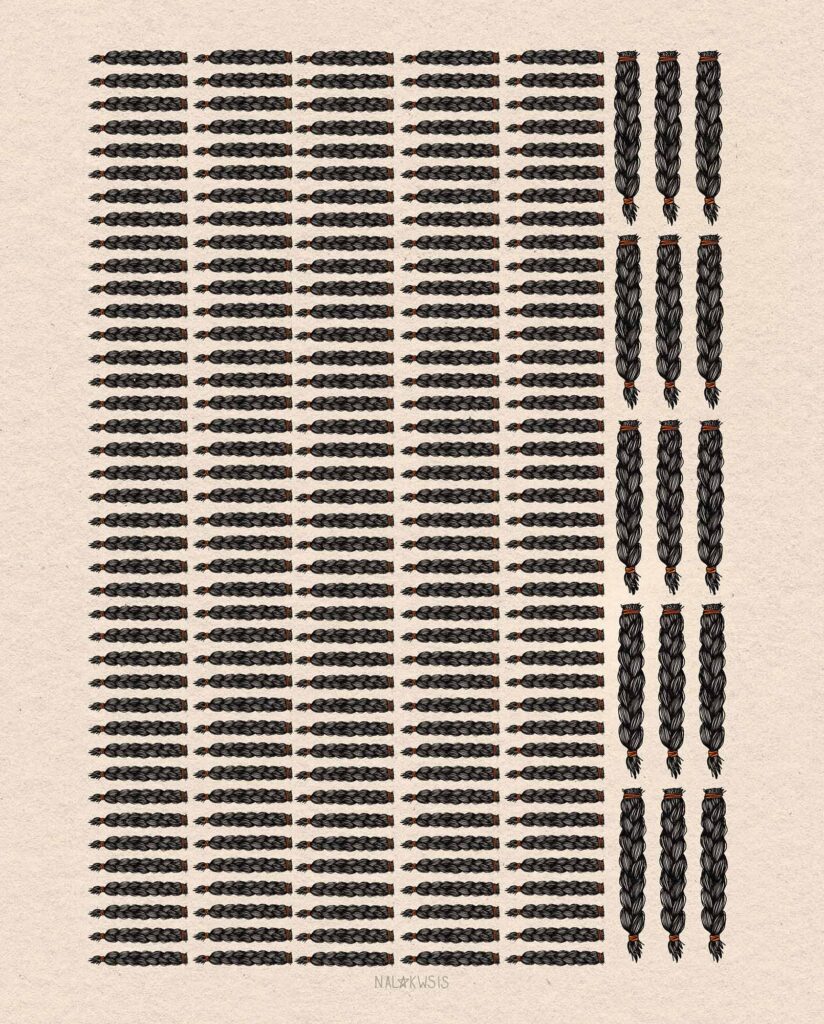
Saige “Nalakwsis” Mukash, 215 Braids, 2021

Nadia Myre, Indian Act, 2000–2002

Carey Newman, Witness Blanket, 2013–14

Davidee Ningeok, Sr., Residential School Nightmare, 2015

Shelley Niro, The Shirt, 2003

Luke Parnell, Neon Reconciliation Explosion, 2020

Dionne Paul, Her First Day of School, 2013
Edward Poitras, Don’t Speak, 2015

Barry Pottle, Yale Dormitory (Residential School), North West River, Labrador, 2015

Teharihulen Michel Savard, Reciprocity (Réciprocité), 2009

Jason Sikoak, Sacrilege, 2015

Greg Staats, Do’-gah – I don’t know [shrugging shoulders], 2020, archival pigment print on canvas on pine stretcher, oil, earth, Indian tobacco ash (edition 2 of 3), 142 x 175.3 x 2.5 cm, Agnes Etherington Art Centre, Kingston.

Alan Syliboy, Grandmother 1, 1997

Jeff Thomas, Broken Treaties, 1613–, 2020
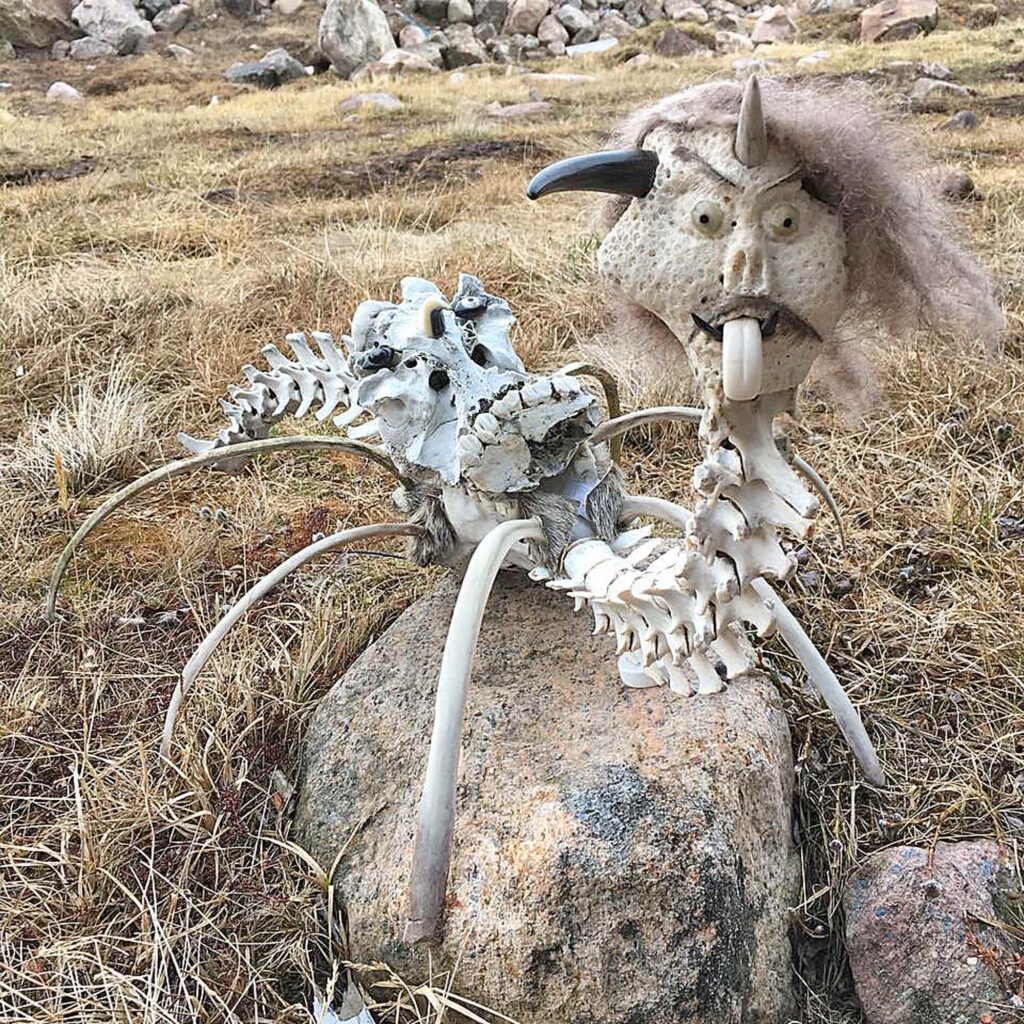
Jesse Tungilik, The Spirit of Intergenerational Trauma, 2019

Tania Willard, Be a Good Girl, 2017