Teharihulen Michel Savard, Reciprocity (Réciprocité), 2009

Teharihulen Michel Savard, Reciprocity (Réciprocité), 2009, mixed media, 35.5 x 29 cm, Huron-Wendat Museum, Wendake.
In Reciprocity (Réciprocité), Huron and Wendat artist Teharihulen Michel Savard (b.1964) transforms the Indian Act from legal instrument into wound. Entering the forest with a rifle, Savard fires a bullet through the document, and from the resulting aperture spill red paint and wampum beads. This sequence of embodied presence in the land, an act of ritualized violence, and the release of materials freighted with Indigenous meaning condenses centuries of colonial legislation and Indigenous resistance into a single, intimate gesture.
The materials are not incidental. In many Indigenous visual traditions, red paint carries
life, blood, identity, and sacrifice. Wampum carries a deeper historical charge: across Haudenosaunee and broader northeastern Indigenous diplomacy, wampum belts encoded treaties, alliances, and nation-to-nation relationships. Their emergence from the torn document suggests that what the Indian Act sought to extinguish—the legal standing, sovereignty, and relational obligations of Indigenous Nations—persists. The beads do
not merely bleed from the Act; they reclaim it, insisting that treaty relationships, though violated, remain alive.
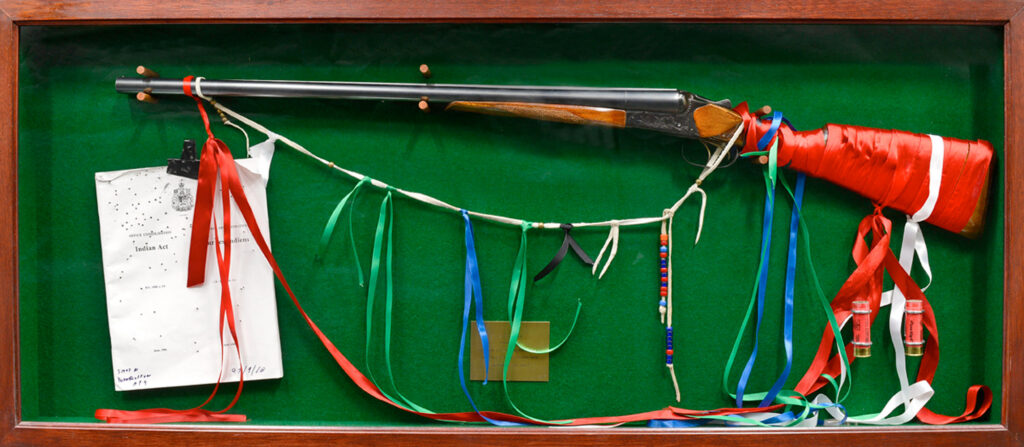
Lawrence Paul Yuxweluptun Lets’lo:steltun, An Indian Act Shooting the Indian Act, Healey Estate, Northumberland, September 14th, 1997, 1997, shotgun, ribbon, used shotgun shell casings, and paper in display frame, 55 x 126 x 9 cm, National Gallery of Canada, Ottawa.
The forest setting is equally deliberate. By removing the Act from courtrooms and archives and bringing it onto the living land, Savard situates colonial law within an Indigenous territorial frame. The land, not the state, becomes the ground of judgment. The rifle, a tool historically turned against Indigenous Peoples, is here turned against colonial legislation itself—its use both confrontational and ceremonially precise. The intimacy of the work’s scale amplifies rather than diminishes this force: close viewing reveals that what appears to be destruction is also restoration.
The title names the ethical principle at the work’s centre. Reciprocity—mutual accountability, relational obligation, the two-directional nature of treaty—is exactly what the Indian Act systematically denied. By invoking it, Savard does not merely critique the legislation, he names the alternative framework that colonial law displaced, asserting that genuine reconciliation requires this foundational return. Thus, the piece operates simultaneously as critique, ceremony, and proposition.
A useful counterpoint is An Indian Act Shooting the Indian Act, Healey Estate, Northumberland, September 14th, 1997, 1997, by Lawrence Paul Yuxweluptun (b.1957), in which a public, high-spectacle performance turns the same document into a target before a live audience. Where Yuxweluptun amplifies dissent through scale and confrontation, Savard’s approach is meditative and materially specific, with meaning carried through wampum and paint as
much as through the rifle shot. Both works insist that the Indian Act is not an abstraction
but an object, and one that can be handled, disrupted, and symbolically refused.
Ultimately, Reciprocity resists easy consolation. Its wound remains visible; its beads and paint do not mend what the Act destroyed. Yet, the work holds open the possibility of something beyond the colonial relation: a future grounded in reciprocity, land, and the enduring presence of treaty. Savard positions art as an enactment of Indigenous legal and ethical memory rather than a representation of history.
Collection of A New Generation of Witness

Sonny Assu, Leila’s Desk, 2013

Michael Barber, A Silent Sky, 2022

Christi Belcourt, Giniigaaniimenaaning (Looking Ahead), 2012

Rebecca Belmore, Apparition, 2013

Rain Cabana-Boucher, Laying Flowers, 2021–24

Quill Christie-Peters, Portrait of Ste. Margaret’s Residential School and All It Could Not Contain, 2018

Dana Claxton, Headdress – Shadae and her Girlz, 2023

Beau Dick, The Ghost Confined to the Chair, 2012
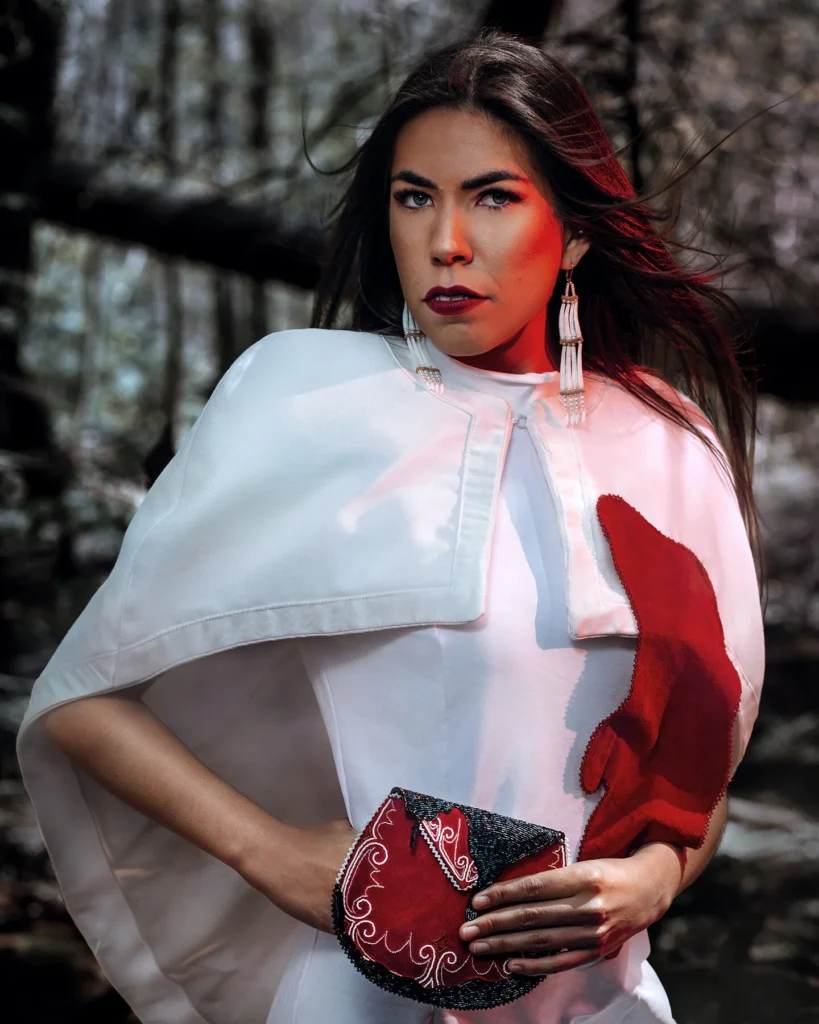
Oakley Rain Wysote Gray, Bleeding Heart Cape – M’st No’gmaq (All My Relations), 2021

7IDANsuu James Hart, Reconciliation Pole: Honouring a Time Before, During and After Canada’s Indian Residential Schools, 2015–17

Emma Hassencahl-Perley, White Flag, 2015

Brent Henry, English Only!, 2021

Shawn Hunt, Flipping the Bird, 2014

Lisa Jackson, Savage, 2009
Ursula Johnson, ITHA: The Livingroom, 2021

Siassie Kenneally, All the Things That I Have Seen, 2016

Jake Kimble, It’s All So Incredibly Loud, 2025

Duane Linklater, i want to forget the english language, ulterior, 2020/23

Jim Logan, National Pastimes, 1991

Luke Marston, Bentwood Box, 2009

Kevin McKenzie, Being Indigenous, 2024

Meryl McMaster, Truth to Power, 2017

Kent Monkman, The Scream, 2017

Caroline Monnet, The Black Case, 2014

Tim Moore, Erasure Is Futile, 2021

Peter Morin, This is what happens when you perform the memory of the land (parts 1 and 2), 2013
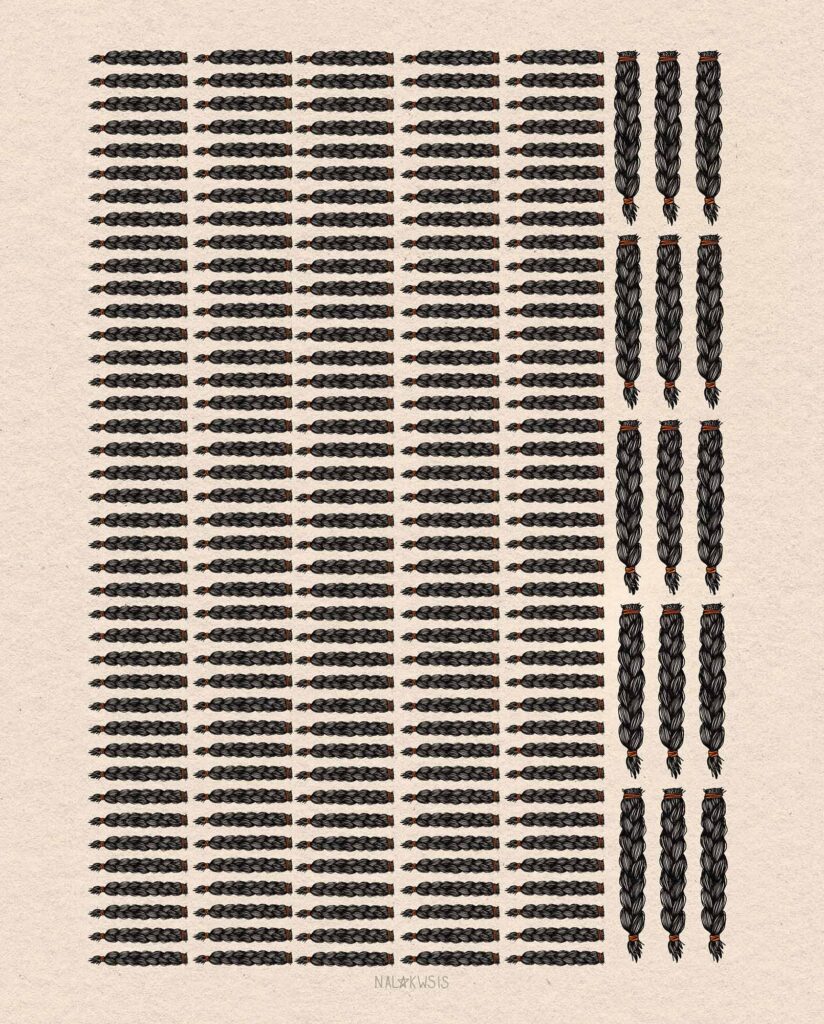
Saige “Nalakwsis” Mukash, 215 Braids, 2021

Nadia Myre, Indian Act, 2000–2002

Carey Newman, Witness Blanket, 2013–14

Davidee Ningeok, Sr., Residential School Nightmare, 2015

Shelley Niro, The Shirt, 2003

Luke Parnell, Neon Reconciliation Explosion, 2020

Dionne Paul, Her First Day of School, 2013
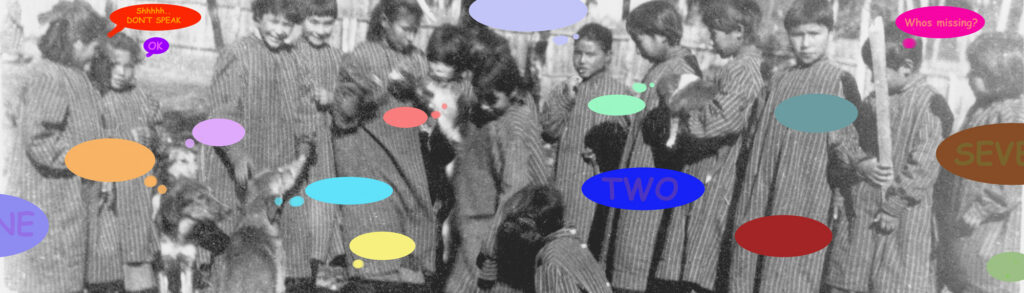
Edward Poitras, Don’t Speak, 2015

Barry Pottle, Yale Dormitory (Residential School), North West River, Labrador, 2015
Teharihulen Michel Savard, Reciprocity (Réciprocité), 2009

Jason Sikoak, Sacrilege, 2015

Greg Staats, Do’-gah – I don’t know [shrugging shoulders], 2020, archival pigment print on canvas on pine stretcher, oil, earth, Indian tobacco ash (edition 2 of 3), 142 x 175.3 x 2.5 cm, Agnes Etherington Art Centre, Kingston.

Alan Syliboy, Grandmother 1, 1997

Jeff Thomas, Broken Treaties, 1613–, 2020
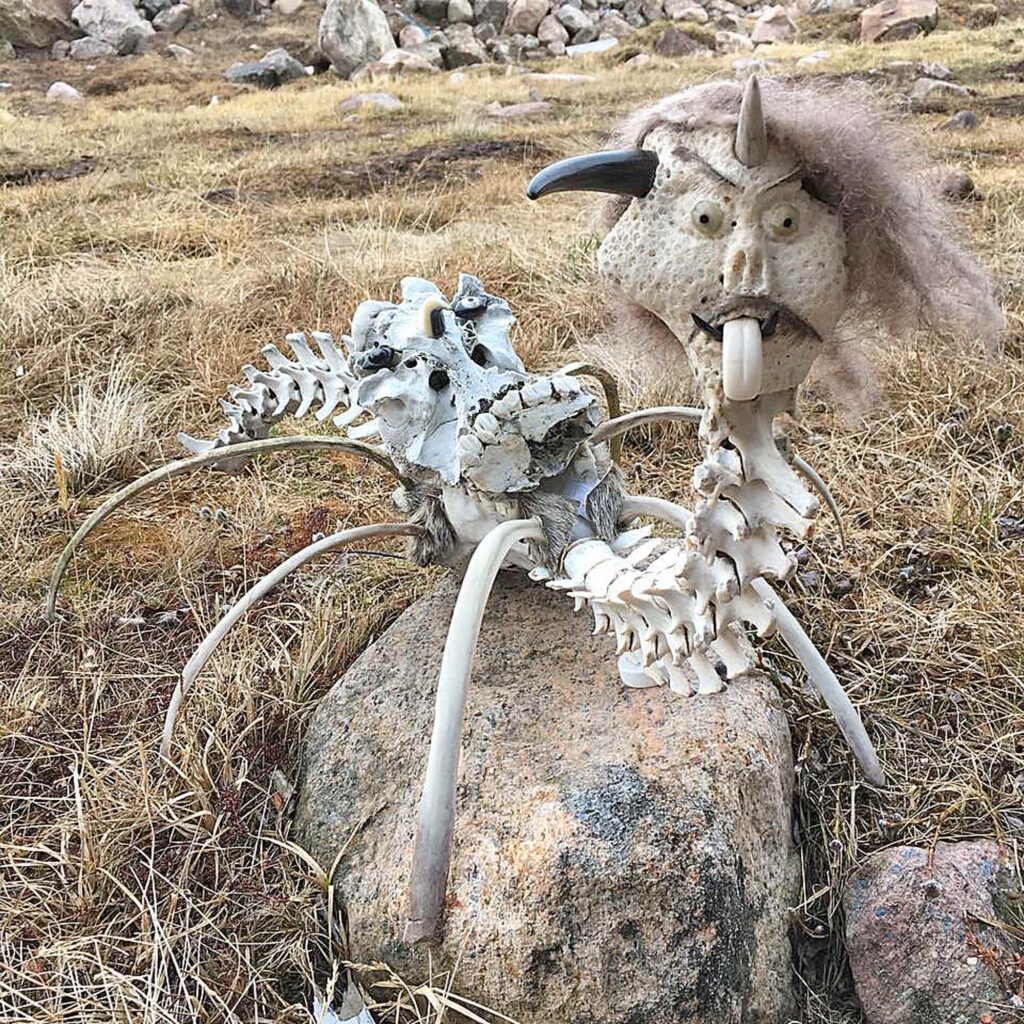
Jesse Tungilik, The Spirit of Intergenerational Trauma, 2019

Tania Willard, Be a Good Girl, 2017