Luke Marston, Bentwood Box, 2009

Luke Marston, Bentwood Box, 2009, wood (red cedar) shell, 67.3 x 96.5 x 50.8 cm, National Centre for Truth and Reconciliation, University of Manitoba, Winnipeg.
Bentwood Box by Coast Salish carver Luke Marston (b.1976) has become one of the most important works of contemporary Indigenous art in Canada, carrying both ceremonial and political weight. Commissioned by the Truth and Reconciliation Commission of Canada (TRC), the box was designed as a repository for sacred items, documents, and testimonies gathered during the commission’s mandate from 2008 to 2015. As both object and process, the box embodies Indigenous sovereignty, communal memory, and the demand that colonial histories of violence be acknowledged and carried forward responsibly.
Formally, the work is rooted in the Coast Salish bentwood box tradition, a practice of steaming and bending a single cedar plank into a container for storage, ceremony, and exchange. Marston’s version expands this tradition into the realm of national testimony.
The box is adorned with deeply carved and painted figures, its front panel dominated by a weeping face whose tears descend like rivers across the surface. Flanked by upraised hands, the composition signals both grief and prayer, an acknowledgement of the pain of residential schools and an appeal for healing. Around the sides, additional forms, including stylized faces and crest designs, situate the box within Indigenous cosmologies and visual languages even as it engages the contemporary political sphere.

Stamp issued by Canada Post featuring Bentwood Box.

Truth and Reconciliation Commission of Canada commissioners join United Church officials to place an expression of reconciliation in Bentwood Box, TRC Atlantic National Event (ANE), Halifax, October 2011, photograph by the Truth and Reconciliation Commission.
Bentwood Box functions on multiple levels. As a carved container, it physically holds offerings from Indigenous communities across Canada, gathered during the TRC’s national events. Items such as moccasins, letters, artworks, and sacred bundles were placed within, transforming the receptacle into a living archive. Unlike a colonial archive defined by state authority, this archive is ceremonial and grounded in relationships among Survivors, families, communities, ancestors, and the items entrusted to it. The box is not simply storage; it is witness. Each object entrusted to it is a testimony to survival, a repudiation of silence, and a commitment to intergenerational truth telling.
Symbolically, the work reclaims Indigenous protocols of caretaking. Bentwood boxes historically stored family heirlooms, ceremonial regalia, and spiritual teachings. By extending this role into the context of the TRC, Marston affirms Indigenous continuity: traditions outlawed under the Indian Act now re-emerge as frameworks for justice and national reckoning. Meanwhile, the carved tears evoke the grief carried by Survivors and families, and they also flow into broader rivers of resurgence, connecting past suffering with present and future commitments to healing.
Critically, Bentwood Box resists closure. At the final TRC gathering in Ottawa in 2015, the commissioners placed their reports and sacred items within it, but the box was not sealed. Instead, it remains open—an ongoing container of memory and responsibility. In this way, Marston’s work manifests a refusal of reconciliation as resolution. Rather than symbolizing an end, it insists on the unfinished work of justice and the continuous presence of Indigenous voices in shaping Canada’s future.
The power of the box lies in its dual function as art and ceremony. It is not a static monument but a mobile vessel, having travelled across the country to every TRC event. Its surfaces speak through carved Northwest Coast formline and Salish iconography, while its interior holds the voices of communities. As both container and witness, Bentwood Box has become a central icon of reconciliation discourse—it insists that history be carried, remembered, and lived with. In Marston’s hands, the bentwood box surpasses craft. It is an Indigenous form transfigured into national testimony, a living archive of trauma and survival, and a call to responsibility that remains as urgent today as when the commission first placed its trust within its carved walls.
Gallery of A New Generation of Witness

Sonny Assu, Leila’s Desk, 2013

Michael Barber, A Silent Sky, 2022

Christi Belcourt, Giniigaaniimenaaning (Looking Ahead), 2012

Rebecca Belmore, Apparition, 2013

Rain Cabana-Boucher, Laying Flowers, 2021–24

Quill Christie-Peters, Portrait of Ste. Margaret’s Residential School and All It Could Not Contain, 2018

Dana Claxton, Headdress – Shadae and her Girlz, 2023

Beau Dick, The Ghost Confined to the Chair, 2012
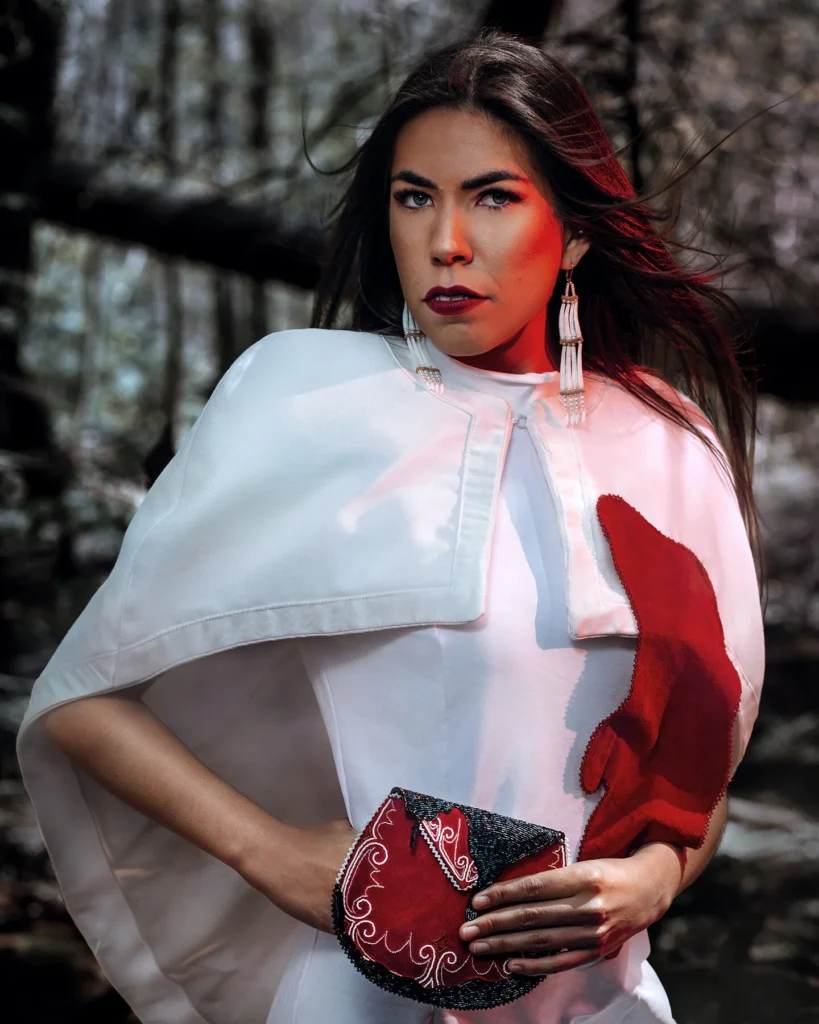
Oakley Rain Wysote Gray, Bleeding Heart Cape – M’st No’gmaq (All My Relations), 2021

7IDANsuu James Hart, Reconciliation Pole: Honouring a Time Before, During and After Canada’s Indian Residential Schools, 2015–17

Emma Hassencahl-Perley, White Flag, 2015

Brent Henry, English Only!, 2021

Shawn Hunt, Flipping the Bird, 2014

Lisa Jackson, Savage, 2009
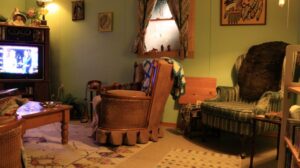
Ursula Johnson, ITHA: The Livingroom, 2021

Siassie Kenneally, All the Things That I Have Seen, 2016

Jake Kimble, It’s All So Incredibly Loud, 2025

Duane Linklater, i want to forget the english language, ulterior, 2020/23

Jim Logan, National Pastimes, 1991
Luke Marston, Bentwood Box, 2009

Kevin McKenzie, Being Indigenous, 2024

Meryl McMaster, Truth to Power, 2017

Kent Monkman, The Scream, 2017

Caroline Monnet, The Black Case, 2014

Tim Moore, Erasure Is Futile, 2021

Peter Morin, This is what happens when you perform the memory of the land (parts 1 and 2), 2013
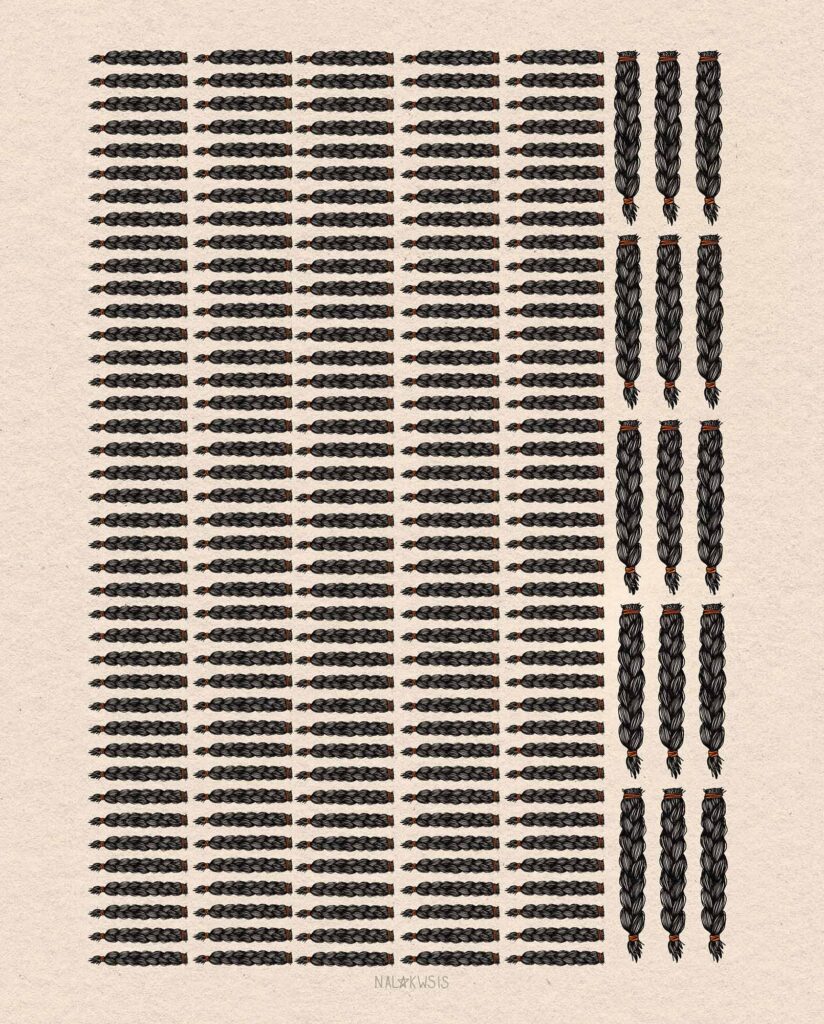
Saige “Nalakwsis” Mukash, 215 Braids, 2021

Nadia Myre, Indian Act, 2000–2002

Carey Newman, Witness Blanket, 2013–14

Davidee Ningeok, Sr., Residential School Nightmare, 2015

Shelley Niro, The Shirt, 2003

Luke Parnell, Neon Reconciliation Explosion, 2020

Dionne Paul, Her First Day of School, 2013
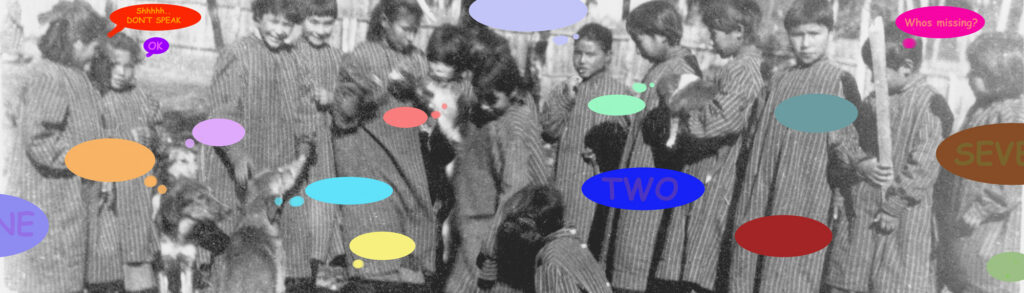
Edward Poitras, Don’t Speak, 2015

Barry Pottle, Yale Dormitory (Residential School), North West River, Labrador, 2015

Teharihulen Michel Savard, Reciprocity (Réciprocité), 2009

Jason Sikoak, Sacrilege, 2015

Greg Staats, Do’-gah – I don’t know [shrugging shoulders], 2020, archival pigment print on canvas on pine stretcher, oil, earth, Indian tobacco ash (edition 2 of 3), 142 x 175.3 x 2.5 cm, Agnes Etherington Art Centre, Kingston.

Alan Syliboy, Grandmother 1, 1997

Jeff Thomas, Broken Treaties, 1613–, 2020
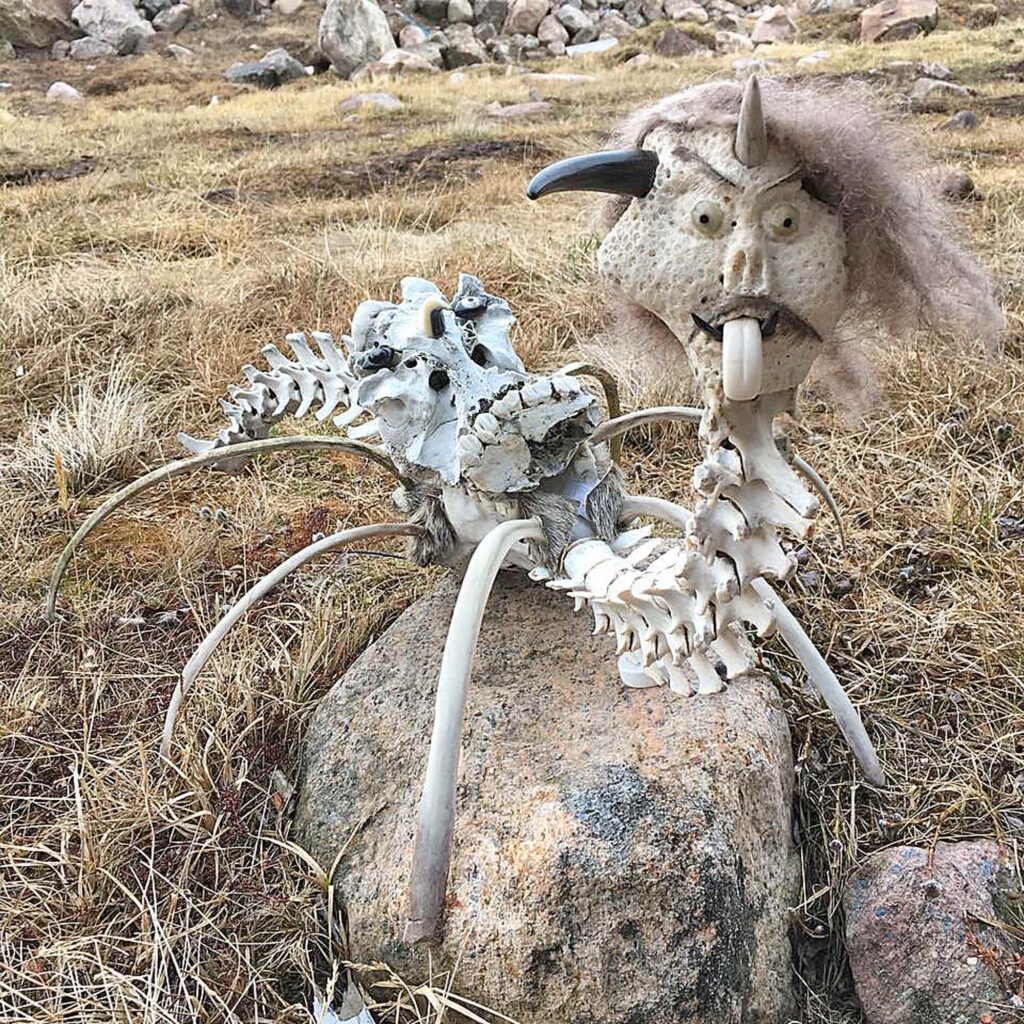
Jesse Tungilik, The Spirit of Intergenerational Trauma, 2019

Tania Willard, Be a Good Girl, 2017