Davidee Ningeok, Sr., Residential School Nightmare, 2015

Davidee Ningeok, Sr., Residential School Nightmare, 2015, soapstone and bone, 26 x 35.6 x 25.4 cm, The Rooms, St. John’s.
In Residential School Nightmare by Inuit sculptor Davidee Ningeok, Sr. (b.1982), an Inuit child kneels as a suited authority figure, likely a teacher, is poised to strike the youth’s hands with a ruler. Resting on the adult’s lap is a small ivory book inscribed with the text “XYZ xyz.” This detail makes explicit that what was being beaten into the child was the Euro-Canadian curriculum itself: the alphabet, arithmetic, and foreign forms of literacy imposed at the expense of
Inuit knowledge. In capturing this moment of confrontation, the sculpture presents a stark and unflinching commentary on the lived trauma of colonial education in Inuit communities.
Ningeok’s choice of materials is deliberate. Soapstone, long associated with Inuit carving traditions, here becomes a vessel for testimony rather than celebration. The contrast between dark stone and bright ivory draws attention to the book and ruler, objects transformed from symbols of education into instruments of harm. In this juxtaposition, stone suggests weight and permanence, while ivory—fragile yet sharp—underscores the violence of enforced lessons.
The title Residential School Nightmare situates the work within the traumatic history of church and federally run institutions across Inuit Nunangat and Canada. For generations, Inuit children were taken from their families, punished for speaking their language, and subjected to physical and psychological abuse. In residential and day schools, corporal punishment, including striking children’s hands, was a common practice in an attempt to extinguish Indigenous identity. By rendering this moment in stone, Ningeok condenses countless memories into a single, haunting tableau.
Stylistically, the figures are monumental and block-like, pared down to essentials. Their abstraction makes the scene archetypal rather than individual, a universal image of power and vulnerability. The child’s defensive posture contrasts sharply with the teacher’s elevated stance, making visible the broader system of domination that underpinned colonial schooling.
The inscribed book is especially potent. While recalling elementary primers meant to teach letters and numbers, in this context, it becomes a symbol of coercion. Paired with the raised ruler, it reveals the paradox of education for Indigenous children: offered as opportunity, it was delivered as cultural erasure and violence.
Ningeok’s carving is both remembrance and resistance. Anchoring painful memory in enduring stone, Residential School Nightmare transforms trauma into witness and honours the resilience of Survivors. Its economy of means—stone, ivory, and a few engraved letters—conveys an entire system of cultural violence. In giving form to the nightmare, Ningeok ensures that this history is neither forgotten nor ignored.
Collection of a New Generation of Witness

Sonny Assu, Leila’s Desk, 2013

Michael Barber, A Silent Sky, 2022

Christi Belcourt, Giniigaaniimenaaning (Looking Ahead), 2012

Rebecca Belmore, Apparition, 2013

Rain Cabana-Boucher, Laying Flowers, 2021–24

Quill Christie-Peters, Portrait of Ste. Margaret’s Residential School and All It Could Not Contain, 2018

Dana Claxton, Headdress – Shadae and her Girlz, 2023

Beau Dick, The Ghost Confined to the Chair, 2012
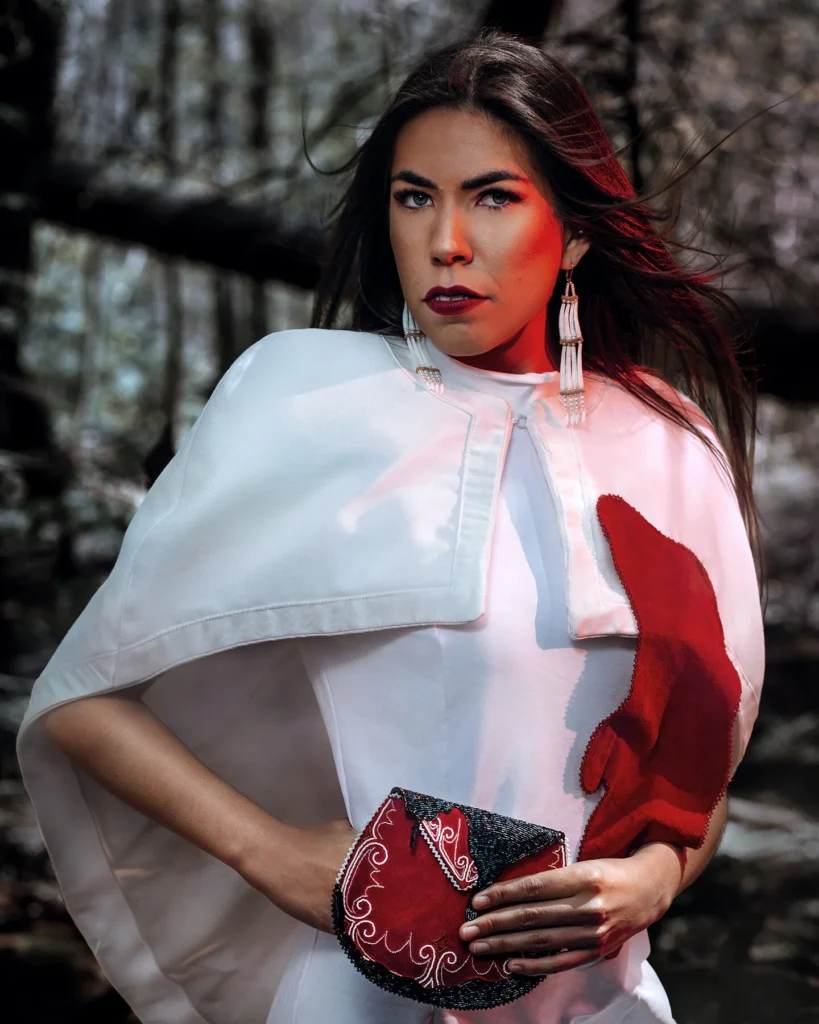
Oakley Rain Wysote Gray, Bleeding Heart Cape – M’st No’gmaq (All My Relations), 2021

7IDANsuu James Hart, Reconciliation Pole: Honouring a Time Before, During and After Canada’s Indian Residential Schools, 2015–17

Emma Hassencahl-Perley, White Flag, 2015

Brent Henry, English Only!, 2021

Shawn Hunt, Flipping the Bird, 2014

Lisa Jackson, Savage, 2009
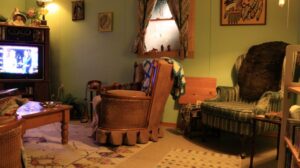
Ursula Johnson, ITHA: The Livingroom, 2021

Siassie Kenneally, All the Things That I Have Seen, 2016

Jake Kimble, It’s All So Incredibly Loud, 2025

Duane Linklater, i want to forget the english language, ulterior, 2020/23

Jim Logan, National Pastimes, 1991

Luke Marston, Bentwood Box, 2009

Kevin McKenzie, Being Indigenous, 2024

Meryl McMaster, Truth to Power, 2017

Kent Monkman, The Scream, 2017

Caroline Monnet, The Black Case, 2014

Tim Moore, Erasure Is Futile, 2021

Peter Morin, This is what happens when you perform the memory of the land (parts 1 and 2), 2013
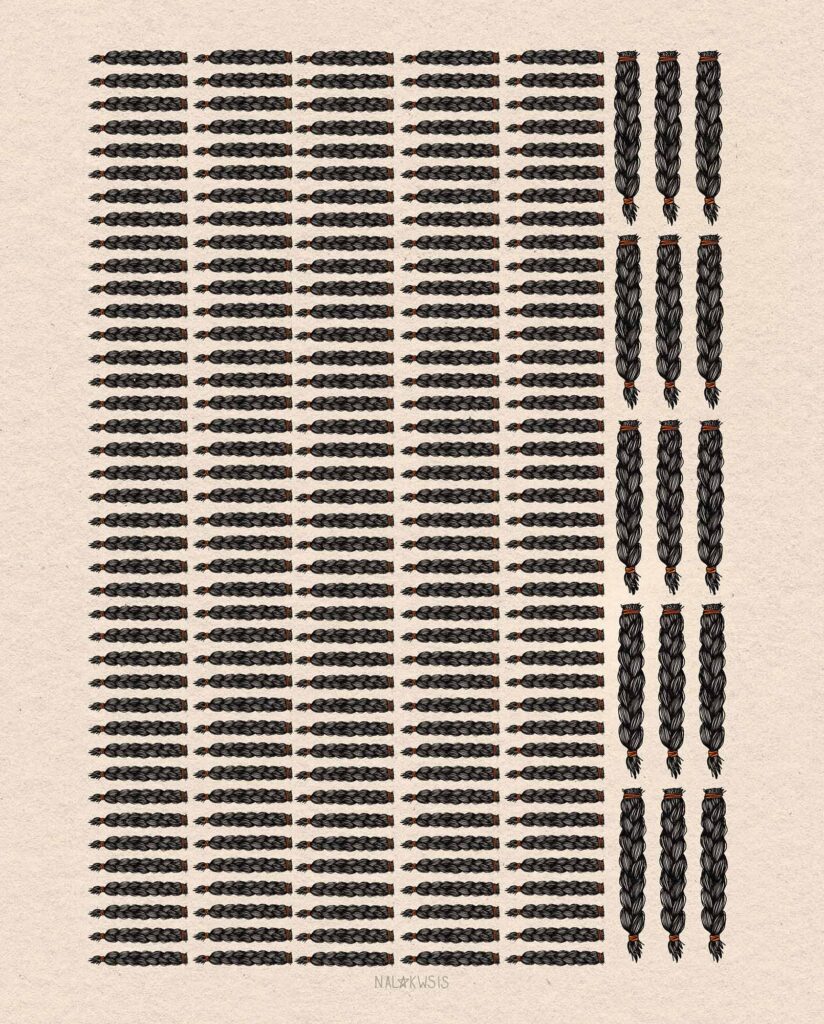
Saige “Nalakwsis” Mukash, 215 Braids, 2021

Nadia Myre, Indian Act, 2000–2002

Carey Newman, Witness Blanket, 2013–14
Davidee Ningeok, Sr., Residential School Nightmare, 2015

Shelley Niro, The Shirt, 2003

Luke Parnell, Neon Reconciliation Explosion, 2020

Dionne Paul, Her First Day of School, 2013
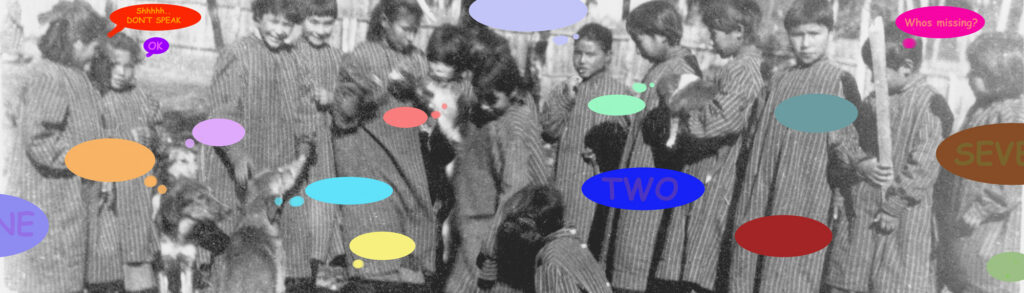
Edward Poitras, Don’t Speak, 2015

Barry Pottle, Yale Dormitory (Residential School), North West River, Labrador, 2015

Teharihulen Michel Savard, Reciprocity (Réciprocité), 2009

Jason Sikoak, Sacrilege, 2015

Greg Staats, Do’-gah – I don’t know [shrugging shoulders], 2020, archival pigment print on canvas on pine stretcher, oil, earth, Indian tobacco ash (edition 2 of 3), 142 x 175.3 x 2.5 cm, Agnes Etherington Art Centre, Kingston.

Alan Syliboy, Grandmother 1, 1997

Jeff Thomas, Broken Treaties, 1613–, 2020
Jesse Tungilik, The Spirit of Intergenerational Trauma, 2019

Tania Willard, Be a Good Girl, 2017