Beau Dick, The Ghost Confined to the Chair, 2012

Beau Dick, The Ghost Confined to the Chair, 2012, chair, carving, documents, feathers, 78.8 x 33.1 x 48.3 cm.
In The Ghost Confined to the Chair, Kwakwaka’wakw artist Beau Dick (1955–2017) transforms an ordinary object—a worn studio chair once housed in a former residential school—into a vessel of memory, resistance, and cultural continuity. Atop the red vinyl seat rests a mask of Bukwus, the Wild Man of the Woods and Chief of the Ghosts. In Kwakwaka’wakw tradition, Bukwus is a skeletal, ghostly figure who lures lost souls with spirit food, condemning them to his spectral retinue. His presence here links the residential school chair to the fate of children forced into assimilation; cut off from family, language, and community, many became like the wandering spirits that Bukwus embodies. Around the mask, the cedar rope, goat’s wool, feathers, and woven cedar
rose assert ceremonial knowledge and sacred continuity. Behind the chair, a painted backboard carries Northwest Coast formline motifs, while at the base lies a copy of the Indian Act, the primary instrument of cultural erasure. Together, these materials layer the spiritual, ceremonial, and bureaucratic dimensions of colonial control.

Beau Dick, Hawk Frontlet, n.d., acrylic on carved cedar mask, 17.8 x 16.2 x 7 cm, private collection.
The chair itself anchors the installation in the history of residential schools, where children were confined, silenced, and disciplined. By repurposing it as a platform for Bukwus, Dick reclaims the object from its colonial function, turning it into a site of Indigenous resurgence. The mask does not simply haunt the chair; it sits upright and active, insisting on being witnessed. In this context, Bukwus is a malevolent spirit and also a potent metaphor for the psychic dislocation caused by assimilation. His skeletal visage mirrors the cultural emptiness imposed on Indigenous children, while his ghostly entourage evokes the generations lost to residential schooling. Yet, by placing Bukwus
in a ceremonial frame surrounded by cedar, feathers, and formline, Dick transforms him into both warning and witness, an ancestral presence that refuses erasure.
Dick was an influential Northwest Coast
artist, renowned for his technical mastery of Kwakwaka’wakw carving as well as for his ability to animate traditional forms in response to contemporary political and social realities. The Ghost Confined to the Chair does not offer reconciliation as resolution. Instead, it keeps the conversation unsettled, reminding viewers that the spirits confined by history remain active in shaping the present. Through Bukwus, Dick channels both trauma and continuity, creating a ceremonial archive that binds memory to resurgence.
Collection of A New Generation of Witness

Sonny Assu, Leila’s Desk, 2013

Michael Barber, A Silent Sky, 2022

Christi Belcourt, Giniigaaniimenaaning (Looking Ahead), 2012

Rebecca Belmore, Apparition, 2013

Rain Cabana-Boucher, Laying Flowers, 2021–24

Quill Christie-Peters, Portrait of Ste. Margaret’s Residential School and All It Could Not Contain, 2018

Dana Claxton, Headdress – Shadae and her Girlz, 2023
Beau Dick, The Ghost Confined to the Chair, 2012
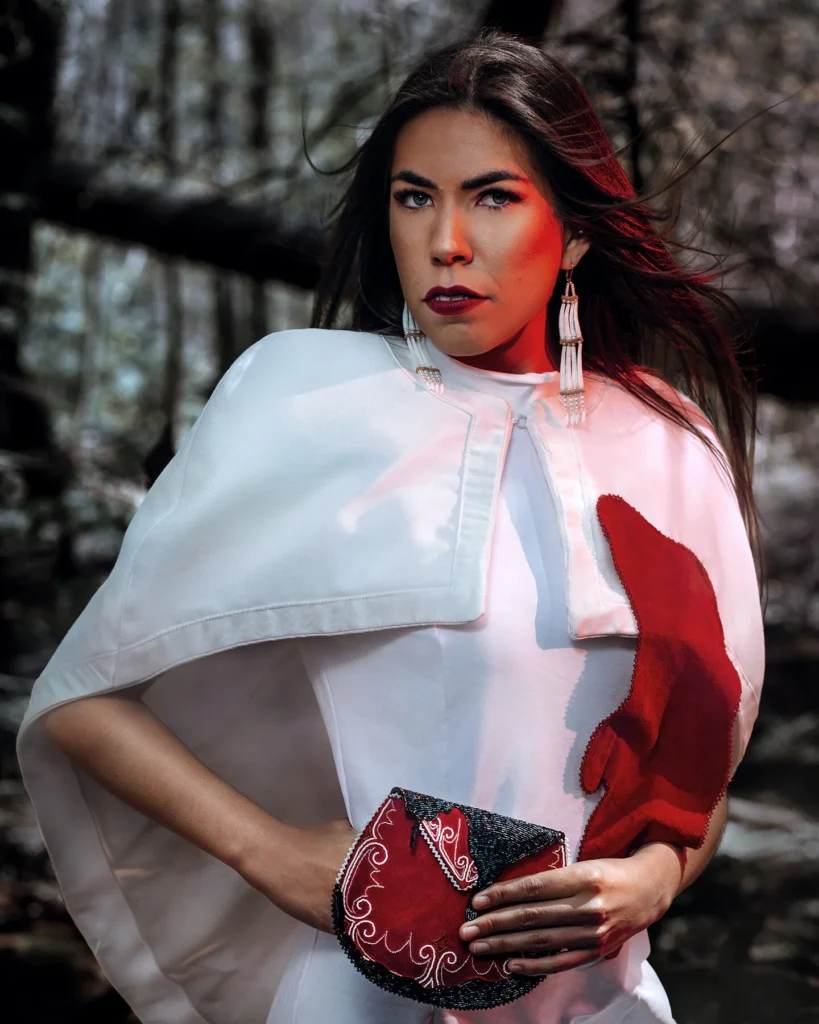
Oakley Rain Wysote Gray, Bleeding Heart Cape – M’st No’gmaq (All My Relations), 2021

7IDANsuu James Hart, Reconciliation Pole: Honouring a Time Before, During and After Canada’s Indian Residential Schools, 2015–17

Emma Hassencahl-Perley, White Flag, 2015

Brent Henry, English Only!, 2021

Shawn Hunt, Flipping the Bird, 2014

Lisa Jackson, Savage, 2009
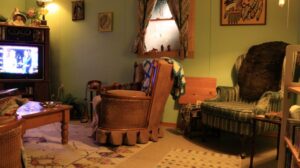
Ursula Johnson, ITHA: The Livingroom, 2021

Siassie Kenneally, All the Things That I Have Seen, 2016

Jake Kimble, It’s All So Incredibly Loud, 2025

Duane Linklater, i want to forget the english language, ulterior, 2020/23

Jim Logan, National Pastimes, 1991

Luke Marston, Bentwood Box, 2009

Kevin McKenzie, Being Indigenous, 2024

Meryl McMaster, Truth to Power, 2017

Kent Monkman, The Scream, 2017

Caroline Monnet, The Black Case, 2014

Tim Moore, Erasure Is Futile, 2021

Peter Morin, This is what happens when you perform the memory of the land (parts 1 and 2), 2013
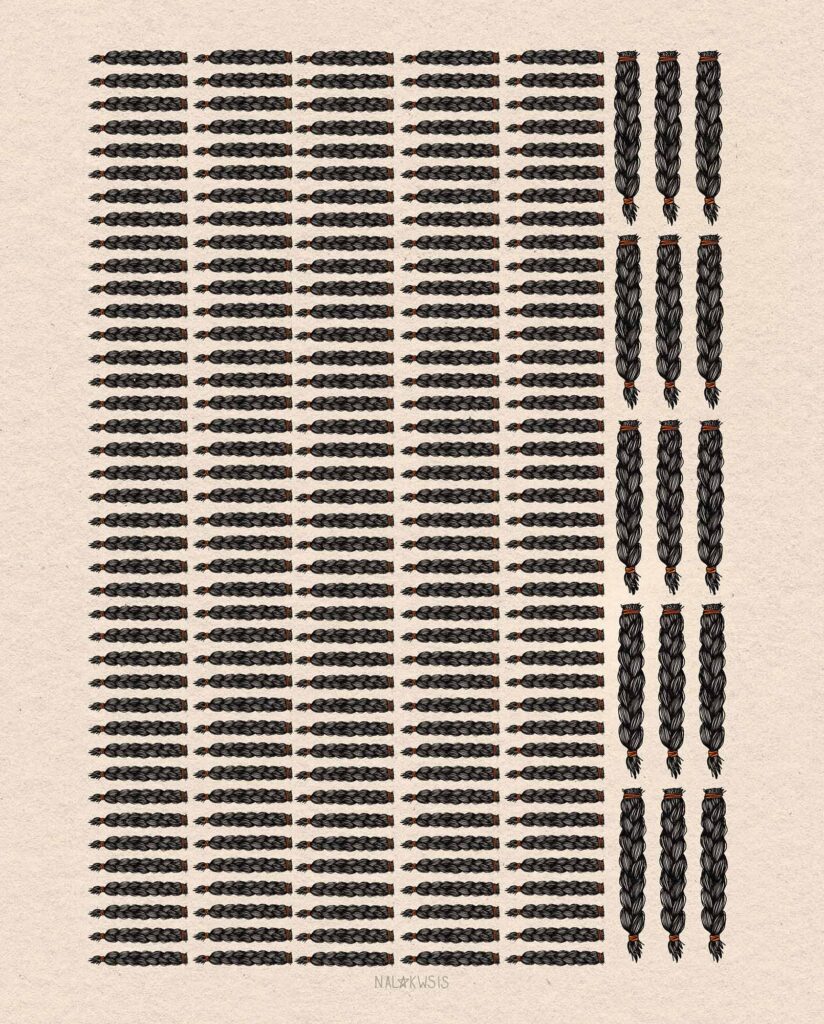
Saige “Nalakwsis” Mukash, 215 Braids, 2021

Nadia Myre, Indian Act, 2000–2002

Carey Newman, Witness Blanket, 2013–14

Davidee Ningeok, Sr., Residential School Nightmare, 2015

Shelley Niro, The Shirt, 2003

Luke Parnell, Neon Reconciliation Explosion, 2020

Dionne Paul, Her First Day of School, 2013
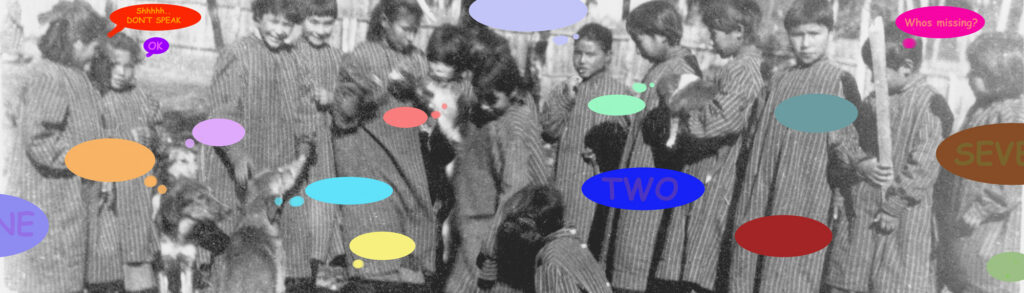
Edward Poitras, Don’t Speak, 2015

Barry Pottle, Yale Dormitory (Residential School), North West River, Labrador, 2015

Teharihulen Michel Savard, Reciprocity (Réciprocité), 2009

Jason Sikoak, Sacrilege, 2015

Greg Staats, Do’-gah – I don’t know [shrugging shoulders], 2020, archival pigment print on canvas on pine stretcher, oil, earth, Indian tobacco ash (edition 2 of 3), 142 x 175.3 x 2.5 cm, Agnes Etherington Art Centre, Kingston.

Alan Syliboy, Grandmother 1, 1997

Jeff Thomas, Broken Treaties, 1613–, 2020
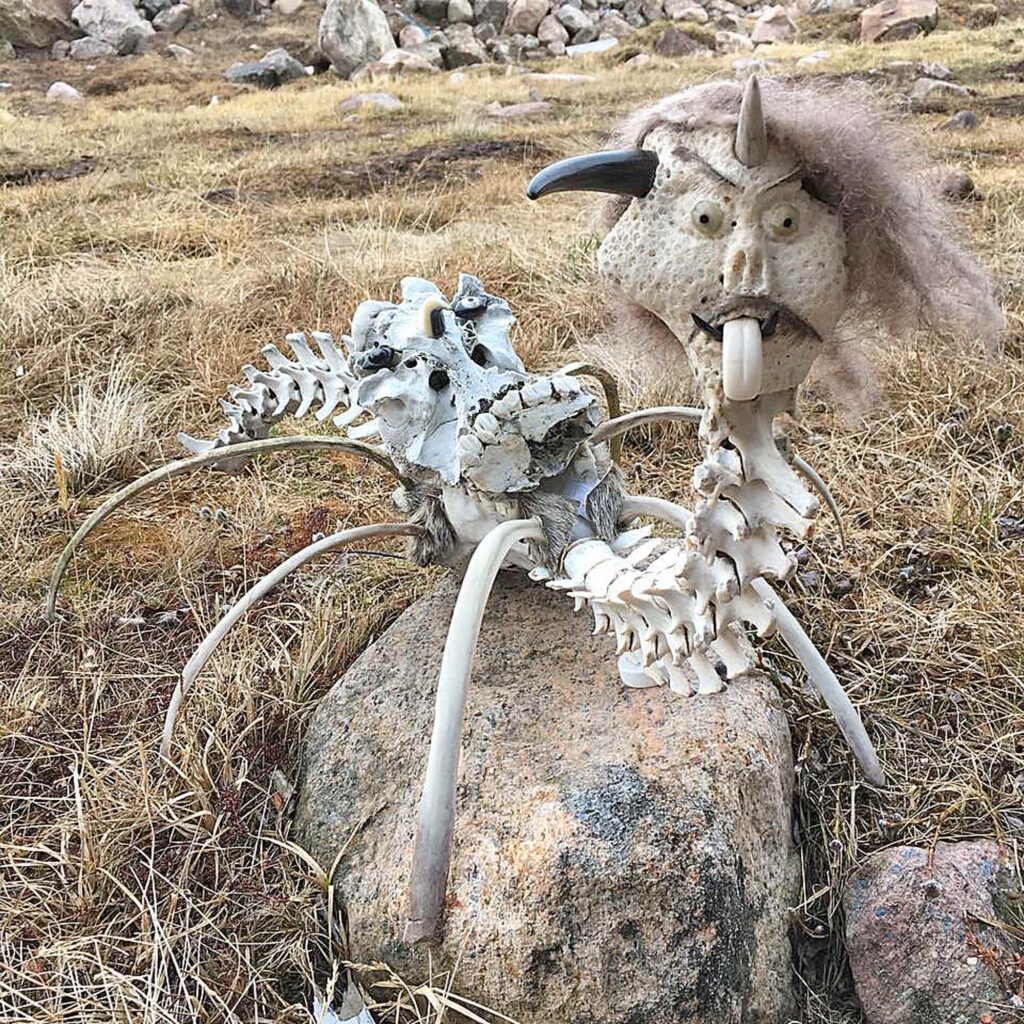
Jesse Tungilik, The Spirit of Intergenerational Trauma, 2019

Tania Willard, Be a Good Girl, 2017