Shawn Hunt, Flipping the Bird, 2014

Shawn Hunt, Flipping the Bird, 2014, red cedar, 243.8 x 190.5 cm, TD Corporate Art Collection, Toronto.
The most striking formal feature of Flipping the Bird, a pole carved by Shawn Hunt (b.1975), who is of Heiltsuk, French, and Scottish heritage, is the inversion of the eagle. In Northwest Coast visual culture, an eagle traditionally crowns a pole, representing prestige, spiritual authority, and respect. Here, Hunt places it at the bottom, literally “flipping the bird.” This inversion destabilizes viewers’ expectations, subverting the vertical hierarchy that poles normally embody. The reversal communicates that the moral order in Canada remains upside down. Despite decades of apologies, reports, and commissions, the structures of colonial violence—land dispossession, residential and day schools, systemic inequities—remain largely intact. The inversion is ethical rather than aesthetic, a declaration that will hold until the wrongs it names are genuinely addressed.

Opening of the Gvákva’áus Haíłzaqv (House of the Heiltsuk) Big House on Heiltsuk territory, Bella Bella, British Columbia, 2020, photograph by Oriana Smy.
Flipping the Bird takes the visual language of the Heiltsuk carving tradition and deploys it with sharp wit and pointed critique. Hunt draws directly on the tradition of the ridicule pole, a traditional form of public accountability in which an image was raised
to shame someone who had acted unjustly until the wrongdoing was rectified. Hunt adapts this form to contemporary Canada, focusing on the nation’s ongoing failures
to address systemic injustices against Indigenous Peoples. The work’s title, with its colloquial reference to “giving the finger,” signals the artist’s embrace of humour
and irreverence as tools of critique. Yet, beneath the humour lies a demand for accountability: the work insists that reconciliation move beyond symbolic gestures toward substantive change.
Flipping the Bird also works by holding two audiences at once. For Indigenous viewers, the ridicule pole carries clear cultural resonance, affirming a long tradition of using visual art to speak truth to power. For non-Indigenous audiences, the humour of the phrase “flipping the bird” functions as an accessible entry point, drawing them into the work before revealing its deeper layers of accountability. Hunt skillfully uses this double register to ensure the sculpture communicates across cultural lines without diluting its political edge.
The piece is not static; Hunt has stated that the pole will remain inverted until Canada fulfills its responsibilities to Indigenous Peoples. In this sense, the artwork is conditional and open-ended. It refuses closure or complacency, existing in a state of suspended resolution. Viewers are implicated; reconciliation will not be symbolized by turning the pole upright but by concrete action: land restitution, respect for treaty rights, reparations for residential and day school Survivors, and systemic reform. Until then, the eagle remains upside down, a visible reminder of imbalance.
Flipping the Bird rebuffs the consolations of symbolic reconciliation. It exemplifies what contemporary Indigenous art does best, reclaiming tradition as a living, adaptive practice while speaking directly to present-day politics. It is at once humorous and uncompromising, local and national, culturally rooted and cross-culturally legible. By fusing satire with traditional form, Hunt insists that art is essential to truth telling and accountability. His pole, inverted and defiant, will stand as witness until justice is achieved.
Gallery of A New Generation of Witness

Sonny Assu, Leila’s Desk, 2013

Michael Barber, A Silent Sky, 2022

Christi Belcourt, Giniigaaniimenaaning (Looking Ahead), 2012

Rebecca Belmore, Apparition, 2013

Rain Cabana-Boucher, Laying Flowers, 2021–24

Quill Christie-Peters, Portrait of Ste. Margaret’s Residential School and All It Could Not Contain, 2018

Dana Claxton, Headdress – Shadae and her Girlz, 2023

Beau Dick, The Ghost Confined to the Chair, 2012
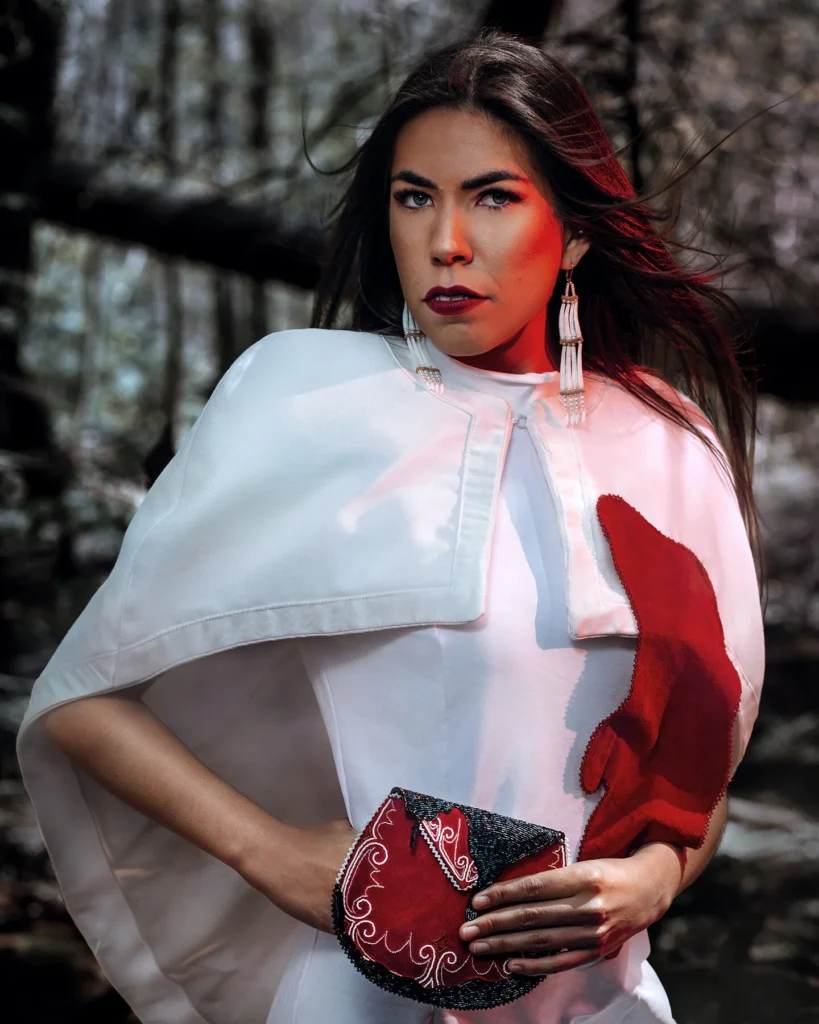
Oakley Rain Wysote Gray, Bleeding Heart Cape – M’st No’gmaq (All My Relations), 2021

7IDANsuu James Hart, Reconciliation Pole: Honouring a Time Before, During and After Canada’s Indian Residential Schools, 2015–17

Emma Hassencahl-Perley, White Flag, 2015

Brent Henry, English Only!, 2021
Shawn Hunt, Flipping the Bird, 2014

Lisa Jackson, Savage, 2009
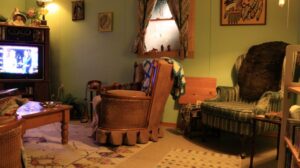
Ursula Johnson, ITHA: The Livingroom, 2021

Siassie Kenneally, All the Things That I Have Seen, 2016

Jake Kimble, It’s All So Incredibly Loud, 2025

Duane Linklater, i want to forget the english language, ulterior, 2020/23

Jim Logan, National Pastimes, 1991

Luke Marston, Bentwood Box, 2009

Kevin McKenzie, Being Indigenous, 2024

Meryl McMaster, Truth to Power, 2017

Kent Monkman, The Scream, 2017

Caroline Monnet, The Black Case, 2014

Tim Moore, Erasure Is Futile, 2021

Peter Morin, This is what happens when you perform the memory of the land (parts 1 and 2), 2013
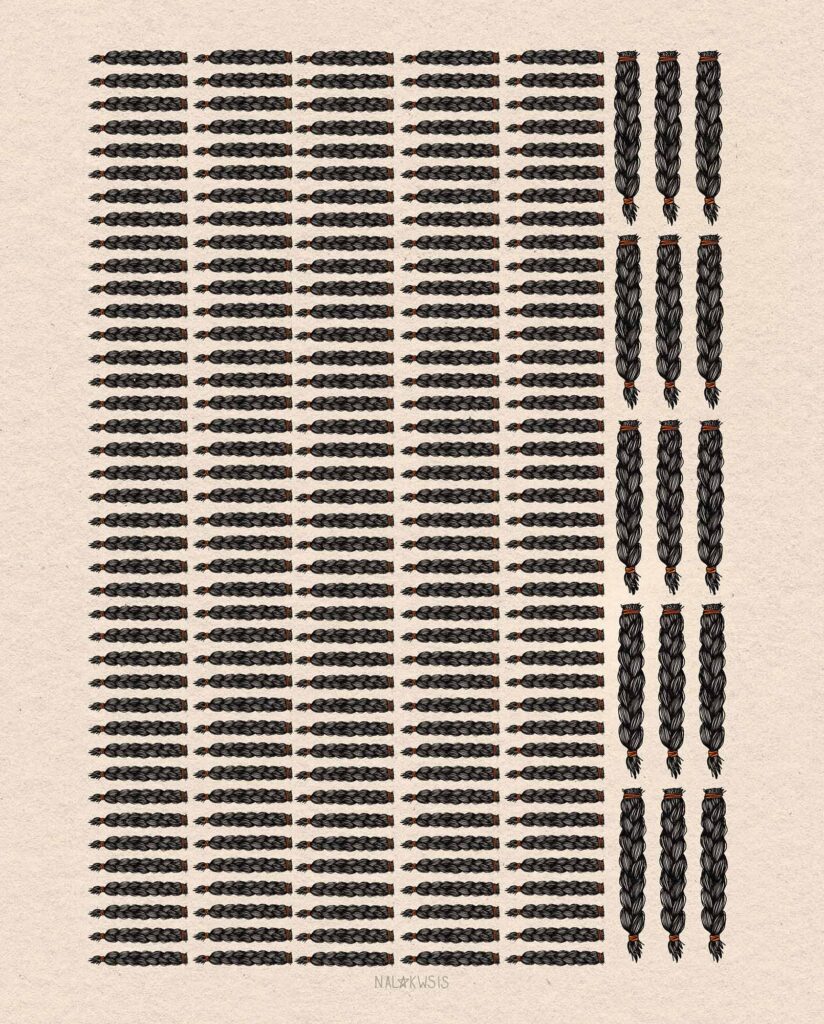
Saige “Nalakwsis” Mukash, 215 Braids, 2021

Nadia Myre, Indian Act, 2000–2002

Carey Newman, Witness Blanket, 2013–14

Davidee Ningeok, Sr., Residential School Nightmare, 2015

Shelley Niro, The Shirt, 2003

Luke Parnell, Neon Reconciliation Explosion, 2020

Dionne Paul, Her First Day of School, 2013
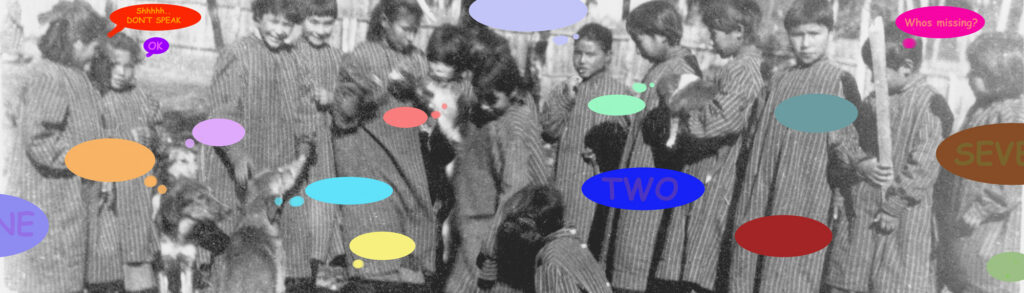
Edward Poitras, Don’t Speak, 2015

Barry Pottle, Yale Dormitory (Residential School), North West River, Labrador, 2015

Teharihulen Michel Savard, Reciprocity (Réciprocité), 2009

Jason Sikoak, Sacrilege, 2015

Greg Staats, Do’-gah – I don’t know [shrugging shoulders], 2020, archival pigment print on canvas on pine stretcher, oil, earth, Indian tobacco ash (edition 2 of 3), 142 x 175.3 x 2.5 cm, Agnes Etherington Art Centre, Kingston.

Alan Syliboy, Grandmother 1, 1997

Jeff Thomas, Broken Treaties, 1613–, 2020
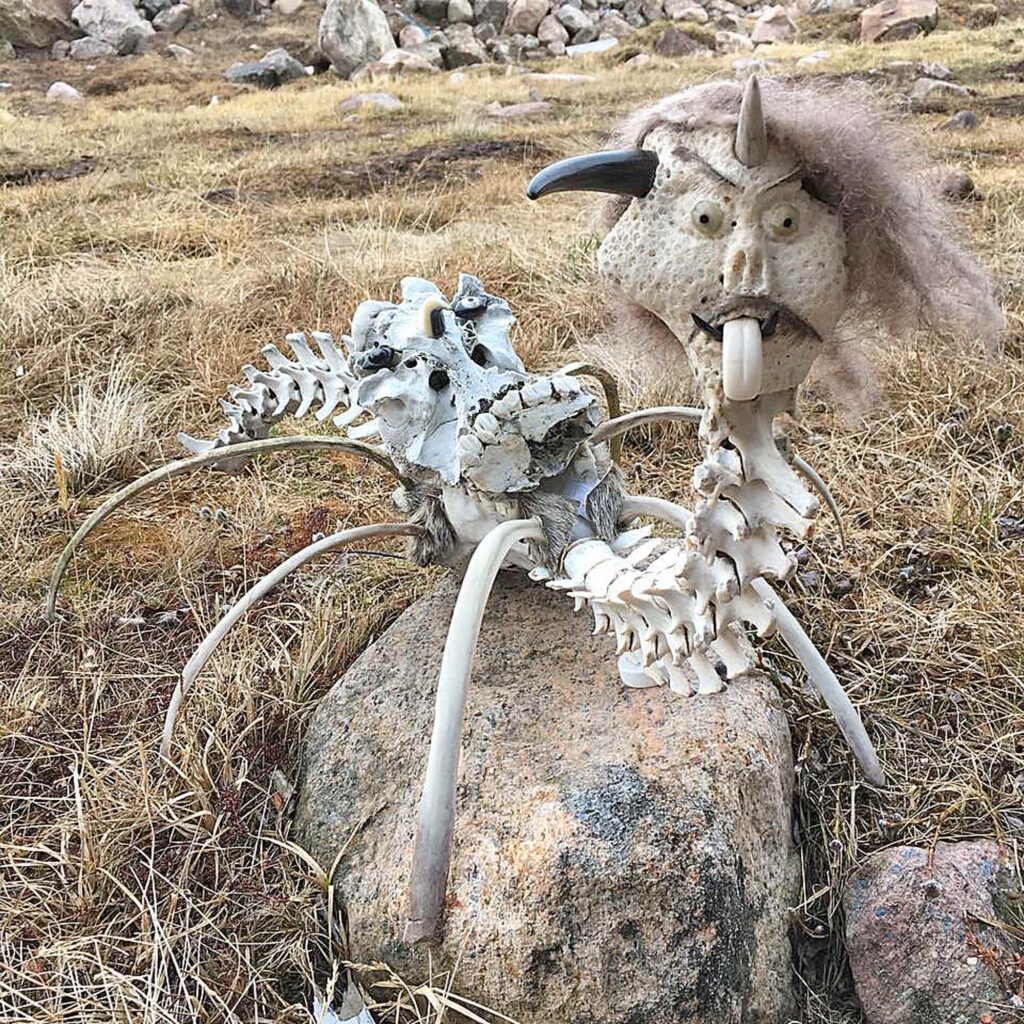
Jesse Tungilik, The Spirit of Intergenerational Trauma, 2019

Tania Willard, Be a Good Girl, 2017