Duane Linklater, i want to forget the english language, ulterior, 2020/23

Duane Linklater, i want to forget the english language, ulterior, 2020/23, five tipi poles, paint, spray paint, rope, tarpaulin, brass chandelier, stone, wooden box, cart, 196 x 706 x 140 cm.
i want to forget the english language, ulterior by Omaskêko Cree artist Duane Linklater (b.1976), stages language itself as a site of colonial violence and constraint of traditional knowledge. Composed of tipi poles wrapped in tarpaulin resting on a dolly, with a crystal chandelier suspended from their apex, the installation operates less as an object than as a visual proposition. It is a syntax assembled in space, one that asks the viewer to reconsider how knowledge is structured, carried, and seen.

Duane Linklater, i want to forget the english language, ulterior (detail), 2020/23.
The work’s title signals this challenge with precision. Its Cree phrasing—e-nôtây-wanikiskisitotam omâ âkâyâsîmowin, kâcikâtêw—does not simply translate as a rejection of English but frames it as a condition of darkness or obscurity. Here, “english” stands in for Western epistemological dominance and its claim to universality. Linklater’s gesture is one of reorientation rather than negation. The desire to “forget” names a longing to re-enter Indigenous grammars of perception, relation, and responsibility that have been displaced, though never erased, by colonial systems of knowledge.
Formally, the installation reinforces this
ethical shift. The tipi poles evoke Indigenous architectures of kinship, mobility, and gathering; however, they are detached from the ground
and set upon a dolly, suggesting both movement and dislocation. Their westward lean carries cosmological weight. In many Plains worldviews, west is associated with closure, transition, or the setting of a cycle. Read this way, the work gestures toward the waning authority of colonial structures of knowledge rather than their destruction. Change here is gradual, deliberate, and relational.
Suspended from the tip is a crystal chandelier, an emblem of European domestic refinement and imperial taste. Its presence is conspicuously unsettled. No longer central or triumphant, it hangs awkwardly from an Indigenous structure, its beauty rendered uneasy. For some viewers, rather than elegance, the chandelier evokes a kind of symbolic capture: a colonial object displaced from its original hierarchy and held in tension. Linklater does not invert power so much as suspend it, forcing a recalibration of value and meaning.
This strategy aligns with miýikosiwin, a mode of knowing through making and gifted vision that emerges relationally rather than declaratively. The installation does not offer resolution or clear translation. Instead, it interrupts Western visual fluency and requires the viewer to slow down, adjust their frame of reference, and attend to relation. In this way, Linklater recalibrates kanawâpâtahmowin, the conditions of seeing. Rather than an evacuation of meaning, his abstraction is a thickening of it, asserting that Indigenous visual knowledge operates through ethical engagement rather than immediate legibility. The work reminds us that to see differently is also to be accountable differently.
Gallery of A New Generation of Witness

Sonny Assu, Leila’s Desk, 2013

Michael Barber, A Silent Sky, 2022

Christi Belcourt, Giniigaaniimenaaning (Looking Ahead), 2012

Rebecca Belmore, Apparition, 2013

Rain Cabana-Boucher, Laying Flowers, 2021–24

Quill Christie-Peters, Portrait of Ste. Margaret’s Residential School and All It Could Not Contain, 2018

Dana Claxton, Headdress – Shadae and her Girlz, 2023

Beau Dick, The Ghost Confined to the Chair, 2012
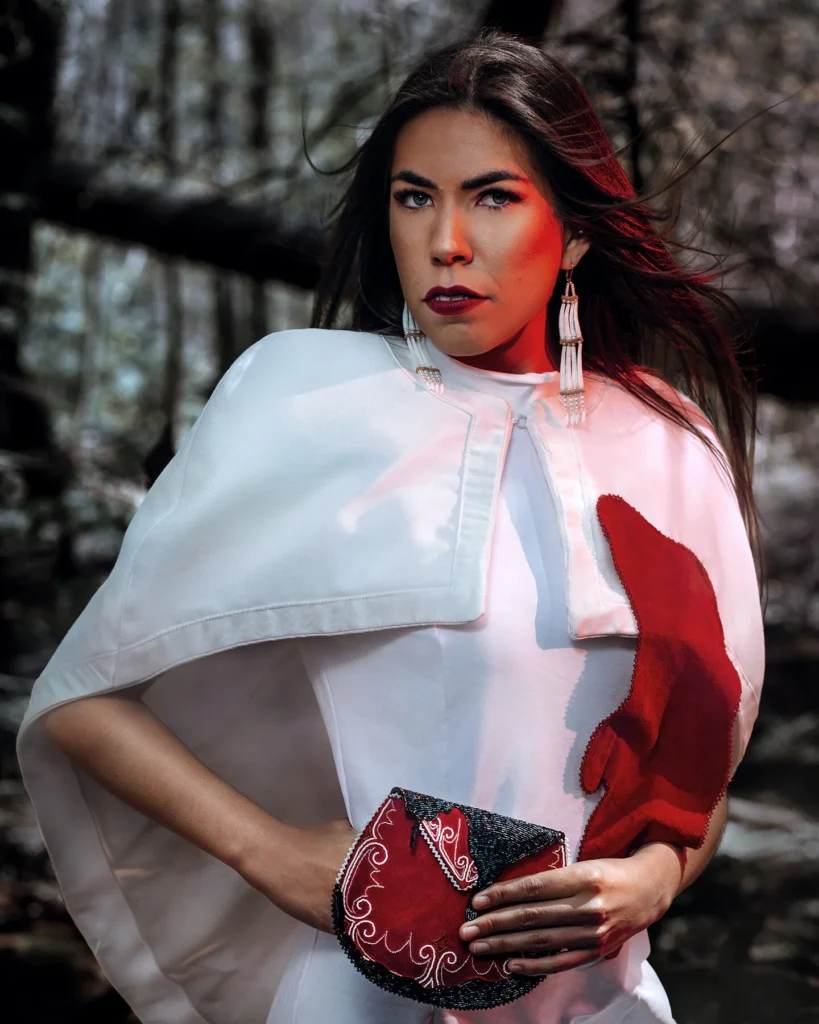
Oakley Rain Wysote Gray, Bleeding Heart Cape – M’st No’gmaq (All My Relations), 2021

7IDANsuu James Hart, Reconciliation Pole: Honouring a Time Before, During and After Canada’s Indian Residential Schools, 2015–17

Emma Hassencahl-Perley, White Flag, 2015

Brent Henry, English Only!, 2021

Shawn Hunt, Flipping the Bird, 2014

Lisa Jackson, Savage, 2009
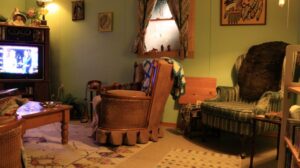
Ursula Johnson, ITHA: The Livingroom, 2021

Siassie Kenneally, All the Things That I Have Seen, 2016

Jake Kimble, It’s All So Incredibly Loud, 2025
Duane Linklater, i want to forget the english language, ulterior, 2020/23

Jim Logan, National Pastimes, 1991

Luke Marston, Bentwood Box, 2009

Kevin McKenzie, Being Indigenous, 2024

Meryl McMaster, Truth to Power, 2017

Kent Monkman, The Scream, 2017

Caroline Monnet, The Black Case, 2014

Tim Moore, Erasure Is Futile, 2021

Peter Morin, This is what happens when you perform the memory of the land (parts 1 and 2), 2013
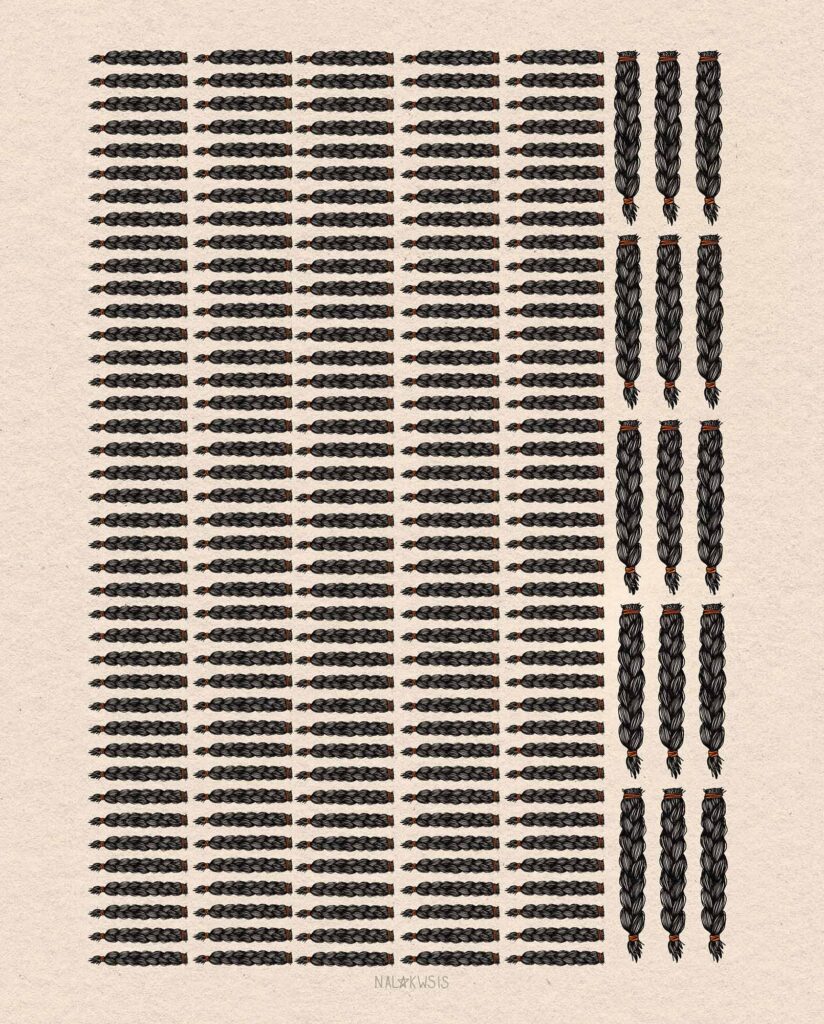
Saige “Nalakwsis” Mukash, 215 Braids, 2021

Nadia Myre, Indian Act, 2000–2002

Carey Newman, Witness Blanket, 2013–14

Davidee Ningeok, Sr., Residential School Nightmare, 2015

Shelley Niro, The Shirt, 2003

Luke Parnell, Neon Reconciliation Explosion, 2020

Dionne Paul, Her First Day of School, 2013
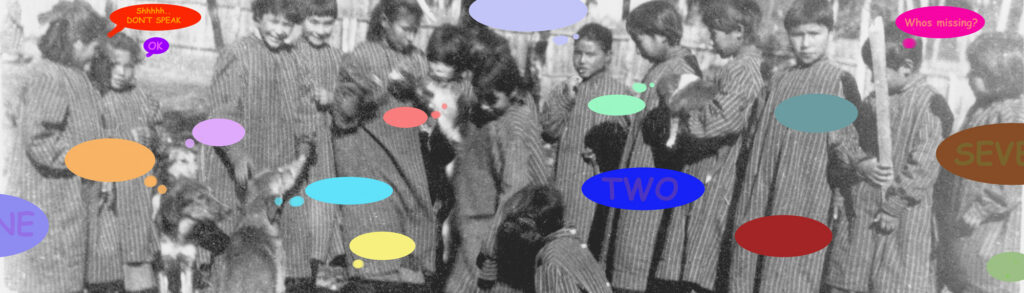
Edward Poitras, Don’t Speak, 2015

Barry Pottle, Yale Dormitory (Residential School), North West River, Labrador, 2015

Teharihulen Michel Savard, Reciprocity (Réciprocité), 2009

Jason Sikoak, Sacrilege, 2015

Greg Staats, Do’-gah – I don’t know [shrugging shoulders], 2020, archival pigment print on canvas on pine stretcher, oil, earth, Indian tobacco ash (edition 2 of 3), 142 x 175.3 x 2.5 cm, Agnes Etherington Art Centre, Kingston.

Alan Syliboy, Grandmother 1, 1997

Jeff Thomas, Broken Treaties, 1613–, 2020
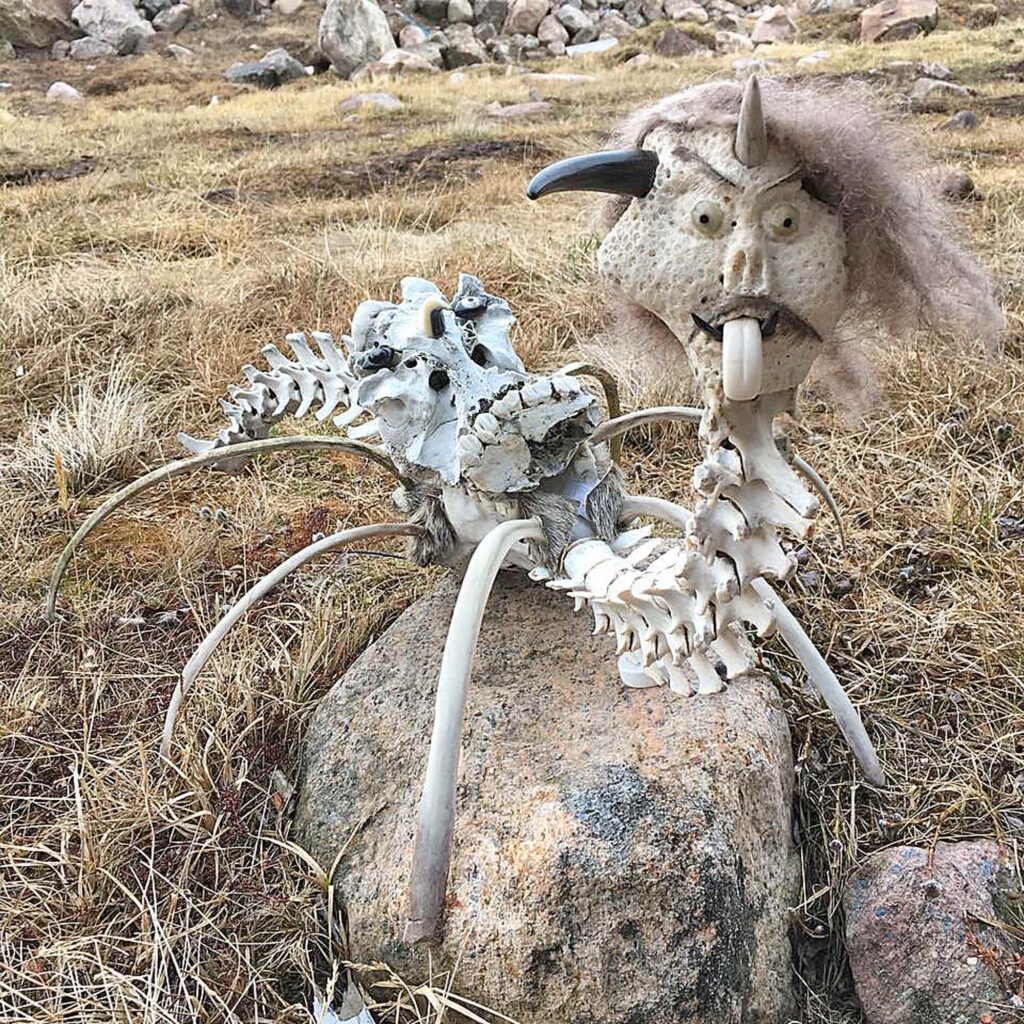
Jesse Tungilik, The Spirit of Intergenerational Trauma, 2019

Tania Willard, Be a Good Girl, 2017