Tania Willard, Be a Good Girl, 2007

Tania Willard, Be a Good Girl, 2007, ink on paper, 66.4 x 101.9 cm, Museum of Anthropology, University of British Columbia, Vancouver.
In the woodblock print Be a Good Girl, Secwépemc artist Tania Willard (b.1977) layers imagery of women and girls in regimented poses: children with clasped hands in prayer, women bent over sewing machines, and figures locked into cycles of obedience and productivity. These visual repetitions echo the assimilation programs of residential schools, which sought to condition Indigenous girls into labour roles suitable for settler households. At the centre, a Madonna-like figure, cloaked in a patterned robe, anchors the image, her presence framed by animals and symbols that invoke both Catholic iconography and Secwépemc visual traditions. At once maternal and monumental, she symbolizes the imposed ideal of Indigenous womanhood: silent, obedient, and industrious.
Through this composition, Willard confronts the gendered violence of colonial assimilation and critiques the role of residential schools in shaping Indigenous women’s labour and identity. Rendered in stark black ink on gold paper, the work was created for the exhibition Women and Work and foregrounds the ways Indigenous girls were trained in prayer, servitude, and domesticity. The title, drawn from a familiar phrase of discipline and control, captures the colonial disciplining of Indigenous femininity, turning an intimate command into a critique of systemic violence.

Sonny Assu, Selective History, from the Happiest Future series, 2012, digital print.
Willard deliberately chose woodblock printing as her medium. The physicality of carving into wood parallels the embodied discipline imposed on Indigenous children—training, punishment, and repetition inscribed on their bodies. At the same time, woodblock printing, historically used to reproduce images and texts in multiples, speaks to the mass dissemination of colonial ideology. By reappropriating this medium, Willard asserts survivance, refusing erasure through acts of creative presence.
Willard’s work resonates with the Happiest Future series, 2012, by Sonny Assu (b.1975),
which includes works that deliberately mimic vintage propaganda posters. Like Assu, Willard strategically inhabits the visual language of colonial persuasion to turn it against itself. Assu’s appropriation of poster formats exposes the racist stereotypes and national myths that circulated in the Canadian imagination, while Willard’s woodblock echoes the mass teachings of the classroom, where colonial values were drilled into Indigenous children. Both artists deploy irony: Assu through slogans that parody settler pride and Willard through the seemingly benign command “Be a good girl.” Each transforms instruments of control—propaganda and pedagogy—into platforms of truth telling.
In doing so, Willard insists that the story of residential schools cannot be told without attending to gender. The disciplining of Indigenous girls into domestic servitude and silence was central to the project of assimilation. Yet, her work also honours resilience: the figures, though regimented, are not erased. Their presence, multiplied and inscribed into the woodblock, testifies to endurance.
By reclaiming “women’s work” as a site of resistance, Be a Good Girl destabilizes colonial narratives of obedience and reasserts Indigenous cultural continuity. The work demonstrates how Indigenous artists retool the forms of colonial power—posters, prints, slogans—not to perpetuate them but to unmask their violence and to reframe history through Indigenous sovereignty and survivance.
Collection of A New Generation of Witness

Sonny Assu, Leila’s Desk, 2013

Michael Barber, A Silent Sky, 2022

Christi Belcourt, Giniigaaniimenaaning (Looking Ahead), 2012

Rebecca Belmore, Apparition, 2013

Rain Cabana-Boucher, Laying Flowers, 2021–24

Quill Christie-Peters, Portrait of Ste. Margaret’s Residential School and All It Could Not Contain, 2018

Dana Claxton, Headdress – Shadae and her Girlz, 2023

Beau Dick, The Ghost Confined to the Chair, 2012
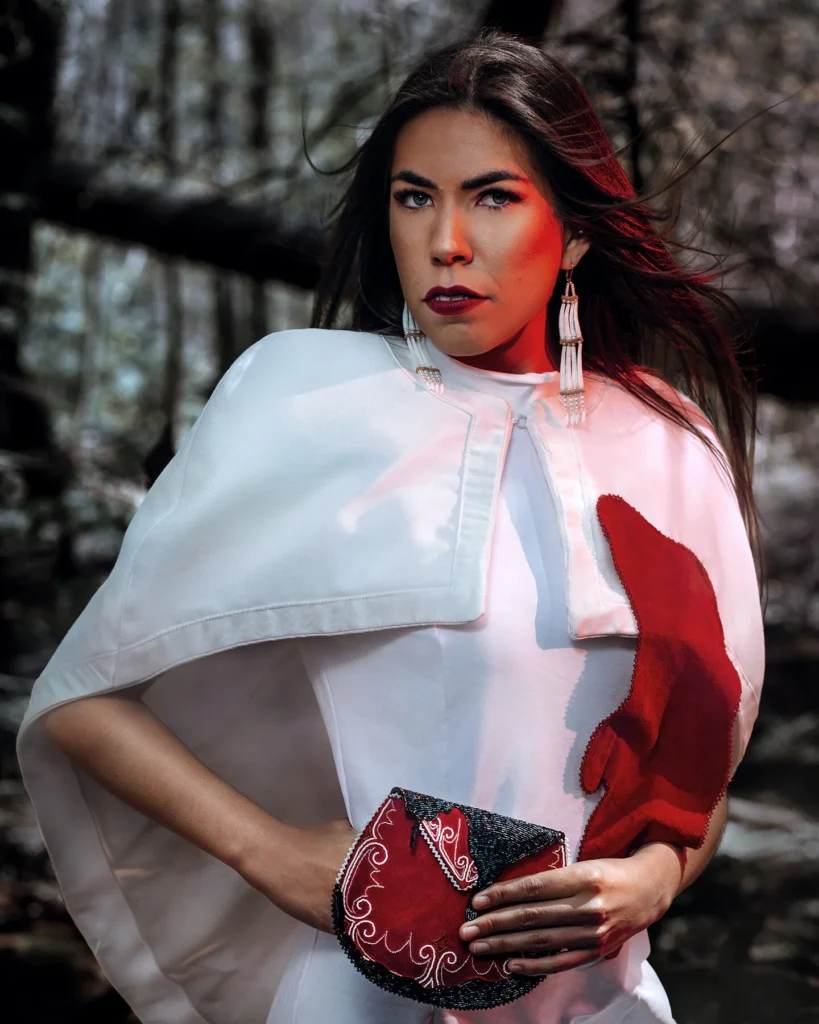
Oakley Rain Wysote Gray, Bleeding Heart Cape – M’st No’gmaq (All My Relations), 2021

7IDANsuu James Hart, Reconciliation Pole: Honouring a Time Before, During and After Canada’s Indian Residential Schools, 2015–17

Emma Hassencahl-Perley, White Flag, 2015

Brent Henry, English Only!, 2021

Shawn Hunt, Flipping the Bird, 2014

Lisa Jackson, Savage, 2009
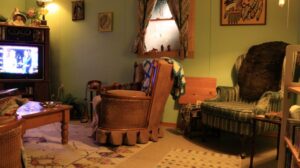
Ursula Johnson, ITHA: The Livingroom, 2021

Siassie Kenneally, All the Things That I Have Seen, 2016

Jake Kimble, It’s All So Incredibly Loud, 2025

Duane Linklater, i want to forget the english language, ulterior, 2020/23

Jim Logan, National Pastimes, 1991

Luke Marston, Bentwood Box, 2009

Kevin McKenzie, Being Indigenous, 2024

Meryl McMaster, Truth to Power, 2017

Kent Monkman, The Scream, 2017

Caroline Monnet, The Black Case, 2014

Tim Moore, Erasure Is Futile, 2021

Peter Morin, This is what happens when you perform the memory of the land (parts 1 and 2), 2013
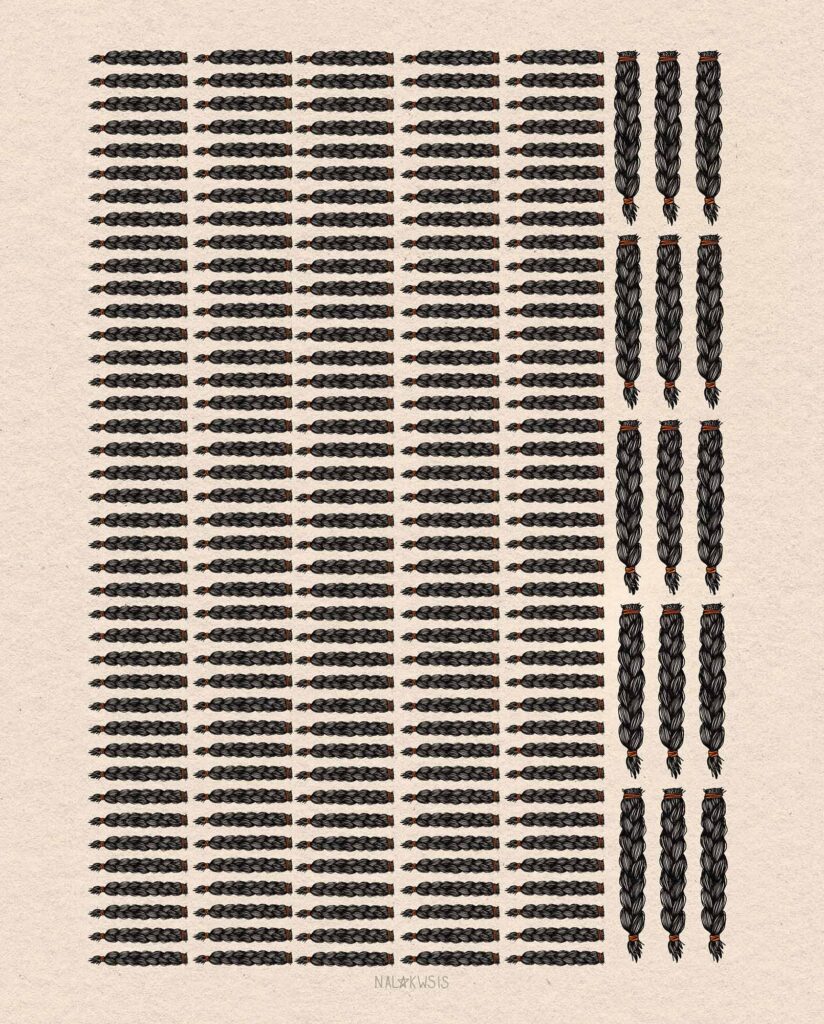
Saige “Nalakwsis” Mukash, 215 Braids, 2021

Nadia Myre, Indian Act, 2000–2002

Carey Newman, Witness Blanket, 2013–14

Davidee Ningeok, Sr., Residential School Nightmare, 2015

Shelley Niro, The Shirt, 2003

Luke Parnell, Neon Reconciliation Explosion, 2020

Dionne Paul, Her First Day of School, 2013
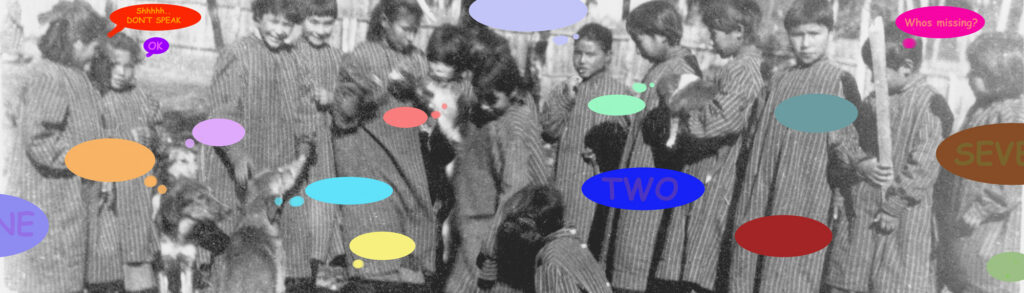
Edward Poitras, Don’t Speak, 2015

Barry Pottle, Yale Dormitory (Residential School), North West River, Labrador, 2015

Teharihulen Michel Savard, Reciprocity (Réciprocité), 2009

Jason Sikoak, Sacrilege, 2015

Greg Staats, Do’-gah – I don’t know [shrugging shoulders], 2020, archival pigment print on canvas on pine stretcher, oil, earth, Indian tobacco ash (edition 2 of 3), 142 x 175.3 x 2.5 cm, Agnes Etherington Art Centre, Kingston.

Alan Syliboy, Grandmother 1, 1997

Jeff Thomas, Broken Treaties, 1613–, 2020
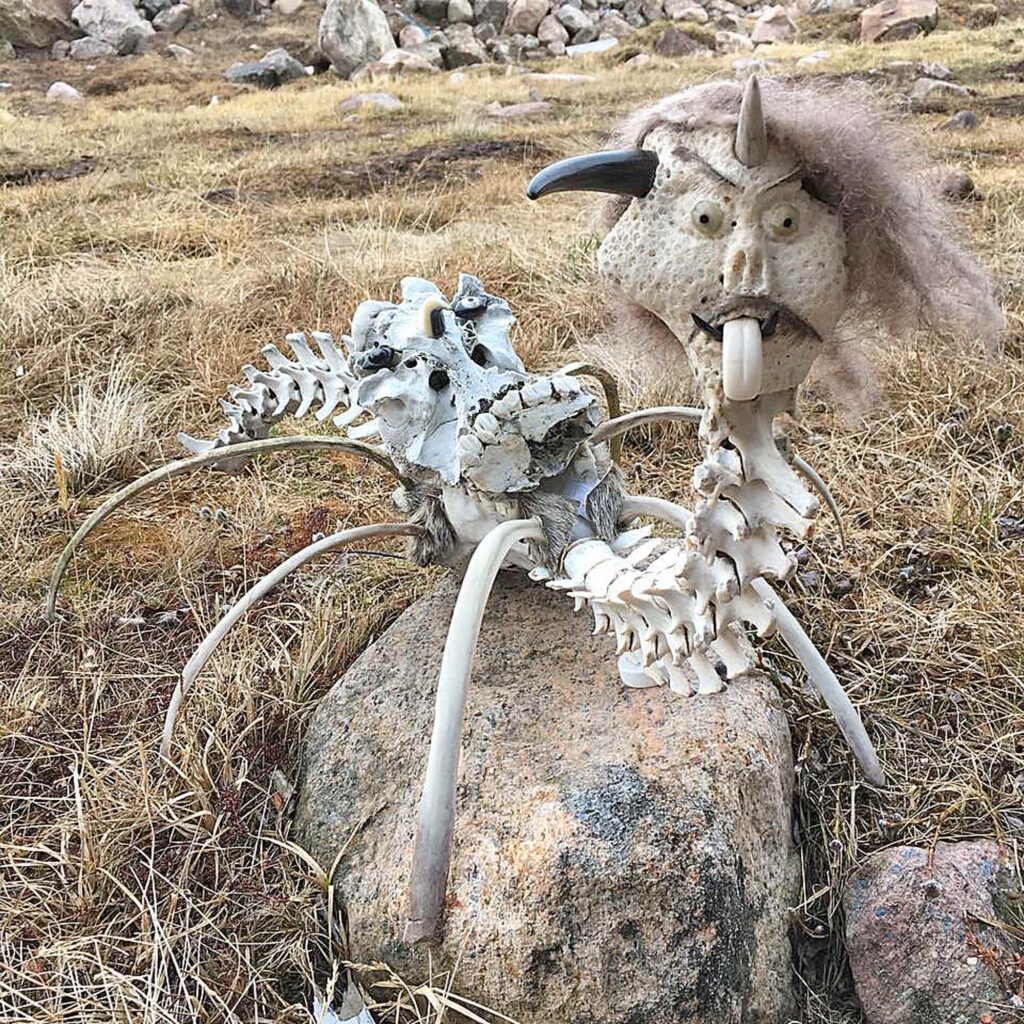
Jesse Tungilik, The Spirit of Intergenerational Trauma, 2019
Tania Willard, Be a Good Girl, 2017