Ursula Johnson, ITHA: The Livingroom, 2021
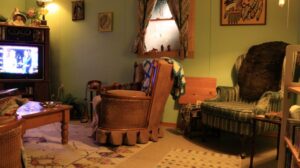
Ursula Johnson, ITHA: The Livingroom, 2021, mixed media immersive installation, dimensions variable.
ITHA: The Livingroom, an installation by Mi’kmaw interdisciplinary artist Ursula Johnson (b.1980) of Eskasoni First Nation, Nova Scotia, recreates a domestic space that appears warm and ordinary at first glance: an archetypal 1980s Mi’kmaw living room complete with crocheted blankets, patterned chairs, framed prints, and a glowing television. Yet, as the viewer looks closer, the scene unsettles. It stages not
nostalgia but a confrontation with the intergenerational effects of residential
schools, the commodification of Indigenous identity, and cultural erasure.
The television anchors the work. Instead of sitcoms or news, it plays the “ITHA Home Shopping Network,” a satirical broadcast offering kitschy items decorated with stereotypical Indigenous imagery. Each item is priced using Mi’kmaw–Crown treaty dates—$17.52 for 1752, for example—turning sacred agreements into consumer price tags. The absurdity is sharp. Treaties, meant to affirm nation-to-nation relationships, are reduced to commodities, just as Indigenous cultures were historically commodified for settler consumption. This biting humour destabilizes the comfort of the living room, exposing the depth of colonial intrusion into everyday life.

Elizabeth Lonecloud basket-weaving, 1965, photograph by Nova Scotia Information Service, Nova Scotia Archives, Halifax.
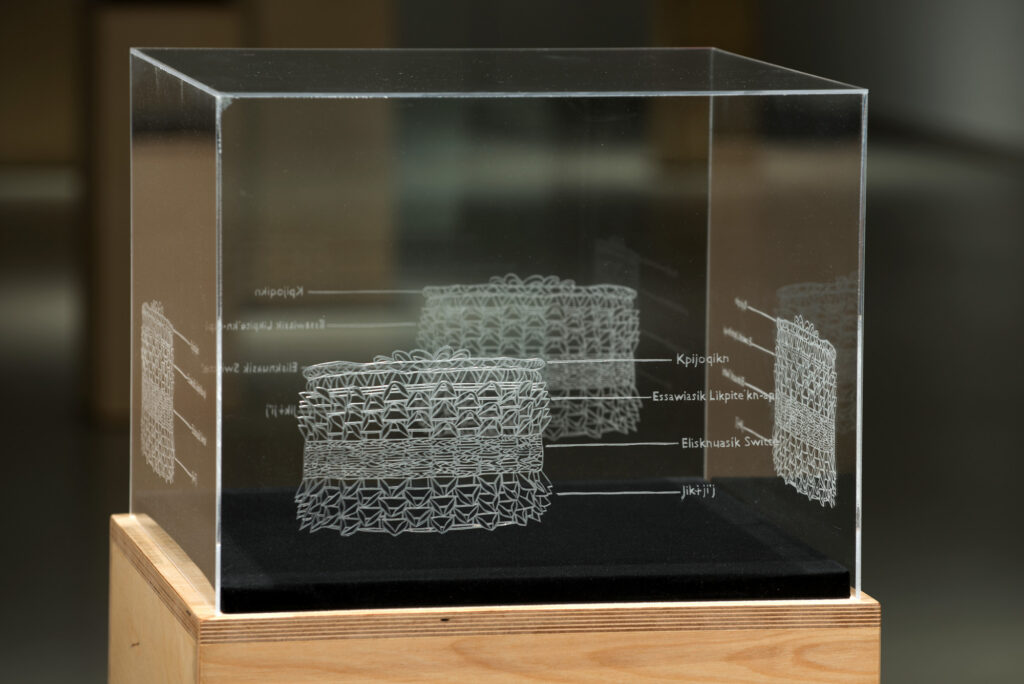
Ursula Johnson, Museological Grand Hall (detail), 2013–14, twelve hand-cut and sandblasted Acrylite vitrines, dimensions variable.
The installation also confronts the legacies of residential schools. English-only entertainment hums from the television, echoing the silencing of the Mi’kmaw language in the schools. Religious icons and settler decor dominate the walls, displacing cultural items from their rightful positions in Mi’kmaw homes. Johnson’s use of satire and mimicry aligns with the Truth and Reconciliation Commission of Canada’s Call to Action 83, which urges Indigenous and non-Indigenous artists to create works that foster reconciliation through critical engagement with history. Here, reconciliation begins with discomfort rather than with resolution, forcing audiences to reckon with complicity and erasure.
Importantly, Johnson roots this critique in tradition and treaty. ITHA—an acronym for Indian Truckhouse of High Art—takes its name from the truckhouse clause enshrined in the 1752 Mi'kmaw Peace and Friendship Treaty, which established Mi'kmaq rights to trade and exchange with the Crown. By invoking this treaty instrument as both title and framework, Johnson situates her installation within a longer history of colonial negotiation and Indigenous assertion. Her practice emerges from Mi’kmaw basket-weaving traditions passed down by her great-grandmother, Caroline Gould. Basketry, historically undervalued as “craft,” becomes the conceptual weave binding this installation’s pieces together: everyday objects, satire, and embodied memory interlace to create a living testimony. By transplanting cultural resilience into a space infiltrated by colonial symbols, Johnson asserts Mi’kmaw survivance.
The installation’s domestic setting is crucial. The living room is where many Survivors returned after residential school—spaces where trauma and resilience met in silence, prayer, television, and daily routines. By reconstructing such a room, Johnson reveals how colonial systems extended beyond the walls of the schools into the intimate textures of family life. Yet, she also reclaims this space. THA becomes a call to attention, a demand that we look, listen, and account for what has been ignored.
First displayed in the Blue Building Gallery in Kjipuktuk (Halifax), on unceded Mi’kmaw territory, ITHA: The Livingroom refuses to let reconciliation slip into abstraction. It demands accountability by making colonial violence visible, even in the most ordinary corners of life.
At the same time, it honours the endurance of kinship, creativity, and humour as strategies of survival. Johnson thereby situates art as truth telling—an urgent call for collective reflection, healing, and the unending work of reconciliation.
Gallery of A New Generation of Witness

Sonny Assu, Leila’s Desk, 2013

Michael Barber, A Silent Sky, 2022

Christi Belcourt, Giniigaaniimenaaning (Looking Ahead), 2012

Rebecca Belmore, Apparition, 2013

Rain Cabana-Boucher, Laying Flowers, 2021–24

Quill Christie-Peters, Portrait of Ste. Margaret’s Residential School and All It Could Not Contain, 2018

Dana Claxton, Headdress – Shadae and her Girlz, 2023

Beau Dick, The Ghost Confined to the Chair, 2012
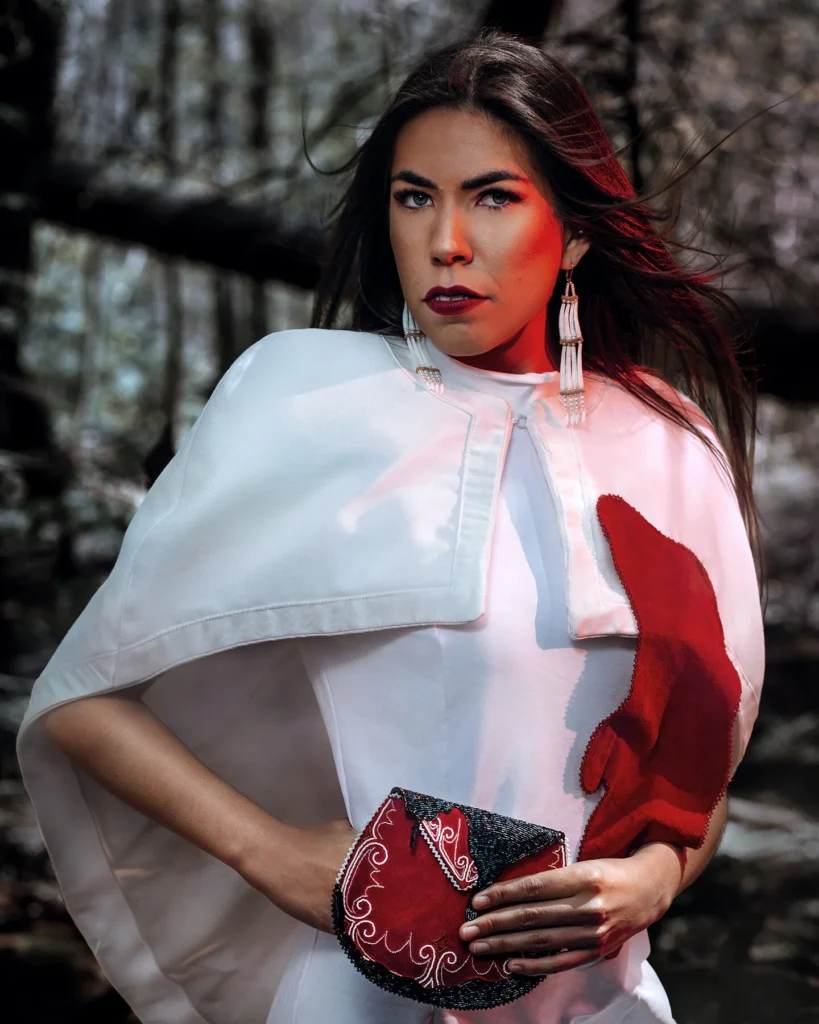
Oakley Rain Wysote Gray, Bleeding Heart Cape – M’st No’gmaq (All My Relations), 2021

7IDANsuu James Hart, Reconciliation Pole: Honouring a Time Before, During and After Canada’s Indian Residential Schools, 2015–17

Emma Hassencahl-Perley, White Flag, 2015

Brent Henry, English Only!, 2021

Shawn Hunt, Flipping the Bird, 2014

Lisa Jackson, Savage, 2009
Ursula Johnson, ITHA: The Livingroom, 2021

Siassie Kenneally, All the Things That I Have Seen, 2016

Jake Kimble, It’s All So Incredibly Loud, 2025

Duane Linklater, i want to forget the english language, ulterior, 2020/23

Jim Logan, National Pastimes, 1991

Luke Marston, Bentwood Box, 2009

Kevin McKenzie, Being Indigenous, 2024

Meryl McMaster, Truth to Power, 2017

Kent Monkman, The Scream, 2017

Caroline Monnet, The Black Case, 2014

Tim Moore, Erasure Is Futile, 2021

Peter Morin, This is what happens when you perform the memory of the land (parts 1 and 2), 2013
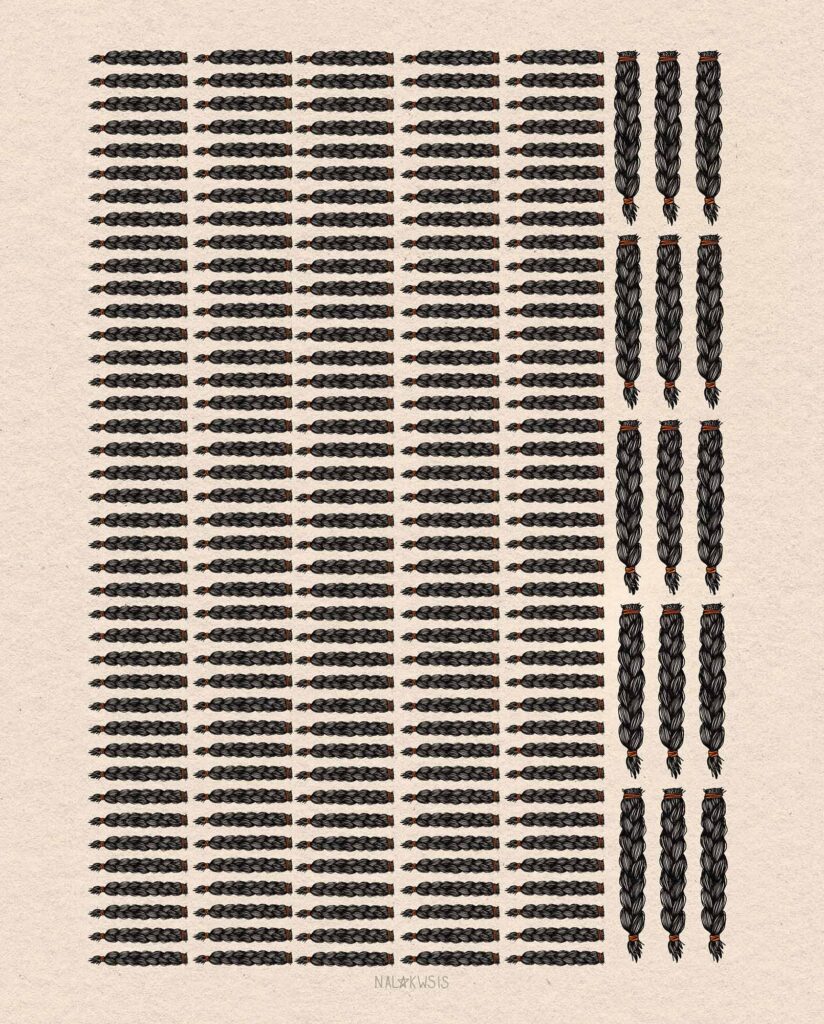
Saige “Nalakwsis” Mukash, 215 Braids, 2021

Nadia Myre, Indian Act, 2000–2002

Carey Newman, Witness Blanket, 2013–14

Davidee Ningeok, Sr., Residential School Nightmare, 2015

Shelley Niro, The Shirt, 2003

Luke Parnell, Neon Reconciliation Explosion, 2020

Dionne Paul, Her First Day of School, 2013
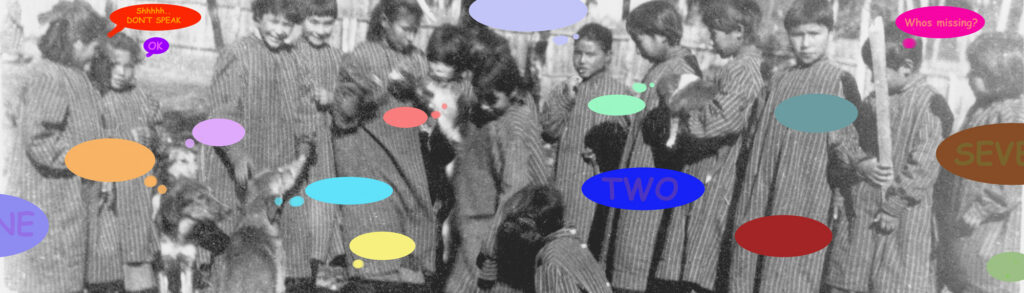
Edward Poitras, Don’t Speak, 2015

Barry Pottle, Yale Dormitory (Residential School), North West River, Labrador, 2015

Teharihulen Michel Savard, Reciprocity (Réciprocité), 2009

Jason Sikoak, Sacrilege, 2015

Greg Staats, Do’-gah – I don’t know [shrugging shoulders], 2020, archival pigment print on canvas on pine stretcher, oil, earth, Indian tobacco ash (edition 2 of 3), 142 x 175.3 x 2.5 cm, Agnes Etherington Art Centre, Kingston.

Alan Syliboy, Grandmother 1, 1997

Jeff Thomas, Broken Treaties, 1613–, 2020
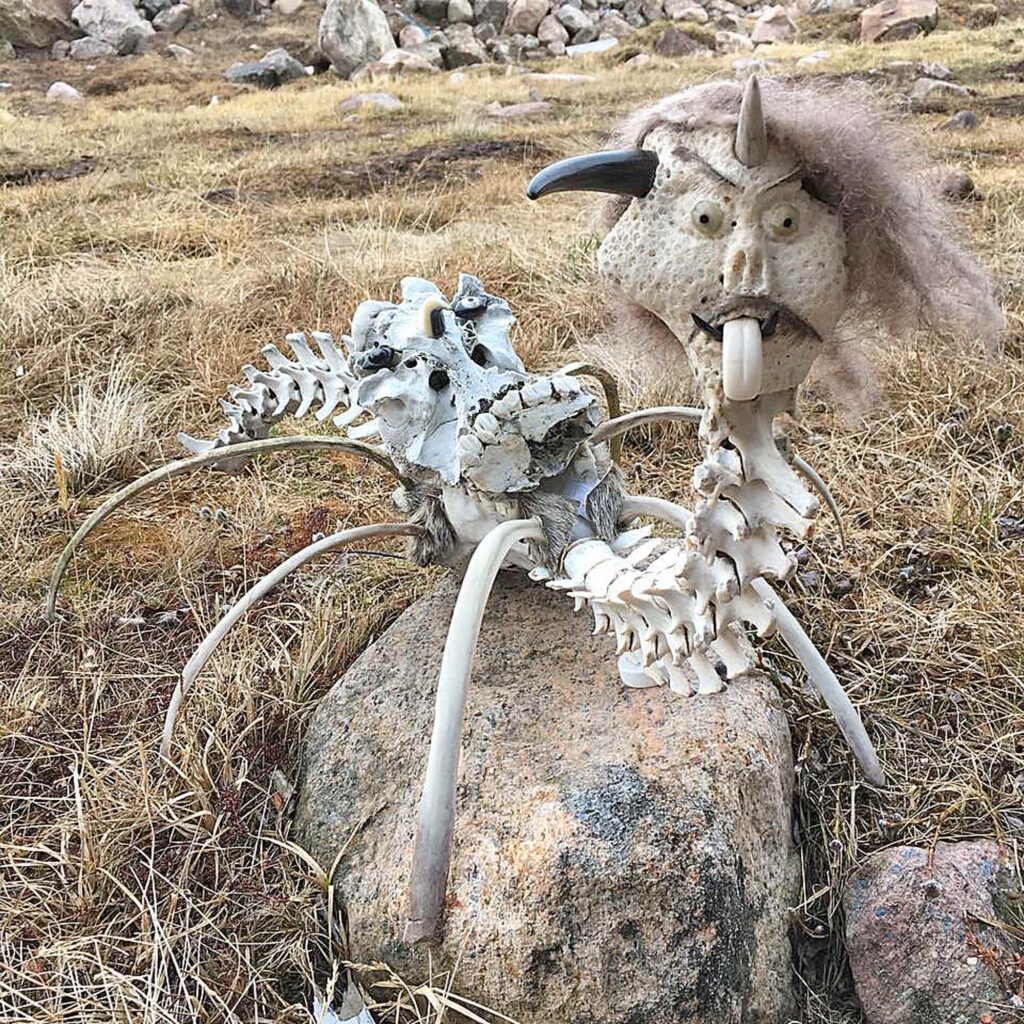
Jesse Tungilik, The Spirit of Intergenerational Trauma, 2019

Tania Willard, Be a Good Girl, 2017