Greg Staats, Do’-gah – I don’t know [shrugging shoulders], 2020

Greg Staats, Do’-gah – I don’t know [shrugging shoulders], 2020, archival pigment print on canvas on pine stretcher, oil, earth, Indian tobacco ash (edition 2 of 3), 142 x 175.3 x 2.5 cm, Agnes Etherington Art Centre, Kingston.
In Do’-gah – I don’t know [shrugging shoulders], Skarù:reˀ (Tuscarora) and Kanien’kehá:ka (Mohawk) photographer and video and installation artist Greg Staats (b.1963) has created a score for a performance in which participants recite sixty variations of “do’-gah,” each accompanied by a shrugging gesture or not. These variations range from playful to guarded, from ironic to ceremonial, embodying the many registers through which “I don’t know” can be voiced and enacted. In this way, Staats transforms a childhood Kanien’kéha (Mohawk language) lesson into a layered meditation on knowing, not knowing, and the sovereignty of refusal.

Curator Lorna Brown performing Greg Staats’s Do’-gah – I don’t know [shrugging shoulders] as part of Soundings: An Exhibition in Five Parts (September 8–December 6, 2020) at the Morris and Helen Belkin Gallery, University of British Columbia, Vancouver, September 8, 2020, photograph by Rachel Topham.
Some iterations suggest strategic withholding:
“I do know, but I refuse to tell you, just for today.” Others acknowledge deeper histories of loss: “I don’t know… my language.” Still others confront the extractive, diminishing nature of colonial inquiry: “I don’t know, and because you asked me and expect a detailed answer, I feel shame and anger… for your extractive expectation of presumed knowledge.”
The concept of “generative refusal,” articulated by Leanne Betasamosake Simpson, finds strong resonance here: withholding can protect sacred or intimate knowledges and uphold cultural safety. Yet, Staats’s work also leaves room to acknowledge a more complicated truth: refusal is not always strategic. Within Indigenous communities,
“I don’t know” can also signal an absence of knowledge, a gap created by cultural disruption, or even a reluctance to engage. Staats does not resolve this tension; instead, his repetitions allow both interpretations to coexist in the same space, underscoring the complex legacies of what is often framed as loss but is more accurately understood as linguistic erasure and recovery.
Materially, the work is rendered as an archival matte canvas print overlaid with oil, earth, and Indian tobacco ash—substances carrying ceremonial and territorial significance. The choice of materials grounds the work in Hodinöhsö:ni’ (Haudenosaunee) values, where land is a monument, oral tradition is a living archive, and the “good mind” is practised daily through acts such as the Ganö:nyök (Thanksgiving Address).
By involving audiences in the recitation and gesture, Do’-gah challenges the usual passivity of viewing art. It transforms the space into a participatory encounter in which the physical act of shrugging and repeating “I don’t know” becomes a shared meditation on the politics of exchanging knowledge. Rather than an invitation to seek definitive answers, it is an opportunity to reflect on when questions should be asked, what answers can or should be given, and how uncertainty can be held without closure.
In Do’-gah, Staats turns a simple phrase into a densely woven inquiry into linguistic erasure, sovereignty, and the ethics of sharing. Whether read as a shield, a confession, or a challenge,
“I don’t know” becomes a statement that refuses erasure and invites us to reconsider the responsibilities bound up in both speaking
and staying silent.
Collection of A New Generation of Witness

Sonny Assu, Leila’s Desk, 2013

Michael Barber, A Silent Sky, 2022

Christi Belcourt, Giniigaaniimenaaning (Looking Ahead), 2012

Rebecca Belmore, Apparition, 2013

Rain Cabana-Boucher, Laying Flowers, 2021–24

Quill Christie-Peters, Portrait of Ste. Margaret’s Residential School and All It Could Not Contain, 2018

Dana Claxton, Headdress – Shadae and her Girlz, 2023

Beau Dick, The Ghost Confined to the Chair, 2012
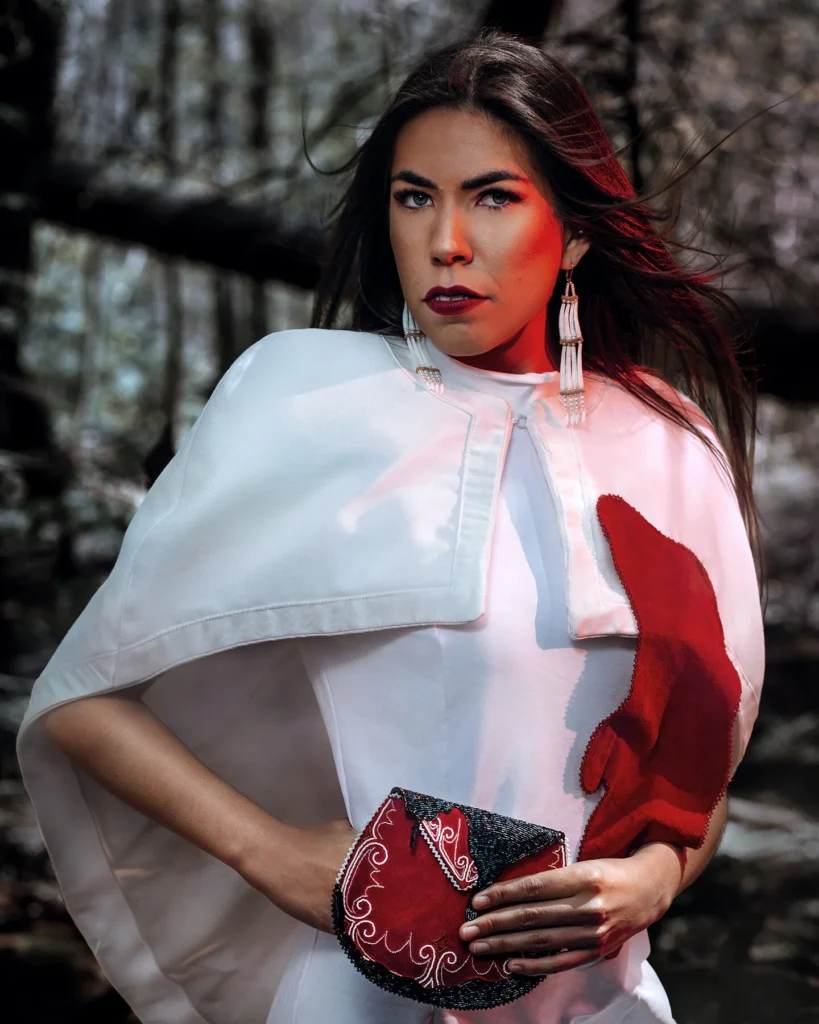
Oakley Rain Wysote Gray, Bleeding Heart Cape – M’st No’gmaq (All My Relations), 2021

7IDANsuu James Hart, Reconciliation Pole: Honouring a Time Before, During and After Canada’s Indian Residential Schools, 2015–17

Emma Hassencahl-Perley, White Flag, 2015

Brent Henry, English Only!, 2021

Shawn Hunt, Flipping the Bird, 2014

Lisa Jackson, Savage, 2009
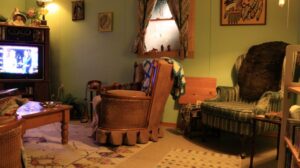
Ursula Johnson, ITHA: The Livingroom, 2021

Siassie Kenneally, All the Things That I Have Seen, 2016

Jake Kimble, It’s All So Incredibly Loud, 2025

Duane Linklater, i want to forget the english language, ulterior, 2020/23

Jim Logan, National Pastimes, 1991

Luke Marston, Bentwood Box, 2009

Kevin McKenzie, Being Indigenous, 2024

Meryl McMaster, Truth to Power, 2017

Kent Monkman, The Scream, 2017

Caroline Monnet, The Black Case, 2014

Tim Moore, Erasure Is Futile, 2021

Peter Morin, This is what happens when you perform the memory of the land (parts 1 and 2), 2013
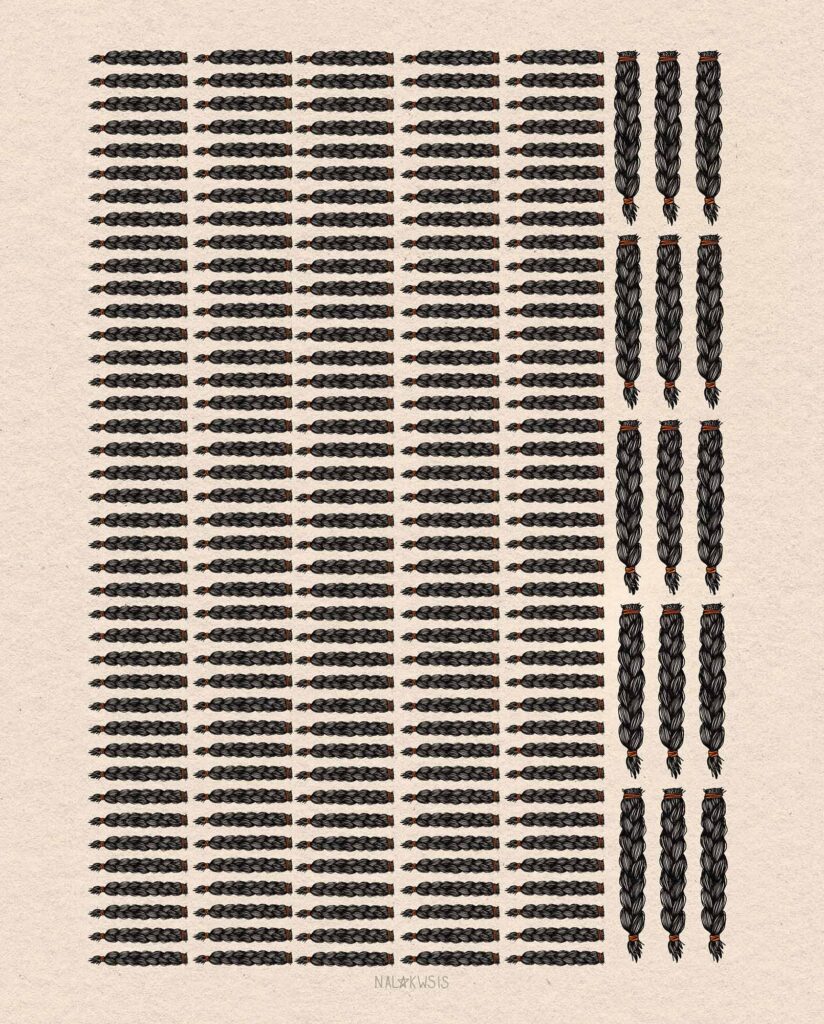
Saige “Nalakwsis” Mukash, 215 Braids, 2021

Nadia Myre, Indian Act, 2000–2002

Carey Newman, Witness Blanket, 2013–14

Davidee Ningeok, Sr., Residential School Nightmare, 2015

Shelley Niro, The Shirt, 2003

Luke Parnell, Neon Reconciliation Explosion, 2020

Dionne Paul, Her First Day of School, 2013
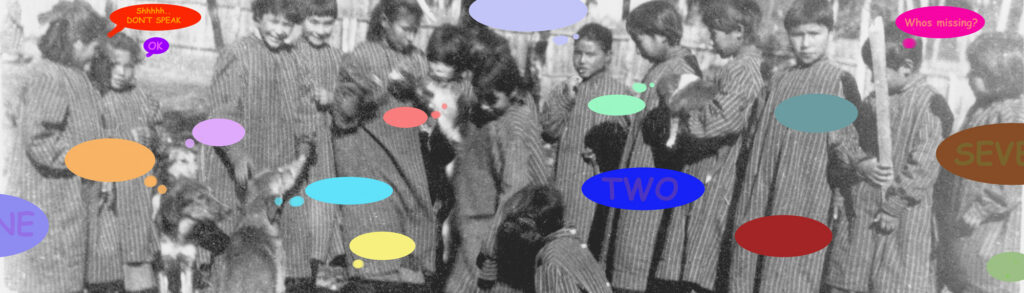
Edward Poitras, Don’t Speak, 2015

Barry Pottle, Yale Dormitory (Residential School), North West River, Labrador, 2015

Teharihulen Michel Savard, Reciprocity (Réciprocité), 2009

Jason Sikoak, Sacrilege, 2015

Greg Staats, Do’-gah – I don’t know [shrugging shoulders], 2020, archival pigment print on canvas on pine stretcher, oil, earth, Indian tobacco ash (edition 2 of 3), 142 x 175.3 x 2.5 cm, Agnes Etherington Art Centre, Kingston.

Alan Syliboy, Grandmother 1, 1997

Jeff Thomas, Broken Treaties, 1613–, 2020
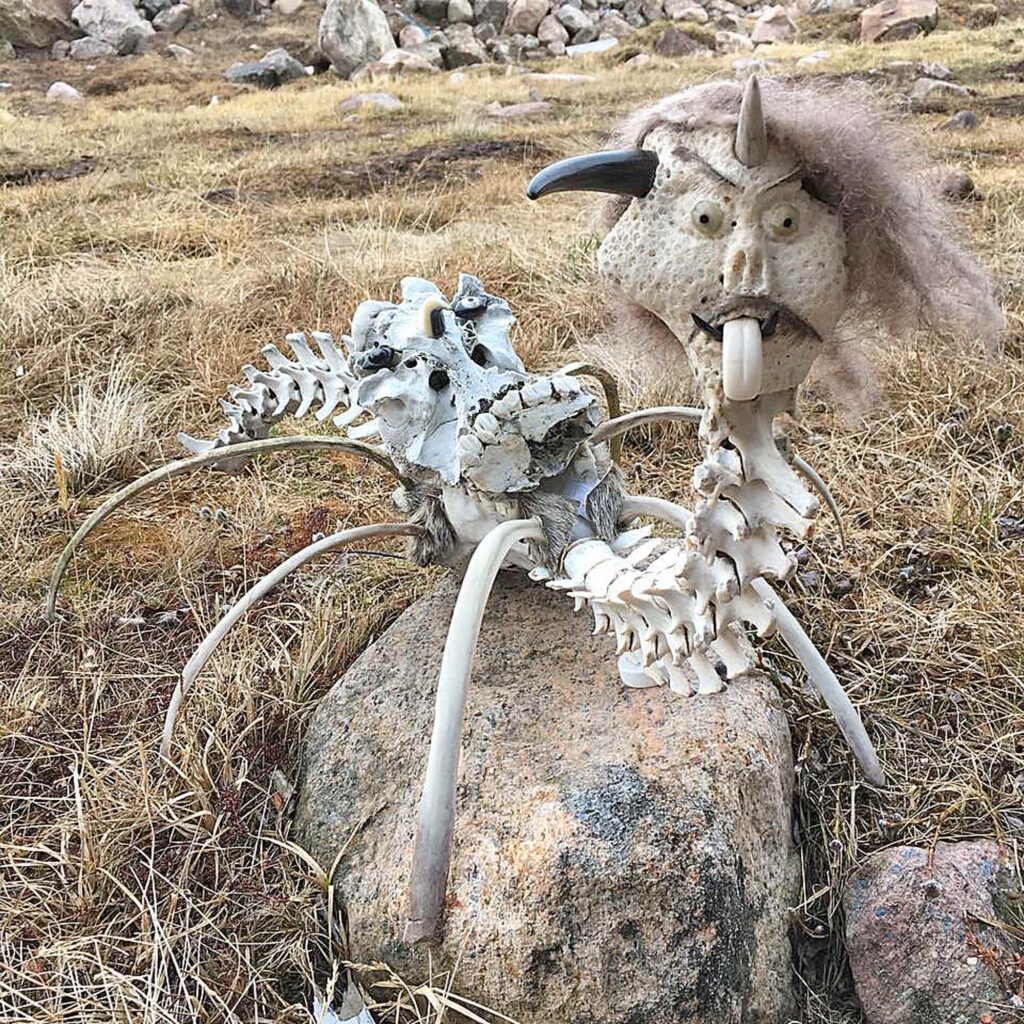
Jesse Tungilik, The Spirit of Intergenerational Trauma, 2019

Tania Willard, Be a Good Girl, 2017