Jeff Thomas, Broken Treaties, 1613–, 2020

Jeff Thomas, Broken Treaties, 1613–, 2020, pigment print on archival paper mounted to aluminum composite panel, 91.4 x 219.7 cm.
In Broken Treaties, 1613–, Iroquois photographer Jeff Thomas (b.1956) presents a panorama composed of five photographs that respond to the ongoing dispute over the Haldimand Tract land claim. In 1784, the British Crown, after negotiations involving Mohawk Chief Joseph Brant, granted approximately 384,450 hectares along the Grand River in Ontario to the Six Nations in recognition of their alliance during the American Revolutionary War and the loss of their homelands in New York. Over the years, the Six Nations alleged that portions of this land were improperly sold or transferred by colonial and Canadian authorities. The dispute remains unresolved and has led to decades of protest, including the 2006 occupation of a housing development site in Caledonia—events that
form the historical and political ground of Thomas’s work.
The images in this artwork depict sites connected to the Haldimand Tract dispute, including contemporary scenes from Caledonia, alongside textual and cartographic references that mark the land as contested territory. Together, they combine Thomas’s long-standing strategies of photography, mapping, and archival reference into an indictment of how treaty promises have been reduced to lines on a map, constrained, and ignored. The work’s wide, mural-like format reads as a corridor of contested space: texts, coordinates, and site imagery are sealed into a single visual field that behaves like a map one can walk, insisting that history is not abstract but locatable—on a street, a river corridor, a fence. By naming the Argyle Street South occupation in Caledonia and plotting GPS points (as identified in the work’s accompanying captions and catalogue records), Thomas draws a bright line between the eighteenth-century Haldimand Tract and twenty-first-century land defence, refusing the amnesia that typically severs protest from its legal and historical grounds.

Jeff Thomas, 1710–1998 / Tee Yee Neen Ho Ga Row—Mohawk (Christianized Hendrick), Emperor of the Six Nations, 1710/1998 / Self-Portrait—Onondaga, Champlain Monument, Ottawa, Ontario, 1998, 1998, chromogenic prints, 87.7 x 65.8 cm, image (left) 49.3 x 33.8 cm, image (right) 49.3 x 33.8 cm, National Gallery of Canada, Ottawa.
Thomas has called himself an urban-Iroquois artist. Broken Treaties proceeds from
that stance by situating Iroquoian sovereignty within the infrastructures of settler modernity: roads, signage, property lines, press photographs. The composite aesthetic of the photographs counters the more common single-document view by layering image and text so that no one element claims authority. In place of the demanding evidentiary photograph, Thomas offers a multilayered surface that invites viewers to make connections among archival fragments, place names, and protest vernacular. This navigation is ethical as much as optical: to read the piece is to accept that land rights are intelligible and verifiable, not merely symbolic.
Formally, the choice of pigment print on aluminum gives the assembled picture a
crisp, industrial presence that echoes the built environment it critiques. Its extended proportions imply a river-course and roadway alike, aligning with the Haldiman Tract’s description—“six miles on each side of the
Grand River”—and turning a legal phrase into
a physical register. When a sign shouts “OH CANADA” inside this treaty-anchored frame, the national motto is recoded as a question: What, and whose, Canada is being invoked here? The juxtaposition reveals a double exposure—patriotic spectacle overlaid on a cartography of dispossession.
Within discussions of contemporary Indigenous art, Broken Treaties exemplifies visual sovereignty by means of both positioning and citation. Rather than presenting an ethnographic “Indian” subject, Thomas presents a treaty: a relationship and a legal instrument. The subject is the agreement itself—and its breach. This shift redirects the act
of viewing from looking at people to looking with them at evidence, infrastructures, and obligations. It also resonates with truth and reconciliation frameworks that call for public education about treaties and their continuing force. Thomas’s image functions as a learning tool and a public reminder, compressing archive, map, and protest memory into one
accessible plane.
By tethering the geographic promise of 1784 to the Caledonia occupation in 2006 and to the present, Thomas reasserts continuity against the legal and visual tactics that isolate events. Broken Treaties is less a lament than a tool, an image that returns viewers to the situations where promises were made and where they can still be honoured.
Collection of A New Generation of Witness

Sonny Assu, Leila’s Desk, 2013

Michael Barber, A Silent Sky, 2022

Christi Belcourt, Giniigaaniimenaaning (Looking Ahead), 2012

Rebecca Belmore, Apparition, 2013

Rain Cabana-Boucher, Laying Flowers, 2021–24

Quill Christie-Peters, Portrait of Ste. Margaret’s Residential School and All It Could Not Contain, 2018

Dana Claxton, Headdress – Shadae and her Girlz, 2023

Beau Dick, The Ghost Confined to the Chair, 2012
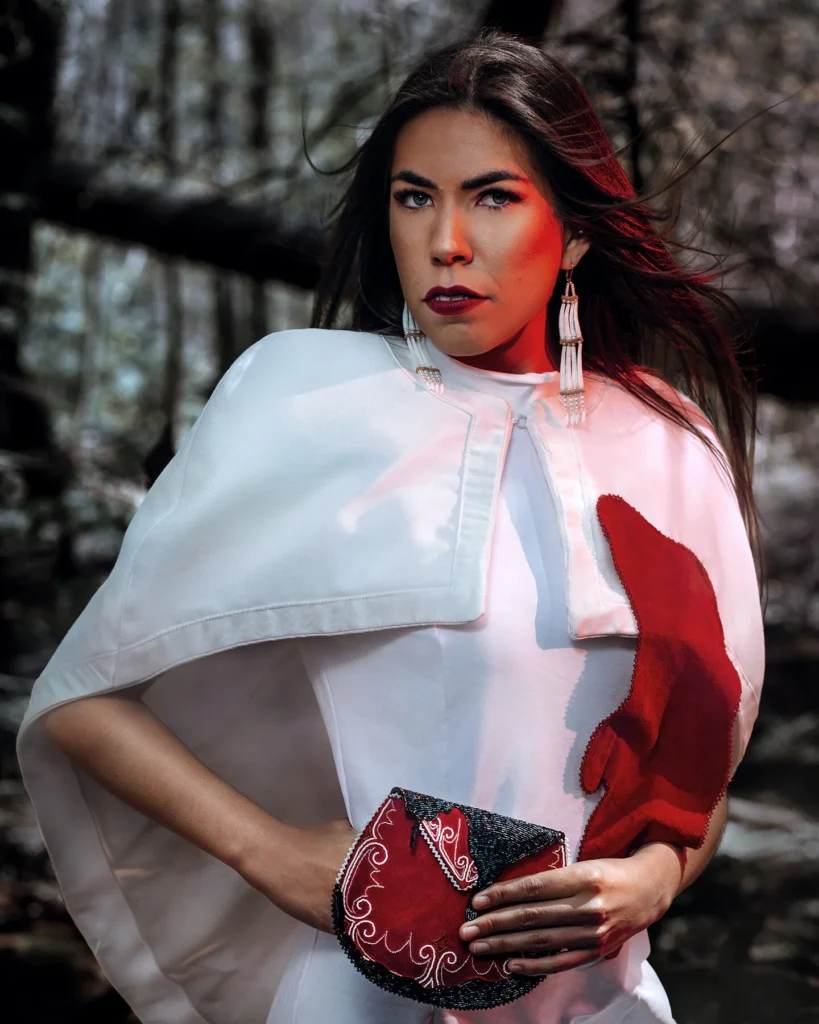
Oakley Rain Wysote Gray, Bleeding Heart Cape – M’st No’gmaq (All My Relations), 2021

7IDANsuu James Hart, Reconciliation Pole: Honouring a Time Before, During and After Canada’s Indian Residential Schools, 2015–17

Emma Hassencahl-Perley, White Flag, 2015

Brent Henry, English Only!, 2021

Shawn Hunt, Flipping the Bird, 2014

Lisa Jackson, Savage, 2009
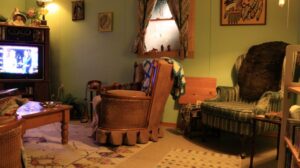
Ursula Johnson, ITHA: The Livingroom, 2021

Siassie Kenneally, All the Things That I Have Seen, 2016

Jake Kimble, It’s All So Incredibly Loud, 2025

Duane Linklater, i want to forget the english language, ulterior, 2020/23

Jim Logan, National Pastimes, 1991

Luke Marston, Bentwood Box, 2009

Kevin McKenzie, Being Indigenous, 2024

Meryl McMaster, Truth to Power, 2017

Kent Monkman, The Scream, 2017

Caroline Monnet, The Black Case, 2014

Tim Moore, Erasure Is Futile, 2021

Peter Morin, This is what happens when you perform the memory of the land (parts 1 and 2), 2013
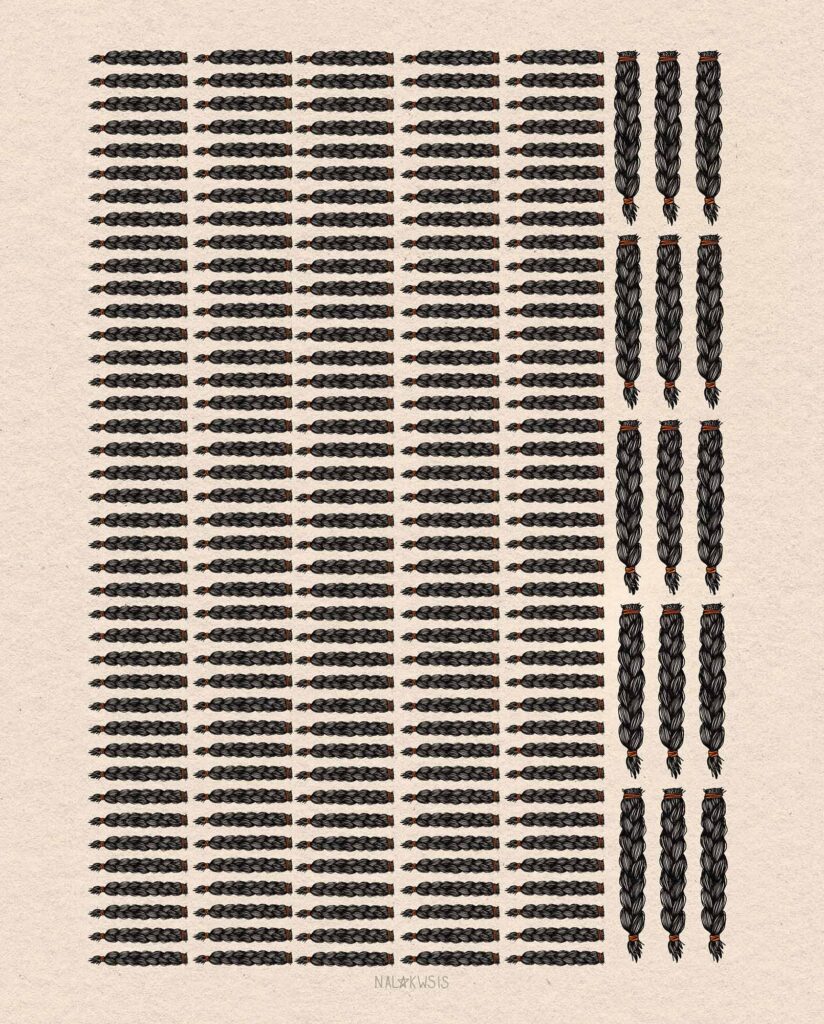
Saige “Nalakwsis” Mukash, 215 Braids, 2021

Nadia Myre, Indian Act, 2000–2002

Carey Newman, Witness Blanket, 2013–14

Davidee Ningeok, Sr., Residential School Nightmare, 2015

Shelley Niro, The Shirt, 2003

Luke Parnell, Neon Reconciliation Explosion, 2020

Dionne Paul, Her First Day of School, 2013
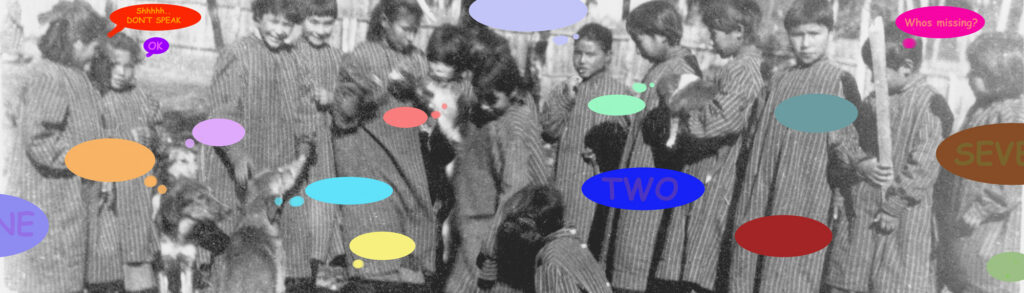
Edward Poitras, Don’t Speak, 2015

Barry Pottle, Yale Dormitory (Residential School), North West River, Labrador, 2015

Teharihulen Michel Savard, Reciprocity (Réciprocité), 2009

Jason Sikoak, Sacrilege, 2015

Greg Staats, Do’-gah – I don’t know [shrugging shoulders], 2020, archival pigment print on canvas on pine stretcher, oil, earth, Indian tobacco ash (edition 2 of 3), 142 x 175.3 x 2.5 cm, Agnes Etherington Art Centre, Kingston.

Alan Syliboy, Grandmother 1, 1997
Jeff Thomas, Broken Treaties, 1613–, 2020
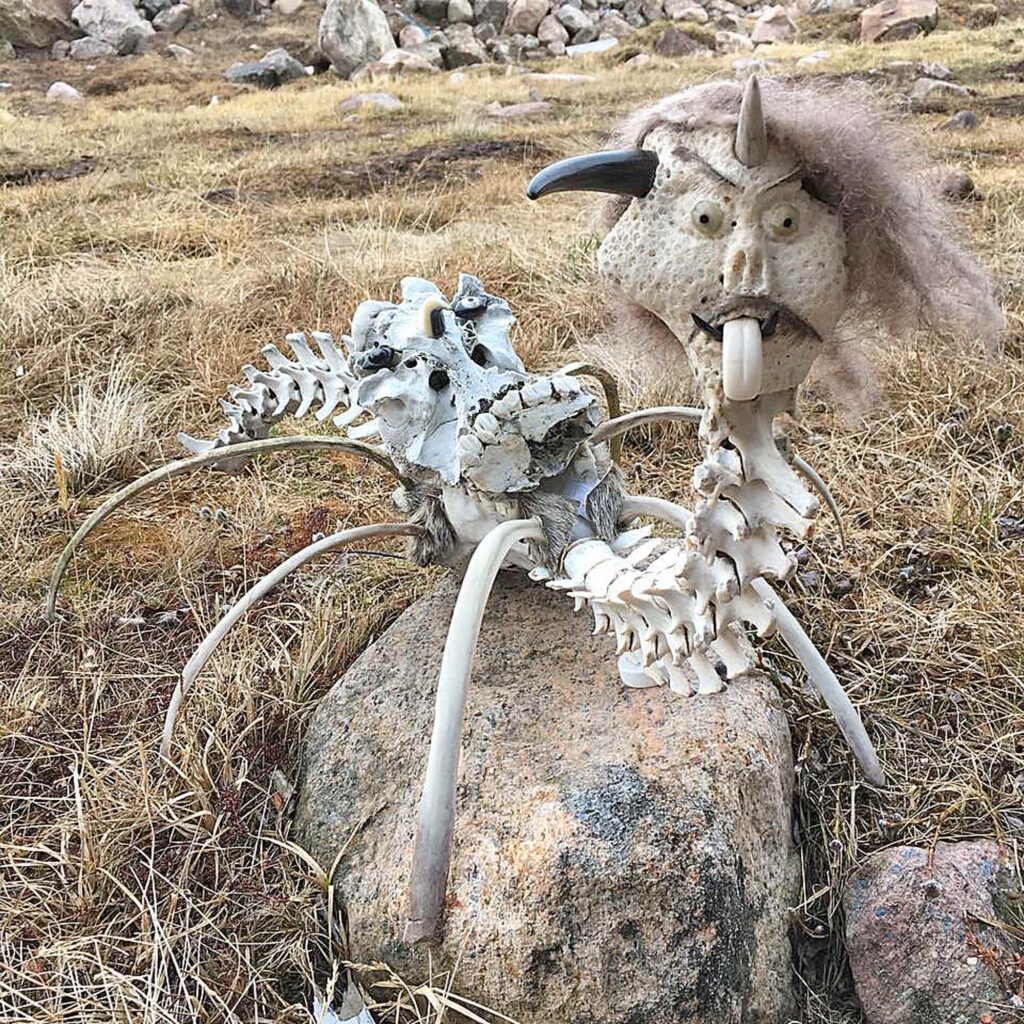
Jesse Tungilik, The Spirit of Intergenerational Trauma, 2019

Tania Willard, Be a Good Girl, 2017