Caroline Monnet, The Black Case, 2014

Caroline Monnet and Daniel Watchorn, The Black Case (still), 2014, video, black and white, sound, Cree with English subtitles, 13 min.
The Black Case compresses a century of policy into a single night. Co-directed by Anishinaabe and French multidisciplinary artist Caroline Monnet (b.1985) of Kitigan Zibi Anishinabeg First Nation, Quebec, and filmmaker and musician Daniel Watchorn (b.1978), the film situates an eight-year-old girl and her infant cousin in the clinical nowhere of a residential school infirmary, where quarantine protocols become a structured system of control. The choices to work in Cree and to frame the narrative through the child’s point of view push against the archival silence that typically surrounds institutional interiors, recoding a medicalized space as a site of spiritual and cultural harm.

Caroline Monnet and Daniel Watchorn, The Black Case (still), 2014, video, black and white, sound, Cree with English subtitles, 13 min.

Caroline Monnet and Daniel Watchorn, The Black Case (still), 2014, video, black and white, sound, Cree with English subtitles, 13 min.
The short film’s austere visual language—often described as psychological thriller or horror—does more than borrow a genre’s affect; it weaponizes it to reveal structure. What is terrifying here is not the supernatural but the ordinary: the routine gestures of caretakers, the bureaucratic logic of isolation, the mise en scène of beds, ledgers, and instruments. Genre becomes an intellectual tool for reading the
lived horror of Canadian policy.
Monnet has repeatedly explored the boundaries of Indigenous experience and modern institutions. Here, the collaboration with Watchorn yields a tight, formal control—measured camera movements, high-contrast compositions—that encloses the protagonists in geometric frames. These compositions echo the architectural rationality of the school itself, visually aligning administrative order with psychic siege. The plot’s minimalism consisting of a night, a room, and a watchful pair of adults allows sound to carry ethical weight: the infant’s breath, footsteps in corridors, the creak of doors. These small acoustics resist the grandiose narratives of the “civilizing mission,” insisting that history is felt at the scale of individual bodies.
The film’s quarantine premise is historically pointed. Residential schools frequently used medical rationales such as tuberculosis fears and sanitation regimes to justify segregation and to naturalize authority over Indigenous children. By threading the story through a 1930s atmosphere, The Black Case references the period when such regimes were prevalent but avoids the meticulous presentation of documentaries. Its temporal haze keeps the narrative legible as system rather than anecdote. That legibility is amplified by the film’s rejection of spectacle. Trauma is indicated—not displayed—trusting viewers to understand that terror also resides
in anticipation, in the long take that does not
cut away.
On a technical level, the work aligns with a broader Indigenous cinema movement that reclaims voice while experimenting with form. Using horror idioms reorients audience expectations. Rather than consuming “issues,” viewers experience a physiological response—tightened chest, held breath—that mirrors the constriction of the children’s world. Monnet
and Watchorn have noted that genre here is grounded in real injustice. As such, the film functions as counter-archive, disclosing truths that administrative records obscure.
In terms of projects on truth telling and residential and day school legacies, The Black Case is valuable because it models how aesthetic choice can be an ethical method. The closed room is both literal and metaphorical: it stands for the containment of language, kinship, and ceremony and for the persistence of witnessing. In its final cadence, the film leaves viewers with unresolved space rather than closure, an insistence that histories of forced confinement resist narrative neatness. The effect is clarity rather than despair, an accommodation to how systems are built and how, through attention and embodied memory, they can be named and refused.
Gallery of A New Generation of Witness

Sonny Assu, Leila’s Desk, 2013

Michael Barber, A Silent Sky, 2022

Christi Belcourt, Giniigaaniimenaaning (Looking Ahead), 2012

Rebecca Belmore, Apparition, 2013

Rain Cabana-Boucher, Laying Flowers, 2021–24

Quill Christie-Peters, Portrait of Ste. Margaret’s Residential School and All It Could Not Contain, 2018

Dana Claxton, Headdress – Shadae and her Girlz, 2023

Beau Dick, The Ghost Confined to the Chair, 2012
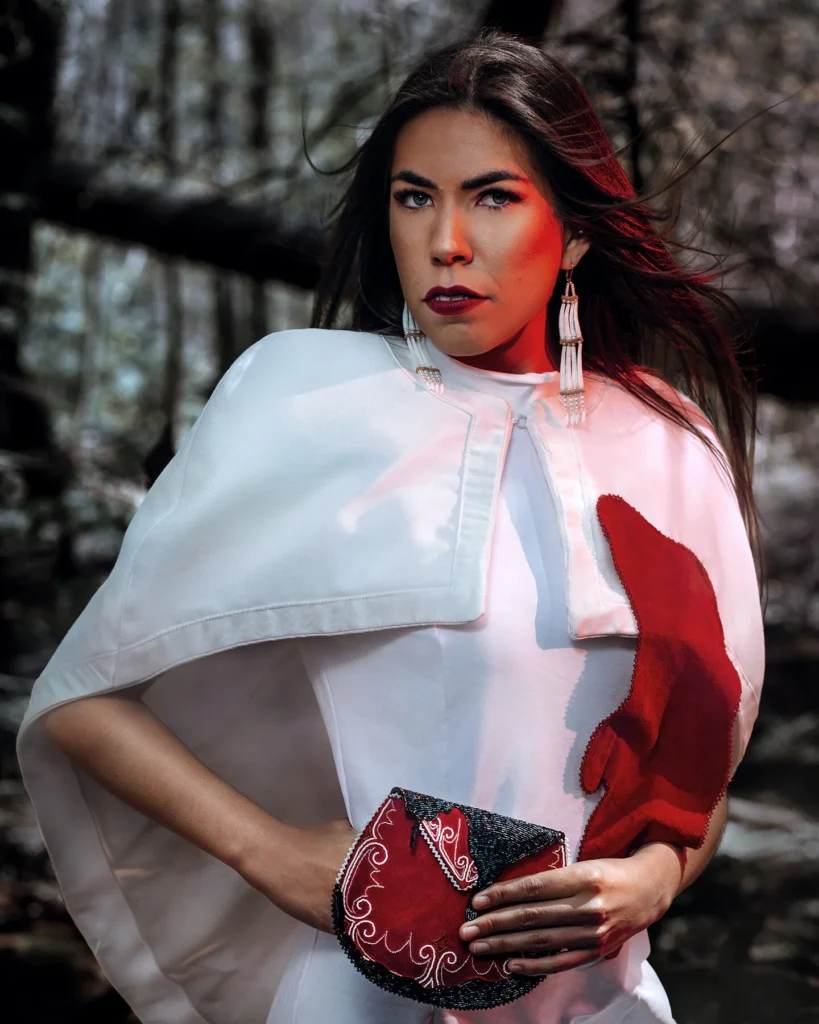
Oakley Rain Wysote Gray, Bleeding Heart Cape – M’st No’gmaq (All My Relations), 2021

7IDANsuu James Hart, Reconciliation Pole: Honouring a Time Before, During and After Canada’s Indian Residential Schools, 2015–17

Emma Hassencahl-Perley, White Flag, 2015

Brent Henry, English Only!, 2021

Shawn Hunt, Flipping the Bird, 2014

Lisa Jackson, Savage, 2009
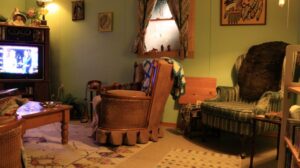
Ursula Johnson, ITHA: The Livingroom, 2021

Siassie Kenneally, All the Things That I Have Seen, 2016

Jake Kimble, It’s All So Incredibly Loud, 2025

Duane Linklater, i want to forget the english language, ulterior, 2020/23

Jim Logan, National Pastimes, 1991

Luke Marston, Bentwood Box, 2009

Kevin McKenzie, Being Indigenous, 2024

Meryl McMaster, Truth to Power, 2017

Kent Monkman, The Scream, 2017
Caroline Monnet, The Black Case, 2014

Tim Moore, Erasure Is Futile, 2021

Peter Morin, This is what happens when you perform the memory of the land (parts 1 and 2), 2013
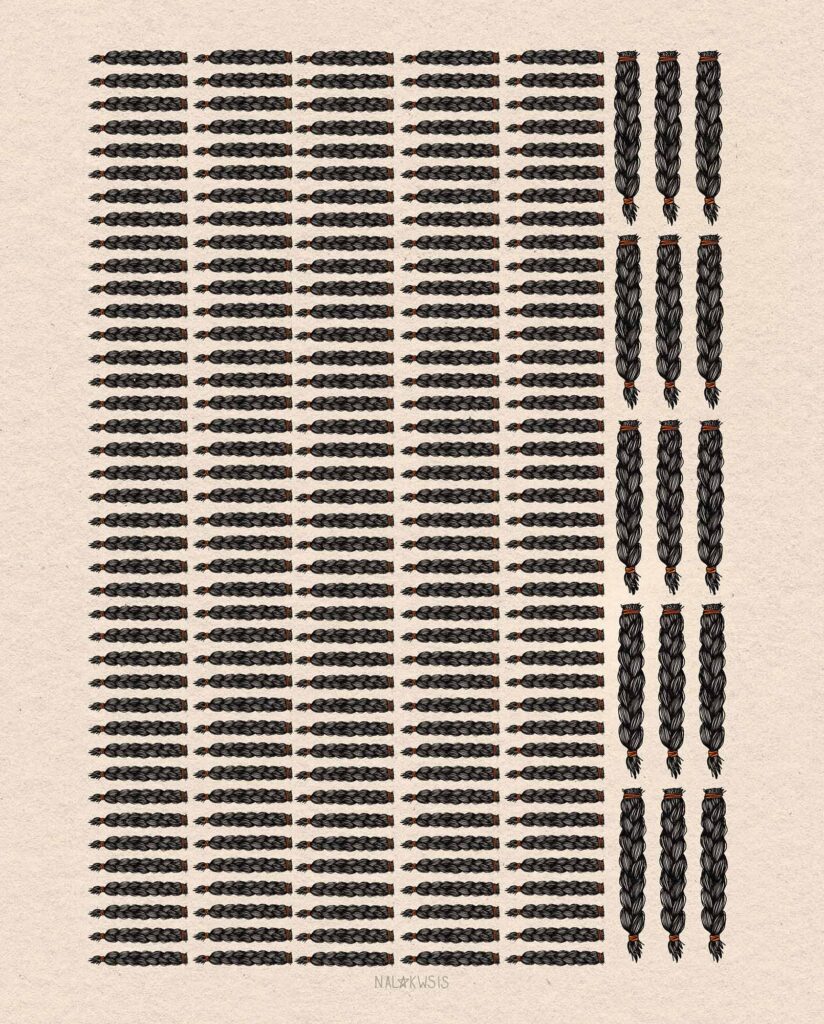
Saige “Nalakwsis” Mukash, 215 Braids, 2021

Nadia Myre, Indian Act, 2000–2002

Carey Newman, Witness Blanket, 2013–14

Davidee Ningeok, Sr., Residential School Nightmare, 2015

Shelley Niro, The Shirt, 2003

Luke Parnell, Neon Reconciliation Explosion, 2020

Dionne Paul, Her First Day of School, 2013
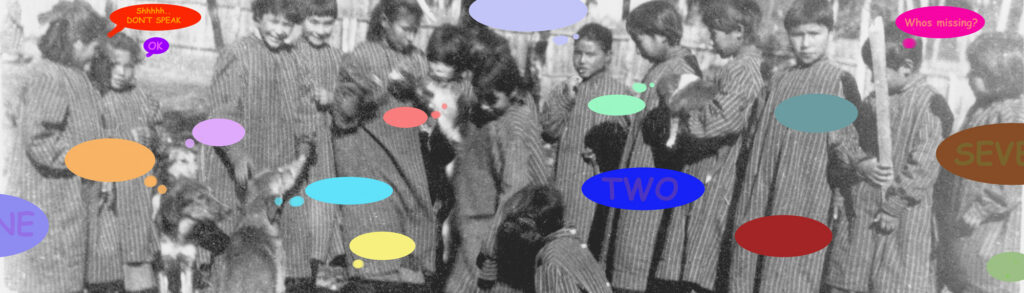
Edward Poitras, Don’t Speak, 2015

Barry Pottle, Yale Dormitory (Residential School), North West River, Labrador, 2015

Teharihulen Michel Savard, Reciprocity (Réciprocité), 2009

Jason Sikoak, Sacrilege, 2015

Greg Staats, Do’-gah – I don’t know [shrugging shoulders], 2020, archival pigment print on canvas on pine stretcher, oil, earth, Indian tobacco ash (edition 2 of 3), 142 x 175.3 x 2.5 cm, Agnes Etherington Art Centre, Kingston.

Alan Syliboy, Grandmother 1, 1997

Jeff Thomas, Broken Treaties, 1613–, 2020
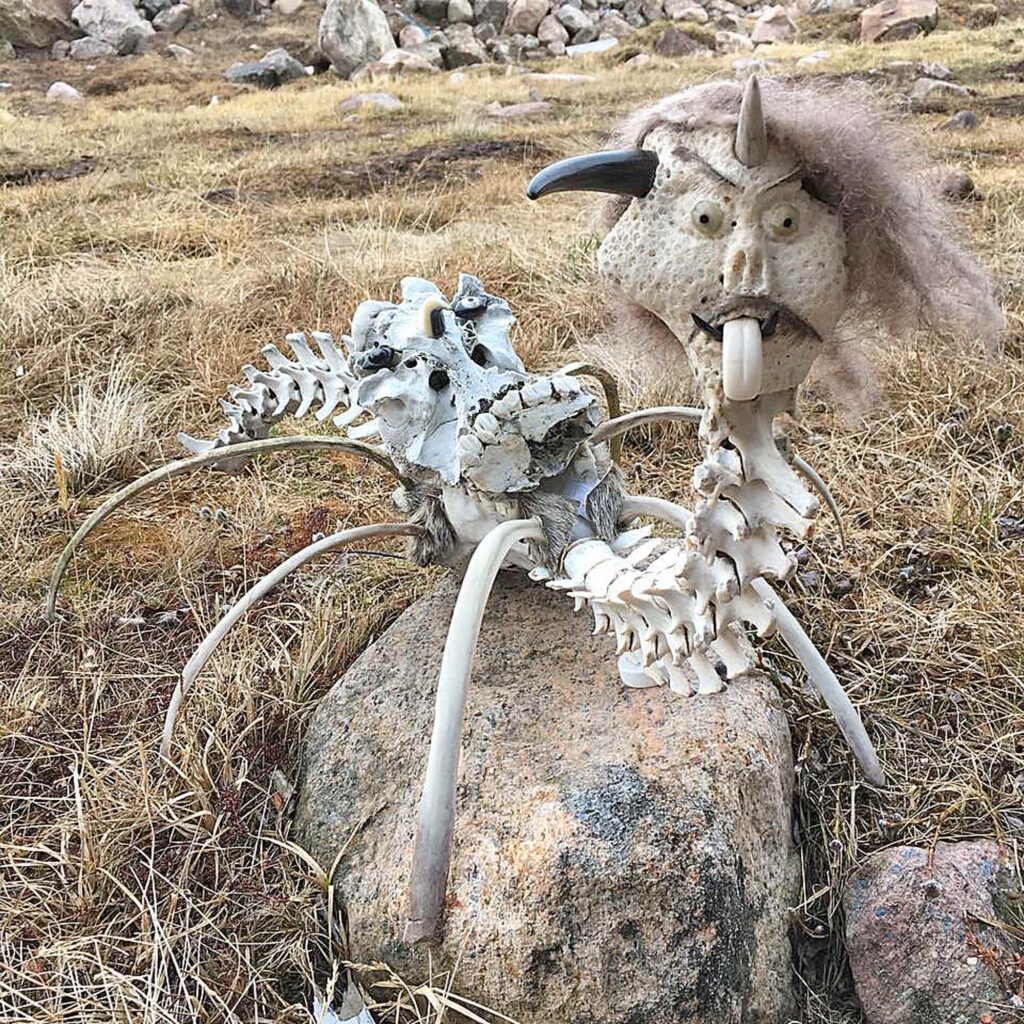
Jesse Tungilik, The Spirit of Intergenerational Trauma, 2019

Tania Willard, Be a Good Girl, 2017