Jesse Tungilik, The Spirit of Intergenerational Trauma, 2019
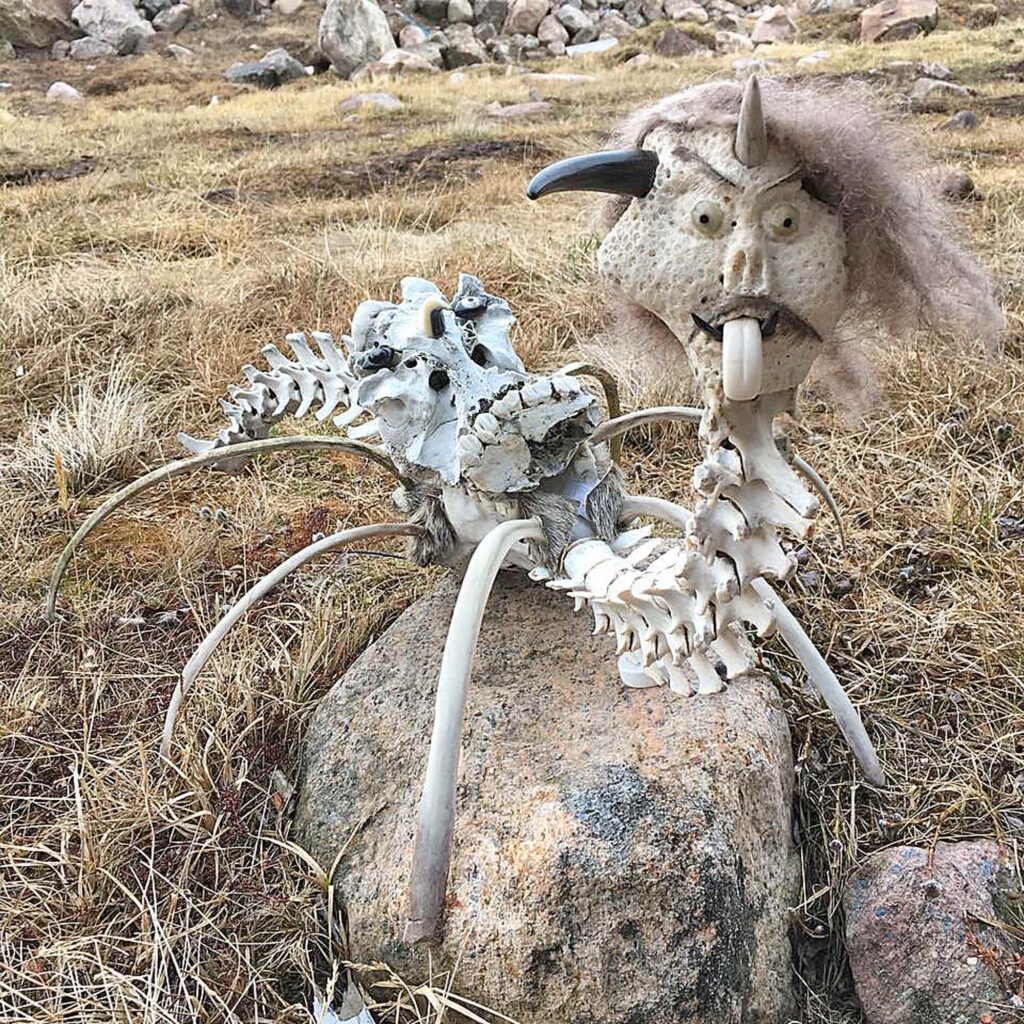
Jesse Tungilik, The Spirit of Intergenerational Trauma, 2019, Nunavut Tunngavik Inc. Collection.
The sculpture The Spirit of Intergenerational Trauma by Iqaluit-based Inuit artist Jesse Tungilik (b.1984) is a multimedia assemblage fashioned from animal bones, hair, and other organic materials native to Nunavut. At first glance, the creature is both grotesque and spectral, a hybrid being that embodies the destructive legacy of residential schools and the enduring shadow of colonial violence on Inuit communities.
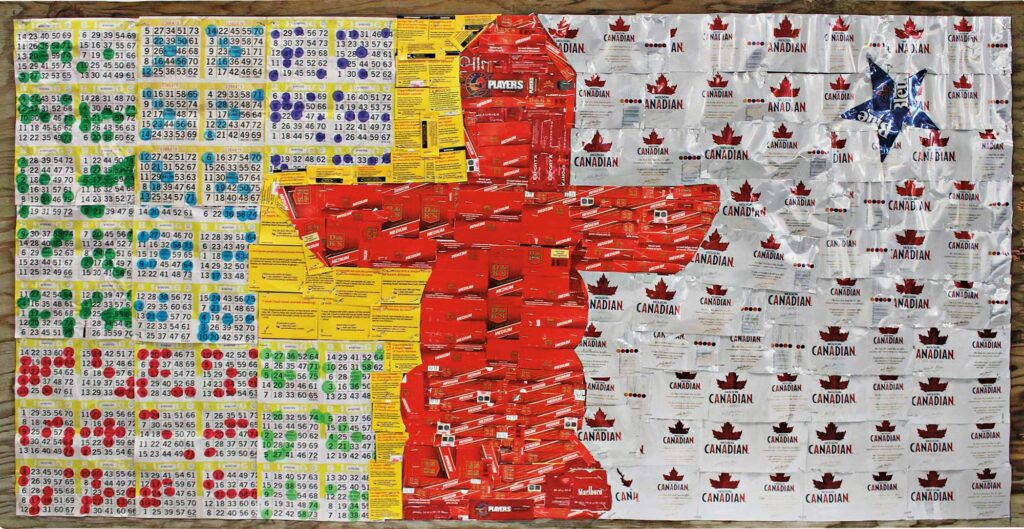
Jesse Tungilik, Nunavice Flag, 2013, mixed media (beer cans, cigarette cartons, and used bingo cards) on plywood, Nunavut Tunngavik Inc. Collection.
The piece is among Tungilik’s most searing objects and is explicitly tied to his own family history. His late father, Marius Tungilik, was among the first Inuit to speak publicly about sexual abuse at the hands of Catholic priests and brothers in the North. The trauma he carried became interwoven into Tungilik’s own life, shaping his path as both son and artist. By translating this history into sculpture, Tungilik transforms private pain into a shared act of testimony. The creature that emerges—part animal,
part spirit, part machine—becomes a living metaphor for intergenerational trauma: relentless, mutating, and carried
on the backs of Survivors’ children.
The work invokes both Inuit material traditions and contemporary art practice. Bones, traditionally used in carving, tools, and spiritual objects, here form a body that is fractured and unsettling. The jagged spine, gaping mouth, and wild mane of hair evoke a monster—one tethered to the land by its materials. The assemblage does not idealize Inuit culture as untouched or static; rather, it exposes how colonialism has twisted familial, spiritual, and cultural relationships into grotesque forms. The fused figure riding the creature’s back intensifies this reading: trauma is never borne alone but clings to future generations.
The work is also inseparable from the broader political context. The Spirit of Intergenerational Trauma was acquired by Nunavut Tunngavik Inc. (NTI), the organization that represents Inuit in Nunavut, as part of its advocacy for justice and reconciliation. NTI has long sought the extradition of a Catholic priest from France, where he has lived since leaving Nunavut in 1993. By placing Tungilik’s sculpture into public circulation, whether in Iqaluit, Ottawa, or France, the work becomes both artwork and activist intervention. It insists that trauma must not be hidden, that Survivors’ voices must be heard, and that perpetrators must face justice.
In this sense, Tungilik’s sculpture refuses closure. The artist himself acknowledges that healing is ongoing and that trauma cannot simply be resolved. The grotesque spirit remains with him, with his family, and with Inuit communities. Yet, in giving it form—bone, hair, horn, tooth—Tungilik creates a way to see and confront what is otherwise invisible. The sculpture is less an exorcism than a companion, a reminder of what has been endured and what still demands redress.
The Spirit of Intergenerational Trauma communicates both testimony and resilience. It confronts the silences of church and state while making visible the endurance of Inuit families who continue to demand accountability. In its evocative presence, the sculpture asserts that reconciliation cannot proceed without justice and that healing begins by naming the spirit that has too long haunted Inuit life.
Collection of A New Generation of Witness

Sonny Assu, Leila’s Desk, 2013

Michael Barber, A Silent Sky, 2022

Christi Belcourt, Giniigaaniimenaaning (Looking Ahead), 2012

Rebecca Belmore, Apparition, 2013

Rain Cabana-Boucher, Laying Flowers, 2021–24

Quill Christie-Peters, Portrait of Ste. Margaret’s Residential School and All It Could Not Contain, 2018

Dana Claxton, Headdress – Shadae and her Girlz, 2023

Beau Dick, The Ghost Confined to the Chair, 2012
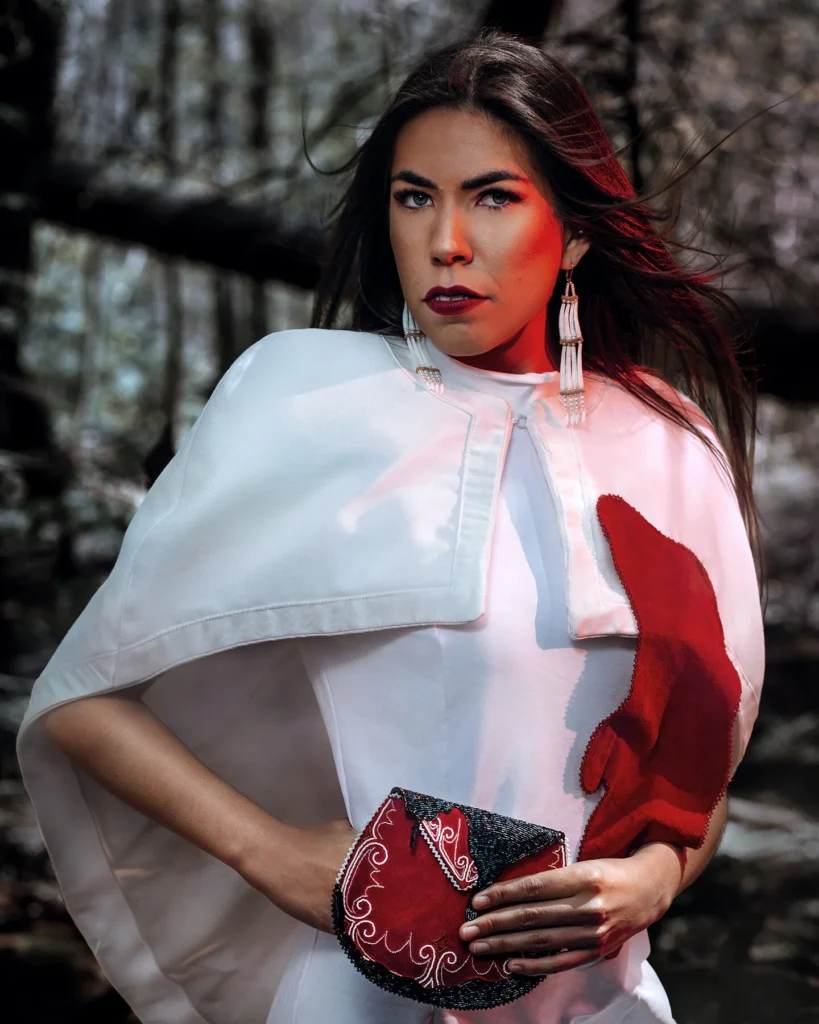
Oakley Rain Wysote Gray, Bleeding Heart Cape – M’st No’gmaq (All My Relations), 2021

7IDANsuu James Hart, Reconciliation Pole: Honouring a Time Before, During and After Canada’s Indian Residential Schools, 2015–17

Emma Hassencahl-Perley, White Flag, 2015

Brent Henry, English Only!, 2021

Shawn Hunt, Flipping the Bird, 2014

Lisa Jackson, Savage, 2009
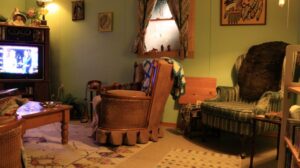
Ursula Johnson, ITHA: The Livingroom, 2021

Siassie Kenneally, All the Things That I Have Seen, 2016

Jake Kimble, It’s All So Incredibly Loud, 2025

Duane Linklater, i want to forget the english language, ulterior, 2020/23

Jim Logan, National Pastimes, 1991

Luke Marston, Bentwood Box, 2009

Kevin McKenzie, Being Indigenous, 2024

Meryl McMaster, Truth to Power, 2017

Kent Monkman, The Scream, 2017

Caroline Monnet, The Black Case, 2014

Tim Moore, Erasure Is Futile, 2021

Peter Morin, This is what happens when you perform the memory of the land (parts 1 and 2), 2013
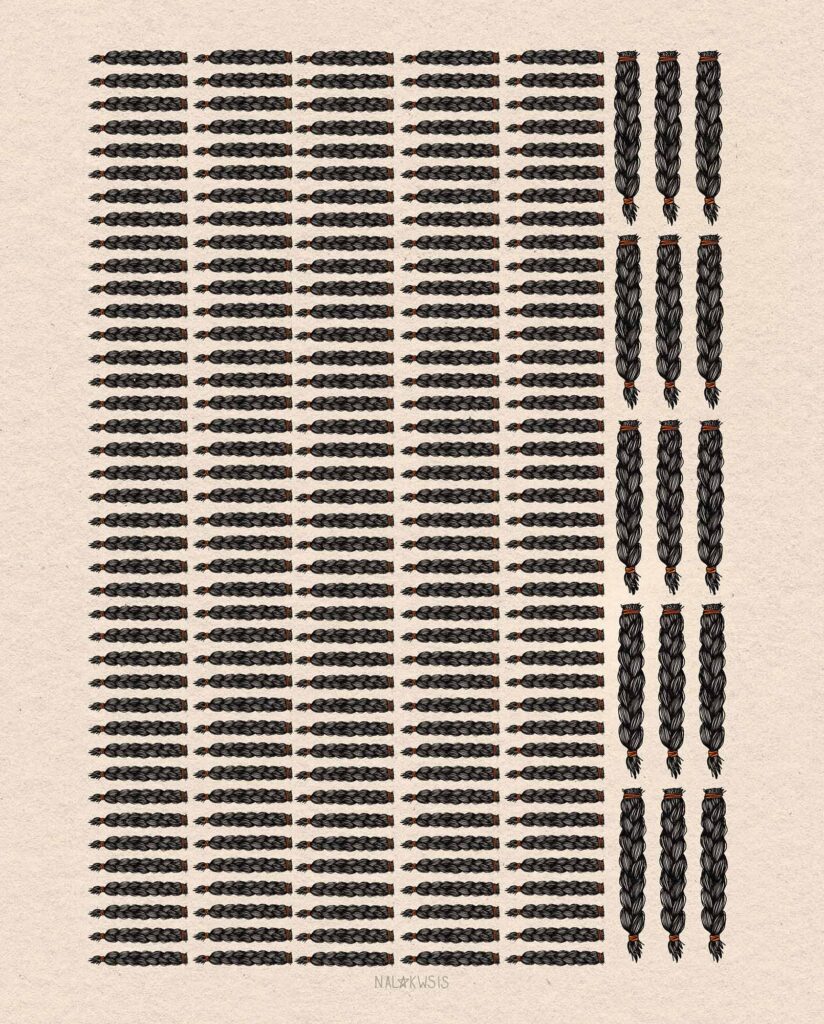
Saige “Nalakwsis” Mukash, 215 Braids, 2021

Nadia Myre, Indian Act, 2000–2002

Carey Newman, Witness Blanket, 2013–14

Davidee Ningeok, Sr., Residential School Nightmare, 2015

Shelley Niro, The Shirt, 2003

Luke Parnell, Neon Reconciliation Explosion, 2020

Dionne Paul, Her First Day of School, 2013
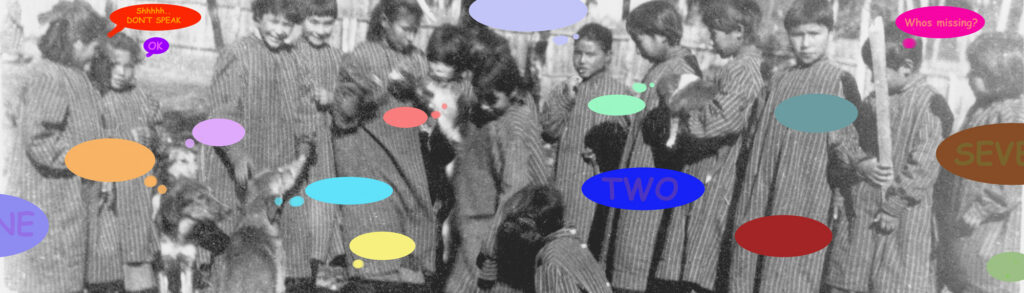
Edward Poitras, Don’t Speak, 2015

Barry Pottle, Yale Dormitory (Residential School), North West River, Labrador, 2015

Teharihulen Michel Savard, Reciprocity (Réciprocité), 2009

Jason Sikoak, Sacrilege, 2015

Greg Staats, Do’-gah – I don’t know [shrugging shoulders], 2020, archival pigment print on canvas on pine stretcher, oil, earth, Indian tobacco ash (edition 2 of 3), 142 x 175.3 x 2.5 cm, Agnes Etherington Art Centre, Kingston.

Alan Syliboy, Grandmother 1, 1997

Jeff Thomas, Broken Treaties, 1613–, 2020
Jesse Tungilik, The Spirit of Intergenerational Trauma, 2019

Tania Willard, Be a Good Girl, 2017