Emma Hassencahl-Perley, White Flag, 2015

Emma Hassencahl-Perley, White Flag, 2015, shredded pieces of the Indian Act attached to the Canadian flag, 76.2 x 152.4 cm.
In White Flag, Wolastoqey visual artist and curator Emma Hassencahl-Perley (b.1995) of Tobique First Nation, New Brunswick, transforms one of Canada’s most recognizable national symbols into a site of confrontation, mourning, and survival. By pasting shredded pages of the Indian Act over the red bars and the maple leaf of a Canadian flag, Hassencahl-Perley performs a gesture that is at once aesthetic and political, reconfiguring the relationship between state power and Indigenous endurance. The title White Flag invokes both surrender and defiance, asking viewers to reconsider whose surrender has historically been demanded and whose resilience continues to endure.
The Indian Act, first passed in 1876 and still in effect today, underpinned the residential school system and broader strategies of assimilation. Its torn fragments layered across the flag embody the violence of bureaucratic control, reducing Indigenous identities to legal categories and regulating every aspect of community life. By shredding and reusing these texts, Hassencahl-Perley stages an act of reclamation. The Indian Act is dismantled but not destroyed; instead, its remnants are bound into an object of national symbolism, exposing the inextricable links between Canadian nationhood and Indigenous dispossession.

Emma Hassencahl-Perley, Wici Kseltomomuwakon (With Love), 2019, mural, City of Fredericton.
The choice to obscure, but not fully erase, the red sections of the flag is central to the work’s meaning. In Wolastoqey visual systems, red holds sacred significance, associated with life, blood, and resilience. Across her practice, Hassencahl-Perley returns consistently to the instruments of colonial legislation as material for transformation rather than symbols of passive erasure. The visual tension between the whiteness of paper and the vitality of red mirrors the larger tension between assimilation and survival. The Indian Act may cover, but it cannot fully extinguish Indigenous ways of being.
The piece reframes the Canadian flag itself. Typically a symbol of unity and pride, here, it becomes a contested ground, revealing the legal and cultural violence embedded within the national fabric. Rather than waving freely, the flag is immobilized, heavy with history. Its whiteness recalls silence, denial, and the false neutrality of state narratives, while its altered surfaces invite viewers to confront the truths buried
beneath official symbols.
White Flag holds grief and hope in equal tension. It acknowledges the cultural destruction wrought by colonial legislation while affirming the endurance of Indigenous knowledge and design. Hassencahl-Perley’s gesture is not one of surrender but of reclamation, a demand that Canada recognize the truths inscribed within its own history and an insistence that Indigenous Nations will continue to shine through.
Collection of A New Generation of Witness

Sonny Assu, Leila’s Desk, 2013

Michael Barber, A Silent Sky, 2022

Christi Belcourt, Giniigaaniimenaaning (Looking Ahead), 2012

Rebecca Belmore, Apparition, 2013

Rain Cabana-Boucher, Laying Flowers, 2021–24

Quill Christie-Peters, Portrait of Ste. Margaret’s Residential School and All It Could Not Contain, 2018

Dana Claxton, Headdress – Shadae and her Girlz, 2023

Beau Dick, The Ghost Confined to the Chair, 2012
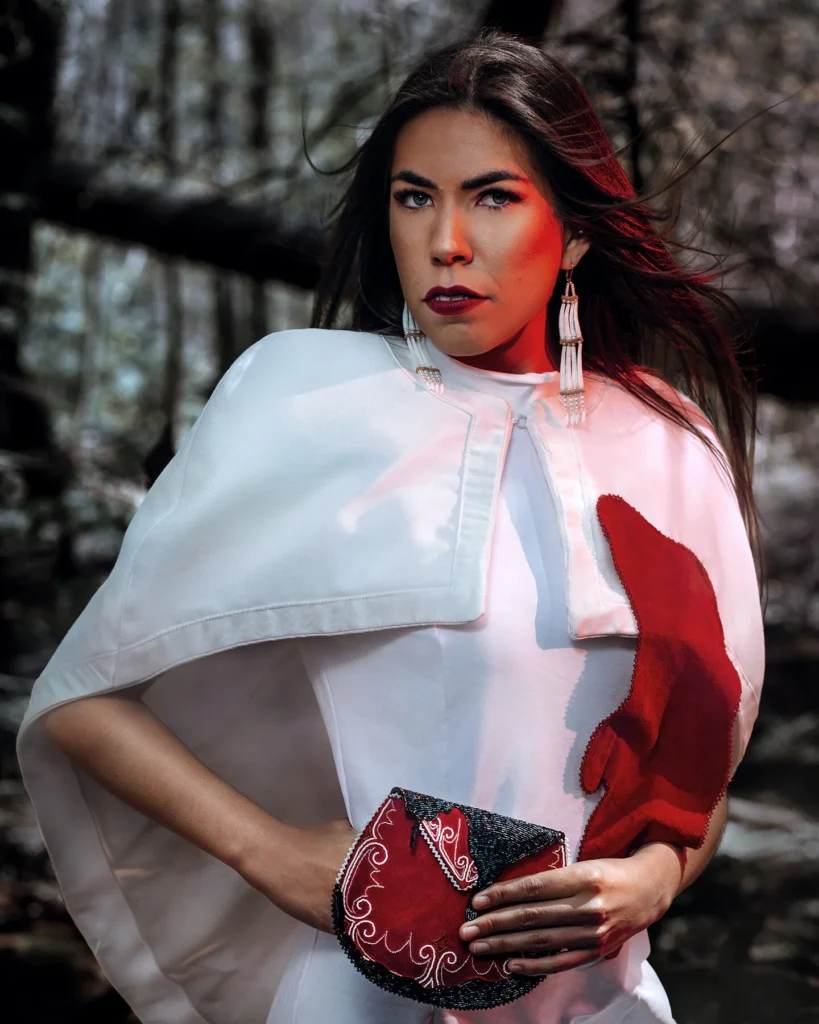
Oakley Rain Wysote Gray, Bleeding Heart Cape – M’st No’gmaq (All My Relations), 2021

7IDANsuu James Hart, Reconciliation Pole: Honouring a Time Before, During and After Canada’s Indian Residential Schools, 2015–17
Emma Hassencahl-Perley, White Flag, 2015

Brent Henry, English Only!, 2021

Shawn Hunt, Flipping the Bird, 2014

Lisa Jackson, Savage, 2009
Ursula Johnson, ITHA: The Livingroom, 2021

Siassie Kenneally, All the Things That I Have Seen, 2016

Jake Kimble, It’s All So Incredibly Loud, 2025

Duane Linklater, i want to forget the english language, ulterior, 2020/23

Jim Logan, National Pastimes, 1991

Luke Marston, Bentwood Box, 2009

Kevin McKenzie, Being Indigenous, 2024

Meryl McMaster, Truth to Power, 2017

Kent Monkman, The Scream, 2017

Caroline Monnet, The Black Case, 2014

Tim Moore, Erasure Is Futile, 2021

Peter Morin, This is what happens when you perform the memory of the land (parts 1 and 2), 2013
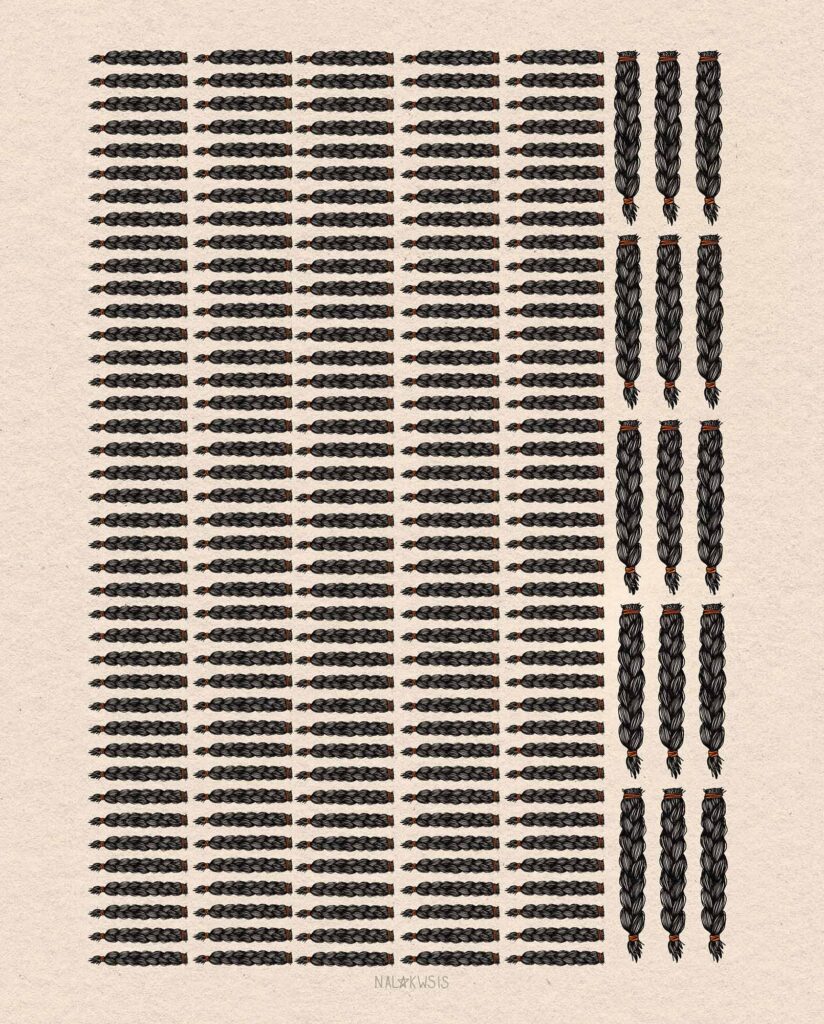
Saige “Nalakwsis” Mukash, 215 Braids, 2021

Nadia Myre, Indian Act, 2000–2002

Carey Newman, Witness Blanket, 2013–14

Davidee Ningeok, Sr., Residential School Nightmare, 2015

Shelley Niro, The Shirt, 2003

Luke Parnell, Neon Reconciliation Explosion, 2020

Dionne Paul, Her First Day of School, 2013
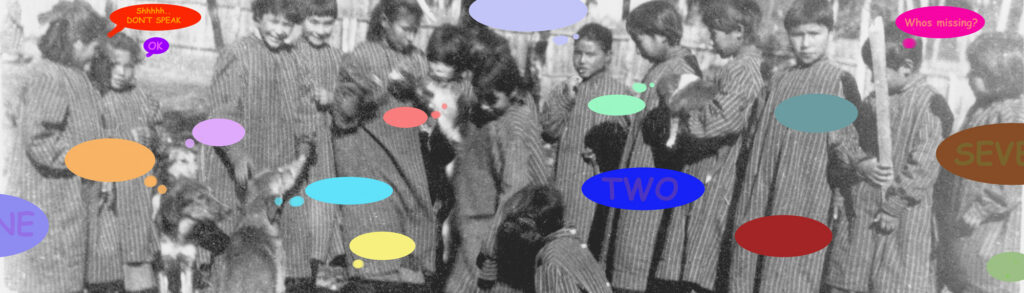
Edward Poitras, Don’t Speak, 2015

Barry Pottle, Yale Dormitory (Residential School), North West River, Labrador, 2015

Teharihulen Michel Savard, Reciprocity (Réciprocité), 2009

Jason Sikoak, Sacrilege, 2015

Greg Staats, Do’-gah – I don’t know [shrugging shoulders], 2020, archival pigment print on canvas on pine stretcher, oil, earth, Indian tobacco ash (edition 2 of 3), 142 x 175.3 x 2.5 cm, Agnes Etherington Art Centre, Kingston.

Alan Syliboy, Grandmother 1, 1997

Jeff Thomas, Broken Treaties, 1613–, 2020
Jesse Tungilik, The Spirit of Intergenerational Trauma, 2019

Tania Willard, Be a Good Girl, 2017