Sonny Assu, Leila’s Desk, 2013

Sonny Assu, Leila’s Desk, 2013, vintage 1930s school desk (wood, metal), vintage Lifebuoy soap, copper leaf, 83.8 x 55.9 x 66.1 cm, Vancouver Art Gallery.
Leila’s Desk, an installation by Ligwiłda’xw Kwakwaka’wakw interdisciplinary artist Sonny Assu (b.1975), is a reclaimed 1930s school desk
in wood and cast iron, its metal parts overlaid with copper leaf, a material signifying Kwakwaka’wakw cultural wealth. On the desktop sits
a bar of vintage Lifebuoy soap—a jarring symbol of racist insult. The work draws on a story from Assu’s grandmother Leila: when she arrived at her Indian day high school, one of her classmates called her a “dirty Indian” as she placed the soap on her desk.
In this transformation of a mundane object into art, Assu preserves Lelia’s experience as a site of truth telling through material form. The copper asserts prosperity and sovereignty in direct counterpoint to the soap’s derogatory message, reclaiming the narrative from one of humiliation to one of pride. Shown during the release of the Truth and Reconciliation Commission of Canada’s final report, the work underscores education’s role in cultural genocide and challenges Canada’s myth of a post-colonial present.

Sonny Assu, Inherent, 2014, 1970s school desk (metal, wood), copper leaf, 63.5 x 48.3 x 77.5 cm, Vancouver Art Gallery.
Inherent, 2014, a 1970s school desk similarly overlaid with copper leaf, recalls Assu’s own high school years during the 1990 Oka Crisis, when a classmate’s racist slurs—“the freeloader, the drunk, the dumb”—laid bare the “inherent” anti-Indigenous prejudice embedded in Canadian society. The piece links his experience to his grandmother’s, revealing the generational persistence of racism within educational spaces. Here, copper again transforms a symbol of colonial discipline into one of cultural resilience. Assu’s question “How do we challenge hate that is so deeply ingrained?” becomes a challenge to viewers, making the work a decolonial act as much as a personal testimony.
Both works enact a creative, ceremonial, and immersive encounter between Indigenous and Western knowledge systems, one built on respect, humility, and mutual accountability.
In Assu’s hands, the school desk, an object designed to contain and to discipline, is converted into a conduit for the transfer of intergenerational knowledge. By linking Leila’s experience to his own, he weaves a kinship narrative that extends to all Indigenous families touched by the violence of colonial education.
Assu creates works that confront Canada’s colonial history and the enduring legacy of residential and day schools. Working at the intersection of Indigenous iconography and the material culture of colonialism, he engages Indigenous visual knowledge—a living archive of memory, relation, and resistance. With Leila’s Desk and Inherent, he transforms objects of assimilation into acts of visual sovereignty.
In the framework of art, truth, and reconciliation—understood here as a form of truth that connects personal intuition, societal beliefs, and the natural world—these desks are animate archives. The copper leaf is wealth restored, offered back to the community and to future generations. In this way, Leila’s Desk and Inherent resist erasure, counter the imposed shame of the colonial classroom, and invite active witnessing. They remind us that truth telling is indeed about exposing harm, but it is also about reasserting presence, wealth, and cultural continuity in the face of ongoing colonial legacies.
Collection of A New Generation of Witness
Sonny Assu, Leila’s Desk, 2013

Michael Barber, A Silent Sky, 2022

Christi Belcourt, Giniigaaniimenaaning (Looking Ahead), 2012

Rebecca Belmore, Apparition, 2013

Rain Cabana-Boucher, Laying Flowers, 2021–24

Quill Christie-Peters, Portrait of Ste. Margaret’s Residential School and All It Could Not Contain, 2018

Dana Claxton, Headdress – Shadae and her Girlz, 2023

Beau Dick, The Ghost Confined to the Chair, 2012
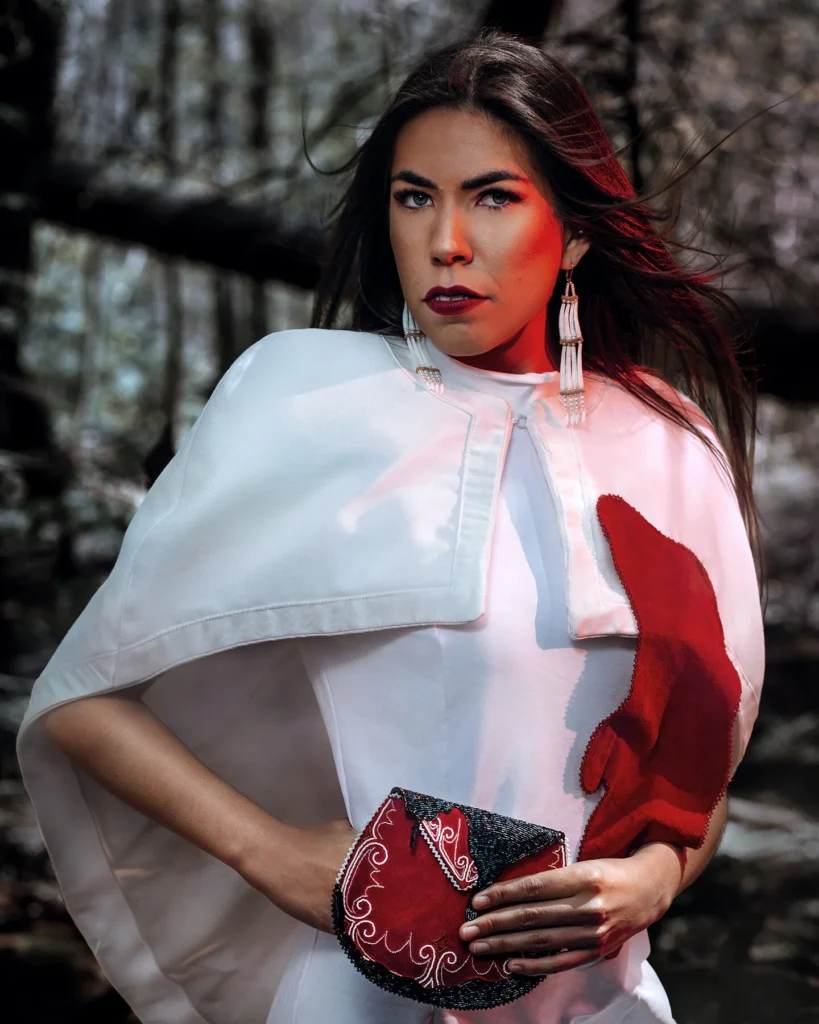
Oakley Rain Wysote Gray, Bleeding Heart Cape – M’st No’gmaq (All My Relations), 2021

7IDANsuu James Hart, Reconciliation Pole: Honouring a Time Before, During and After Canada’s Indian Residential Schools, 2015–17

Emma Hassencahl-Perley, White Flag, 2015

Brent Henry, English Only!, 2021

Shawn Hunt, Flipping the Bird, 2014

Lisa Jackson, Savage, 2009
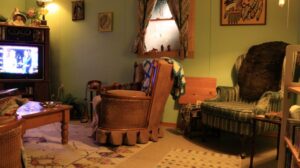
Ursula Johnson, ITHA: The Livingroom, 2021

Siassie Kenneally, All the Things That I Have Seen, 2016

Jake Kimble, It’s All So Incredibly Loud, 2025

Duane Linklater, i want to forget the english language, ulterior, 2020/23

Jim Logan, National Pastimes, 1991

Luke Marston, Bentwood Box, 2009

Kevin McKenzie, Being Indigenous, 2024

Meryl McMaster, Truth to Power, 2017

Kent Monkman, The Scream, 2017

Caroline Monnet, The Black Case, 2014

Tim Moore, Erasure Is Futile, 2021

Peter Morin, This is what happens when you perform the memory of the land (parts 1 and 2), 2013
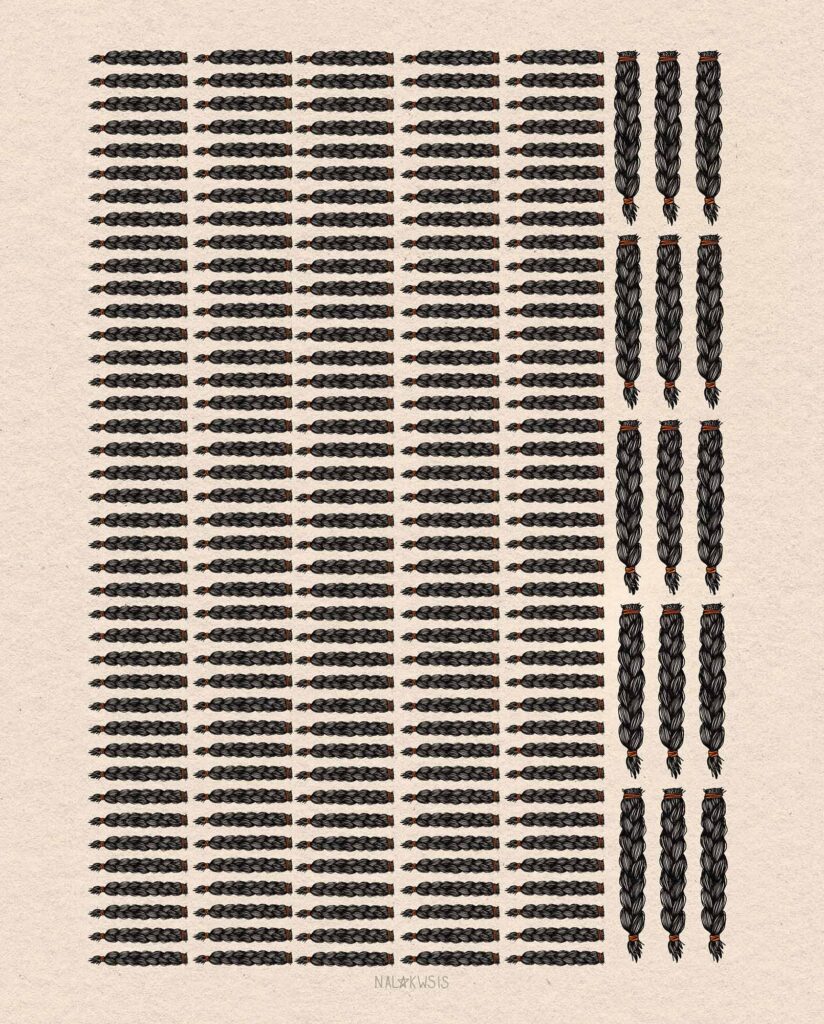
Saige “Nalakwsis” Mukash, 215 Braids, 2021

Nadia Myre, Indian Act, 2000–2002

Carey Newman, Witness Blanket, 2013–14

Davidee Ningeok, Sr., Residential School Nightmare, 2015

Shelley Niro, The Shirt, 2003

Luke Parnell, Neon Reconciliation Explosion, 2020

Dionne Paul, Her First Day of School, 2013
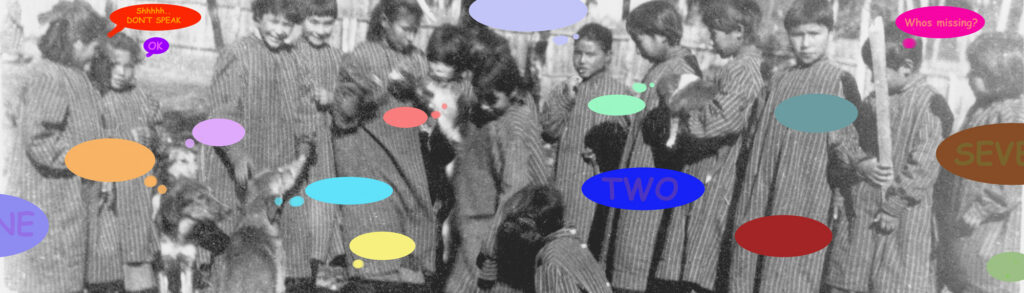
Edward Poitras, Don’t Speak, 2015

Barry Pottle, Yale Dormitory (Residential School), North West River, Labrador, 2015

Teharihulen Michel Savard, Reciprocity (Réciprocité), 2009

Jason Sikoak, Sacrilege, 2015

Greg Staats, Do’-gah – I don’t know [shrugging shoulders], 2020, archival pigment print on canvas on pine stretcher, oil, earth, Indian tobacco ash (edition 2 of 3), 142 x 175.3 x 2.5 cm, Agnes Etherington Art Centre, Kingston.

Alan Syliboy, Grandmother 1, 1997

Jeff Thomas, Broken Treaties, 1613–, 2020
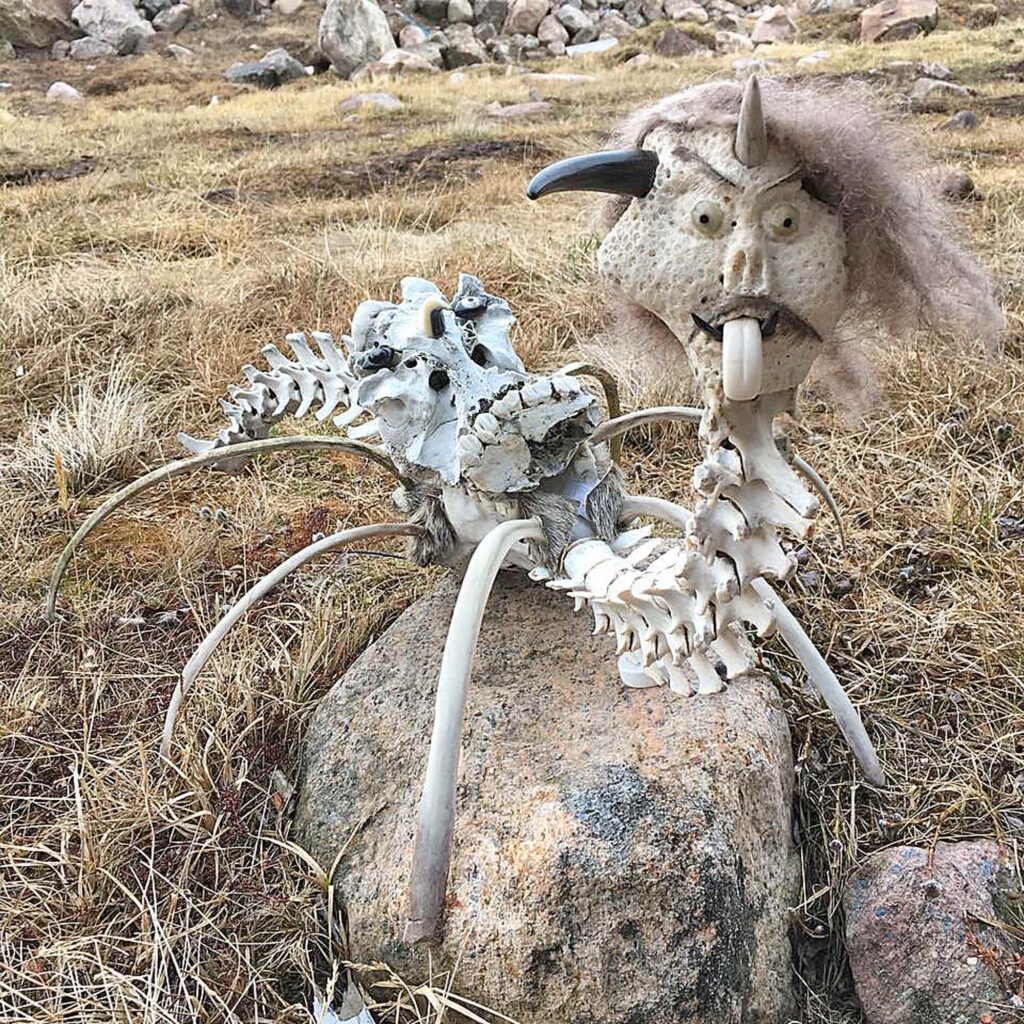
Jesse Tungilik, The Spirit of Intergenerational Trauma, 2019

Tania Willard, Be a Good Girl, 2017