Rain Cabana-Boucher, Laying Flowers, 2021–24

Rain Cabana-Boucher, Laying Flowers, 2021–24, vintage beads, fishing line, deer hide tanned by hunter Garry Blake, collection of Mel Granley.
In Laying Flowers, Michif and British settler interdisciplinary artist Rain Cabana-Boucher (b.1995) creates a profoundly moving installation that embodies both grief and resistance in response to the unmarked graves at former residential school sites. At the heart of this work is a white plinth covered with a tanned hide on which orange glass beads are scattered. The beads, symbolic of both children’s lives lost and the contemporary Orange Shirt Day movement, spill across the hide, simultaneously fragile and enduring. On the surrounding walls, small clusters of orange beaded flowers are meticulously arranged in grids, their repetition evoking both absence and persistence. Each flower is a gesture of care, an act of ceremony, and a refusal to forget. The visual austerity of the gallery space amplifies their presence, compelling viewers into a quality of sustained, responsible attention.
The work resonates with Indigenous
principles of kanawâpâtahmowin—seeing with responsibility, vision, and creativity. In this framing, Cabana-Boucher transforms beadwork, which has long been a medium of storytelling and exchange between Indigenous and settler societies, into a counter-currency to capitalist values. Beads, once central to Indigenous economies and trade, are here reclaimed as a measure of remembrance and cultural sovereignty. Their careful placement on hide and wall invokes ancestral practices of making things while also standing as a contemporary political act that critiques the commodification and erasure imposed by colonial institutions.
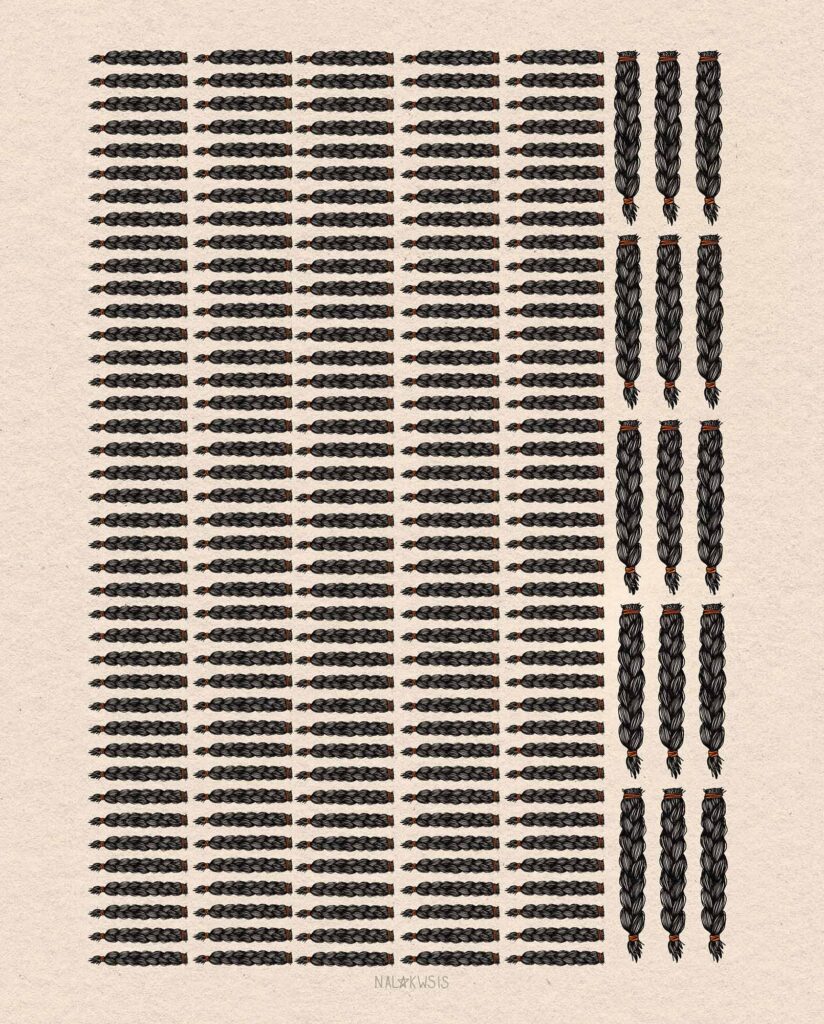
Saige “Nalakwsis” Mukash, 215 Braids, 2021, digital print, 23 x 20.5 cm.

Ruth Cuthand, Small Pox, 2009, beads and acrylic on suedeboard, 61 x 45.7 cm, MacKenzie Art Gallery, Regina.
Raised in Treaty 6 territory in Saskatoon, Saskatchewan, and deeply connected to historic Michif communities, Cabana-Boucher situates her practice within an intergenerational continuum of memory and survivance, an active presence grounded in survival, resistance, and the ongoing assertion of Indigenous identity. Her work, gathered under the exhibition title
For Love, Loss & Land, interlaces beadwork, sculpture, and performative installation into a living archive that focuses on Indigenous sovereignty, shared witnessing, and collective mourning.
In Laying Flowers, mourning is never passive: it insists on a shared relationship, demanding that settler and Indigenous viewers alike recognize remembrance as inseparable from justice. Like 215 Braids, 2021, by Saige “Nalakwsis” Mukash (b.1996), which memorializes children through strands of hair, Cabana-Boucher’s beaded flowers carry the weight of individual lives while building toward collective memory.
Cabana-Boucher’s work also resonates with paintings by Allen Sapp (1928–2015) of the residential school experience, where trauma and cultural continuity coexist. While Sapp’s images bear witness through narrative figuration, Cabana-Boucher insists on abstraction and repetition, allowing the empty spaces between beads and flowers to speak as loudly as the materials themselves. The silence embedded in the installation mirrors the silence imposed on Indigenous children—yet, here, it becomes a space of resurgence.
By invoking the ceremonial gesture of laying flowers, Cabana-Boucher affirms the persistence of Michif and Indigenous presence across time. Laying Flowers is not a monument in the traditional sense; rather, it is a dynamic, relational archive. It is rooted in grief but oriented toward care, ensuring that mourning becomes an ongoing practice of love and accountability. In this way, Cabana-Boucher’s work aligns with the broader vision of Indigenous visual sovereignty: art as truth telling, as a vehicle for survival, and as a call for justice that refuses closure. In this, it joins a growing lineage of Indigenous counter-monument practices, such as Indian Act, 2000–2002, by Nadia Myre (b.1974) or beaded depictions of disease by Ruth Cuthand (b.1954), which transform archival trauma into acts of reclamation. Together, these works deny erasure by weaving memory into form, insisting that remembrance itself is a radical and enduring practice of sovereignty.
Collection of A New Generation of Witness

Sonny Assu, Leila’s Desk, 2013

Michael Barber, A Silent Sky, 2022

Christi Belcourt, Giniigaaniimenaaning (Looking Ahead), 2012

Rebecca Belmore, Apparition, 2013

Rain Cabana-Boucher, Laying Flowers, 2021–24

Quill Christie-Peters, Portrait of Ste. Margaret’s Residential School and All It Could Not Contain, 2018

Dana Claxton, Headdress – Shadae and her Girlz, 2023

Beau Dick, The Ghost Confined to the Chair, 2012
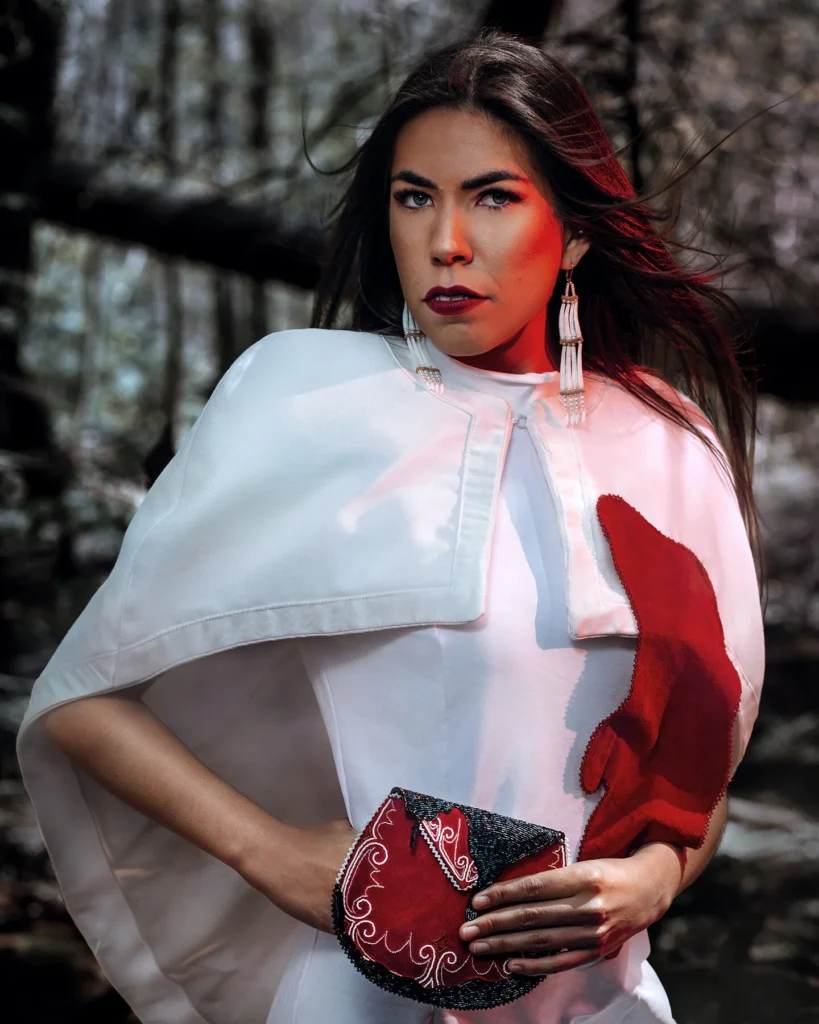
Oakley Rain Wysote Gray, Bleeding Heart Cape – M’st No’gmaq (All My Relations), 2021

7IDANsuu James Hart, Reconciliation Pole: Honouring a Time Before, During and After Canada’s Indian Residential Schools, 2015–17

Emma Hassencahl-Perley, White Flag, 2015

Brent Henry, English Only!, 2021

Shawn Hunt, Flipping the Bird, 2014

Lisa Jackson, Savage, 2009
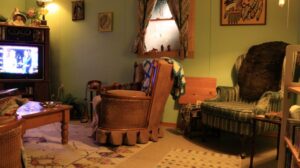
Ursula Johnson, ITHA: The Livingroom, 2021

Siassie Kenneally, All the Things That I Have Seen, 2016

Jake Kimble, It’s All So Incredibly Loud, 2025

Duane Linklater, i want to forget the english language, ulterior, 2020/23

Jim Logan, National Pastimes, 1991

Luke Marston, Bentwood Box, 2009

Kevin McKenzie, Being Indigenous, 2024

Meryl McMaster, Truth to Power, 2017

Kent Monkman, The Scream, 2017

Caroline Monnet, The Black Case, 2014

Tim Moore, Erasure Is Futile, 2021

Peter Morin, This is what happens when you perform the memory of the land (parts 1 and 2), 2013
Saige “Nalakwsis” Mukash, 215 Braids, 2021

Nadia Myre, Indian Act, 2000–2002

Carey Newman, Witness Blanket, 2013–14

Davidee Ningeok, Sr., Residential School Nightmare, 2015

Shelley Niro, The Shirt, 2003

Luke Parnell, Neon Reconciliation Explosion, 2020

Dionne Paul, Her First Day of School, 2013
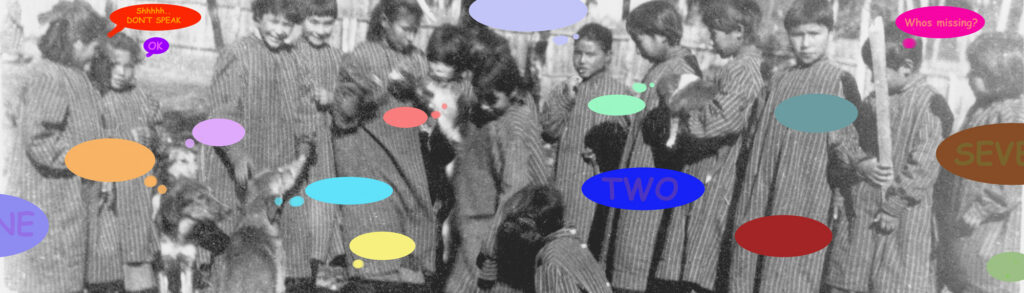
Edward Poitras, Don’t Speak, 2015

Barry Pottle, Yale Dormitory (Residential School), North West River, Labrador, 2015

Teharihulen Michel Savard, Reciprocity (Réciprocité), 2009

Jason Sikoak, Sacrilege, 2015

Greg Staats, Do’-gah – I don’t know [shrugging shoulders], 2020, archival pigment print on canvas on pine stretcher, oil, earth, Indian tobacco ash (edition 2 of 3), 142 x 175.3 x 2.5 cm, Agnes Etherington Art Centre, Kingston.

Alan Syliboy, Grandmother 1, 1997

Jeff Thomas, Broken Treaties, 1613–, 2020
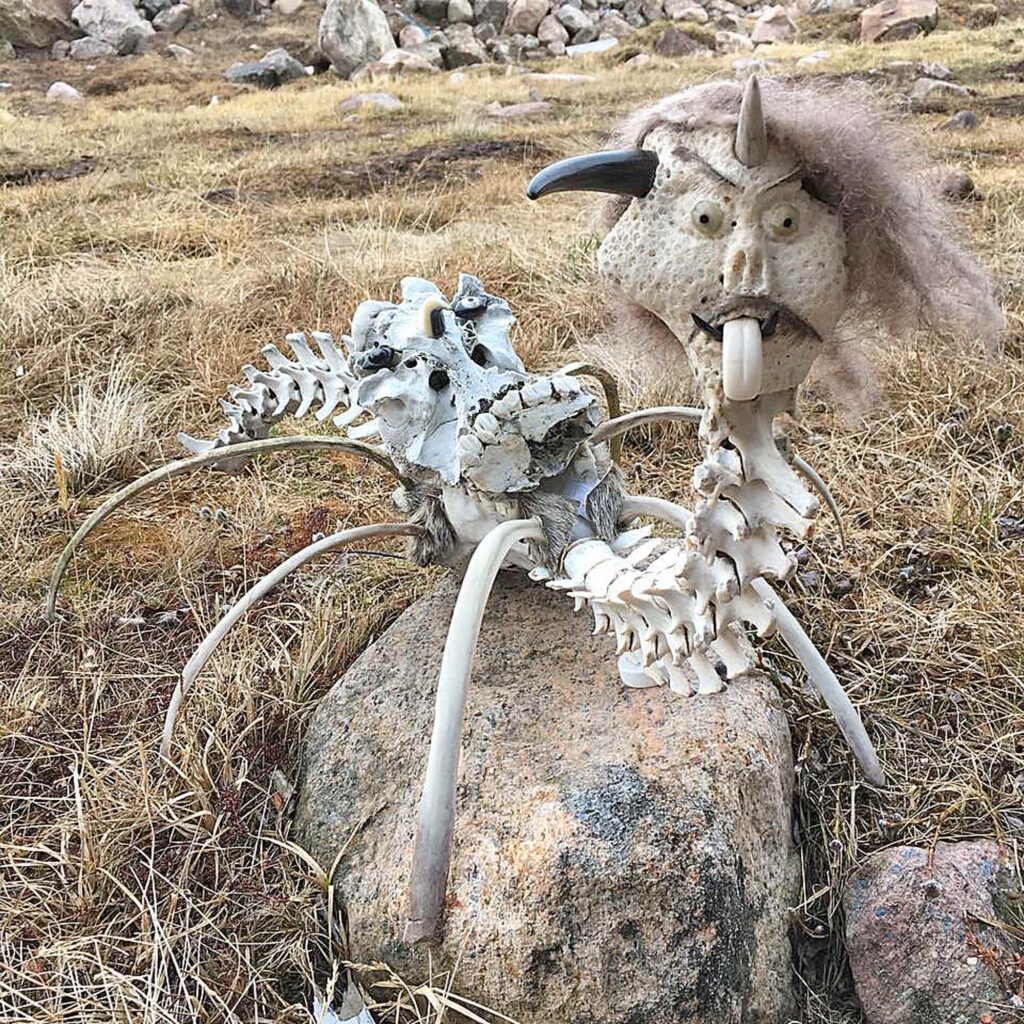
Jesse Tungilik, The Spirit of Intergenerational Trauma, 2019

Tania Willard, Be a Good Girl, 2017