Rebecca Belmore, Apparition, 2013

Rebecca Belmore, Apparition, 2013, video installation on painted wall, 2 minutes 50 seconds, Morris and Helen Belkin Art Gallery, University of British Columbia, Vancouver.
In her deceptively simple video performance Apparition, Anishinaabe interdisciplinary artist Rebecca Belmore (b.1960) kneels with duct tape over her mouth, removes it, and remains silent. It operates as a profound critique of the ways in which Indigenous languages and voices have been forcibly suppressed, especially through the residential and day school systems. The work’s silence is not absence; rather, it signals what has been lost, what is at risk, and what persists beyond the enforced muteness. As such, it unfolds as a quiet yet potent meditation on language loss, colonial erasure, and the embodied residue of silence.
Belmore’s articulation of silence is deeply layered. The duct tape, a symbol of forced silence, evokes the institutional policies that punished students for speaking their mother tongues. Removing it does not automatically bring back voice or belonging, for the artist remains silent, making visible the long shadow of imposed muteness. This silence reflects both individual and communal histories: the personal sense of displacement, loss of ancestral speech, and collective cultural trauma. Yet, it also becomes a site of resistance. By remaining present in silence, Belmore disrupts normative expectations of what testimony or reconciliation should look like—audible confession or formal declaration.

Rebecca Belmore, The Named and the Unnamed, 2005, video installation, 38 minutes 25 seconds, Morris and Helen Belkin Art Gallery, University of British Columbia, Vancouver.
Visually, Apparition employs restraint. The minimal staging, with a painted backdrop and her body centred, directs attention to presence versus absence, voice versus silence. The duration of the four-minute video feels stretched in its silence, creating space for reflection and discomfort. The viewer is forced to stay with Belmore in her unvoiced mourning; in that shared time, empathy or recognition becomes possible but not guaranteed. Crucially, Apparition demands more than personal lament. It points to structural harms: the residential schools’ deliberate eradication of language, culture, and identity. Belmore’s choice not to restore speech even after removing the tape emphasizes that apology or reconciliation cannot simply re-enable what was lost. Structural supports, such as language revival, cultural affirmation, and educational change, are necessary.
Apparition aligns with many of Belmore’s performance works, including her groundbreaking The Named and the Unnamed, 2005. Belmore does not dramatize violence but dwells in aftermath, memory, and relational loss. That dwelling exceeds mourning. It is an insistence on what the schools were designed to destroy: the conditions of mino-bimaadiziwin, the Anishinaabe understanding of living well,
in right relation with the land, language, community, and future generations.
The viewer emerges from Apparition unsettled because Belmore refuses to give false closure. The work holds open the questions of what it means to speak, to be heard, and to reclaim what was forcibly silenced. For Indigenous Survivors and communities, Apparition becomes more than art—it becomes an act of recognition, mourning, and insistence that language, voice, and presence matter.
Collection of A New Generation of Art

Sonny Assu, Leila’s Desk, 2013

Michael Barber, A Silent Sky, 2022

Christi Belcourt, Giniigaaniimenaaning (Looking Ahead), 2012
Rebecca Belmore, Apparition, 2013

Rain Cabana-Boucher, Laying Flowers, 2021–24

Quill Christie-Peters, Portrait of Ste. Margaret’s Residential School and All It Could Not Contain, 2018

Dana Claxton, Headdress – Shadae and her Girlz, 2023

Beau Dick, The Ghost Confined to the Chair, 2012
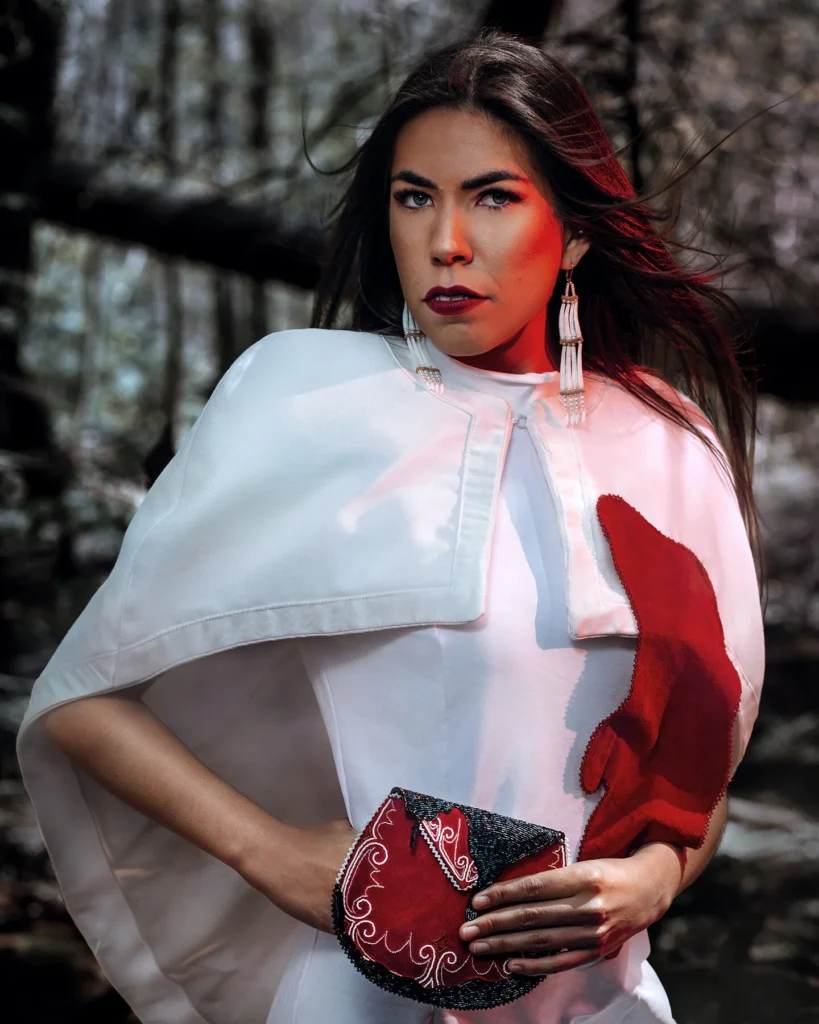
Oakley Rain Wysote Gray, Bleeding Heart Cape – M’st No’gmaq (All My Relations), 2021

7IDANsuu James Hart, Reconciliation Pole: Honouring a Time Before, During and After Canada’s Indian Residential Schools, 2015–17

Emma Hassencahl-Perley, White Flag, 2015

Brent Henry, English Only!, 2021

Shawn Hunt, Flipping the Bird, 2014

Lisa Jackson, Savage, 2009
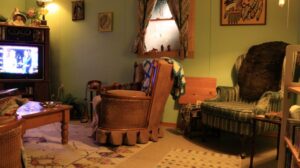
Ursula Johnson, ITHA: The Livingroom, 2021

Siassie Kenneally, All the Things That I Have Seen, 2016

Jake Kimble, It’s All So Incredibly Loud, 2025

Duane Linklater, i want to forget the english language, ulterior, 2020/23

Jim Logan, National Pastimes, 1991

Luke Marston, Bentwood Box, 2009

Kevin McKenzie, Being Indigenous, 2024

Meryl McMaster, Truth to Power, 2017

Kent Monkman, The Scream, 2017

Caroline Monnet, The Black Case, 2014

Tim Moore, Erasure Is Futile, 2021

Peter Morin, This is what happens when you perform the memory of the land (parts 1 and 2), 2013
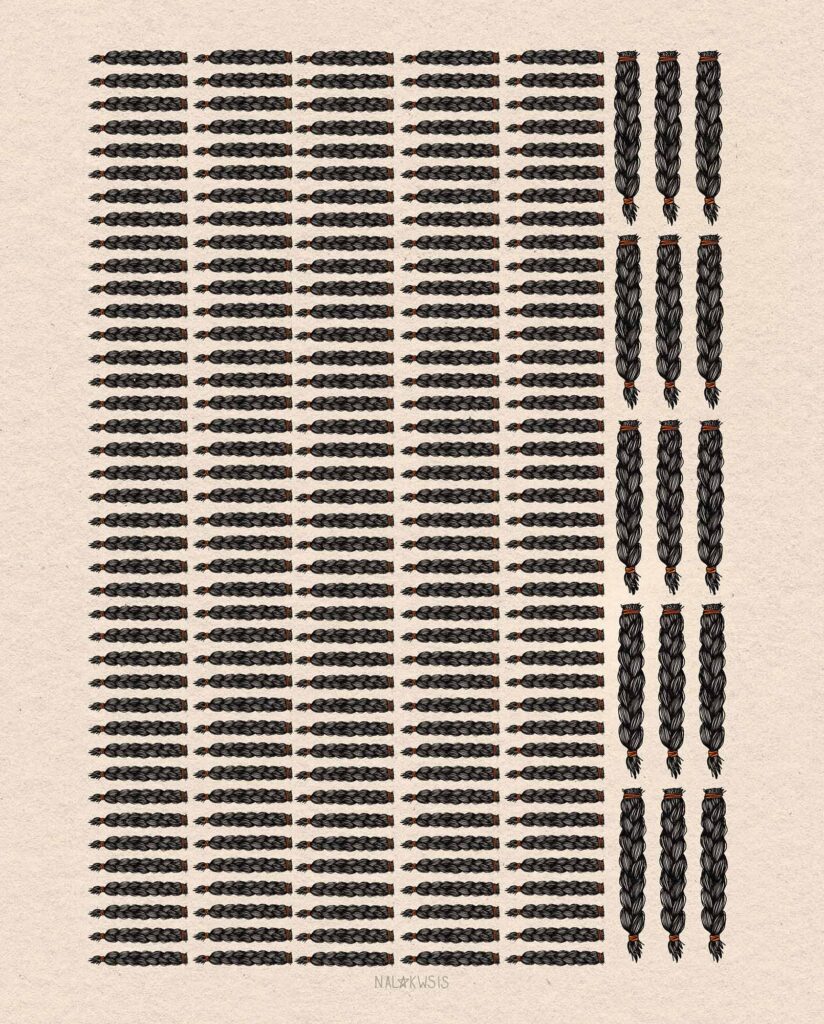
Saige “Nalakwsis” Mukash, 215 Braids, 2021

Nadia Myre, Indian Act, 2000–2002

Carey Newman, Witness Blanket, 2013–14

Davidee Ningeok, Sr., Residential School Nightmare, 2015

Shelley Niro, The Shirt, 2003

Luke Parnell, Neon Reconciliation Explosion, 2020

Dionne Paul, Her First Day of School, 2013
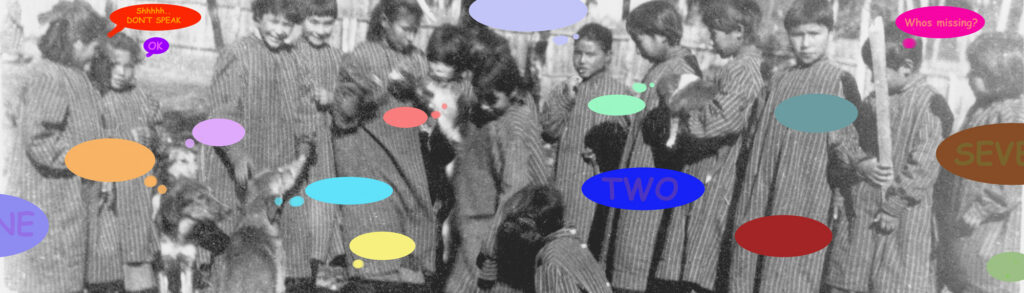
Edward Poitras, Don’t Speak, 2015

Barry Pottle, Yale Dormitory (Residential School), North West River, Labrador, 2015

Teharihulen Michel Savard, Reciprocity (Réciprocité), 2009

Jason Sikoak, Sacrilege, 2015

Greg Staats, Do’-gah – I don’t know [shrugging shoulders], 2020, archival pigment print on canvas on pine stretcher, oil, earth, Indian tobacco ash (edition 2 of 3), 142 x 175.3 x 2.5 cm, Agnes Etherington Art Centre, Kingston.

Alan Syliboy, Grandmother 1, 1997

Jeff Thomas, Broken Treaties, 1613–, 2020
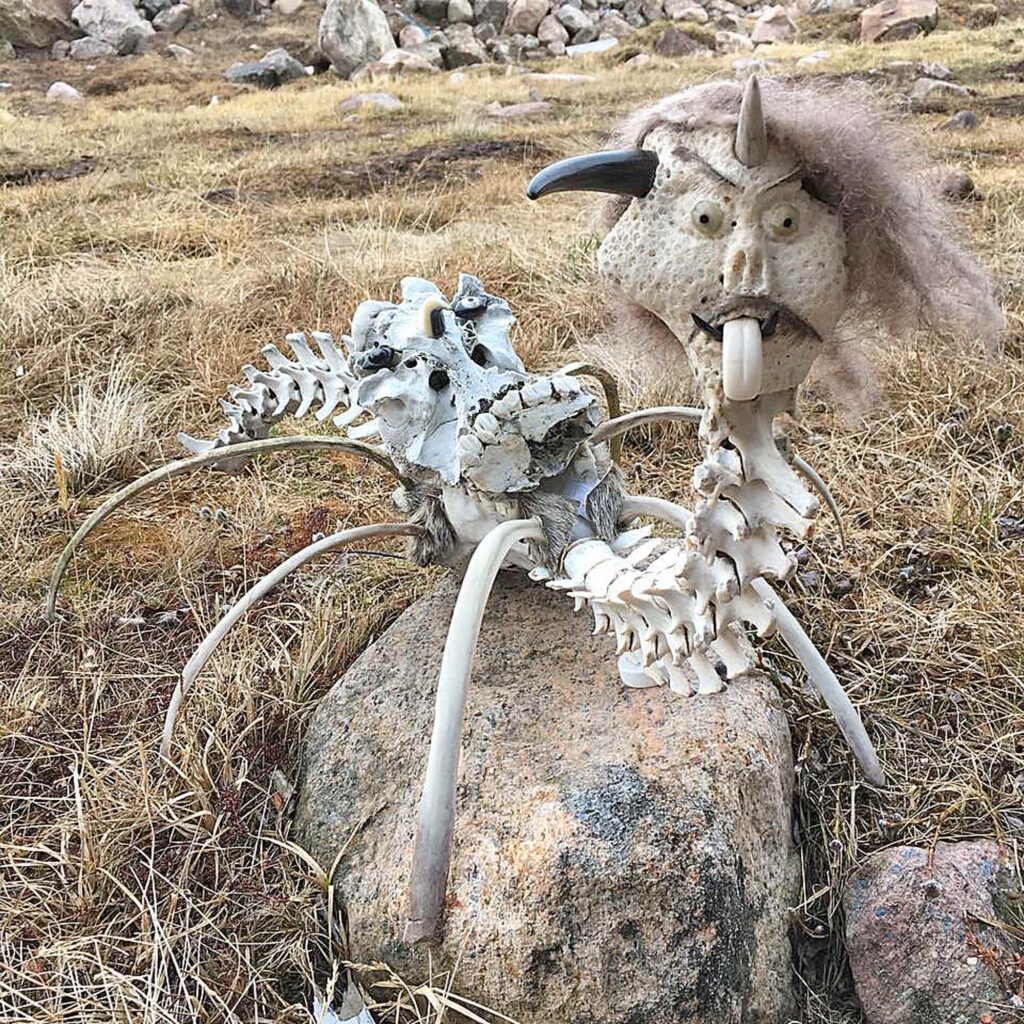
Jesse Tungilik, The Spirit of Intergenerational Trauma, 2019

Tania Willard, Be a Good Girl, 2017