Brent Henry, English Only!, 2021

Brent Henry, English Only!, 2021, acrylic and oil stick on canvas, 91.4 x 91.4 cm.
The composition of the painting English Only!
by Anishinaabe artist Brent Henry (b.1995) of Saugeen First Nation, Ontario, is deceptively simple. Three figures stand against a turquoise background beneath the authoritarian directive “ENGLISH ONLY!” Their faces, fractured and mask-like, evoke both scars and cultural effacement. Across their chests, the word “OJIBWAY” appears, only to be struck out in heavy paint—a literal inscription of erasure. The central figure’s face is obliterated into striated lines, above which appears the phrase “It’s been cut,”
a chilling reference to the cutting of braids, a ritual humiliation that marked both the suppression of culture and the disciplining of Indigenous bodies. His blunt deployment of text in the form of commands, insults, and crossed-out names replicates the violence of colonial pedagogy—but only to expose it. Here, English is no longer a neutral medium of communication but a weapon inscribed on the body.

Duane Linklater, i want to forget the english language, ulterior, 2020/23, five tipi poles, paint, spray paint, rope, tarpaulin, brass chandelier, stone, wooden box, cart, 196 x 706 x 140 cm.
Placed in dialogue with the installation i want to forget the english language, ulterior, 2020/23, by Duane Linklater (b.1976), Henry’s English Only! enters a broader conversation about language as both a site of violence and a horizon for renewal. Where Linklater’s work constructs a grammar of Cree resurgence through tipi poles, tarpaulin, and a chandelier, Henry opts for immediacy. Linklater calls us into careful reorientation, slowing down perception through Cree linguistic and cosmological structures. Henry,
by contrast, hurls us into the violence itself. His painted slogan does not invite contemplation so much as force recognition of what was shouted at children across generations.
The two works converge in their insistence that language is not merely symbolic but rooted in traditional knowledge, structuring how the world is seen, known, and lived. Linklater’s desire to “forget the English language” gestures toward a Cree realignment, a refusal of colonial perceptual dominance. Henry, meanwhile, makes visible the wounds of that dominance—the scars left when language was forbidden, cut away, crossed out. In Henry’s figures, we see the aftermath; in Linklater’s tilted tipi poles, the possibility of another orientation.
Together, these artists insist that the violence of assimilation cannot be forgotten or bypassed. It must be named, seen, and transformed. Henry’s contribution lies in his unflinching witness to enduring legacies of colonial assimilation through visual testimony. English Only! stages a direct confrontation with the stifling of Indigenous languages in residential and day schools, where children were punished for speaking Anishinaabemowin, Cree, or other ancestral tongues. It is not subtle; it is urgent.
Its slogans and defaced inscriptions are less painting than testimony, less abstraction than wound. But precisely in this rawness lies its power: it reclaims what was silenced, forcing both Indigenous and non-Indigenous viewers to contend with the psychic scars of enforced English and to imagine the resurgence of languages once forbidden.
Collection of A New Generation of Witness

Sonny Assu, Leila’s Desk, 2013

Michael Barber, A Silent Sky, 2022

Christi Belcourt, Giniigaaniimenaaning (Looking Ahead), 2012

Rebecca Belmore, Apparition, 2013

Rain Cabana-Boucher, Laying Flowers, 2021–24

Quill Christie-Peters, Portrait of Ste. Margaret’s Residential School and All It Could Not Contain, 2018

Dana Claxton, Headdress – Shadae and her Girlz, 2023

Beau Dick, The Ghost Confined to the Chair, 2012
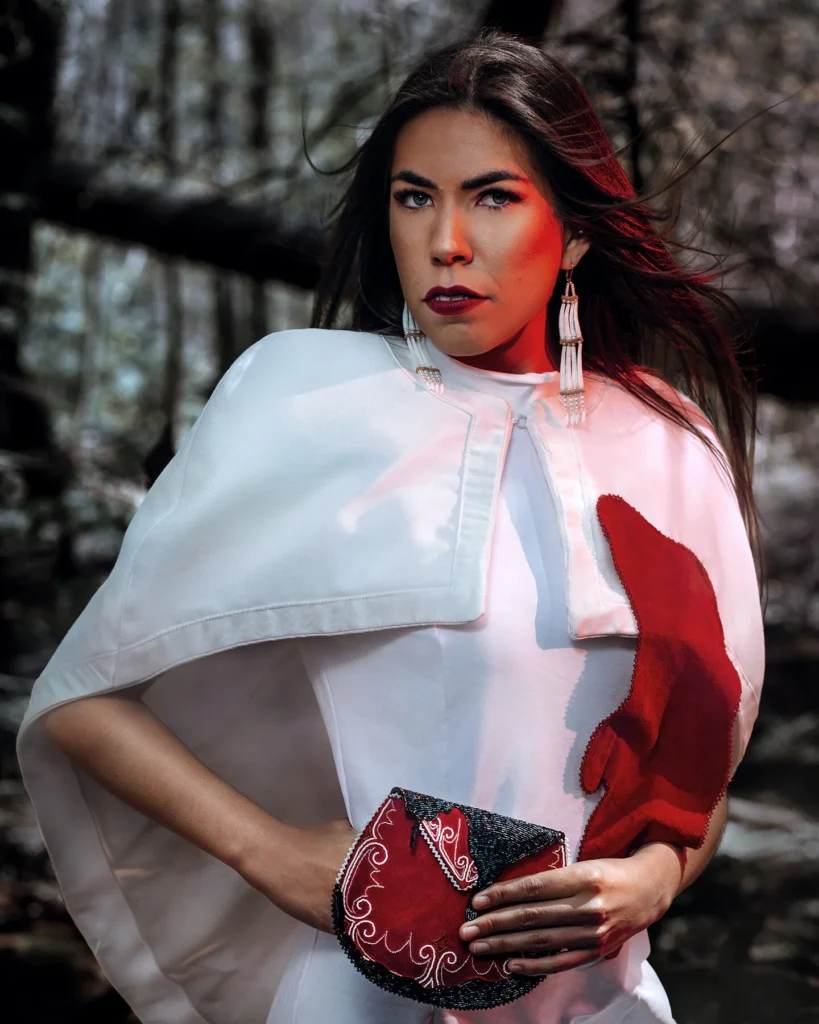
Oakley Rain Wysote Gray, Bleeding Heart Cape – M’st No’gmaq (All My Relations), 2021

7IDANsuu James Hart, Reconciliation Pole: Honouring a Time Before, During and After Canada’s Indian Residential Schools, 2015–17

Emma Hassencahl-Perley, White Flag, 2015
Brent Henry, English Only!, 2021

Shawn Hunt, Flipping the Bird, 2014

Lisa Jackson, Savage, 2009
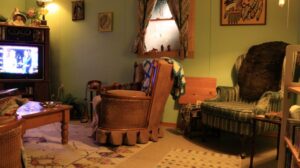
Ursula Johnson, ITHA: The Livingroom, 2021

Siassie Kenneally, All the Things That I Have Seen, 2016

Jake Kimble, It’s All So Incredibly Loud, 2025
Duane Linklater, i want to forget the english language, ulterior, 2020/23

Jim Logan, National Pastimes, 1991

Luke Marston, Bentwood Box, 2009

Kevin McKenzie, Being Indigenous, 2024

Meryl McMaster, Truth to Power, 2017

Kent Monkman, The Scream, 2017

Caroline Monnet, The Black Case, 2014

Tim Moore, Erasure Is Futile, 2021

Peter Morin, This is what happens when you perform the memory of the land (parts 1 and 2), 2013
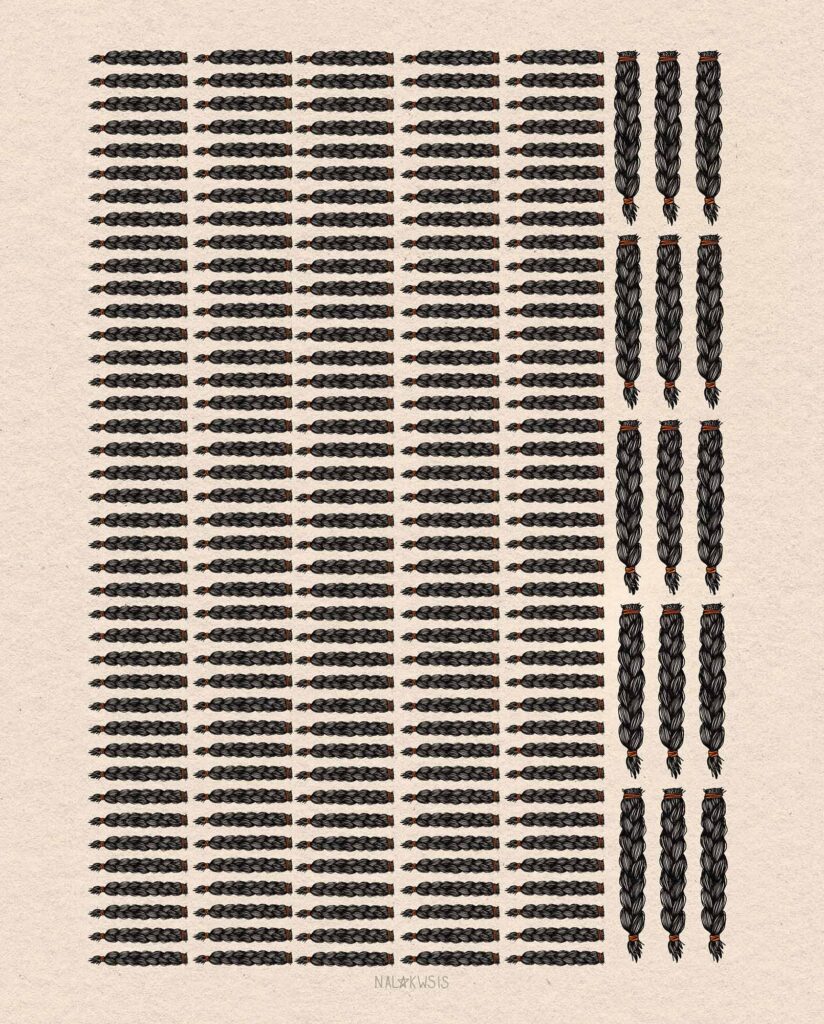
Saige “Nalakwsis” Mukash, 215 Braids, 2021

Nadia Myre, Indian Act, 2000–2002

Carey Newman, Witness Blanket, 2013–14

Davidee Ningeok, Sr., Residential School Nightmare, 2015

Shelley Niro, The Shirt, 2003

Luke Parnell, Neon Reconciliation Explosion, 2020

Dionne Paul, Her First Day of School, 2013
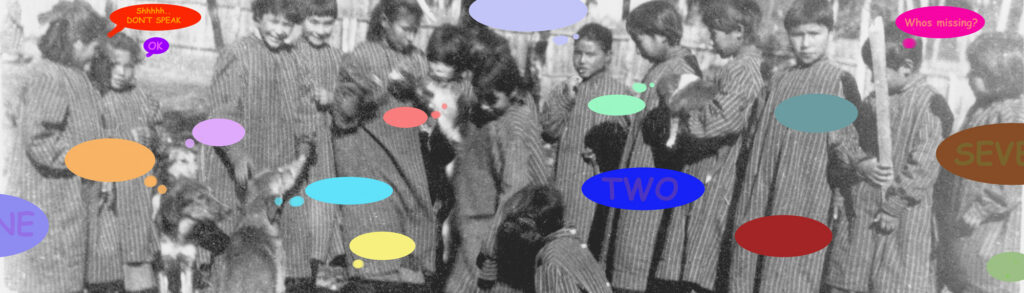
Edward Poitras, Don’t Speak, 2015

Barry Pottle, Yale Dormitory (Residential School), North West River, Labrador, 2015

Teharihulen Michel Savard, Reciprocity (Réciprocité), 2009

Jason Sikoak, Sacrilege, 2015

Greg Staats, Do’-gah – I don’t know [shrugging shoulders], 2020, archival pigment print on canvas on pine stretcher, oil, earth, Indian tobacco ash (edition 2 of 3), 142 x 175.3 x 2.5 cm, Agnes Etherington Art Centre, Kingston.

Alan Syliboy, Grandmother 1, 1997

Jeff Thomas, Broken Treaties, 1613–, 2020
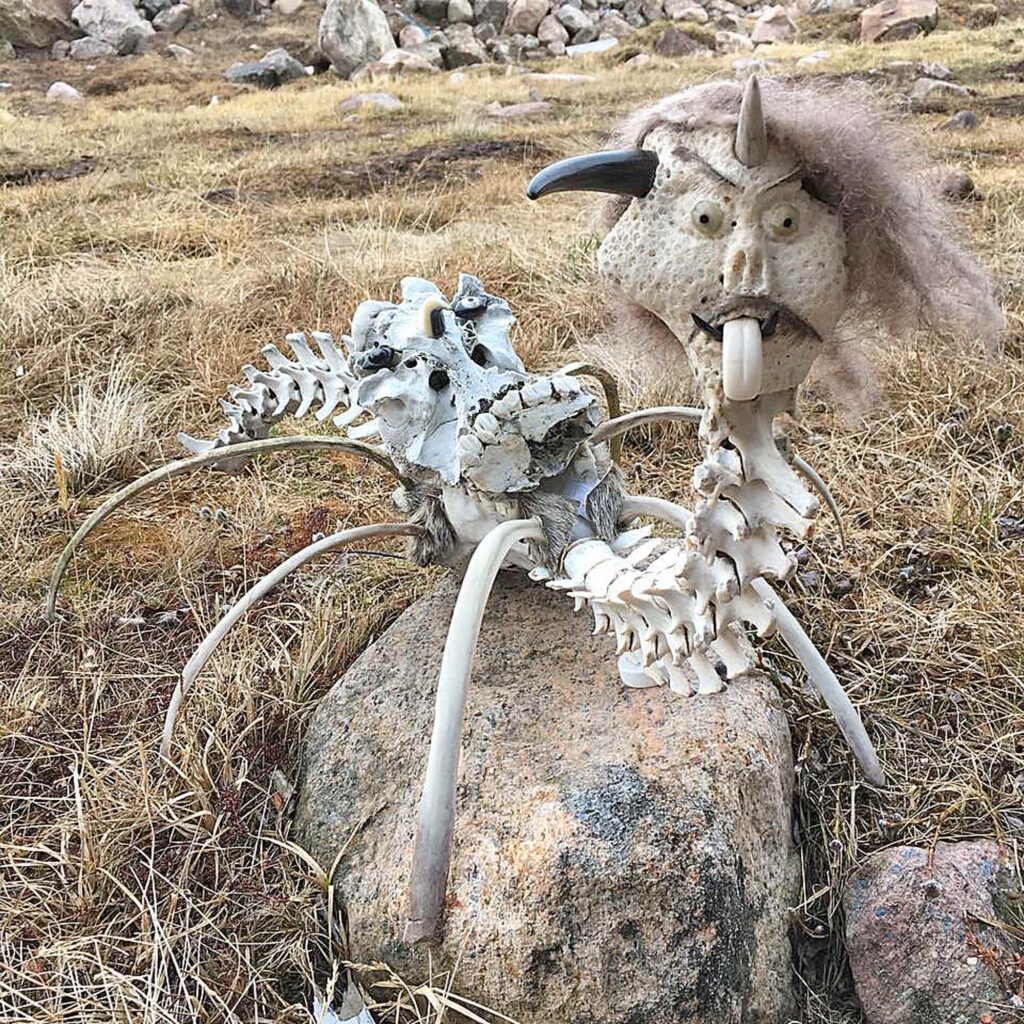
Jesse Tungilik, The Spirit of Intergenerational Trauma, 2019

Tania Willard, Be a Good Girl, 2017