Dana Claxton, Headdress – Shadae and her Girlz, 2023

Dana Claxton, Headdress – Shadae and her Girlz, 2023, LED Firebox with transmounted chromogenic transparency, 152.4 x 101.6 cm.
Headdress – Shadae and her Girlz by Lakota filmmaker, photographer, and performance artist Dana Claxton (b.1959) presents three figures—a mother and her two daughters—in elaborate, colourful regalia. Their ribbon skirts,
a resurgent garment of ceremony and everyday pride, signal continuity in Indigenous womanhood, grounding the figures in the living present of their communities. Claxton renders continuity here through the density of the adornment: each medallion, fringe, or cedar-weave reflects the work of makers and the relationships that connect generations, families, and places. Each headdress is not a singular crown but a part of a larger network of belonging.
Claxton’s decision to layer intertribal items,
such as hip-hop baseball caps and Western hats perched atop beaded medallions beside pow wow and peyote fans, disrupts the rigid categories once used by ethnographic museums to define Indigenous cultures. The image insists on mobility, taste, and self-fashioning: belongings circulate through families and across territories, knowledge travels with people, and adornment is curated not frozen. As Claxton notes in her Headdress series statement, the works present people and objects as “cultural carriers,” living expressions of identity and story.
Visually, Headress – Shadae and her Girlz is as strategic as it is sumptuous. The neutral background heightens the vivid colours of cloth and glass beads; illumination renders each surface tactile, from quillwork and buckskin to sequins and nylon. This calibrated abundance counters scarcity narratives that have long shadowed Indigenous representation. At the same time, the veiled faces enact a politics of refusal: by withholding clear visibility, the sitters resist the controlling gaze of the camera and, by extension, the archive. The viewer is invited to engage through protocols of attention—attending to pattern, craftsmanship, and labour—rather than through identification or voyeurism.
With this image, Claxton extends her longstanding investigation of Indigenous representation by using the visual grammar of commodity display—the glowing light box—to stage a counter-spectacle of kinship, cultural plenitude, and survivance. The LED Firebox, a signature format in her practice, borrows the lure of advertising while rejecting its logic of consumption: rather than selling a product, the radiance amplifies the living presence of cultural belongings while the sitters remain partially anonymous.
Installed within museums and fairs, Headress – Shadae and her Girlz creates a charged relational space: an image that glows like an advertisement but functions as ceremony, where light honours relation between people, ancestors, and community. In this work, Claxton offers a luminous lesson in visual sovereignty: the right to look Indigenous, beautifully and on one’s own terms, while turning display itself into a practice of care for past and future kin.
Collection of A New Generation of Witness

Sonny Assu, Leila’s Desk, 2013

Michael Barber, A Silent Sky, 2022

Christi Belcourt, Giniigaaniimenaaning (Looking Ahead), 2012

Rebecca Belmore, Apparition, 2013

Rain Cabana-Boucher, Laying Flowers, 2021–24

Quill Christie-Peters, Portrait of Ste. Margaret’s Residential School and All It Could Not Contain, 2018
Dana Claxton, Headdress – Shadae and her Girlz, 2023

Beau Dick, The Ghost Confined to the Chair, 2012
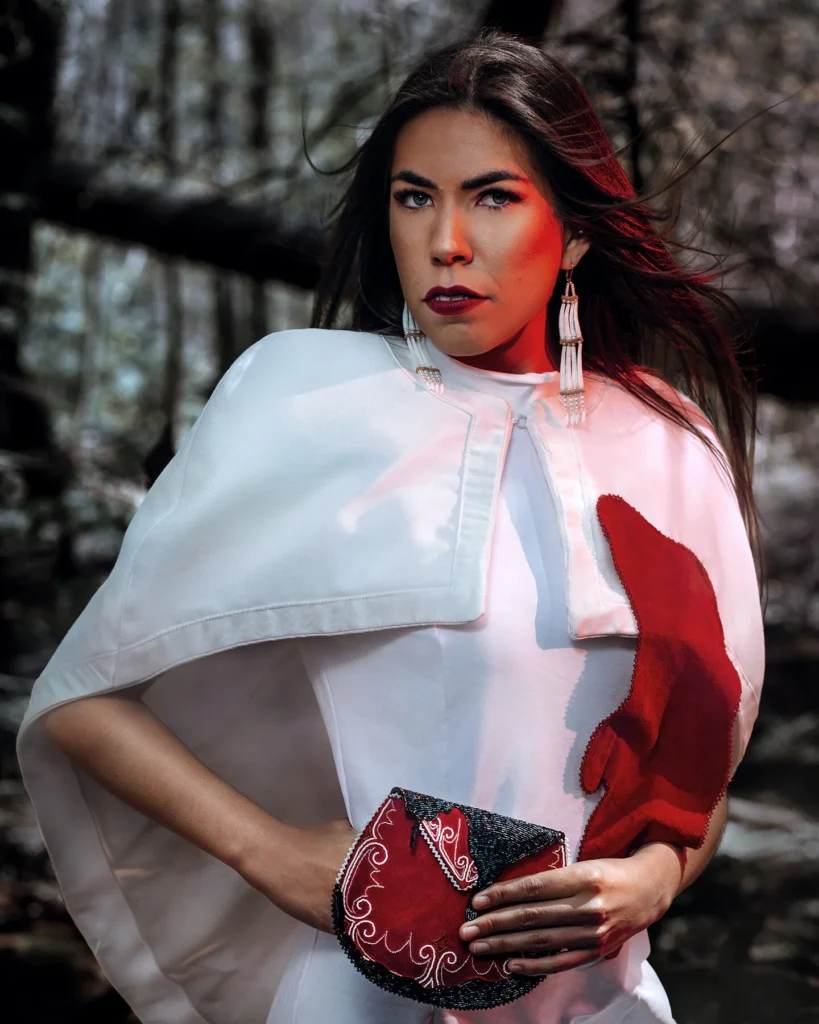
Oakley Rain Wysote Gray, Bleeding Heart Cape – M’st No’gmaq (All My Relations), 2021

7IDANsuu James Hart, Reconciliation Pole: Honouring a Time Before, During and After Canada’s Indian Residential Schools, 2015–17

Emma Hassencahl-Perley, White Flag, 2015

Brent Henry, English Only!, 2021

Shawn Hunt, Flipping the Bird, 2014

Lisa Jackson, Savage, 2009
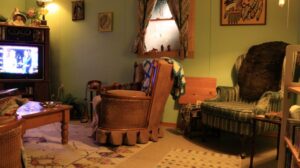
Ursula Johnson, ITHA: The Livingroom, 2021

Siassie Kenneally, All the Things That I Have Seen, 2016

Jake Kimble, It’s All So Incredibly Loud, 2025

Duane Linklater, i want to forget the english language, ulterior, 2020/23

Jim Logan, National Pastimes, 1991

Luke Marston, Bentwood Box, 2009

Kevin McKenzie, Being Indigenous, 2024

Meryl McMaster, Truth to Power, 2017

Kent Monkman, The Scream, 2017

Caroline Monnet, The Black Case, 2014

Tim Moore, Erasure Is Futile, 2021

Peter Morin, This is what happens when you perform the memory of the land (parts 1 and 2), 2013
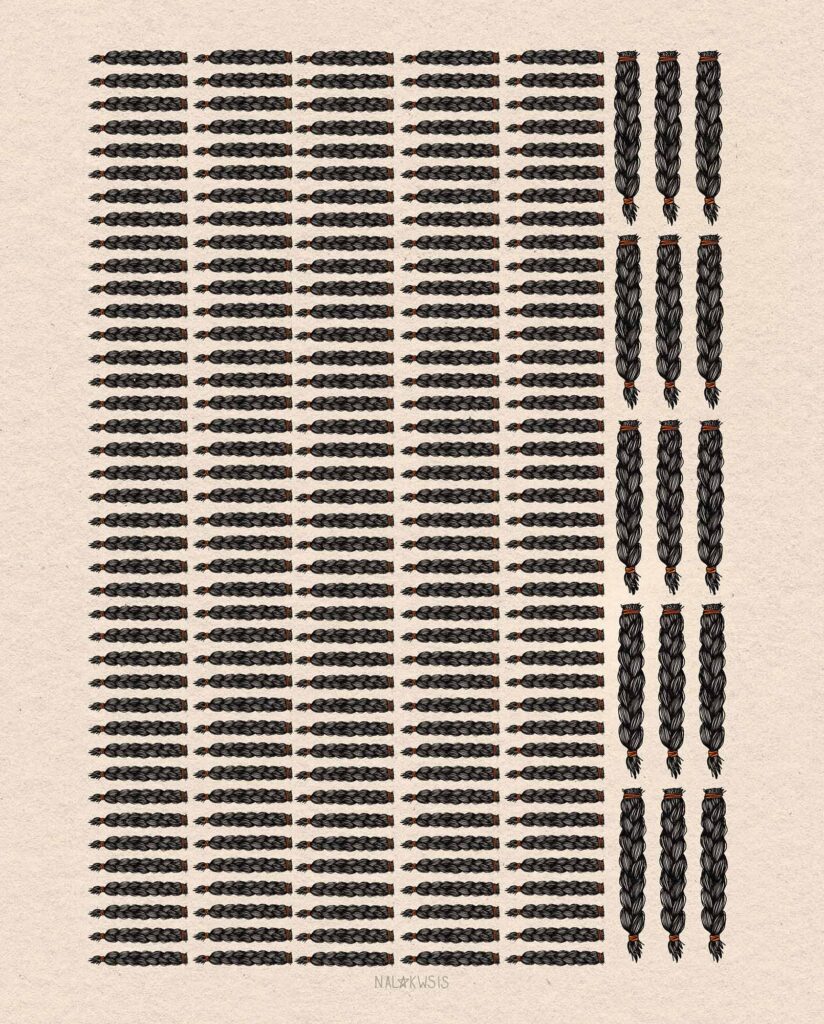
Saige “Nalakwsis” Mukash, 215 Braids, 2021

Nadia Myre, Indian Act, 2000–2002

Carey Newman, Witness Blanket, 2013–14

Davidee Ningeok, Sr., Residential School Nightmare, 2015

Shelley Niro, The Shirt, 2003

Luke Parnell, Neon Reconciliation Explosion, 2020

Dionne Paul, Her First Day of School, 2013
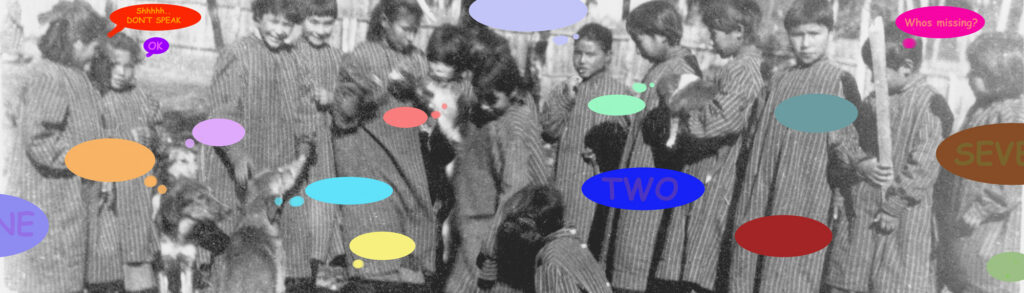
Edward Poitras, Don’t Speak, 2015

Barry Pottle, Yale Dormitory (Residential School), North West River, Labrador, 2015

Teharihulen Michel Savard, Reciprocity (Réciprocité), 2009

Jason Sikoak, Sacrilege, 2015

Greg Staats, Do’-gah – I don’t know [shrugging shoulders], 2020, archival pigment print on canvas on pine stretcher, oil, earth, Indian tobacco ash (edition 2 of 3), 142 x 175.3 x 2.5 cm, Agnes Etherington Art Centre, Kingston.

Alan Syliboy, Grandmother 1, 1997

Jeff Thomas, Broken Treaties, 1613–, 2020
Jesse Tungilik, The Spirit of Intergenerational Trauma, 2019

Tania Willard, Be a Good Girl, 2017